Captioner
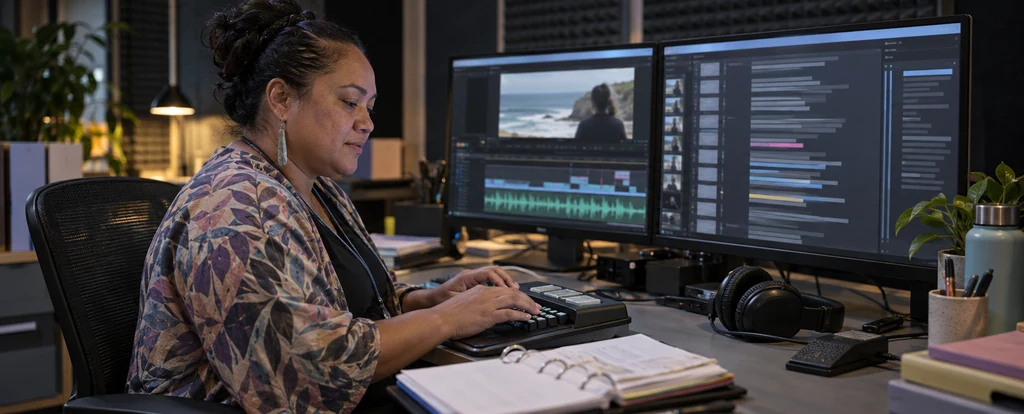
Captioners turn spoken audio into timed text for television, streaming, online video and live events, so audiences who cannot hear the sound can still follow what is said.
- Median salary*
- $65,000
4.5%vs last year, before tax
- People employed*
- 1,800
0.0%vs last year
- Projected growth*
- +10%
to 2035
- AI exposure*
- Moderate
- automation risk
- Average hours*
- 38/wk
−2h vs all jobs
- Shortage status*
- Not in shortage
national
Most captioners work for media access companies, broadcasters and streaming platforms, though many work freelance from home. The role sits close to transcription and subtitling, but the work is shaped by timing and accessibility rules: captions have to match the speech, stay on screen long enough to read, and follow the client's style guide. Live captioning, where the text appears as someone speaks, is the most demanding end of the job.
How much do captioners earn?
The median full-time salary for a captioner is $65,000 per annum, before tax, up $13,800 since 2018.
Pay depends heavily on who you work for and how you are engaged. Captioners employed by broadcasters or large access providers are usually covered by an award or enterprise agreement, while freelancers are often paid per finished minute of caption, so clear audio lifts the hourly equivalent and difficult recordings drag it down. Live captioning and specialist re-speaking work generally attract higher rates than pre-recorded transcription.
What does a captioner do day to day?
The list below is what fills most weeks; the exact mix shifts with seniority and whatever stage the current work is at.
- Transcribing dialogue, interviews and voice-over for pre-recorded programs
- Timing captions so each line appears with the speech it matches
- Editing auto-generated transcripts for punctuation, names and speaker changes
- Captioning live bulletins and events at speaking pace using re-speaking or stenographic methods
- Checking finished captions against the client's style guide and accessibility standards
What skills do captioners need?
Employers look for content creation and writing, backed by Adobe Premiere Pro fluency and strong attention to detail.
Specialist skills
- Content creation and writing
Software and tools
- Adobe Premiere Pro
- Otter.ai
- YouTube Studio
- CaptionMaker
General skills
- Attention to detail
- Written communication
- Time and deadline management
- Digital literacy
- Problem solving
Is the job growing?
About 1,800 people work as captioners in Australia, and employment is projected to grow 10% over the decade to 2035. That's healthy, above-average growth, and the role should stay in solid demand.
How do you become a captioner?
Here's the path most captioners take, step by step.
- 1Build your typing and language accuracy
Captioners are judged on words per minute and error rate, so steady practice at touch typing, punctuation and close listening matters before you apply for anything.
- 2Get a qualification in screen and media or a related field
A Certificate III or IV, a diploma in screen and media, or a communications, journalism or linguistics degree all appear in the field, though many employers base hiring on an accuracy test rather than the certificate.
- 3Learn the captioning software and the style guides
Pre-recorded work is done in captioning tools and video editors such as Adobe Premiere Pro, and each broadcaster or platform publishes its own captioning style guide that you will be expected to follow.
- 4Start with pre-recorded work at an access provider
Media access companies, broadcasters and universities are the main employers, and most people begin on recorded programs before taking on live shifts.
- 5Train specifically for live captioning if you want it
Live work uses re-speaking or stenographic methods that need their own training, and some providers run that training for their staff over several months.
Ready to apply as a captioner?
Whether you're working toward becoming a captioner or already are one and want a hand with the next step (sharpening your resume for ATS screening, tightening your cover letter, or knowing what you'll actually be asked at interview), here are examples grounded in this specific role, not generic templates.
What jobs can a captioner move to?
Moving into Video Editor typically comes with the biggest pay rise, worth $37,700 a year more on average.
| Move to | Typical pay change | Overlap | Retraining |
|---|---|---|---|
| Video Editor A video editor extends captioners' familiarity with video timing and media files, adding editing software skills through a short course. | +$37,700 | 50% | short course |
| Journalist A journalist draws on captioners' accurate transcription and language skills, moving into reporting with a short course in news writing. | +$24,500 | 54% | short course |
| Proofreader A proofreader brings close text accuracy and language skills, letting captioners move into editorial checking with little retraining. | +$1,600 | 78% | minimal |
| Publishing Editor A publishing editor builds on captioning's language and timing discipline, adding editorial judgement and publishing workflow through a short course. | +$0 | 58% | short course |
Moves are chosen from Jobs and Skills Australia's Data on Occupation Mobility, which follows income tax records between 2011-12 and 2020-21, together with entry requirements and skill overlap. A known move is one people were seen making in that data. Pay change compares median full-time pay for the two roles.
Who works as a captioner?
The typical captioner is 40 years old; 75% are women, 60% work full-time, and full-timers average 38 hours a week.
- 40
- Median age
- 75%
- Female share
- 60%
- Full-time
- −2h
- vs all-jobs avg
What's it like being a captioner?
The work is quiet and concentrated: long stretches at a computer with headphones on, a steady stream of audio to get through, and deadlines set by broadcast schedules rather than by you. Live shifts are the exception, and they run at speaking speed with no chance to go back. People who enjoy this work tend to like language, notice small details, and are comfortable working alone for most of the day.
What people like
- Captions decide whether a program is usable. Your work is what lets a deaf viewer, a commuter watching with the sound off, or someone following in a second language make sense of a program, which is a clear and practical result.
- Flexible, often home-based work. Much captioning is done on your own equipment and to your own schedule, which suits people fitting work around study, family or other commitments, provided the deadline is met.
- The standards are written down. Style guides and accessibility standards mean you know what a good caption looks like, so the job is about applying them consistently rather than guessing at the format.
- The subject matter keeps changing. One week might be a drama series, the next a parliamentary sitting, a university lecture or a football match, so the content varies even when the process does not.
What people find hard
- Deadlines follow the broadcast schedule. A program goes to air at a fixed time whether or not your captions are finished, so a late file or unclear audio can mean a rushed job with no room to move the delivery.
- Concentration is relentless. Long sessions of close listening and typing leave little room for a wandering mind, and poor sound, heavy accents and people talking over each other all slow the work down.
- Per-minute rates reward speed. When you are paid by the finished minute, a difficult recording eats into your effective hourly rate, and quiet months are yours to absorb.
- Live shifts leave no margin. Captioning a live bulletin or match means typing or re-speaking at the pace of speech for an hour or more, and a dropped word cannot be fixed afterwards.
Based on our synthesis of professional-body surveys and public accounts of the role, not first-person verified reviews.
Which industries employ captioners?
Information Media and Telecommunications employs the largest share of captioners, followed by Professional, Scientific and Technical Services.
Top employing industries
- 1Information Media and Telecommunications
- 2Professional, Scientific and Technical Services
- 3Education and Training
- 4Public Administration and Safety
- 5Arts and Recreation Services
Ranked by employment share; the source doesn't publish an exact percentage per industry.
| Certificate III/IV | 34% | |
|---|---|---|
| Diploma / Advanced Diploma | 26% | |
| Bachelor degree | 20% | |
| Year 12 or below | 20% |
Will AI replace captioners?
Captioning sits in the middle: speech recognition already produces a rough transcript of most recorded audio, so a great deal of the typing has gone. What it does not do reliably is decide where a line should break, who is speaking, how a surname is spelled, or how long a caption needs to stay on screen, and that judgement is the job now. Live captioning, produced at the pace of speech, remains largely human work.
Share of typical working time by exposure level
- Editing machine-generated transcriptsSpeech recognition returns a rough draft within minutes, and your job is to fix the punctuation, speaker labels and misheard names before the file is delivered.30%high
- Timing and formatting captionsDeciding where each caption starts, ends and breaks is still a human call, because software does not know how quickly a viewer can read the line.25%moderate
- Captioning live to airCaptioning a live bulletin or a match means re-speaking or typing at the speed of speech, and any error has to be caught and corrected in the moment.25%low
- Checking captions against the client's standardsStyle guides, name spellings and accessibility rules differ between broadcasters and platforms, and a final human check catches what automated tools let through.20%moderate
Common questions about becoming a captioner
Straight answers to the questions people ask most.
How much do captioners earn?
Full-time captioners earn a median of $65,000 per year before tax, so half earn more than that and half earn less. Staff roles pay a set wage under an award or agreement, while freelance captioners usually bill per finished minute, which can sit either side of that figure.
How do I become a captioner?
Most people start by getting their typing speed and accuracy up, then learn a captioning tool and a client's style guide. A Certificate IV or diploma in screen and media helps, but providers often hire on an accuracy and speed test instead. Pre-recorded work at an access company or broadcaster is the usual first job.
Are captioners in demand?
Captioners are currently not in shortage, and employment is projected to grow 10% over the decade to 2035 over the decade to 2035. Because the occupation is small, those roles appear in small numbers and are mostly with specialist access providers, broadcasters, universities and streaming platforms rather than in general marketing teams.
Will AI replace captioners?
Speech recognition already drafts most pre-recorded captions, and it handles clearly recorded speech well. What it still misses is the editing: punctuation, speaker changes, names, accents and the timing decisions that make a caption readable, plus live captioning and quality checking. The work is shifting towards correcting and supervising machine output rather than typing every word.
What can captioners move into?
Captioners move into proofreading, video editing and journalism, all of which reuse the same attention to accurate text and timing. Video editing adds software skills through a short course and pays $37,700 more, while proofreading needs almost no retraining and pays $1,600 more. Many experienced captioners also stay in the field and build their own client list, which is often where earnings grow.
What is the difference between captions and subtitles?
Captions are made for viewers who cannot hear the audio and include speaker labels and descriptions of sounds, while subtitles usually translate dialogue for viewers who can hear it. In Australia the same teams often produce both, but broadcasters have separate accessibility rules that apply to captions.
Related roles
Not sure this is you? Take the career quiz and get a ranked shortlist of roles that fit how you like to work.