Car Salesperson
A car salesperson helps customers choose a vehicle, agree on a price and drive it home.
- Median salary
- $68,400
4.1%vs last year, before tax
- People employed
- 14,500
0.7%vs last year
- Projected growth
- +7.3%
to 2035
- AI exposure*
- Moderate
- automation risk
- Average hours
- 45/wk
+5h vs all jobs
- Shortage status
- Not in shortage
national
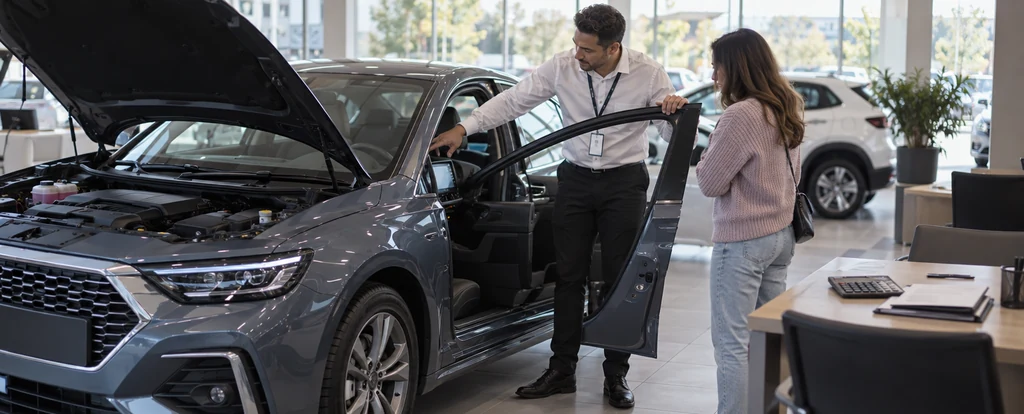
Car salespeople work the showroom floor of a dealership, showing new and used vehicles and guiding buyers through everything from the test drive to the paperwork. Unlike a sales representative, who manages an ongoing list of business clients, most of their work comes from walk-in and online enquiries, so building rapport quickly matters. Dealerships range from single-site family yards to large franchise groups, and many salespeople specialise in new cars, used cars or a particular brand.
How much do car salespersons earn?
The median full-time salary for a car salesperson is $68,400 per annum, before tax, up $14,400 since 2018.
Base salaries in this job are usually modest, and commission or a monthly bonus on top is where a lot of the earnings sit, so two people in the same showroom can take home quite different amounts. What you sell matters too: new cars, used cars, fleet deals and finance and insurance products each carry different margins. A franchise dealership in a busy metro area generally offers more traffic and bigger deals than a small yard, though pay varies by state and by dealer group.
What does a car salesperson do day to day?
The list below is what fills most weeks; the exact mix shifts with seniority and whatever stage the current work is at.
- Greeting customers on the showroom floor and working out what they need and can afford
- Demonstrating vehicle features, performance and safety systems, often during a test drive
- Negotiating price, trade-in value and finance terms until buyer and dealership agree
- Completing the sales paperwork and arranging registration, insurance and delivery
- Following up with past customers, using the CRM to prompt repeat sales and service referrals
What skills do car salespersons need?
Employers look for selling and negotiation, account and relationship management, backed by dealership management system (DMS) fluency and strong customer service.
Specialist skills
- Selling and negotiation
- Account and relationship management
Software and tools
- dealership management system (DMS)
- vehicle inventory database
- CRM software
- finance calculator
- email and phone systems
General skills
- Customer service
- Written communication
- Problem solving
- Time and deadline management
Is the job growing?
About 14,500 people work as car salespersons in Australia, and employment is projected to grow 7.3% over the decade to 2035. That's modest growth: demand is steady rather than booming.
How do you become a car salesperson?
Here's the path most car salespersons take, step by step.
- 1Get your driver's licence and finish Year 12 or equivalent
A full licence is effectively required, since you will be moving cars around the yard and taking customers on test drives. The most common qualification among car salespeople is Year 12 or below, held by 51% of them, so a degree is not the usual route in.
- 2Apply for a sales role or cadetship at a dealership
Most people learn the job on the floor. Large dealer groups often run structured sales cadetships or trainee positions that include product training on the brands they sell, while smaller yards tend to hire on attitude and customer service experience.
- 3Consider a Certificate III in Automotive Sales
The Certificate III in Automotive Sales (AUR31020) covers vehicle knowledge, sales process and compliance, and it can help if you are competing for a role without dealership experience. It is not a licensing requirement, so plenty of salespeople start without it.
- 4Learn the finance and compliance side
Understanding trade-in valuations, finance applications and the responsible lending rules your dealership works under makes you more useful to buyers and more valuable to an employer. Most of this is learned in-house from the business manager.
- 5Specialise where the margin is
Moving into fleet sales, prestige brands or finance and insurance is how many salespeople increase their earnings, because those deals carry higher margins and repeat business. It usually takes a few years of consistent sales before a dealership will move you into one of these areas.
Ready to apply as a car salesperson?
Whether you're working toward becoming a car salesperson or already are one and want a hand with the next step (sharpening your resume for ATS screening, tightening your cover letter, or knowing what you'll actually be asked at interview), here are examples grounded in this specific role, not generic templates.
What jobs can a car salesperson move to?
Moving into Sales Manager typically comes with the biggest pay rise, worth $70,800 a year more on average.
| Move to | Typical pay change | Overlap | Retraining |
|---|---|---|---|
| Sales Manager Car sales selling and negotiation skills support leading a sales team, though management study or experience is needed.Known move | +$70,800 | 33% | reskill |
| Mortgage Broker Car sales negotiation and commission-driven client work suit mortgage broking, though a finance qualification is needed.Known move | +$65,600 | 16% | reskill |
| Sales Representative Car sales product knowledge and closing skills transfer directly to selling other goods and services.Known move | +$19,600 | 91% | minimal |
| Key Account Manager Managing business accounts builds on the car salesperson's relationship and negotiation skills, with little extra training. | +$19,000 | 75% | minimal |
| Real Estate Agent Vehicle sales negotiating and client management transfer to property sales, with a certificate and licensing short course required.Known move | +$9,800 | 53% | short course |
Moves are chosen from Jobs and Skills Australia's Data on Occupation Mobility, which follows income tax records between 2011-12 and 2020-21, together with entry requirements and skill overlap. A known move is one people were seen making in that data. Pay change compares median full-time pay for the two roles.
Who works as a car salesperson?
The typical car salesperson is 40 years old; 84% are men, 77% work full-time, and full-timers average 45 hours a week.
- 40
- Median age
- 16%
- Female share
- 77%
- Full-time
- +5h
- vs all-jobs avg
What's it like being a car salesperson?
The job runs on the rhythm of the showroom and the sales month. Saturdays are among the busiest days, quiet weekdays can drag, and a target resets on the first of every month no matter how well the last one went. People who enjoy it tend to like the variety of customers, the quick feedback of a deal closing and the fact that effort shows up directly in what they earn.
What people like
- A deal closes and you know it. Unlike long projects where results arrive months later, a sale is agreed in an afternoon and the paperwork follows. That quick loop suits people who like visible progress.
- Commission rewards effort. A strong month shows up in your pay. Salespeople who build a repeat customer base and sell higher-margin vehicles can earn well above the base salary.
- You learn the product fast. Selling cars means knowing engines, safety systems, towing capacities and trim differences across a whole range, and that knowledge builds quickly because customers ask about it all day.
- Customers are different every day. A first-car buyer, a family upgrading to a seven-seater and a tradie replacing a ute all want different things, which keeps the conversations varied.
What people find hard
- Weekends and evenings are part of the roster. Dealerships are busiest when customers are free, so Saturday work is standard and late-night trading is common in some states. Rostered days off during the week are the usual trade-off.
- Income moves with the market. When interest rates rise or buyer confidence drops, showroom traffic falls and commission with it. A quiet quarter is felt in the pay packet, not just in the boredom.
- Most enquiries go nowhere. A large share of people who walk in or send an online enquiry are weeks or months from buying, and some are just looking. Handling that without losing patience is a big part of the job.
- The target resets every month. Whatever you sold last month, the counter starts again. That cycle suits some people and wears others down over a few years.
Based on our synthesis of professional-body surveys and public accounts of the role, not first-person verified reviews.
Which industries employ car salespersons?
Retail Trade employs the largest share of car salespersons, followed by Wholesale Trade.
Top employing industries
- 1Retail Trade
- 2Wholesale Trade
Ranked by employment share; the source doesn't publish an exact percentage per industry.
| Year 12 or below | 50.6% | |
|---|---|---|
| Certificate III/IV | 22.8% | |
| Diploma / Advanced Diploma | 9.8% | |
| Bachelor degree | 9.1% | |
| Postgraduate | 2.5% |
Will AI replace car salespersons?
AI has a moderate reach into this job. It is already used behind the scenes for lead scoring, online enquiry chatbots, vehicle listing descriptions and trade-in price guides, which trims the admin and the first round of customer contact. The parts that stay human are the ones customers judge you on: the test drive, the read on what someone can actually afford, and the negotiation over price and trade-in.
Share of typical working time by exposure level
- Showroom walkarounds and test drivesExplaining how a vehicle drives, whether a child seat fits or how a tow pack works happens in person and depends on reading the customer's reaction.30%low
- Negotiating price and trade-in valuePricing software suggests a valuation and a floor price for the trade-in, but the actual conversation about what the customer will accept is still handled at the desk.25%moderate
- Paperwork, finance applications and deliveryContract preparation, registration paperwork and finance lodgement are increasingly automated in dealership management systems, leaving the salesperson to check and explain the details.25%high
- Handling online and phone enquiriesDealership chat tools and automated follow-up emails now answer the first questions about stock, availability and price, so a salesperson often picks up a lead that has already been qualified.20%high
Common questions about becoming a car salesperson
Straight answers to the questions people ask most.
How much do car salespeople earn?
Full-time car salespeople earn a median of $68,400 per year before tax. Base salaries are usually lower than that figure, with commission and bonuses making up the difference, so your earnings depend heavily on how many vehicles you sell and what they are worth. It is a median for the occupation, not a rate an employer has to pay.
How do you become a car salesperson?
Most people apply directly to a dealership and learn on the job, which is why a degree is uncommon in the role. A full driver's licence is effectively required, and customer service experience from retail, hospitality or a call centre counts for a lot. Some dealerships run cadetships, and a Certificate III in Automotive Sales (AUR31026) can help if you have no sales background.
Are car salespeople in demand?
Car salespeople are currently not in shortage, and employment in the role is projected to grow 7.3% over the decade to 2035 over the decade to 2035. Hiring follows new and used vehicle sales, so openings tend to appear where dealership groups are expanding or replacing staff who leave. Turnover in the job is steady, which keeps entry-level positions coming up.
Will AI replace car salespeople?
Not entirely, but parts of the job are changing. Chat tools and dealer websites now handle the first round of online enquiries, and pricing software helps value trade-ins and set asking prices, which takes some guesswork out of the desk work. Test drives, reading whether a couple is serious, and the back-and-forth over a trade-in still happen face to face.
What can car salespeople move into?
Sales representative pays $19,600 more and uses the same closing and account skills on a different product. Real estate agent pays $9,800 more and calls on similar negotiation, though it needs a certificate and licensing short course. Key account manager pays $19,000 more and suits salespeople who have looked after fleet and business customers.
What are the hours like?
Full-time car salespeople average around 45 hours a week, which is longer than the standard week. Saturdays are usually the busiest trading day, so most rosters include weekend work with days off during the week. Evening trading varies by state and by dealership.
Related roles
- Sales Representative
- Sales Manager
- Real Estate Agent
- Key Account Manager
- Mortgage Broker
- Sales Representative
Not sure this is you? Take the career quiz and get a ranked shortlist of roles that fit how you like to work.