Home Manufacturing & Production
Coffee Roaster
Coffee roasters turn green coffee beans into the roasted product cafes and shops sell, adjusting heat, airflow and time to bring out the flavour of each batch.
- Median salary*
- $65,000
4.2%vs last year, before tax
- People employed
- 770
3.8%vs last year
- Projected growth*
- +7%
to 2035
- AI exposure*
- Moderate
- automation risk
- Average hours*
- 40/wk
matches all-jobs average
- Shortage status*
- Not in shortage
national
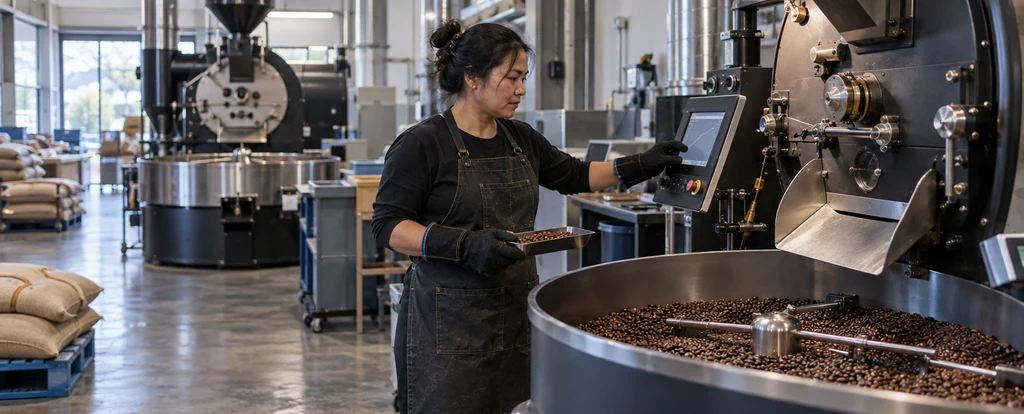
Coffee roasters work in a roastery, a warehouse unit or the back of a cafe, running batches of green beans through a roasting machine and tasting what comes out. The job mixes machine operation with sensory judgement and stockwork: setting a profile for a new origin, checking the house blend tastes the same as last week, then packing and sending the orders. It's often confused with barista work, but baristas make the coffee while roasters decide how the beans are roasted before they get there.
How much do coffee roasters earn?
The median full-time salary for a coffee roaster is $65,000 per annum, before tax, up $13,600 since 2018.
Pay moves with the employer and the size of the operation: a one-machine specialty roastery usually pays less than a wholesale business roasting for many cafes, and head roasters and production managers earn above the figure. Weekend and early-morning roasting sometimes attracts penalty rates or overtime, depending on the award or enterprise agreement covering the workplace.
What does a coffee roaster do day to day?
The list below is what fills most weeks; the exact mix shifts with seniority and whatever stage the current work is at.
- Selecting green beans and blending lots for different customers
- Setting and running roast profiles, watching heat, airflow and time
- Cupping roasted batches to check flavour and consistency
- Adjusting profiles between batches as beans and seasons change
- Packing, labelling and dispatching orders, and cleaning the roaster between runs
What skills do coffee roasters need?
Employers look for operations management, food safety and hygiene, plant and equipment operation, backed by Cropster fluency and strong attention to detail.
Specialist skills
- Operations management
- Food safety and hygiene
- Plant and equipment operation
- Process improvement
- Inventory management
Software and tools
- Cropster
- Artisan
- Probat roasting equipment
- Loring roaster
- Ikawa sample roaster
General skills
- Attention to detail
- Customer service
Is the job growing?
About 770 people work as coffee roasters in Australia, and employment is projected to grow 7% over the decade to 2035. That's modest growth: demand is steady rather than booming.
How do you become a coffee roaster?
Here's the path most coffee roasters take, step by step.
- 1Start in coffee or food production
Most roasters begin as baristas, packers or production assistants in a roastery, where you build palate and machine familiarity while being paid. That first job matters more than any course, because employers want someone who has already spent time around a machine and a cupping table.
- 2Learn roasting on the job
Training happens at the machine under a head roaster: logging profiles, cupping every batch and learning how heat, airflow and time change what ends up in the cup. Expect a year or two before you are trusted to set profiles on your own.
- 3Add formal study if you want a technical or management path
About 38% of people in the role hold a bachelor degree, and food science or food technology is a common fit, though it isn't a requirement for roasting itself. A Certificate III or IV in food processing covers hygiene, quality and production systems that larger roasteries value.
- 4Build sensory and business skills
Cupping courses and specialty coffee association training sharpen the tasting side, while learning green bean buying, pricing and wholesale accounts prepares you for the commercial part of the job. Small roasteries expect both.
- 5Move up to head roaster or production manager
After a few years, the step up usually means taking responsibility for the profile library, green stock and the roasting team, or running production across shifts in a larger business.
Ready to apply as a coffee roaster?
Whether you're working toward becoming a coffee roaster or already are one and want a hand with the next step (sharpening your resume for ATS screening, tightening your cover letter, or knowing what you'll actually be asked at interview), here are examples grounded in this specific role, not generic templates.
What jobs can a coffee roaster move to?
Moving into Brewer typically comes with the biggest pay rise, worth $20,600 a year more on average.
| Move to | Typical pay change | Overlap | Retraining |
|---|---|---|---|
| Brewer Coffee roasters bring beverage production, sensory analysis and quality control to brewing, though formal brewing study is needed. | +$20,600 | 37% | reskill |
| Distiller Coffee roasters bring roast profiling, sensory evaluation and batch consistency to distilling, with a short course covering spirit production. | +$5,200 | 50% | short course |
| Cheesemaker Coffee roasters bring food production hygiene, sensory testing and small-batch consistency to cheesemaking. | +$0 | 62% | minimal |
Moves are chosen from Jobs and Skills Australia's Data on Occupation Mobility, which follows income tax records between 2011-12 and 2020-21, together with entry requirements and skill overlap. A known move is one people were seen making in that data. Pay change compares median full-time pay for the two roles.
Who works as a coffee roaster?
The typical coffee roaster is 38 years old; 83% are men, 66% work full-time, and full-timers average 40 hours a week.
- 38
- Median age
- 17%
- Female share
- 66%
- Full-time
- +0h
- vs all-jobs avg
What's it like being a coffee roaster?
Roasting is production work with a craft at the centre of it. Days are built around batches, so you spend most of your time on your feet at the machine, checking temperatures and reading the smell and colour of a roast as it develops, then cupping what you made. People who enjoy it tend to like that mix of physical routine, sensory judgement and a finished product they can hand straight to a customer.
What people like
- You taste the result of every batch. Cupping is part of the job, so you get quick, direct feedback on decisions you made an hour earlier.
- Small batches, visible work. A day's roasting ends with something bagged, labelled and heading out to a cafe, rather than a task that disappears into a system.
- A craft with room to experiment. New origins, profile tweaks and blend adjustments are part of the work rather than an exception, and customers will tell you what they think of the result.
- Working with the cafes you supply. Wholesale relationships are often handled by the roaster, so you hear directly about how a blend is pouring.
What people find hard
- Standing, lifting and heat. Green bean sacks are heavy, the roastery is warm and chaff settles on everything, so it is physical work rather than a desk job.
- The roaster sets the pace. You can't rush a batch or walk away mid-roast, so the machine dictates the shape of the day, including early starts when orders are due.
- Repetition on the house blend. Roasting the same blend to the same profile week after week is steady work, and the variety comes from smaller orders and new crops.
- Cleaning is a real part of the job. Between batches there are chutes, trays and cooling pans to clean and fines to sweep up, and a dirty roaster shows in the cup.
Based on our synthesis of professional-body surveys and public accounts of the role, not first-person verified reviews.
Which industries employ coffee roasters?
Coffee and tea manufacturing employs the largest share of coffee roasters, followed by Beverage manufacturing.
Top employing industries
- 1Coffee and tea manufacturing
- 2Beverage manufacturing
- 3Wholesale trade
- 4Food and beverage services
- 5Retail trade
Ranked by employment share; the source doesn't publish an exact percentage per industry.
| Bachelor degree | 38% | |
|---|---|---|
| Diploma / Advanced Diploma | 24% | |
| Certificate III/IV | 20% | |
| Postgraduate | 10% | |
| Other | 8% |
Will AI replace coffee roasters?
Coffee roasting sits in the middle: the machinery and record-keeping are increasingly automated, while the tasting is not. Software such as Cropster handles profile logging, stock and ordering, and some roasteries run semi-automated machines, but someone still has to decide how a particular crop should roast and whether the batch in front of them is good enough to sell.
Share of typical working time by exposure level
- Buying and blending green coffeeDemand forecasting and stock tracking are handled well by software, but judging a new crop's moisture, density and likely roast behaviour is a sensory call.30%moderate
- Running roast profiles and logging batchesCropster and Artisan record the curve, repeat a saved profile and flag a batch that drifts, so much of the watching and comparing is done by software while you manage the machine.25%high
- Packing, labelling and sending ordersLarger roasteries automate weighing, sealing and labelling, though short runs and wholesale orders are still packed and checked by hand.25%moderate
- Cupping and grading batchesSmell, taste and the look of the bean decide whether a roast is right, which is the part of the job no software can grade for you.20%low
Moves least exposed to AI
These career moves from coffee roaster work are rated low for AI exposure:
- Distiller
Solid skill overlap (50%), short course to get there, and a low automation-risk profile.
- Brewer
Some skill overlap (37%), reskill to get there, and a low automation-risk profile.
Common questions about becoming a coffee roaster
Straight answers to the questions people ask most.
How much do coffee roasters earn?
Coffee roasters earn $65,000 per year before tax at the median for full-time work. Pay depends on the size of the employer and how much of the role is roasting rather than packing, deliveries and admin, and head roasters sit above that figure.
How do you become a coffee roaster?
There is no single qualification that gets you in; most people start in coffee or food production and learn at the machine. Time as a barista, packer or production assistant in a roastery builds the palate and machine hours employers look for, and a food processing certificate or food science degree helps if you want a technical or management path.
Are coffee roasters in demand?
Coffee roasters are currently not in shortage, and employment is projected to grow 7% over the decade to 2035. The occupation is small, around 770 people, so openings come mainly from roasteries hiring as they grow and from staff moving on rather than from large-scale recruitment.
Will AI replace coffee roasters?
AI and software already handle parts of the job, but not the tasting. Roasting software such as Cropster and Artisan logs curves, repeats saved profiles and tracks green stock and orders, which takes over much of the record-keeping. Judging a new crop, cupping a batch and deciding how to adjust the profile still comes down to a person at the machine.
What can coffee roasters move into?
Distillers earn $5,200 more than coffee roasters and the move makes sense because roast profiling and sensory work carry across, with a short course covering spirit production. Brewers earn $20,600 more but need formal brewing study, while cheesemakers earn about the same and take little retraining because food hygiene and batch consistency transfer directly. Many roasters eventually open or run their own roastery or supply a cafe they own, which is often where earnings grow.
What is the difference between a coffee roaster and a barista?
A barista prepares and serves coffee, while a roaster decides how the beans are roasted before they reach the machine. In small businesses the same person often does both, but roasting involves production schedules, green bean buying and quality control rather than service.
Related roles
Not sure this is you? Take the career quiz and get a ranked shortlist of roles that fit how you like to work.