Construction Estimator
Construction estimators work out what a building project will cost before it is built, so a builder can price a tender and a client can plan a budget.
- Median salary*
- $98,800
4.3%vs last year, before tax
- People employed
- 7,000
1.4%vs last year
- Projected growth
- +14.2%
to 2035
- AI exposure*
- Moderate
- automation risk
- Average hours
- 42/wk
+2h vs all jobs
- Shortage status
- Not in shortage
national
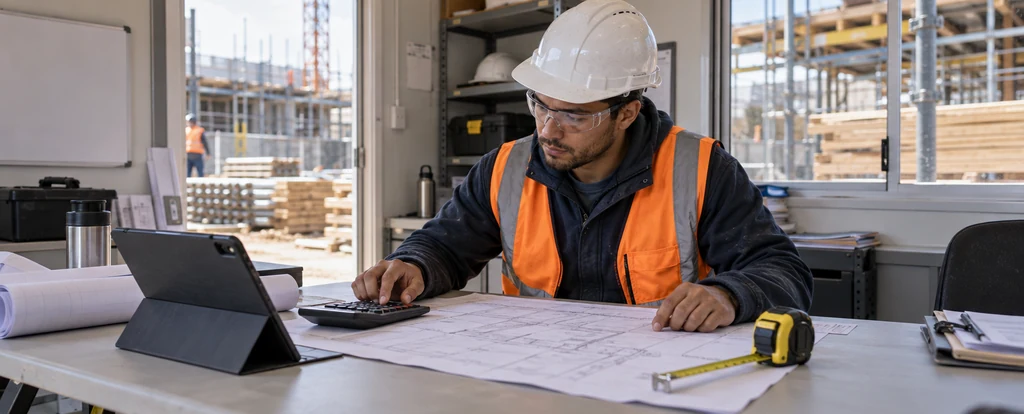
Most estimators work in an office, pricing jobs from drawings and specifications and heading to site when they need to check what is actually there. They sit between the design team and the project managers, turning plans into materials, labour and time. The role is often confused with quantity surveying, which covers similar measurement work but usually calls for a degree and professional accreditation.
How much do construction estimators earn?
The median full-time salary for a construction estimator is $98,800 per annum, before tax, up $20,900 since 2018.
Pay depends heavily on the sector and the type of employer: estimators pricing commercial and civil tenders for a head contractor generally earn more than those working on small residential jobs for a subcontractor. Experience counts for more than it does in many trades, and a senior estimator who carries bid responsibility or manages a team sits above the middle of the range. Pay also varies between capital cities and regional areas, and between salaried office roles and contract estimating work.
What does a construction estimator do day to day?
The list below is what fills most weeks; the exact mix shifts with seniority and whatever stage the current work is at.
- Preparing detailed cost estimates from architectural and engineering drawings
- Measuring and pricing materials, labour and equipment for each stage of a project
- Obtaining and comparing quotes from suppliers and subcontractors, often against a tender deadline
- Preparing tender documents and bills of quantities for submission
- Tracking actual costs against the estimate as the job runs and reporting where they diverge
What skills do construction estimators need?
Employers look for quoting and estimating, reading plans and specifications, budgeting and forecasting, backed by CostX fluency and strong stakeholder management.
Specialist skills
- Quoting and estimating
- Reading plans and specifications
- Budgeting and forecasting
- Financial analysis and modelling
- Building codes and standards
- Project management
Software and tools
- CostX
- Buildsoft Cubit
- Bluebeam Revu
- Procore
- Microsoft Excel
General skills
- Stakeholder management
- Attention to detail
Is the job growing?
About 7,000 people work as construction estimators in Australia, and employment is projected to grow 14.2% over the decade to 2035. That's healthy, above-average growth, and the role should stay in solid demand.
How do you become a construction estimator?
Here's the path most construction estimators take, step by step.
- 1Finish Year 12 with maths
Estimating is numbers work, and employers generally look for solid mathematics and an ability to read technical drawings. There is no single prerequisite, but a Year 12 certificate with maths keeps your options open.
- 2Take a construction qualification
A Certificate IV in Building and Construction (CPC40120) (Estimating) or a diploma in building and construction covers measurement, pricing and contracts, and is the usual route for people coming from a trade or straight from school. A bachelor degree in construction management or quantity surveying is the other common path, particularly with larger contractors.
- 3Learn the software employers use
Most estimating jobs use takeoff and estimating software such as Buildsoft Cubit or CostX alongside spreadsheets and a document tool like Bluebeam Revu. Coursework introduces some of it, but practising on real drawings is what makes you useful in your first job.
- 4Get site exposure through a cadetship or a trade background
A cadetship with a builder, or time on site as a carpenter or supervisor, teaches you how work is actually sequenced and what trades charge, which is the part of estimating that software cannot supply.
Ready to apply as a construction estimator?
Whether you're working toward becoming a construction estimator or already are one and want a hand with the next step (sharpening your resume for ATS screening, tightening your cover letter, or knowing what you'll actually be asked at interview), here are examples grounded in this specific role, not generic templates.
What jobs can a construction estimator move to?
Moving into Construction Manager typically comes with the biggest pay rise, worth $96,300 a year more on average.
| Move to | Typical pay change | Overlap | Retraining |
|---|---|---|---|
| Construction Manager Estimators bring cost planning and project knowledge to construction management, though a management qualification is needed.Known move | +$96,300 | 44% | reskill |
| Quantity Surveyor Estimators bring cost planning and measurement skills to quantity surveying, but the degree and professional accreditation must be completed.Known move | +$16,500 | 41% | requalify |
| Civil Engineer Estimators bring construction cost knowledge to civil engineering, but a full engineering degree is required.Known move | +$16,500 | 21% | requalify |
| Contract Administrator Estimators bring cost and building knowledge to contract administration, though contract law and administration study is needed.Known move | +$12,000 | 6% | reskill |
Moves are chosen from Jobs and Skills Australia's Data on Occupation Mobility, which follows income tax records between 2011-12 and 2020-21, together with entry requirements and skill overlap. A known move is one people were seen making in that data. Pay change compares median full-time pay for the two roles.
Who works as a construction estimator?
The typical construction estimator is 40 years old; 83% are men, 87% work full-time, and full-timers average 42 hours a week.
- 40
- Median age
- 17%
- Female share
- 87%
- Full-time
- +2h
- vs all-jobs avg
What's it like being a construction estimator?
Estimating runs on the tender calendar: quieter weeks for measurement, pricing and documentation, then a rush when a submission is due. Full-time estimators average 42 hours a week, and the days before a deadline run longer. It suits people who like detail and numbers but want to stay close to construction without managing crews on site.
What people like
- You see a project from the numbers up. Pricing a job means working through every trade and material, so an estimator often understands the build better than anyone else before it starts.
- Your work decides whether the job is won. A price that is too high loses the tender and one that is too low costs the company, so the estimate carries real weight in the business.
- The week is mostly indoors and predictable. Most of the time is spent at a desk with drawings, estimating software and spreadsheets, with site visits when a detail needs checking.
- You build a mental library of what things cost. Every project adds to your sense of what materials, trades and risks really cost, and that knowledge travels with you between employers.
What people find hard
- Tender deadlines bunch up. Several submissions can fall in the same fortnight, and the final few days before a closing date are long ones.
- You own your numbers. If a job is won on a price that turns out to be too low, the estimate is the first place people look for the reason.
- Designs change after you have priced them. Late variations mean reworking parts of the estimate, sometimes more than once on the same project.
- Measurement can be repetitive. Working through a set of drawings item by item is detailed and at times tedious, and it has to be accurate.
Based on our synthesis of professional-body surveys and public accounts of the role, not first-person verified reviews.
Which industries employ construction estimators?
Construction employs the largest share of construction estimators, followed by Manufacturing.
Top employing industries
- 1Construction
- 2Manufacturing
Ranked by employment share; the source doesn't publish an exact percentage per industry.
| Bachelor degree | 29.7% | |
|---|---|---|
| Certificate III/IV | 25.9% | |
| Year 12 or below | 17.2% | |
| Diploma / Advanced Diploma | 14.5% | |
| Postgraduate | 9.6% |
Will AI replace construction estimators?
Estimating sits in the middle: software already handles a large share of the measurement and arithmetic, while the judgement that decides a tender price stays with the estimator. Takeoff tools can read a digital model and produce quantities in minutes, so the human work moves to checking what they missed and working out what could go wrong on site. The role is shifting towards interpreting machine output rather than measuring everything by hand.
Share of typical working time by exposure level
- Measuring quantities from drawingsAutomatic takeoff tools can pull quantities straight from a digital model, so time goes into checking what the software has missed rather than counting items by hand.30%high
- Building up a tender priceSoftware stores rates and applies them quickly, but deciding which rate fits an unusual job and how much risk to add is still an estimator's call.30%moderate
- Obtaining and comparing subcontractor quotesComparison can be part automated, though judging whether a cheap quote is realistic, or whether a subcontractor has misread the scope, takes experience.20%moderate
- Site visits and talks with clients, architects and site staffWalking a site to check access, ground conditions or existing services is the part no model captures, and those observations often change the price.20%low
Moves least exposed to AI
These career moves from construction estimator work are rated low for AI exposure:
- Civil Engineer
Some skill overlap (21%), requalify to get there, and a low automation-risk profile.
Common questions about becoming a construction estimator
Straight answers to the questions people ask most.
How much do construction estimators earn?
The median full-time construction estimator earns $98,800 per year before tax, which means half earn more and half earn less. Pay rises with the size and complexity of the projects you price, and estimators working for head contractors on commercial or civil work tend to sit above that middle point. Location and whether the job includes bid responsibility also move the figure.
How do you become a construction estimator?
Most people enter through a Certificate IV or diploma in building and construction, or a construction management degree, and pick up the estimating skills on the job. 30% of the people working as construction estimators hold a Bachelor degree, which reflects what the current workforce holds rather than a requirement for entry. Coming from a trade, particularly carpentry or site supervision, is a common route because you already understand how work is sequenced and priced.
Are construction estimators in demand?
Construction estimators are currently not in shortage, and employment is projected to grow 14.2% over the decade to 2035. Because the work follows the building pipeline, hiring rises and falls with the level of construction activity in your area rather than with one industry. When you are applying, ask about the employer's forward tender pipeline, since that is what determines whether there is work to price.
Will AI replace construction estimators?
AI and estimating software already do part of the work: automatic takeoff tools can pull quantities from a digital model far faster than measuring a set of drawings by hand. What they do not replace is judgement about site conditions, what subcontractors will actually charge, and which risks belong in the price. The job is shifting towards checking and interpreting automated output rather than disappearing.
What is the difference between a construction estimator and a quantity surveyor?
An estimator prices tenders for a builder, working from drawings before the job starts and usually staying involved as costs come in. A quantity surveyor does similar measurement and cost planning but generally needs a degree and professional accreditation, and often works for clients or consultancies rather than contractors. Estimators do move across, and the pay is $16,500 more, but the degree and accreditation have to be completed first.
Can construction estimators move into other roles?
Construction management is a common next step, where the pay is $96,300 more, though a management qualification is usually needed. Contract administration is another, using the same understanding of contracts and project costs. People also come into estimating from site supervision and carpentry, where practical knowledge shortens the time it takes to become useful.
Related roles
Not sure this is you? Take the career quiz and get a ranked shortlist of roles that fit how you like to work.