Correctional Facility Manager
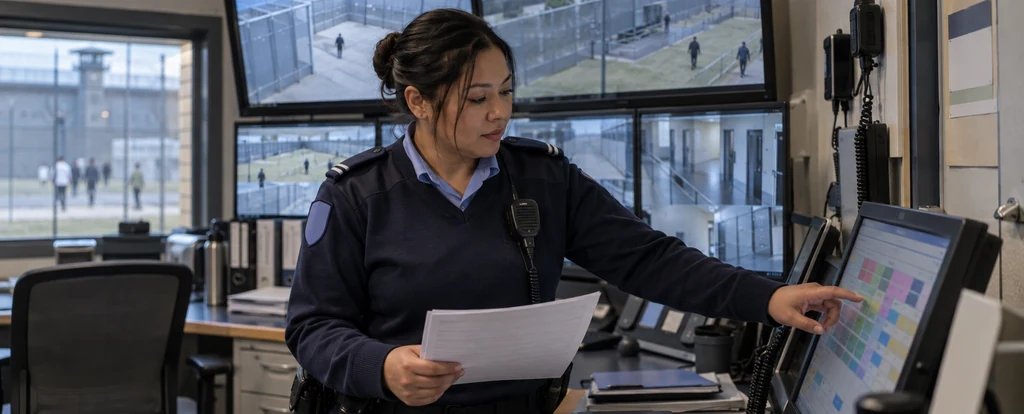
Correctional facility managers run a prison, remand centre or youth detention facility, accountable for its security, for the staff who deliver it and for how people in custody are treated.
- Median salary*
- $166,400
4.3%vs last year, before tax
- People employed
- 610
1.7%vs last year
- Projected growth*
- +3%
to 2035
- AI exposure*
- Low
- automation risk
- Average hours*
- 42/wk
+2h vs all jobs
- Shortage status*
- Not in shortage
national
They are the most senior operational leaders on site, working from an office inside the facility but spending much of the day moving through it. They answer to a corrective services commissioner or department executive for security, staffing, budgets and lawful and humane custody. The role is different from that of a corrections officer, which is shift based and directly hands on with prisoners; a facility manager works through other people and through systems.
How much do correctional facility managers earn?
The median full-time salary for a correctional facility manager is $166,400 per annum, before tax, up $35,100 since 2018.
Pay is set by state and territory corrective services agreements, so the same title can carry a different figure depending on where you work. Within a system, classification level, the security rating of the site and shift or on-call allowances move the number most, with maximum security and complex remand facilities typically sitting above lower security sites at the same band.
What does a correctional facility manager do day to day?
The list below is what fills most weeks; the exact mix shifts with seniority and whatever stage the current work is at.
- Overseeing security operations, staff rosters and emergency response, including lock-downs and incident reviews
- Leading custodial officers, case managers and support staff, covering recruitment, performance and conduct matters
- Keeping the facility compliant with corrections legislation, operating standards and human rights obligations
- Managing the facility budget, procurement, contracts and maintenance
- Liaising with courts, police, health services and community agencies on offender management and reintegration
What skills do correctional facility managers need?
Employers look for operations management, regulatory compliance, risk and internal controls, backed by Offender management information systems fluency and strong people leadership.
Specialist skills
- Operations management
- Regulatory compliance
- Risk and internal controls
- Budgeting and forecasting
Software and tools
- Offender management information systems
- UKG Dimensions (rostering)
- CCTV and access control platforms
- Microsoft Power BI
- Incident reporting systems
General skills
- People leadership
- Stakeholder management
- Safety and compliance awareness
- Written communication
Is the job growing?
About 610 people work as correctional facility managers in Australia, and employment is projected to grow 3% over the decade to 2035. That's modest growth: demand is steady rather than booming.
How do you become a correctional facility manager?
Here's the path most correctional facility managers take, step by step.
- 1Start in custodial work
Most managers come up through the ranks, beginning as a corrections officer or custodial officer. Entry usually needs a police check, a medical and sometimes a fitness assessment, and recruits complete a paid training course before working the floor.
- 2Add a relevant qualification
A diploma or bachelor degree in criminology, justice, social work, psychology or management supports promotion, and 38% of the current workforce holds a bachelor degree. TAFE and several universities offer justice and criminology courses that fit around shift work.
- 3Move into supervisory ranks
Promotion usually comes through running a unit or a shift, then managing a function such as security, programs, case management or intelligence. These roles are where you build the rostering, incident command and staff management experience the manager job assumes.
- 4Take on facility-wide responsibility
Deputy and operations manager roles, or acting stints as facility manager, are the usual step before the top job. They carry the on-call and emergency management duties, and they are what a selection panel looks for.
- 5Consider postgraduate study
A graduate certificate or masters in management, public policy or justice administration is common for applicants moving into senior executive ranks, particularly where the role sits alongside policy and departmental work. It is not required to be appointed.
Ready to apply as a correctional facility manager?
Whether you're working toward becoming a correctional facility manager or already are one and want a hand with the next step (sharpening your resume for ATS screening, tightening your cover letter, or knowing what you'll actually be asked at interview), here are examples grounded in this specific role, not generic templates.
What jobs can a correctional facility manager move to?
None of the roles correctional facility managers typically move into pay more than the role itself. Aged Care Manager is the closest match. If a bigger salary is the goal, moving up into a senior or principal position within the role is usually the faster route than moving sideways.
| Move to | Typical pay change | Overlap | Retraining |
|---|---|---|---|
| Aged Care Manager Facility management, compliance and staff leadership carry into aged care management, with reskilling in aged care standards and funding. | −$49,400 | 71% | reskill |
| Community Services Manager The manager brings custodial operations leadership, staff and budget management to community services, with reskilling in community sector practice. | −$52,500 | 94% | reskill |
| Security Manager Custodial security, risk management and team leadership carry into commercial security management, with a short course for licensing. | −$53,000 | 79% | short course |
| Retirement Village Manager Managing a secure residential facility, staff and compliance carries into retirement village management with minimal retraining. | −$57,200 | 67% | minimal |
Moves are chosen from Jobs and Skills Australia's Data on Occupation Mobility, which follows income tax records between 2011-12 and 2020-21, together with entry requirements and skill overlap. A known move is one people were seen making in that data. Pay change compares median full-time pay for the two roles.
Who works as a correctional facility manager?
The typical correctional facility manager is 49 years old; 66% are men, 94% work full-time, and full-timers average 42 hours a week.
- 49
- Median age
- 34%
- Female share
- 94%
- Full-time
- +2h
- vs all-jobs avg
What's it like being a correctional facility manager?
The job has a fixed rhythm of briefings, meetings and reports, broken by incidents that override everything else on the calendar. Accountability is constant, and much of the work is spent balancing staff welfare, prisoner safety, budget limits and the expectations of a department and a public that watch closely. People who do it well tend to be steady under pressure, comfortable with procedure and good at reading a room.
What people like
- You see the whole operation. Running the site means understanding security, programs, health, education, staffing and budgets at once, and decisions you make show up in how the place runs within days.
- The problems are real and consequential. Reducing assaults, improving reintegration or fixing a staffing gap changes outcomes for people in custody, for staff and for the community they return to.
- A structured career with solid pay. Corrective services offers clear classification levels, defined progression and superannuation arrangements that make long service in the system worthwhile.
- A close team. Custodial work builds strong working relationships, and managers who back their staff usually find that loyalty comes back during incidents and difficult periods.
What people find hard
- The facility never closes. You carry on-call responsibility and can be called in at any hour; even when you are off site, serious incidents come to you first.
- Every serious incident lands on your desk. Assaults, self-harm, deaths in custody and escapes trigger internal reviews and sometimes coronial or parliamentary scrutiny, and the manager is the accountable witness.
- Staffing shortages shape the week. Recruitment and retention in corrections are difficult in many jurisdictions, so rosters run short and the manager absorbs the pressure of filling shifts safely.
- Political and public attention. Decisions that are operationally sound can still be criticised publicly, and managers need to be comfortable explaining their reasoning to media, ministers and inquiries.
Based on our synthesis of professional-body surveys and public accounts of the role, not first-person verified reviews.
Which industries employ correctional facility managers?
Correctional and detention services employs the largest share of correctional facility managers, followed by Central government administration.
Top employing industries
- 1Correctional and detention services
- 2Central government administration
- 3Investigation and security services
- 4Health care and social assistance
Ranked by employment share; the source doesn't publish an exact percentage per industry.
| Bachelor degree | 38% | |
|---|---|---|
| Diploma / Advanced Diploma | 24% | |
| Certificate III/IV | 20% | |
| Postgraduate | 10% | |
| Other | 8% |
Will AI replace correctional facility managers?
This is a low-exposure job. The technology around it, offender management information systems, rostering platforms, CCTV and access control, and reporting dashboards, handles records, schedules and analysis, but the decisions that define the role involve people in custody, staff on shift and immediate risk. Authority to lock down a unit, approve a use of force or answer to a coroner cannot be delegated to software.
Share of typical working time by exposure level
- Emergency response and decisions about people in custodyManaging an assault, a cell extraction or a medical emergency in real time depends on reading the situation, the staff available and the person in front of you.45%low
- Rostering and staff deploymentRostering systems flag coverage gaps and shift entitlements, but the manager still decides who works where and how to fill a short shift safely.20%moderate
- Incident reports and compliance recordsStructured reporting tools speed up incident documentation and audit trails, while the judgement about what happened and what to change stays with the manager.20%moderate
- Budget tracking and procurement paperworkFinancial and purchasing systems produce the forecasts and variance reports, and the manager interprets them and decides what to cut or defend.15%moderate
Common questions about becoming a correctional facility manager
Straight answers to the questions people ask most.
How much does a correctional facility manager earn?
$166,400 per annum, before tax. State and territory corrective services agreements set the bands, so pay varies by jurisdiction, classification level and the security rating of the facility, and shift, on-call and higher duties allowances add to the base.
How do you become a correctional facility manager?
You normally start as a corrections officer, build experience in unit and operations management, and apply for a deputy or facility manager role from there. A diploma or degree in criminology, justice or management helps, and every applicant goes through police checks and security clearance.
Are correctional facility managers in demand?
Correctional facility managers are currently not in shortage, and employment is projected to grow 3% over the decade to 2035. With about 610 people working in the role, openings come mainly from retirements and from managers moving into related government and community roles, so vacancies are fewer but turn over steadily.
Will AI replace correctional facility managers?
No, and the exposure is low because the core of the job is authority over people in a secure setting. Rostering software, offender management systems, CCTV analytics and reporting dashboards already handle scheduling, record keeping and trend analysis, but decisions about use of force, cell placement, staff discipline and emergency response stay with the manager on duty.
What related roles could a correctional facility manager move into?
Several moves draw on the same staff, budget and compliance leadership. Community services management uses the same operational skills with reskilling in community sector practice and pays $52,500 less, while commercial security management carries custodial security and risk work across with a short licensing course and pays $53,000 less. Managing an aged care facility is a closer fit than it looks, since both involve a regulated residential site, and it pays $49,400 less.
What are the hours like?
Average full-time hours are 42 a week, and 94% of people in the role work full time. The office hours are regular, but senior managers rotate through on-call rosters and can be recalled for incidents at any time, which is the main reason the role suits someone who lives reasonably close to the facility.
Related roles
- Community Services Manager
- Security Manager
- Retirement Village Manager
- Aged Care Manager
- Corrections Officer
- Security Manager
Not sure this is you? Take the career quiz and get a ranked shortlist of roles that fit how you like to work.