Diabetes Educator
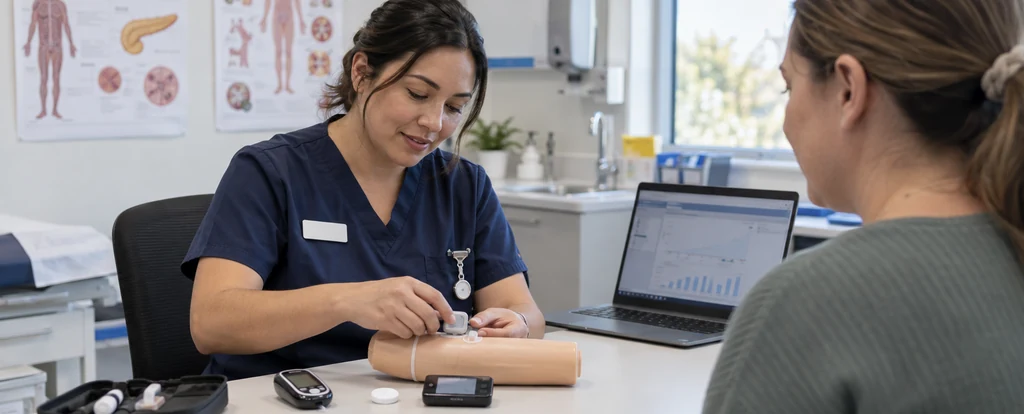
Diabetes educators teach people with diabetes how to manage the condition day to day, from glucose monitoring and insulin doses to food, exercise and foot care.
- Median salary*
- $104,000
4.5%vs last year, before tax
- People employed
- 1,000
0.0%vs last year
- Projected growth*
- +12%
to 2035
- AI exposure*
- Low
- automation risk
- Average hours*
- 38/wk
−2h vs all jobs
- Shortage status*
- Not in shortage
national
Diabetes educators work in hospitals, community health services, general practice and specialist diabetes clinics, usually alongside endocrinologists, dietitians and podiatrists. Most come from nursing or dietetics and then specialise, which makes the role narrower than either: the whole job is helping someone manage their own diabetes. Many hold credentialling through the Australian Diabetes Educators Association, which recognises supervised training in diabetes education.
How much do diabetes educators earn?
The median full-time salary for a diabetes educator is $104,000 per annum, before tax, up $22,100 since 2018.
Most diabetes educators are employed under a nursing or allied health award or enterprise agreement rather than a dedicated classification, so the agreement you sit under does most of the work. Public hospital and community health roles step up with annual increments, while private practice and consulting often pay by session or hour. Credentialling, seniority and any clinical leadership duties push the figure higher.
What does a diabetes educator do day to day?
The list below is what fills most weeks; the exact mix shifts with seniority and whatever stage the current work is at.
- Assessing how someone is managing their diabetes, including glucose readings, medication and daily routine
- Building an education plan around the person's diet, work, cultural background and other health conditions
- Teaching blood glucose monitoring, insulin injection and pump or sensor use, then checking technique at follow-ups
- Running group sessions on carbohydrate counting, physical activity and foot care
- Coordinating care with general practitioners, endocrinologists, dietitians and podiatrists, and writing reports back to the referring doctor
What skills do diabetes educators need?
Employers look for health education and advice, patient care and support, clinical assessment and treatment, backed by Blood glucose meters fluency and strong written communication.
Specialist skills
- Health education and advice
- Patient care and support
- Clinical assessment and treatment
- Care planning and coordination
- Medication management
Software and tools
- Blood glucose meters
- Continuous glucose monitoring systems
- Insulin pumps
- Electronic health records (e.g. Best Practice)
- NDSS (National Diabetes Services Scheme) portal
General skills
- Written communication
- Empathy and interpersonal care
Is the job growing?
About 1,000 people work as diabetes educators in Australia, and employment is projected to grow 12% over the decade to 2035. That's healthy, above-average growth, and the role should stay in solid demand.
How do you become a diabetes educator?
Here's the path most diabetes educators take, step by step.
- 1Qualify as a health professional
Nursing, dietetics, pharmacy and podiatry are the usual entry points, each needing a bachelor degree plus registration or accreditation with the relevant body. About 52% of people in the role hold a Bachelor degree.
- 2Build clinical experience
Two or three years of practice, ideally in chronic disease, primary care or hospital wards, gives you a base for a diabetes caseload and is what most employers expect before you specialise.
- 3Complete postgraduate study in diabetes education
A graduate certificate or graduate diploma in diabetes education is the standard qualification, offered by several universities and usually taken while you keep working.
- 4Get credentialled
Credentialling through the Australian Diabetes Educators Association requires the postgraduate qualification plus supervised practice hours. It is not mandatory to work in the field, but it is what referral pathways and most employers recognise.
- 5Keep registration and credentialling current
Nurses renew AHPRA registration each year with continuing professional development, and credentialling renews on its own cycle, so the hours are worth planning into your year.
Ready to apply as a diabetes educator?
Whether you're working toward becoming a diabetes educator or already are one and want a hand with the next step (sharpening your resume for ATS screening, tightening your cover letter, or knowing what you'll actually be asked at interview), here are examples grounded in this specific role, not generic templates.
What jobs can a diabetes educator move to?
Moving into Nurse Manager typically comes with the biggest pay rise, worth $34,200 a year more on average.
| Move to | Typical pay change | Overlap | Retraining |
|---|---|---|---|
| Nurse Manager Diabetes educators bring clinical leadership and service coordination, and can move into nurse management with further study in health management. | +$34,200 | 13% | requalify |
| Nurse Practitioner Diabetes educators bring advanced chronic disease management and patient education, and can become nurse practitioners with further study and endorsement. | +$10,000 | 76% | requalify |
| Remote Area Nurse Diabetes educators bring chronic disease expertise and self-management teaching, suiting remote area nursing where diabetes care is central, with cultural safety training. | +$7,800 | 70% | short course |
| Nurse Educator Diabetes educators bring patient teaching and diabetes expertise, and can become nurse educators with further study in education. | +$5,200 | 23% | requalify |
Moves are chosen from Jobs and Skills Australia's Data on Occupation Mobility, which follows income tax records between 2011-12 and 2020-21, together with entry requirements and skill overlap. A known move is one people were seen making in that data. Pay change compares median full-time pay for the two roles.
Who works as a diabetes educator?
The typical diabetes educator is 50 years old; 90% are women, 39% work full-time, and full-timers average 38 hours a week.
- 50
- Median age
- 90%
- Female share
- 39%
- Full-time
- −2h
- vs all-jobs avg
What's it like being a diabetes educator?
The week runs on appointments: assessments, teaching sessions and follow-ups, with group programs breaking up the clinic days. The pressure comes from the gap between what a person needs and what a funded session allows, and from how slowly blood glucose control moves. It suits people who like explaining things plainly and can keep encouraging someone through setbacks without taking them personally.
What people like
- People arrive ready to act. The appointment is often the moment someone decides to change something, which makes the teaching land better than it does in a rushed ward round.
- You watch the change over time. A person who could not count carbohydrates or change a pump site in March is managing both by spring, and you were part of that shift.
- The teaching is practical. Sessions cover concrete things: how to read a sensor trace, what to do before a night shift, how to handle a birthday party with type 1 diabetes.
- The caseload spans every age. A newly diagnosed child, a woman with gestational diabetes and a retired tradesperson with type 2 can all appear in the same week.
What people find hard
- Appointments are short in hospital clinics. Half an hour has to cover monitoring, medication and whatever the person actually came to ask, and the next opening can be months away.
- Some conversations start too late. Part of the caseload arrives after years of high glucose or with a new complication, and progress from there is slow and uneven.
- Things outside the clinic undo good work. The cost of sensors, shift work or insecure housing can override careful teaching, which is hard to watch.
- The paperwork is steady. Care plans, referral letters, credentialling records and National Diabetes Services Scheme forms take a real share of each week.
Based on our synthesis of professional-body surveys and public accounts of the role, not first-person verified reviews.
Which industries employ diabetes educators?
Hospitals employs the largest share of diabetes educators, followed by Community health services.
Top employing industries
- 1Hospitals
- 2Community health services
- 3General practice and primary care
- 4Specialist diabetes services
- 5Aged care services
Ranked by employment share; the source doesn't publish an exact percentage per industry.
| Bachelor degree | 52% | |
|---|---|---|
| Postgraduate | 26% | |
| Diploma / Advanced Diploma | 13% | |
| Other | 9% |
Will AI replace diabetes educators?
Exposure here is low, because the job is a conversation that changes what someone does at home. Continuous glucose monitoring downloads, pump data and the National Diabetes Services Scheme portal make the numbers easier to review, but deciding what a pattern means for that person, and getting them to act on it, is still the educator's work. The technology removes some administration and leaves the teaching intact.
Share of typical working time by exposure level
- One-on-one education and coachingTeaching someone to adjust their insulin for a restaurant meal, then checking at the next visit that they can do it alone, is a conversation no tool holds.35%low
- Running group self-management programsHandouts and course content can be drafted and updated faster with AI, while running the session and reading how the room is responding stays with the educator.25%low
- Reviewing glucose, pump and sensor dataSoftware now flags overnight rises and time-in-range automatically, but working out whether a pattern reflects the basal rate, a late meal or an infection needs clinical judgement about that person.20%moderate
- Coordinating care and writing reportsReferral letters, care plans and updates back to the general practitioner are the most automatable part of the week, and templates have already cut the time they take.20%low
Common questions about becoming a diabetes educator
Straight answers to the questions people ask most.
How much does a diabetes educator earn?
Diabetes educators earn $104,000 per annum, before tax. Pay follows the award or enterprise agreement you are employed under, so it shifts with classification, sector and whether the role is public or private. Treat the figure as a guide rather than a fixed rate.
How do you become a diabetes educator?
Qualify as a nurse, dietitian, pharmacist or podiatrist first, work in clinical practice for a few years, then complete postgraduate study in diabetes education. Credentialling through the Australian Diabetes Educators Association requires that qualification and a set number of supervised practice hours. It is a second career step rather than a first job.
Are diabetes educators in demand?
Diabetes educators are currently not in shortage, and employment is projected to grow 12% over the decade to 2035. About 1,000 people work in the role, so the number of openings in any year is small even when demand for diabetes care holds steady.
Will AI replace diabetes educators?
AI is unlikely to replace this role, because the core of it is a person changing their habits with a clinician's support. What it does change is the data and the paperwork: continuous glucose monitoring downloads, recall lists and report writing are all getting faster to produce. The reviewing and documenting are the exposed parts, not the teaching.
What is the difference between a diabetes educator and a dietitian?
Both teach self-management, but a dietitian's training is in nutrition and a diabetes educator's covers the whole condition, including insulin doses, monitoring technology and foot care. Many dietitians credential as diabetes educators and work across both.
What hours do diabetes educators work?
Full-time hours average 38 a week and 39% of people in the role work full time, mostly in standard clinic and outpatient hours. Part-time and job-share arrangements are common, which suits people who come to the role later in a nursing or dietetics career.
Related roles
Not sure this is you? Take the career quiz and get a ranked shortlist of roles that fit how you like to work.