Remote Area Nurse
Remote area nurses deliver primary and emergency care in isolated communities, where they are often the only health professional for hundreds of kilometres.
- Median salary*
- $111,800
3.8%vs last year, before tax
- People employed*
- 3,800
0.0%vs last year
- Projected growth*
- +12%
to 2035
- AI exposure*
- Low
- automation risk
- Average hours*
- 38/wk
−2h vs all jobs
- Shortage status*
- In shortage (regional)
national
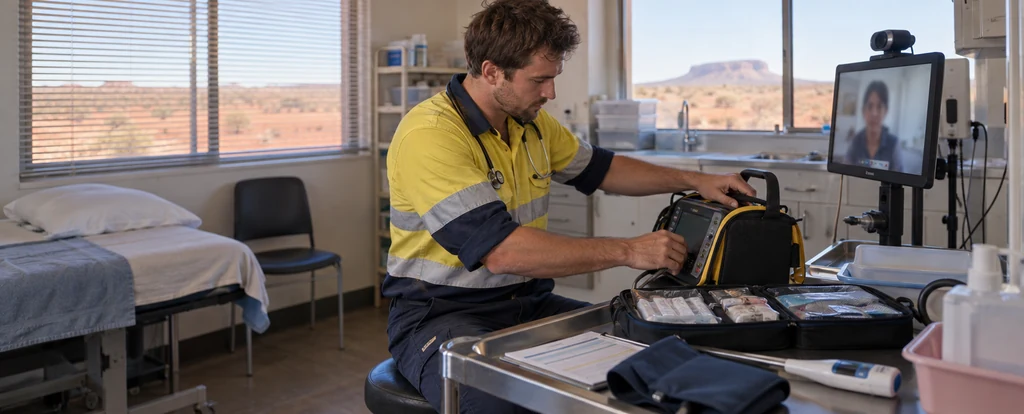
Remote area nurses work in clinics, small hospitals and health services across rural and remote Australia, usually as the most senior clinician on site. That sets the role apart from hospital nursing: instead of one specialty, they cover primary care, chronic disease, maternal health and emergencies, often with a doctor available only by phone or telehealth. State health departments, Aboriginal and Torres Strait Islander health services and community health services are the main employers.
How much do remote area nurses earn?
The median full-time salary for a remote area nurse is $111,800 per annum, before tax, up $23,200 since 2018.
Pay depends heavily on where you work and which agreement covers you. State and territory health departments set most remote area nursing pay through enterprise agreements that add remote and isolation allowances, extra leave and subsidised housing, so two jobs with the same title can pay quite differently. Agency and short-term contract work often pays more per hour, usually without the same leave, housing or continuity.
What does a remote area nurse do day to day?
The list below is what fills most weeks; the exact mix shifts with seniority and whatever stage the current work is at.
- Running clinic days of booked and walk-in appointments across primary and urgent care
- Assessing and treating patients when the nearest doctor is a phone call or a telehealth screen away
- Stabilising emergencies such as trauma, chest pain or obstetric complications for evacuation
- Managing chronic disease and medications, including supplying or prescribing under remote area protocols where legislation allows
- Coordinating visiting specialists, telehealth follow-ups and shared care with Aboriginal health workers
What skills do remote area nurses need?
Employers look for patient care and support, clinical assessment and treatment, medication management, backed by Communicare fluency and strong written communication.
Specialist skills
- Patient care and support
- Clinical assessment and treatment
- Medication management
- Care planning and coordination
- Emergency response
- Health education and advice
- Infection control and hygiene
Software and tools
- Communicare
- My Health Record
- Best Practice Software
- Telehealth platforms
- Defibrillators
General skills
- Written communication
Is the job growing?
About 3,800 people work as remote area nurses in Australia, and employment is projected to grow 12% over the decade to 2035. That's healthy, above-average growth, and the role should stay in solid demand.
How do you become a remote area nurse?
Here's the path most remote area nurses take, step by step.
- 1Complete a Bachelor of Nursing
Three years full time, or a two-year graduate entry degree if you already hold a bachelor's in another field. The program must be accredited by the Australian Nursing and Midwifery Accreditation Council.
- 2Register with AHPRA as a registered nurse
Registration through the Nursing and Midwifery Board of Australia is required before you can practise. It is renewed each year with continuing professional development.
- 3Build generalist hospital experience
Most employers expect at least two to three years of nursing, ideally across emergency, acute and community settings, because remote practice leaves little room to look things up mid-shift.
- 4Add remote and emergency qualifications
Courses in remote emergency care, pharmacotherapeutics for nurses and immunisation are commonly required and often funded by employers. Some states also require a scheduled medicines endorsement before you can supply or prescribe under protocol.
- 5Apply through a health service or agency
State health departments, Aboriginal and Torres Strait Islander health services and nursing agencies recruit for remote posts. Orientation and cultural safety training are usually provided, and contracts range from a few months to ongoing.
Ready to apply as a remote area nurse?
Whether you're working toward becoming a remote area nurse or already are one and want a hand with the next step (sharpening your resume for ATS screening, tightening your cover letter, or knowing what you'll actually be asked at interview), here are examples grounded in this specific role, not generic templates.
What jobs can a remote area nurse move to?
Moving into Director of Nursing typically comes with the biggest pay rise, worth $23,400 a year more on average.
| Move to | Typical pay change | Overlap | Retraining |
|---|---|---|---|
| Director of Nursing Remote area nurses bring clinical leadership and isolated practice experience to director of nursing roles, which require management development. | +$23,400 | 40% | reskill |
| Nurse Practitioner Remote area nurses bring advanced assessment and autonomous practice to nurse practitioner roles, which require a master's degree and endorsement. | +$2,200 | 62% | requalify |
| Registered Nurse Remote area nurses bring broad generalist and emergency skills to registered nurse roles in hospitals and community health settings. | +$2,200 | 67% | minimal |
| Midwife Remote area nurses bring maternal and emergency care experience to midwifery, which requires a recognised midwifery qualification. | −$1,900 | 52% | short course |
| Diabetes Educator Remote area nurses bring chronic disease management and patient education skills to diabetes educator roles, with credential recognition. | −$7,800 | 70% | minimal |
Moves are chosen from Jobs and Skills Australia's Data on Occupation Mobility, which follows income tax records between 2011-12 and 2020-21, together with entry requirements and skill overlap. A known move is one people were seen making in that data. Pay change compares median full-time pay for the two roles.
Who works as a remote area nurse?
The typical remote area nurse is 42 years old; 88% are women, 65% work full-time, and full-timers average 38 hours a week.
- 42
- Median age
- 88%
- Female share
- 65%
- Full-time
- −2h
- vs all-jobs avg
What's it like being a remote area nurse?
The work follows a steady clinic rhythm broken by emergencies, and the nurse usually carries more clinical responsibility than a hospital role at the same level. Community connection is central: many remote area nurses know their patients' families and come back to the same town year after year, which makes continuity of care possible. It suits nurses who are comfortable deciding alone and who want breadth rather than a single specialty.
What people like
- Autonomy you don't get in a hospital. You assess, decide and treat without waiting for a doctor's review, and your scope of practice often grows with the training your health service provides.
- Seeing a patient's whole health picture. The same nurse manages a chronic condition, a pregnancy and an acute injury over months or years, so you see whether a treatment actually worked.
- Relationships with the community. Knowing families, local history and who to call makes a real difference to whether patients turn up and follow through with care.
- Packaged conditions and travel. Remote allowances, extra leave, subsidised housing and travel to communities that most Australians never visit are part of many contracts.
What people find hard
- Responsibility without a doctor on site. Decisions about whether to treat locally or call a retrieval aircraft rest with you, and a long drive or flight can shape how a patient does.
- Distance from family and services. You may be hours from a supermarket, a dentist or your own family, and in a small town there is little anonymity after hours.
- Weather and access problems. Wet season roads, cancelled flights and washed-out airstrips can delay transfers and force you to manage a deteriorating patient for longer than planned.
- Staff turnover. Short contracts mean colleagues change often, and experienced remote nurses spend part of each year orienting newcomers and covering gaps.
Based on our synthesis of professional-body surveys and public accounts of the role, not first-person verified reviews.
Which industries employ remote area nurses?
Government Health Departments employs the largest share of remote area nurses, followed by Aboriginal and Torres Strait Islander Health Services.
Top employing industries
- 1Government Health Departments
- 2Aboriginal and Torres Strait Islander Health Services
- 3Community Health Services
- 4Hospitals
- 5Primary Care
Ranked by employment share; the source doesn't publish an exact percentage per industry.
| Bachelor degree | 52% | |
|---|---|---|
| Postgraduate | 26% | |
| Diploma / Advanced Diploma | 13% | |
| Other | 9% |
Will AI replace remote area nurses?
AI exposure in this role is low. The core of the job is hands-on assessment, emergency stabilisation and relationships with patients in places where a system cannot stand in, and those parts stay with the nurse. What has changed is the support around the work: telehealth links specialist advice into the clinic, remote monitoring devices let some chronic disease checks happen at home, and electronic records such as Communicare and My Health Record replace paper files and speed up handover.
Share of typical working time by exposure level
- Emergency and trauma responseStabilising someone after a car accident on a remote highway, or managing a difficult birth before the retrieval plane lands, depends on hands-on skills no system can supply.30%low
- Clinic assessment and treatmentTriage tools and decision support help flag risk, but examining a patient, working out what is wrong and starting treatment stays with the nurse.25%moderate
- Health education and community careExplaining a treatment in a patient's first language, or running a screening program alongside Aboriginal health practitioners, is relationship work that translation tools only partly assist.25%low
- Chronic disease management and medicationRecall systems and home monitoring do some of the tracking for diabetes and blood pressure, but adjusting a care plan needs a clinician who knows the patient.20%moderate
Common questions about becoming a remote area nurse
Straight answers to the questions people ask most.
How much do remote area nurses earn?
Remote area nurses earn a median of $111,800 per annum, before tax. Remote and isolation allowances, the state or territory agreement you work under, your classification level and whether housing and travel are included all move the total.
How do you become a remote area nurse?
You complete a nursing degree, register with AHPRA, and work for a few years in hospital or community nursing before applying for remote posts. Employers usually also expect remote emergency care training and, in some states, extra certification to supply or prescribe medicines.
Are remote area nurses in demand?
Remote area nurses are currently in shortage in regional areas, and employment across the role is projected to grow 12% over the decade to 2035. For someone with the right experience that means ongoing vacancies in rural and remote health services, though the total number of positions is small next to hospital nursing.
Will AI replace remote area nurses?
No. Assessing, treating and stabilising patients in person is not work AI does, and exposure in this role is low. What changes is the support around it: telehealth brings specialist advice into the clinic, remote monitoring lets some chronic disease checks happen at home, and electronic records speed up handover.
What can remote area nurses move into?
Nurse practitioner is a common next step and pays $2,200 more, though it needs a master's degree and endorsement. Returning to hospital work as a registered nurse uses the same broad skills and pays $2,200 more. Director of nursing roles pay $23,400 more and suit nurses who take on management development.
Do you need a driver's licence to work as a remote area nurse?
Usually yes. Many posts involve driving to outstations, bush clinics or airstrips on unsealed roads, and some employers ask for a manual licence and four-wheel-drive experience. It is worth asking about the driving involved in a particular posting before you accept it.
Related roles
Not sure this is you? Take the career quiz and get a ranked shortlist of roles that fit how you like to work.