Fashion Stylist
Fashion stylists choose and combine the clothing and accessories that give a shoot, campaign, event or client its look.
- Median salary*
- $65,000
4.3%vs last year, before tax
- People employed
- 340
13.3%vs last year
- Projected growth*
- +1.5%
to 2035
- AI exposure*
- Moderate
- automation risk
- Average hours*
- 40/wk
matches all-jobs average
- Shortage status*
- Not in shortage
national
Fashion stylists work with garments that already exist, selecting, fitting and combining them rather than designing or making them. Most work in retail, media and advertising, or freelance alongside photographers, art directors and hair and makeup teams. A typical week mixes shoot days with sourcing trips, fittings and the admin that keeps a wardrobe rail moving.
How much do fashion stylists earn?
The median full-time salary for a fashion stylist is $65,000 per annum, before tax, up $13,700 since 2018.
How you work matters more than anything else here. Retail and media employers pay award or enterprise agreement rates for in-house stylist roles, while freelance stylists quote a day rate that has to cover prep, fittings and returns as well as the shoot itself. Assistants earn less than leads and department heads, and commercial or advertising work generally pays better than editorial.
What does a fashion stylist do day to day?
The list below is what fills most weeks; the exact mix shifts with seniority and whatever stage the current work is at.
- Pulling a wardrobe for a shoot, sourcing pieces from designers, retailers, hire houses and archives
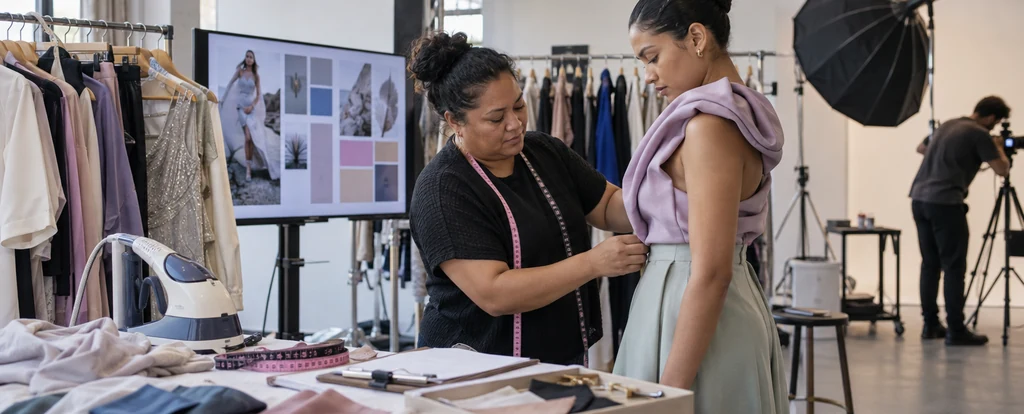
- Fitting garments on models and clients, pinning and adjusting so the clothes sit properly on camera
- Building mood boards and shot lists with the photographer and art director before a shoot day
- Styling on set through the day, steaming, changing and keeping the rail in order between setups
- Tracking budgets, hire fees and returns so borrowed stock goes back on time
What skills do fashion stylists need?
Employers look for visual design, creative software production, content creation and writing, backed by Adobe Photoshop fluency and strong client relationships and advisory.
Specialist skills
- Visual design
- Creative software production
- Content creation and writing
- Marketing analytics
Software and tools
- Adobe Photoshop
- Adobe InDesign
- Canva
- Microsoft Excel
- Airtable
General skills
- Client relationships and advisory
- Written communication
- Attention to detail
Is the job growing?
About 340 people work as fashion stylists in Australia, and employment is projected to grow 1.5% over the decade to 2035. That's modest growth: demand is steady rather than booming.
How do you become a fashion stylist?
Here's the path most fashion stylists take, step by step.
- 1Learn the basics of styling
A certificate, diploma or short course in fashion styling, fashion business or visual merchandising at TAFE or a private college covers trend research, wardrobe, mood boards and how a shoot day runs. Courses run from a few months to a year, and many include a work placement.
- 2Assist established stylists
Assisting is how most people learn the job: prep, steaming, returns, and watching how a senior stylist handles a client, a budget and a difficult fitting. Assistants are usually paid a day rate, though work on student and portfolio shoots often is not.
- 3Build a portfolio of styled work
A portfolio of styled shoots, even test shoots with friends and emerging photographers, is what gets you hired. E-commerce and catalogue styling are a common first paid job because the volume of work is steady and the briefs are clear.
- 4Choose a specialty and set up as a freelancer
Stylists tend to settle into editorial, advertising, bridal, celebrity or personal styling, and many register an ABN, take out public liability insurance and invoice clients directly. Retailers, magazines and production companies also hire in-house stylists on award or enterprise agreement rates.
Ready to apply as a fashion stylist?
Whether you're working toward becoming a fashion stylist or already are one and want a hand with the next step (sharpening your resume for ATS screening, tightening your cover letter, or knowing what you'll actually be asked at interview), here are examples grounded in this specific role, not generic templates.
What jobs can a fashion stylist move to?
Moving into Art Director typically comes with the biggest pay rise, worth $37,700 a year more on average.
| Move to | Typical pay change | Overlap | Retraining |
|---|---|---|---|
| Art Director A stylist's visual judgement and trend awareness support art direction, with short course training in campaign and editorial concepts. | +$37,700 | 48% | short course |
| Photographer A fashion stylist's understanding of composition, lighting and shoot needs carries into photography work. | +$30,700 | 63% | minimal |
| Social Media Content Creator A fashion stylist's eye for looks and trends supports creating and presenting visual content for social media brands. | +$5,200 | 76% | minimal |
| Costume Designer Costume design builds on a stylist's wardrobe and character knowledge, with retraining in costume construction and screen production. | +$5,200 | 33% | reskill |
| Fashion Designer A stylist's trend and garment knowledge supports fashion design, with retraining in patternmaking, textiles and range development. | −$5,500 | 43% | reskill |
Moves are chosen from Jobs and Skills Australia's Data on Occupation Mobility, which follows income tax records between 2011-12 and 2020-21, together with entry requirements and skill overlap. A known move is one people were seen making in that data. Pay change compares median full-time pay for the two roles.
Who works as a fashion stylist?
The typical fashion stylist is 32 years old; 82% are women, 52% work full-time, and full-timers average 40 hours a week.
- 32
- Median age
- 82%
- Female share
- 52%
- Full-time
- +0h
- vs all-jobs avg
What's it like being a fashion stylist?
The job runs on two kinds of day: prep, which is research, sourcing, fittings and paperwork, and shoot days, which are long, collaborative and driven by a schedule shared with photographers, art directors and hair and makeup. Stylists who enjoy it tend to be organised, comfortable negotiating with brands and hire houses, and happy to work to someone else's brief as well as their own taste. The creative decisions are constant, but they come wrapped in logistics.
What people like
- Seeing a look come together. A rail of borrowed clothing turns into an image that carries the campaign, and that moment keeps most stylists in the job.
- The work changes every week. One week you are on a location shoot, the next you are in a showroom pulling options for a client's event, so the job rarely settles into routine.
- Your taste is the product. Trend knowledge, colour sense and an eye for proportion are used every day, and clients pay for that judgement rather than for your time alone.
- Flexible freelance schedule. Freelancers can turn work down or take a quiet month between jobs, as long as they can carry the quiet months financially.
What people find hard
- Long days on location. Call times can start before sunrise and shoot days run until the last setup is finished, with heavy garment bags to move, steam and repack.
- Budgets limit the creative idea. The look you want often costs more than the production can spend, so much of the work is finding alternatives that land close to it for less.
- A lot of the job is admin. Returns, hire fees, receipts and wardrobe tracking take up hours that have nothing to do with the creative side of styling.
- Uneven income when freelance. Shoots are booked in clusters, and a quiet month means no pay while insurance, storage and equipment costs keep running.
Based on our synthesis of professional-body surveys and public accounts of the role, not first-person verified reviews.
Which industries employ fashion stylists?
Retail Trade employs the largest share of fashion stylists, followed by Professional, Scientific and Technical Services.
Top employing industries
- 1Retail Trade
- 2Professional, Scientific and Technical Services
- 3Information Media and Telecommunications
- 4Arts and Recreation Services
- 5Manufacturing
Ranked by employment share; the source doesn't publish an exact percentage per industry.
| Bachelor degree | 38% | |
|---|---|---|
| Diploma / Advanced Diploma | 24% | |
| Certificate III/IV | 20% | |
| Postgraduate | 10% | |
| Other | 8% |
Will AI replace fashion stylists?
Fashion styling sits in the middle: AI tools are genuinely useful for research, mood boards and admin, but they cannot dress a person or judge how a garment falls under the lights on the day. Generative image tools and e-commerce platforms now produce basic styled product shots, which trims some catalogue work. On-set styling and client-facing work stay hands-on, which is what keeps the overall exposure moderate.
Share of typical working time by exposure level
- Fitting garments on models and clientsPinning, adjusting and seeing how fabric sits on a real body at that moment is physical, practical work that no tool can do remotely.30%low
- Mood boards and shot planningImage generation and visual search can fill a mood board in minutes, though the final direction still rests on a stylist's read of the brand and the brief.25%high
- Styling on set and last-minute changesTwo setups into a beach shoot, a stylist might swap a heavy knit for a swim piece because the first look reads too dark on camera and the light is going.25%low
- Sourcing searches and returns adminFinding a specific piece across suppliers, tracking hire fees and getting borrowed stock back on time is largely software work, and search tools are getting quicker at it.20%high
Common questions about becoming a fashion stylist
Straight answers to the questions people ask most.
How much do fashion stylists earn?
Fashion stylists earn a median of $65,000 per year before tax, based on full-time workers. Freelance day rates can look higher, but they have to cover preparation days, fittings, returns, insurance and equipment. Assistants and early-career stylists sit below the median, while leads who run their own teams and budgets earn more.
How do you become a fashion stylist?
Most stylists start by assisting someone experienced while building a portfolio, often after a styling or fashion course at TAFE or a private college. The first paid work is usually e-commerce, catalogue or retail styling, with editorial and advertising coming as your book and contacts grow.
Are fashion stylists in demand?
Fashion stylists are currently not in shortage, and employment is projected to grow 1.5% over the decade to 2035 over the decade to 2035. With about 340 people working in the role nationally, the market is small, so openings are often filled through contacts and reputation rather than advertised.
Will AI replace fashion stylists?
AI is changing parts of the job rather than removing it. Sourcing, mood boards and e-commerce catalogue work are the exposed areas, and some simple product shoots now use AI-generated images instead of a full styling team. Fitting on real people, on-set decisions and client relationships stay hands-on.
What can fashion stylists move into?
Stylists often move into social media content creation ($5,200 more in median pay), where the same eye for looks and trends applies, or into photography ($30,700 more) and art direction ($37,700 more), which build on composition and visual judgement. Many experienced stylists also go freelance or run their own styling business, and that is often where earnings grow, since day rates and client lists are theirs to build. Moving into fashion design is possible but needs retraining in patternmaking and textiles, and median pay there is $5,500 less.
Do you need a degree to be a fashion stylist?
No qualification is legally required, and stylists come from degrees, diplomas and short courses alike. Employers and clients look for a portfolio and evidence you can run a shoot day, so a course that includes practical styling work and industry placement is worth more than the certificate on its own.
Related roles
- Social Media Content Creator
- Art Director
- Photographer
- Costume Designer
- Fashion Designer
- Social Media Content Creator
Not sure this is you? Take the career quiz and get a ranked shortlist of roles that fit how you like to work.