Fire Safety Engineer
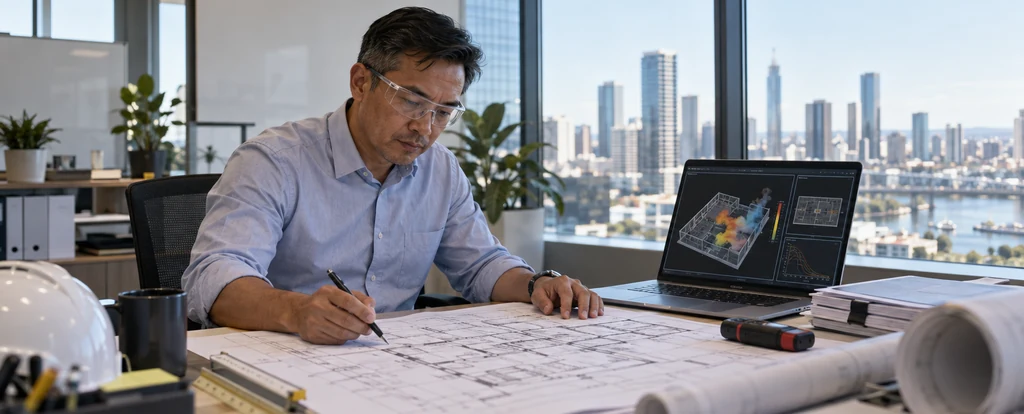
Fire safety engineers work out how a building would behave in a fire and design the measures that let people escape and limit the damage.
- Median salary*
- $117,000
4.2%vs last year, before tax
- People employed
- 560
6.7%vs last year
- Projected growth*
- +8%
to 2035
- AI exposure*
- Moderate
- automation risk
- Average hours*
- 40/wk
matches all-jobs average
- Shortage status*
- In shortage
national
Most fire safety engineers work in engineering consultancies, joining project teams alongside architects, structural engineers, builders and certifiers. Their distinguishing skill is the performance-based argument: where a building can't meet the code's deemed-to-satisfy provisions, they model fire and smoke to show that a different design meets the same safety objectives. That report can go to a certifier, council or fire authority as part of a development approval, so the reasoning has to hold up outside the office.
How much do fire safety engineers earn?
The median full-time salary for a fire safety engineer is $117,000 per annum, before tax, up $24,500 since 2018.
What you earn depends on the sector and the responsibility you carry, because a consultancy, a building regulator and an infrastructure owner each set their own bands. Chartered status through Engineers Australia, and registration as a fire safety engineer where your state requires it, both affect the scope of work you can take on. Because registration is state-based, the rules where you intend to work are worth checking before you plan a move.
What does a fire safety engineer do day to day?
The list below is what fills most weeks; the exact mix shifts with seniority and whatever stage the current work is at.
- Assessing architectural drawings and specifications against the National Construction Code and the fire safety standards it calls up
- Running fire and smoke simulations in tools such as Fire Dynamics Simulator and Pathfinder to test how a space fills with smoke and how long occupants have to leave
- Designing performance-based solutions, from stair pressurisation to extended travel distances, where a building can't meet the deemed-to-satisfy provisions
- Inspecting sites and completed buildings to check that fire doors, compartmentation and suppression systems were built as designed
- Writing the fire engineering reports that certifiers, councils and fire authorities rely on when they approve a design
What skills do fire safety engineers need?
Employers look for engineering design and analysis, building codes and standards, risk and internal controls, backed by Fire Dynamics Simulator (FDS) fluency and strong problem solving.
Specialist skills
- Engineering design and analysis
- Building codes and standards
- Risk and internal controls
- Regulatory compliance
- Project engineering and delivery
- Field inspection and testing
Software and tools
- Fire Dynamics Simulator (FDS)
- PyroSim
- Pathfinder
- Revit
- AutoCAD
General skills
- Problem solving
Is the job growing?
About 560 people work as fire safety engineers in Australia, and employment is projected to grow 8% over the decade to 2035. That's modest growth: demand is steady rather than booming.
How do you become a fire safety engineer?
Here's the path most fire safety engineers take, step by step.
- 1Start with an engineering degree
A four-year Bachelor of Engineering in civil, mechanical or structural engineering is the usual base, and taking any fire safety electives on offer makes the next step easier.
- 2Add postgraduate fire safety study
Fire safety engineering is taught mainly at postgraduate level, with a small number of universities, including the University of Queensland, offering graduate certificates, diplomas and masters. This is where you cover fire dynamics, egress modelling and performance-based code work.
- 3Take a graduate role in a consultancy or authority
Most people start in a fire engineering consultancy, a building surveyor's office or a fire authority, working on real projects under senior engineers. The supervised project work in these first years is what later credentials are assessed against.
- 4Work towards chartered status
Engineers Australia's chartered credential generally follows about four years of professional experience after your degree, and gives clients and certifiers a way to judge your competence. Registration as a fire safety engineer is separate and state-based; some states, Victoria among them, register this group as building practitioners.
- 5Keep the code knowledge current
The National Construction Code is updated on a three-year cycle, so continuing professional development is part of staying registered and staying employable.
Ready to apply as a fire safety engineer?
Whether you're working toward becoming a fire safety engineer or already are one and want a hand with the next step (sharpening your resume for ATS screening, tightening your cover letter, or knowing what you'll actually be asked at interview), here are examples grounded in this specific role, not generic templates.
What jobs can a fire safety engineer move to?
Moving into Mechanical Engineer typically comes with the biggest pay rise, worth $18,900 a year more on average.
| Move to | Typical pay change | Overlap | Retraining |
|---|---|---|---|
| Mechanical Engineer Fire safety engineers bring smoke control and fire suppression knowledge to mechanical engineering, needing requalification in mechanical design. | +$18,900 | 25% | requalify |
| Electrical Engineer Fire safety engineers bring fire detection and emergency lighting knowledge to electrical engineering, needing a short course in electrical design. | +$15,800 | 50% | short course |
| Civil Engineer Fire safety engineers bring building code and egress design knowledge to civil engineering, needing a short course in civil works. | −$1,700 | 50% | short course |
| Structural Engineer Fire safety engineers bring passive fire protection and structural fire design knowledge, needing reskilling in structural analysis. | −$1,700 | 38% | reskill |
Moves are chosen from Jobs and Skills Australia's Data on Occupation Mobility, which follows income tax records between 2011-12 and 2020-21, together with entry requirements and skill overlap. A known move is one people were seen making in that data. Pay change compares median full-time pay for the two roles.
Who works as a fire safety engineer?
The typical fire safety engineer is 37 years old; 86% are men, 89% work full-time, and full-timers average 40 hours a week.
- 37
- Median age
- 14%
- Female share
- 89%
- Full-time
- +0h
- vs all-jobs avg
What's it like being a fire safety engineer?
Fire safety engineers move between the desk and the site: a week might hold a modelling session on an apartment tower, an inspection of a warehouse fit-out and a call with an architect about stair pressurisation. The deadlines come from development approvals and construction programs, so the work arrives in bursts, and each report has to stand up when a certifier or a fire brigade officer reads it. It suits engineers who like testing a design against evidence and explaining their reasoning to people who are not engineers.
What people like
- Problems the code doesn't answer directly. Performance-based work is where the engineering happens: you build a case from first principles and defend it, rather than matching clauses to a floor plan.
- You see the building go up. Site inspections put you inside the apartments, hospitals and warehouses you helped design, which is a different satisfaction from desk-only work.
- A small field where reputations are visible. With only a few hundred practitioners nationally, consultants, certifiers and fire brigade officers tend to know each other, so the quality of your reports travels.
- Variety in building types. A month can cover a data centre, a shopping centre refurbishment and a school upgrade, each with different egress, detection and suppression problems.
What people find hard
- Deadlines set by approvals, not by the project team. Development applications and construction programs fix the dates, so several reports can fall in the same fortnight and the modelling doesn't get shorter because a date moved.
- You are often the one saying the design doesn't comply. Architects, builders and clients would rather hear yes, and holding the line on a travel distance or a missing compartment wall is a routine part of the job.
- Designs change after your report is issued. A substituted door, an extra service penetration or a changed ceiling plan can undo assumptions you modelled, so you return to site and check what was actually built.
- Roles cluster in the larger cities. Because the profession is small, most openings sit with consultancies in Sydney, Melbourne and Brisbane, and changing employers often means relocating.
Based on our synthesis of professional-body surveys and public accounts of the role, not first-person verified reviews.
Which industries employ fire safety engineers?
Professional, Scientific and Technical Services employs the largest share of fire safety engineers, followed by Construction.
Top employing industries
- 1Professional, Scientific and Technical Services
- 2Construction
- 3Public Administration and Safety
- 4Manufacturing
- 5Property Operators and Real Estate Services
Ranked by employment share; the source doesn't publish an exact percentage per industry.
| Bachelor degree | 52% | |
|---|---|---|
| Postgraduate | 26% | |
| Diploma / Advanced Diploma | 13% | |
| Other | 9% |
Will AI replace fire safety engineers?
Fire safety engineering sits in the middle band: the calculations, code checks and report drafting are steadily being automated, while the judgement calls that decide whether a design is safe are not. Simulation software has handled the heavy mathematics for years, and AI is now speeding up model setup, code searching and first drafts. What it cannot do is take professional responsibility for a performance-based argument that a certifier, council or fire authority has to accept.
Share of typical working time by exposure level
- Checking designs against the National Construction CodeCode search and drawing comparison tools are getting faster, though applying a clause to a real floor plan, and knowing when a performance solution is needed, still takes experience.30%moderate
- Fire and smoke modellingFDS, PyroSim and Pathfinder already run the physics, and AI is speeding up mesh setup and parameter studies, but choosing the design fire and judging whether the results are credible is still the engineer's call.25%moderate
- Site inspections and as-built verificationChecking that fire doors, penetrations and suppression systems match the design happens in a real building, and software can record what is there but not judge whether it complies.25%low
- Writing fire engineering reportsStandard clauses, summaries and first drafts are increasingly assembled with AI assistance, which trims the typing but leaves the reasoning, and the accountability, with the engineer.20%high
Moves least exposed to AI
These career moves from fire safety engineer work are rated low for AI exposure:
- Civil Engineer
Solid skill overlap (50%), short course to get there, and a low automation-risk profile.
Common questions about becoming a fire safety engineer
Straight answers to the questions people ask most.
How much does a fire safety engineer earn?
A fire safety engineer earns $117,000 per year, before tax. That is a median, so half earn more and half earn less, and chartered status, state registration and the sector you work in all move the figure.
How do you become a fire safety engineer?
The usual route is a four-year engineering degree followed by postgraduate study in fire safety engineering, which most people take as a graduate certificate, diploma or masters. From there you join a consultancy, a building surveyor's office or a fire authority and build supervised project experience towards chartered status.
Are fire safety engineers in demand?
Fire safety engineers are currently in shortage nationally, and employment is projected to grow 8% over the decade to 2035. The field is small and specialised, so demand follows construction and development activity rather than general hiring.
Will AI replace fire safety engineers?
Not entirely, though the modelling and drafting parts of the job are changing fastest. AI speeds up simulation setup, code searching and first drafts of reports, while the judgement on whether a performance-based design is safe, and the professional accountability for it, stays with the engineer.
What else can a fire safety engineer move into?
Civil and structural engineering are common moves, since building codes, fire resistance and load paths overlap and the retraining is measured in months rather than years. Electrical engineering builds on detection and emergency lighting work and pays $15,800 more. Experienced engineers also move to the client side with government, health or defence building owners, or set up their own consultancies, which is often where earnings grow.
Do fire safety engineers need to be registered?
It depends on the state. Some states, Victoria among them, register fire safety engineers as building practitioners, which means meeting that state's experience and assessment requirements, while elsewhere chartered status with Engineers Australia is the credential clients ask about.
Related roles
- Civil Engineer
- Structural Engineer
- Electrical Engineer
- Mechanical Engineer
- Civil Engineer
- Structural Engineer
Not sure this is you? Take the career quiz and get a ranked shortlist of roles that fit how you like to work.