Hospital Orderly
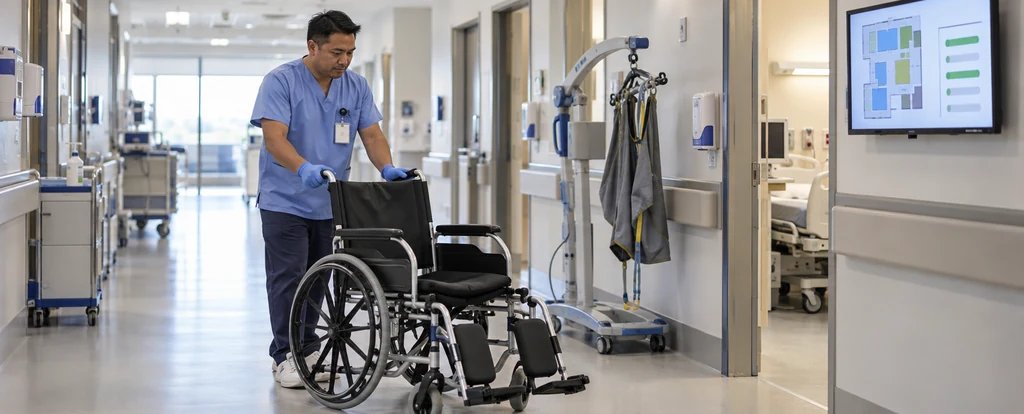
Hospital orderlies move patients, equipment and supplies around a hospital so clinical staff can stay with the people in their care.
- Median salary*
- $61,400
3.9%vs last year, before tax
- People employed
- 14,900
2.1%vs last year
- Projected growth
- +24.7%
to 2035
- AI exposure*
- Low
- automation risk
- Average hours
- 42/wk
+2h vs all jobs
- Shortage status
- Not in shortage
national
Orderlies work across a whole hospital rather than in one ward, moving patients between beds, theatres, imaging and discharge areas, and shifting the equipment, linen and specimens that keep those areas running. They are the people clinical staff call when a patient needs to be somewhere else quickly, including during emergency codes. Most work in public and private hospitals on rotating shifts, and the job stays separate from nursing: orderlies move and support patients, but they do not assess or treat them.
How much do hospital orderlys earn?
The median full-time salary for a hospital orderly is $61,400 per annum, before tax, up $12,800 since 2018.
Most hospital orderlies are covered by a public hospital enterprise agreement or a private hospital award, and rates differ between states and health services. Penalty rates for nights, weekends and public holidays are a normal part of the job, so total earnings often sit above the base rate, while casual and agency shifts pay a loading instead of paid leave.
What does a hospital orderly do day to day?
The list below is what fills most weeks; the exact mix shifts with seniority and whatever stage the current work is at.
- Moving patients by wheelchair, trolley or bed between wards, theatres, imaging and discharge areas
- Using hoists, slide sheets and bed movers to transfer patients safely, including those who cannot weight-bear
- Assembling, positioning and collecting medical equipment, beds and furniture around the hospital
- Running linen, waste, specimens and stores between departments through the shift
- Answering emergency calls and code pages, and helping clinical staff with a resuscitation or a patient who has fallen
What skills do hospital orderlys need?
Employers look for patient care and support, infection control and hygiene, plant and equipment operation, backed by Patient hoists and slide sheets fluency and strong safety and compliance awareness.
Specialist skills
- Patient care and support
- Infection control and hygiene
- Plant and equipment operation
- Cleaning and grounds maintenance
Software and tools
- Patient hoists and slide sheets
- Wheelchairs and patient transport trolleys
- Bed movers and lifting equipment
- Two-way radios and paging systems
- Patient flow and bed management systems
General skills
- Safety and compliance awareness
- Physical stamina and dexterity
- Written communication
Is the job growing?
About 14,900 people work as hospital orderlys in Australia, and employment is projected to grow 24.7% over the decade to 2035. That's very strong growth. Few roles in Australia are expanding this fast, and it points to solid demand for years to come.
How do you become a hospital orderly?
Here's the path most hospital orderlys take, step by step.
- 1Check what the health service asks for
The role needs no degree or registration, but every employer requires a police check, and some states ask for a working with children check. Hospitals also want evidence of immunisation and a manual handling induction before you work on the floor.
- 2Take a Certificate III in Health Services Assistance
This certificate covers patient handling, infection control and assisting clinical staff, and takes about six to twelve months at TAFE or a private provider. Larger hospitals tend to prefer it, though it is not mandatory.
- 3Or learn on the job
Many hospitals hire orderlies without a certificate and train them in patient transport, hoists, slide sheets and emergency procedures during a probation period. It suits people who need to start earning straight away, but it can narrow which hospitals will consider you.
- 4Apply through hospital networks
Public health services advertise on their own careers sites and run bulk recruitment rounds, while private hospitals and casual staffing agencies hire throughout the year. Casual or agency shifts are a common way in and carry a loading in place of paid leave.
Ready to apply as a hospital orderly?
Whether you're working toward becoming a hospital orderly or already are one and want a hand with the next step (sharpening your resume for ATS screening, tightening your cover letter, or knowing what you'll actually be asked at interview), here are examples grounded in this specific role, not generic templates.
What jobs can a hospital orderly move to?
Moving into Registered Nurse typically comes with the biggest pay rise, worth $52,600 a year more on average.
| Move to | Typical pay change | Overlap | Retraining |
|---|---|---|---|
| Registered Nurse The hospital orderly brings ward familiarity and patient handling, but becoming a registered nurse requires a nursing degree and registration.Known move | +$52,600 | 27% | requalify |
| Aged Care Worker The hospital orderly brings patient handling and care routines, but needs an aged care certificate to work in residential care.Known move | +$30,200 | 29% | reskill |
| Operating Theatre Technician The hospital orderly brings patient movement and theatre support habits, and a short course qualifies as an operating theatre technician.Known move | +$19,200 | 75% | short course |
| Dialysis Technician The hospital orderly brings hospital routines and equipment handling, and can train as a dialysis technician with a short course. | +$8,800 | 65% | short course |
| Assistant in Nursing The hospital orderly already assists with patient movement and ward routines, and a short course opens assistant in nursing work.Known move | +$3,600 | 53% | short course |
Moves are chosen from Jobs and Skills Australia's Data on Occupation Mobility, which follows income tax records between 2011-12 and 2020-21, together with entry requirements and skill overlap. A known move is one people were seen making in that data. Pay change compares median full-time pay for the two roles.
Who works as a hospital orderly?
The typical hospital orderly is 48 years old; 60% are men, 57% work full-time, and full-timers average 42 hours a week.
- 48
- Median age
- 40%
- Female share
- 57%
- Full-time
- +2h
- vs all-jobs avg
What's it like being a hospital orderly?
The rhythm of the job comes from the hospital rather than from a caseload: transport jobs arrive by radio or through a bed management system, and orderlies spend most of a shift walking between departments. It suits people who like being on the move, working with their hands and belonging to a team that gets called on when something urgent happens. It is physical work in a place where people are often having a hard day, and the roster includes nights, weekends and public holidays.
What people like
- You see how a hospital works. Orderlies pass through wards, theatres, imaging and the emergency department in a single shift, so they learn the layout and the people faster than staff based in one unit.
- The work ends when the shift does. There is no caseload to take home and no paperwork waiting, which matters to people who have come from jobs where the day follows them.
- You are relied on at the sharp end. During a code or after a patient falls, the orderly is one of the first people called, and that trust is a real part of the job.
- The tasks change through the shift. One hour is a discharge, the next a theatre transfer, the next a specimen run, which suits people who dislike doing the same thing all day.
What people find hard
- Patient handling takes a toll. Lifting and repositioning patients, sometimes with equipment that is not where it should be, is the main source of injury in the job, and back and shoulder problems build up over a career.
- Long shifts on your feet. Full-time orderlies average 42 hours a week, much of it spent walking and standing, and the roster includes nights, weekends and public holidays.
- Quiet stretches, then sudden pressure. Jobs can queue up with nothing urgent, then three calls arrive at once and each one is someone waiting in a corridor.
- You are close to hard moments. Orderlies move patients who are frightened, confused or dying, and they are in the room when families are having the worst day of their year.
Based on our synthesis of professional-body surveys and public accounts of the role, not first-person verified reviews.
Which industries employ hospital orderlys?
Health Care and Social Assistance employs the largest share of hospital orderlys.
Top employing industries
- 1Health Care and Social Assistance
Ranked by employment share; the source doesn't publish an exact percentage per industry.
| Year 12 or below | 43.2% | |
|---|---|---|
| Certificate III/IV | 28% | |
| Bachelor degree | 10.9% | |
| Diploma / Advanced Diploma | 8.5% | |
| Postgraduate | 3% |
Will AI replace hospital orderlys?
This is a hands-on job and its exposure to AI is low. Patient flow and bed management systems now assign and track transport jobs electronically, which changes how an orderly receives work, but nothing available moves a patient from a bed onto a theatre trolley. Hoists and slide sheets do the lifting, yet someone still has to position them, reassure the patient and decide when to call for a second pair of hands.
Share of typical working time by exposure level
- Moving patients between wards, theatres and imagingEquipment reduces the strain, but an orderly still has to position the hoist, guide the trolley through a corridor and keep a frightened patient calm on the way.40%low
- Delivering linen, specimens, waste and stores around the hospitalTask management systems increasingly group and route these runs, which cuts the number of trips but not the handling at either end.25%moderate
- Logging transport jobs and updating bed management systemsPatient flow software now assigns and tracks jobs automatically, so the orderly confirms a job on a screen rather than writing it in a paper log.20%high
- Answering emergency calls and code pagesA page tells you where to go, not what to do when you arrive, so the response depends on recognising what the clinical team needs and moving fast.15%low
Common questions about becoming a hospital orderly
Straight answers to the questions people ask most.
How much does a hospital orderly earn?
Hospital orderlies earn a median of $61,400 per year before tax. Most work under a public hospital enterprise agreement or a private hospital award, and night, weekend and public holiday penalties mean take-home pay varies a lot from one roster to the next.
How do you become a hospital orderly?
There is no degree or registration required. Most hospitals either ask for a Certificate III in Health Services Assistance (HLT33115) or train orderlies in house, and you will need a police check, proof of immunisation and a manual handling induction before you start.
Are hospital orderlies in demand?
Hospital orderlies are currently not in shortage. Employment is projected to grow 24.7% over the decade to 2035, and because the role exists in every hospital department, vacancies come up as orderlies move into nursing, theatre and aged care work.
Will AI replace hospital orderlies?
The automatable part is the dispatch and tracking side, such as patient flow software that assigns and logs transport jobs, rather than the physical work itself. Moving someone safely out of a bed still depends on a person reading the situation and handling the equipment, so the role is rated low for AI exposure.
What can a hospital orderly move on to?
Two moves that build on the job are operating theatre technician and assistant in nursing, because both use patient handling and ward routines and need only a short course; an operating theatre technician earns about $19,200 more and an assistant in nursing about $3,600 more. Becoming a registered nurse is a larger step that requires a nursing degree and registration, but it pays about $52,600 more.
What is the difference between a hospital orderly and an assistant in nursing?
Orderlies move patients, equipment and supplies, while assistants in nursing provide direct care such as showering, feeding and monitoring patients. The two work side by side on the ward, but only the assistant in nursing takes on care tasks.
Related roles
- Operating Theatre Technician
- Assistant in Nursing
- Registered Nurse
- Aged Care Worker
- Dialysis Technician
- Cleaner
Not sure this is you? Take the career quiz and get a ranked shortlist of roles that fit how you like to work.