Industrial Engineer
Industrial engineers work out how people, machines and materials should fit together, then redesign the system so it produces more with less waste.
- Median salary*
- $111,800
4.0%vs last year, before tax
- People employed
- 4,700
2.2%vs last year
- Projected growth
- +23.1%
to 2035
- AI exposure*
- Moderate
- automation risk
- Average hours
- 42/wk
+2h vs all jobs
- Shortage status
- Not in shortage
national
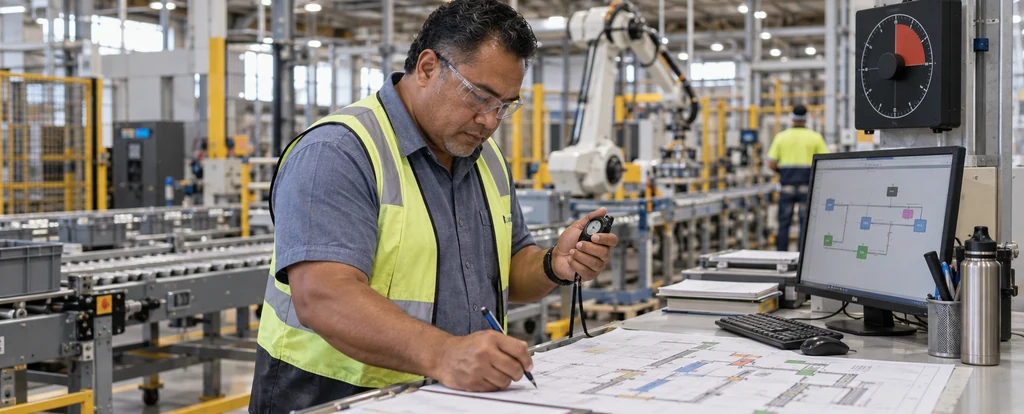
Industrial engineers work inside operating businesses, mostly in manufacturing, logistics, construction and professional services, studying how a process actually runs before they change it. The role is easy to confuse with design engineering: a mechanical engineer designs the machine, while an industrial engineer decides how many machines are needed, where they sit and how work flows between them. Most people in the role hold an accredited engineering degree, and many work on site alongside production, planning and quality teams.
How much do industrial engineers earn?
The median full-time salary for an industrial engineer is $111,800 per annum, before tax, up $23,300 since 2018.
Sector moves pay more than the job title does: industrial engineers in mining, oil and gas and heavy resources usually earn well above those in general manufacturing, and enterprise agreements set the bands on larger sites. Chartered status through Engineers Australia and experience leading a site-wide program both shift you up the range. Contract and consulting work can pay a premium, though it usually trades away paid leave and stability.
What does an industrial engineer do day to day?
The list below is what fills most weeks; the exact mix shifts with seniority and whatever stage the current work is at.
- Timing each step of a production line or warehouse task to see where work stalls and why
- Building simulation and spreadsheet models to test a layout or roster before the business commits to it
- Designing factory, warehouse and service layouts that cut travel, handling and waiting
- Setting time, cost and quality standards for each task, then checking output against them
- Running continuous improvement projects with the supervisors and operators who do the work
What skills do industrial engineers need?
Employers look for process improvement, operations management, engineering design and analysis, backed by Simul8 fluency and strong stakeholder management.
Specialist skills
- Process improvement
- Operations management
- Engineering design and analysis
- Data analysis
- Project management
- Supply chain planning
Software and tools
- Simul8
- MATLAB
- Python
- Microsoft Excel
- SAP
General skills
- Stakeholder management
Is the job growing?
About 4,700 people work as industrial engineers in Australia, and employment is projected to grow 23.1% over the decade to 2035. That's very strong growth. Few roles in Australia are expanding this fast, and it points to solid demand for years to come.
How do you become an industrial engineer?
Here's the path most industrial engineers take, step by step.
- 1Complete an accredited engineering degree
A four-year Bachelor of Engineering (Honours) majoring in industrial, manufacturing or mechanical engineering is the standard entry point, and the program needs Engineers Australia accreditation if you want to register later. Entry usually requires Year 12 maths and physics, or an equivalent pathway.
- 2Get on site while you study
Most degrees include a work placement of around twelve weeks, and vacation work at a manufacturer, miner or logistics operator often turns into a graduate offer. Placements are frequently paid, but not always, so check before you accept.
- 3Start as a graduate engineer
Graduate programs rotate you through production, planning and quality, which is where you learn how a real process behaves compared with a model of it. This first two or three years is also when you build the site relationships that make later changes possible.
- 4Work toward chartered status
Engineers Australia's Chartered credential needs roughly four to five years of practice, a portfolio of engineering work and a written and interview assessment. It matters most in consulting and in roles where you sign off on designs or safety cases.
- 5Specialise or move into management
After a few years, industrial engineers tend to specialise in supply chain, quality or operations, or move into project and engineering management. A postgraduate qualification in management or a related field is the usual support for the management route.
Ready to apply as an industrial engineer?
Whether you're working toward becoming an industrial engineer or already are one and want a hand with the next step (sharpening your resume for ATS screening, tightening your cover letter, or knowing what you'll actually be asked at interview), here are examples grounded in this specific role, not generic templates.
What jobs can an industrial engineer move to?
Moving into Engineering Manager typically comes with the biggest pay rise, worth $71,200 a year more on average.
| Move to | Typical pay change | Overlap | Retraining |
|---|---|---|---|
| Engineering Manager Industrial engineers bring process and systems expertise, while engineering management adds team leadership, budgets and strategy, requiring management study.Known move | +$71,200 | 32% | reskill |
| Logistics Manager Industrial engineers bring supply chain analysis and optimisation skills, which suit logistics management roles overseeing distribution, inventory and transport. | +$35,600 | 57% | short course |
| Mechanical Engineer Industrial engineers bring systems and process optimisation, while mechanical engineering adds machine design and thermodynamics, needing further engineering study.Known move | +$24,100 | 25% | requalify |
| Production Engineer Production engineers build on the industrial engineer's process improvement and systems thinking to manage manufacturing lines and output.Known move | −$3,600 | 68% | minimal |
| Continuous Improvement Manager Industrial engineers bring waste reduction and process analysis, which transfer directly to leading continuous improvement programs across operations. | −$15,600 | 59% | short course |
Moves are chosen from Jobs and Skills Australia's Data on Occupation Mobility, which follows income tax records between 2011-12 and 2020-21, together with entry requirements and skill overlap. A known move is one people were seen making in that data. Pay change compares median full-time pay for the two roles.
Who works as an industrial engineer?
The typical industrial engineer is 39 years old; 82% are men, 89% work full-time, and full-timers average 42 hours a week.
- 39
- Median age
- 18%
- Female share
- 89%
- Full-time
- +2h
- vs all-jobs avg
What's it like being an industrial engineer?
Industrial engineers split their time between a screen and the floor: build the model, then go and watch the process to check whether the model was right. Much of the work runs as projects with a defined finish, which suits people who like diagnosing a problem and then proving the fix holds. The pressure comes from operations that don't pause while you test an idea, and from changes that land on someone else's daily work.
What people like
- Fixes you can watch happen. A layout change or a new scheduling rule shows up in the output figures within weeks, and you can walk the floor and see it working.
- Decisions that rest on evidence. Choosing between two options usually comes down to data you collected and modelled, rather than the loudest opinion in the room.
- Methods that travel between industries. The same techniques work on a hospital admissions process, a mine haul cycle or a food packing line, so the skills keep their value if you change sector.
- A licence to ask why. The role gives you standing to question any step in the operation, from a manual handling task on the floor to how finance approves a capital request.
What people find hard
- Change meets resistance. The people whose work you are redesigning may have done it the same way for years, and some will hear the change as criticism of how they work.
- Results depend on other people. You can design a better process and still watch it fail because a shift roster, a supplier or a budget decision sits outside your control.
- Long hours on the floor. Time and motion studies mean standing in a hot factory, a cold store or a noisy plant for hours, sometimes on night shift to catch a changeover.
- Models only go so far. Real operations carry variability that a simulation smooths out, so you often rework your assumptions once the first week of data comes back.
Based on our synthesis of professional-body surveys and public accounts of the role, not first-person verified reviews.
Which industries employ industrial engineers?
Manufacturing employs the largest share of industrial engineers, followed by Professional, Scientific and Technical Services.
Top employing industries
- 1Manufacturing
- 2Professional, Scientific and Technical Services
- 3Construction
Ranked by employment share; the source doesn't publish an exact percentage per industry.
| Bachelor degree | 51.4% | |
|---|---|---|
| Postgraduate | 27% | |
| Diploma / Advanced Diploma | 7.9% | |
| Certificate III/IV | 6.9% | |
| Year 12 or below | 5% |
Will AI replace industrial engineers?
Industrial engineering sits in the middle: the analysis, modelling and reporting side is increasingly automated, while the part that depends on walking a plant, reading how a shift actually behaves and persuading people to change is not. Simulation and optimisation software will generate a baseline model and a set of scheduling options faster than you can, which pushes the job toward framing the problem well, checking the data and making the change hold.
Share of typical working time by exposure level
- Process data analysis and modellingSimulation packages, optimisation solvers and scripts in Python or MATLAB build most first-pass models now, so your time goes into choosing the right inputs and challenging the output.30%high
- Time and motion studies on the floorTiming a changeover or a breakdown, and judging what counts as normal, still needs someone standing there watching the shift work.25%low
- Stakeholder workshops and implementation supportGetting supervisors and operators to agree to a change, then coaching them through the first weeks, happens face to face on the site.25%low
- Layout and workflow designSoftware can generate layout options and calculate travel distances quickly, but the choice still weighs maintenance access, safety and how the team wants to work.20%moderate
Common questions about becoming an industrial engineer
Straight answers to the questions people ask most.
How much do industrial engineers earn in Australia?
Industrial engineers earn a median of $111,800 per annum, before tax, based on full-time workers in the role. Pay depends heavily on sector, so resources and heavy industry roles tend to sit above general manufacturing, and chartered engineers leading site-wide programs earn more again.
How do I become an industrial engineer?
The usual route is a four-year Bachelor of Engineering (Honours) majoring in industrial, manufacturing or mechanical engineering, accredited by Engineers Australia. Entry normally requires Year 12 maths and physics, and most degrees include a work placement that often leads to a graduate offer. Graduate programs in manufacturing, mining or logistics then give you the site experience the modelling work depends on.
Are industrial engineers in demand?
Industrial engineers are currently not in shortage, and employment is projected to grow 23.1% over the decade to 2035 over the decade to 2035. With about 4,700 people in the role, openings tend to follow investment in new plants, warehouses and automation rather than the wider labour market, so it helps to watch which sectors are spending.
Will AI replace industrial engineers?
Not the whole job, but a good part of the analysis is being automated. Simulation and optimisation tools such as Simul8, plus scripts in Python or MATLAB, now build and run the baseline models that once took days, which shifts the work toward framing the right question, validating the data and getting the change to stick on the floor.
What can an industrial engineer move into?
Production engineering is a common next step, sharing 68% of the skills, though pay is $3,600 less and the focus shifts from designing improvements to running the line that delivers them. Others move into continuous improvement management ($15,600 less) or logistics management ($35,600 more), both built on the same process and supply chain analysis. Engineering management pays more again ($71,200 more) but usually needs study in team leadership and budgets.
Do I need to be registered to work as an industrial engineer?
In most states and territories, no, but Engineers Australia's chartered credential is the recognised mark of competence and some employers, consultants especially, look for it. Queensland requires engineers providing engineering services to the public to be registered, so check the rules for the state or territory where you plan to work.
Related roles
- Production Engineer
- Mechanical Engineer
- Engineering Manager
- Continuous Improvement Manager
- Logistics Manager
- Mechanical Engineer
Not sure this is you? Take the career quiz and get a ranked shortlist of roles that fit how you like to work.