Laundry Worker
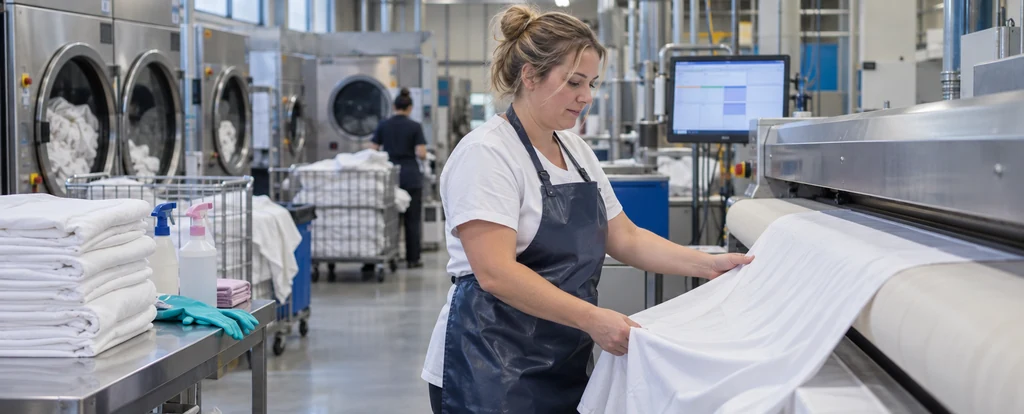
Laundry workers wash, dry, press and fold the linen and garments that hospitals, hotels and care services rely on every day.
- Median salary*
- $49,900
3.7%vs last year, before tax
- People employed
- 9,700
0.0%vs last year
- Projected growth
- +4.1%
to 2035
- AI exposure*
- High
- automation risk
- Average hours
- 40/wk
matches all-jobs average
- Shortage status*
- Not in shortage
national
Laundry workers run the industrial washers, dryers, ironers and presses that large volumes of linen pass through, in commercial laundries, hospital and aged care laundries, and hotel back-of-house areas. The job is closer to production work than household washing: items arrive in slings or trolleys, are sorted by fabric and soil level, then leave folded and pressed, ready to go back on a bed or a trolley. Linen is needed every day, so many laundries roster across early mornings, evenings and weekends.
How much do laundry workers earn?
The median full-time salary for a laundry worker is $49,900 per annum, before tax, up $10,300 since 2018.
Most laundry workers are paid under the Dry Cleaning and Laundry Industry Award, so shift loadings make a real difference: night, weekend and public holiday hours attract penalty rates on top of the base rate. In-house hospital and aged care laundries often sit under health sector agreements with different rates again. Team leaders, dry cleaning staff and those handling chemical dosing tend to earn more than general hands.
What does a laundry worker do day to day?
The list below is what fills most weeks; the exact mix shifts with seniority and whatever stage the current work is at.
- Sorting incoming linen and garments by fabric, colour and soil level, pulling out items that need separate treatment
- Loading and running commercial washer-extractors, choosing the cycle and chemicals for each load
- Treating stains by hand before washing, because heat can set some marks permanently
- Feeding sheets and towels through a flatwork ironer, or pressing uniforms and garments by hand
- Checking clean items for tears and stains, then folding, packing and dispatching them to wards, rooms or kitchens
What skills do laundry workers need?
Employers look for cleaning and grounds maintenance, plant and equipment operation, operations management, backed by Commercial washer-extractor fluency and strong safety and compliance awareness.
Specialist skills
- Cleaning and grounds maintenance
- Plant and equipment operation
- Operations management
Software and tools
- Commercial washer-extractor
- Tumble dryer
- Flatwork ironer
- Garment steamer
- Laundry management software
General skills
- Safety and compliance awareness
- Attention to detail
- Physical stamina and dexterity
- Customer service
Is the job growing?
About 9,700 people work as laundry workers in Australia, and employment is projected to grow 4.1% over the decade to 2035. That's modest growth: demand is steady rather than booming.
How do you become a laundry worker?
Here's the path most laundry workers take, step by step.
- 1Start in an entry-level position
No formal qualification is needed for most laundry jobs, and employers hire on reliability and being able to stand for a full shift. Induction covers chemical handling, manual handling and safe use of the machinery.
- 2Learn the plant
Washer-extractors, dryers, flatwork ironers and presses each have their own settings and load limits, and the cycle you choose depends on the fabric and how soiled it is. Running a flatwork ironer at speed without jamming it takes weeks of practice.
- 3Get comfortable with chemicals and stains
Dosing and stain treatment are where judgement matters most, because the wrong chemical or too much heat can damage a whole load. A short course in safe chemical handling, or a Certificate III in Cleaning Operations (CPP30321), helps if you want to move into dry cleaning or supervisory work.
- 4Specialise or move up
Experienced workers move into hospital and aged care laundries, dry cleaning, or team leader and shift supervisor roles. Laundries often promote from within, so letting a supervisor know you want the extra responsibility is usually how it starts.
Ready to apply as a laundry worker?
Whether you're working toward becoming a laundry worker or already are one and want a hand with the next step (sharpening your resume for ATS screening, tightening your cover letter, or knowing what you'll actually be asked at interview), here are examples grounded in this specific role, not generic templates.
What jobs can a laundry worker move to?
Moving into Aged Care Worker typically comes with the biggest pay rise, worth $41,700 a year more on average.
| Move to | Typical pay change | Overlap | Retraining |
|---|---|---|---|
| Aged Care Worker Laundry workers in care settings bring hygiene awareness and resident familiarity, but aged care roles need a certificate and personal care training.Known move | +$41,700 | 4% | reskill |
| Process Worker Laundry workers bring machine operation and manual handling to process work, with retraining for production line tasks and safety.Known move | +$29,100 | 25% | reskill |
| Cleaner Laundry workers bring fabric care, stain awareness and cleaning routines to cleaner roles, which need a short course for safe chemical use.Known move | +$19,900 | 50% | short course |
| Housekeeper Laundry workers understand linen care and hygiene, which carries into housekeeper roles that add room cleaning and guest service.Known move | +$14,100 | 44% | reskill |
| Drycleaner Laundry workers already sort, treat and finish garments, so they can move into drycleaner roles with solvent handling training.Known move | −$500 | 53% | short course |
Moves are chosen from Jobs and Skills Australia's Data on Occupation Mobility, which follows income tax records between 2011-12 and 2020-21, together with entry requirements and skill overlap. A known move is one people were seen making in that data. Pay change compares median full-time pay for the two roles.
Who works as a laundry worker?
The typical laundry worker is 49 years old; 71% are women, 44% work full-time, and full-timers average 40 hours a week.
- 49
- Median age
- 71%
- Female share
- 44%
- Full-time
- +0h
- vs all-jobs avg
What's it like being a laundry worker?
The day has a clear rhythm: loads in, loads out, and a queue of clean linen that has to be ready when wards, rooms and kitchens need it. It suits people who like finishing a shift with something visibly done and who are comfortable with heat, noise and being on their feet. Because the machines run to a schedule, there is little slack in the day, and the busy periods are predictable.
What people like
- A visible result at the end of the shift. You can see exactly what you got through: stacks of folded linen and trolleys ready to go back out, rather than a list of tasks that carries over to tomorrow.
- You can learn the job on the floor. Sorting, stain treatment and machine settings are picked up at work, which means you can start earning while you build the skills.
- The machines do the hard cleaning. Most of the scrubbing happens inside the washer, so the skill sits in sorting, timing and finishing rather than in physical effort.
- Set processes and clear expectations. Loads, cycles and folding standards are set, so once you know the routine you know what a good day's work looks like.
What people find hard
- Heat, noise and time on your feet. Industrial laundry floors are warm and loud from the dryers and presses, and most of the shift is spent standing and lifting.
- Repetitive sorting and folding. The same motions repeat hundreds of times in a shift, which some workers find tedious after the first few months.
- Soiled and contaminated linen. Hospital and aged care laundry includes linen that has to be handled under infection control procedures, which adds strict routines to the work.
- Weekends and public holidays. Linen is needed every day of the year, so rosters usually include weekend and public holiday shifts alongside early starts.
Based on our synthesis of professional-body surveys and public accounts of the role, not first-person verified reviews.
Which industries employ laundry workers?
Other Services employs the largest share of laundry workers, followed by Health Care and Social Assistance.
Top employing industries
- 1Other Services
- 2Health Care and Social Assistance
Ranked by employment share; the source doesn't publish an exact percentage per industry.
| Year 12 or below | 62.3% | |
|---|---|---|
| Certificate III/IV | 13% | |
| Bachelor degree | 8.5% | |
| Diploma / Advanced Diploma | 5.9% | |
| Postgraduate | 2.7% |
Will AI replace laundry workers?
This is already a highly automated workplace, and the exposure to further automation is high. Washer-extractors dose their own chemicals, RFID tags track each item through the plant, and automated feeders and folders handle flat linen such as sheets and towels, which cuts the number of people needed per load. What keeps workers in the job is the soiled and damaged end of it, where someone has to judge how to treat a stain, spot a torn item and decide what cannot go back into circulation.
Share of typical working time by exposure level
- Folding, pressing and packing clean linenAutomated feeders and folders process sheets and towels at a rate no team can match by hand, so this is where the biggest reductions in staffing have come.30%high
- Sorting incoming linen and loading machinesSorting still needs a person to spot the item that will bleed colour through a load, though conveyors and scanning systems are taking over the routine part.25%moderate
- Running wash and dry cyclesProgrammable machines now dose their own chemicals and pick the cycle from the load type, so the operator mainly starts the run and watches for faults.25%high
- Stain treatment and hand finishingWorking out how to lift an unusual stain, or pressing a delicate garment without marking it, still depends on someone who has handled that fabric before.20%low
Moves least exposed to AI
These career moves from laundry worker work are rated low for AI exposure:
- Cleaner
Solid skill overlap (50%), short course to get there, and a low automation-risk profile.
- Housekeeper
Solid skill overlap (44%), reskill to get there, and a low automation-risk profile.
- Aged Care Worker
Some skill overlap (4%), reskill to get there, and a low automation-risk profile.
Common questions about becoming a laundry worker
Straight answers to the questions people ask most.
How much do laundry workers earn?
Laundry workers earn $49,900 per year before tax at the median, based on full-time workers. Pay usually follows the Dry Cleaning and Laundry Industry Award, so shift loadings and weekend penalties can lift take-home pay above the base rate, and hospital and aged care laundries may pay under separate agreements.
How do you become a laundry worker?
You apply for an entry-level job, and no formal qualification is required. Employers look for reliability and the physical capacity to stand and lift for a shift, then provide induction in chemical handling, manual handling and machinery safety. About 62% of laundry workers hold Year 12 or below as their highest qualification, which reflects how the job is hired.
Is there demand for laundry workers?
Laundry workers are currently not in shortage, and employment is projected to grow 4.1% over the decade to 2035. The work sits mostly in hospital, aged care and hotel laundries and in commercial linen services, and because linen has to be processed every day, replacement demand keeps jobs coming up even when overall numbers move little.
Will AI and automation replace laundry workers?
Automation already does much of this work, and the exposure is high. Programmable washers dose their own chemicals, RFID tags track each item through the plant, and automated feeders and folders handle flat linen such as sheets and towels, so each load needs fewer people than it once did. What stays with workers is the judgement end of the job: preparing badly stained or damaged items, checking clean linen for faults and clearing jams.
What jobs can a laundry worker move into?
Laundry work overlaps closely with cleaning and dry cleaning, so sideways moves are common. Cleaner roles pay $19,900 more and use the same fabric and surface care, while drycleaner roles pay $500 less and build on the stain treatment you already do. Housekeeping and process work are larger jumps that usually need retraining.
Is laundry work physically hard?
It is physical, though not heavy in the way labouring jobs are. You stand for most of the shift, lift wet linen and push trolleys, and the floor is hot near the dryers and presses. Most people adjust within a few weeks, and sites that run big volumes often rotate staff through different stations to break up the strain.
Related roles
Not sure this is you? Take the career quiz and get a ranked shortlist of roles that fit how you like to work.