Carpet Cleaner
Carpet cleaners clean carpets, rugs and upholstery in homes and businesses, removing the dirt, stains and allergens that build up with everyday use.
- Median salary*
- $62,400
3.8%vs last year, before tax
- People employed
- 2,400
0.0%vs last year
- Projected growth*
- +2%
to 2035
- AI exposure*
- Low
- automation risk
- Average hours*
- 40/wk
matches all-jobs average
- Shortage status*
- Not in shortage
national
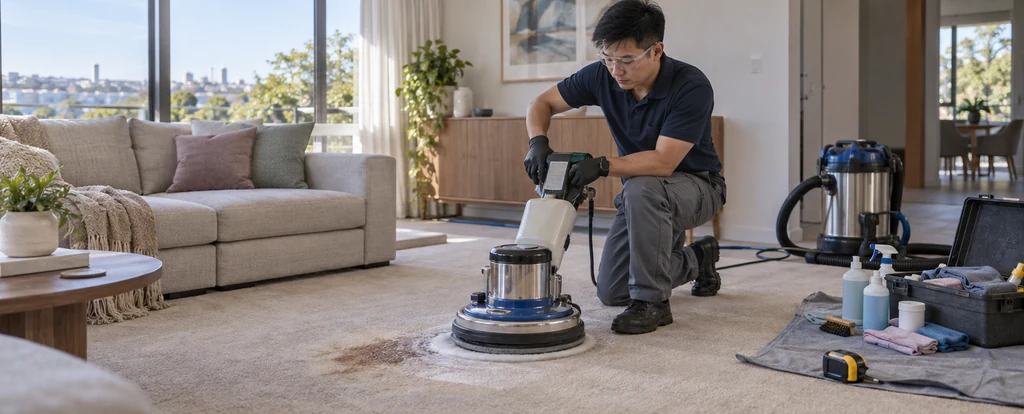
Carpet cleaners work in houses, offices, hotels and rental properties, usually travelling between jobs in a van fitted with a hot water extraction unit. Unlike general cleaners, they check the fibre type and choose chemicals to suit each surface, so a wool rug and a nylon office carpet get different treatment. Many work for cleaning companies, while others subcontract or run their own business and quote jobs directly.
How much do carpet cleaners earn?
The median full-time salary for a carpet cleaner is $62,400 per annum, before tax, up $12,900 since 2018.
Whether you are on wages or running your own jobs changes the picture more than anything else. Employees usually work under the Cleaning Services Award or a company enterprise agreement, and weekend, after-hours and emergency flood work often attract penalty rates. Subcontractors and owner-operators set their own prices but carry the cost of equipment, chemicals, fuel and insurance, which comes out of what the job pays.
What does a carpet cleaner do day to day?
The list below is what fills most weeks; the exact mix shifts with seniority and whatever stage the current work is at.
- Inspecting carpets and upholstery to identify fibre type and work out what caused a stain
- Pre-treating spots and mixing cleaning solutions to suit the fabric
- Operating hot water extraction, rotary bonnet and dry cleaning equipment
- Quoting from room sizes, then setting up and packing down equipment on site
- Advising customers on stain protection, drying times and when to rebook
What skills do carpet cleaners need?
Employers look for cleaning and grounds maintenance, plant and equipment operation, operations management, backed by Truck-mount hot water extraction unit fluency and strong customer service.
Specialist skills
- Cleaning and grounds maintenance
- Plant and equipment operation
- Operations management
Software and tools
- Truck-mount hot water extraction unit
- Rotary bonnet cleaning machine
- Spotting and stain removal kit
- ServiceM8
- Xero
General skills
- Customer service
- Safety and compliance awareness
- Physical stamina and dexterity
- Attention to detail
Is the job growing?
About 2,400 people work as carpet cleaners in Australia, and employment is projected to grow 2% over the decade to 2035. That's modest growth: demand is steady rather than booming.
How do you become a carpet cleaner?
Here's the path most carpet cleaners take, step by step.
- 1Start with a cleaning company
Most people enter without a qualification, joining a carpet cleaning business that provides the truck-mount unit and chemicals and sends new staff out with an experienced technician. The first months are paid on-the-job training in fibre identification, chemical dilution and machine handling.
- 2Learn the trade on the job
Stain treatment is the part that takes longest to pick up, because the answer depends on what spilled, how long ago and what the carpet is made of. Many employers run short internal courses, and experienced technicians build a mental library of products and methods.
- 3Add a qualification for specialist or supervisory work
A Certificate III in Cleaning Operations (CPP30321) or a Certificate IV in Cleaning (CPP40421) Management at TAFE or a private RTO is not required to clean carpets, but it helps if you want to move into restoration work, site supervision or running a team.
- 4Sort out your licence and safety requirements
A current driver licence is effectively necessary, since the job is driving to jobs with equipment. You also need to follow safety data sheets for every chemical you use, and a White Card is required for work on construction sites, which comes up on new builds.
- 5Go out on your own when you are ready
After a few years, many cleaners register an ABN, take out public liability insurance, buy a van and extraction unit, and quote directly for homes and real estate agents. Setting up alone brings in more per job but adds the costs and the admin.
Ready to apply as a carpet cleaner?
Whether you're working toward becoming a carpet cleaner or already are one and want a hand with the next step (sharpening your resume for ATS screening, tightening your cover letter, or knowing what you'll actually be asked at interview), here are examples grounded in this specific role, not generic templates.
What jobs can a carpet cleaner move to?
Moving into Restoration Technician typically comes with the biggest pay rise, worth $7,800 a year more on average.
| Move to | Typical pay change | Overlap | Retraining |
|---|---|---|---|
| Restoration Technician Carpet cleaners can move into restoration work, applying their knowledge of cleaning and stain removal to damaged properties, though further training is required. | +$7,800 | 38% | reskill |
| Cleaner Carpet cleaners can broaden their skills to general cleaning, where knowledge of surfaces and cleaning agents supports a move to commercial or domestic cleaning roles. | +$7,400 | 50% | short course |
| Car Detailer Carpet cleaners bring expertise in stain removal and fabric care to car detailing, where deep cleaning skills translate directly. | +$2,100 | 100% | minimal |
Moves are chosen from Jobs and Skills Australia's Data on Occupation Mobility, which follows income tax records between 2011-12 and 2020-21, together with entry requirements and skill overlap. A known move is one people were seen making in that data. Pay change compares median full-time pay for the two roles.
Who works as a carpet cleaner?
The typical carpet cleaner is 48 years old; 91% are men, 38% work full-time, and full-timers average 40 hours a week.
- 48
- Median age
- 9%
- Female share
- 38%
- Full-time
- +0h
- vs all-jobs avg
What's it like being a carpet cleaner?
The day runs on bookings, so it is spent driving between jobs, setting up in someone else's house or office, and finishing within the time quoted. Weather, traffic and stains that have been sitting for years set the pace, and much of the work happens solo with the customer checking the result at the end. It suits people who like visible results, hands-on work and managing their own schedule, and who do not mind the physical load that comes with it.
What people like
- The result is easy to see. A lounge room goes from marked and grey to noticeably cleaner in an hour or two, and the customer's reaction is immediate. That feedback comes with every job rather than once a year.
- You work with people, not just machines. Most of the day is spent alone with the equipment, but each job starts and ends with a conversation about the carpet, the stain and the price. Regular customers get to know you by name.
- Repeat work builds itself. Homes and offices rebook at predictable intervals, and real estate agents call the same cleaner back between tenants. A technician who does a careful job spends less time chasing work.
- Every stain is a small puzzle. Working out whether a mark is coffee, pet urine, ink or dye takes experience, and the right sequence of products often saves a carpet from replacement. That problem-solving keeps the job from feeling repetitive.
What people find hard
- The physical load adds up. Hoses, wands and water are heavy, and much of the work is done kneeling or bent over in rooms where you cannot move freely. Stairs, upstairs units and parked cars in the driveway all make the job harder.
- Drying takes longer than customers expect. You can extract most of the water, but the carpet still needs air movement and time before furniture goes back. Explaining that on a cold, humid day is part of the job, and not everyone wants to hear it.
- Work comes in cycles. Spring cleaning, end-of-lease turnovers and insurance work after storms or floods arrive in bursts, with quieter weeks in between. Subcontractors feel those gaps directly in their income.
- You are working in someone else's space. Moving furniture, managing pets and children, finding a parking spot and running a machine in a small unit are routine. Customers watch the whole process, which leaves little room for a bad day.
Based on our synthesis of professional-body surveys and public accounts of the role, not first-person verified reviews.
Which industries employ carpet cleaners?
Other Services employs the largest share of carpet cleaners, followed by Administrative and Support Services.
Top employing industries
- 1Other Services
- 2Administrative and Support Services
Ranked by employment share; the source doesn't publish an exact percentage per industry.
| Certificate III/IV | 34% | |
|---|---|---|
| Diploma / Advanced Diploma | 26% | |
| Bachelor degree | 20% | |
| Year 12 or below | 20% |
Will AI replace carpet cleaners?
Carpet cleaning is low exposure, because the work is physical and happens in a specific room that a machine cannot size up or reach into. Booking, quoting and invoicing software has changed the admin side of the job, and moisture meters and fibre test kits help with diagnosis, but choosing a chemical and working a wand over a stain is still done by hand.
Share of typical working time by exposure level
- Pre-treating and removing stainsThe order you apply products in, how long you dwell, and whether heat or cold water is safe for that fibre are decisions made at the carpet.30%low
- Running extraction equipment and drying the roomWand passes, water pressure and air movers are hands-on work, and no robot yet carries a hose up three flights of stairs.30%low
- Inspecting carpets and checking fibre typeA tester or a burn test gives you a clue, but reading a carpet by feel and knowing how it will react to water comes from experience.20%low
- Scheduling, quoting and invoicingJob management software such as ServiceM8 handles bookings, reminders, quote templates and Xero invoicing, which cuts the paperwork to a confirmation with the customer.20%high
Common questions about becoming a carpet cleaner
Straight answers to the questions people ask most.
How much do carpet cleaners earn?
Full-time carpet cleaners earn a median $62,400 per year before tax. What moves that figure most is whether you are employed or subcontracting, and how much weekend, after-hours and emergency work you take on.
Do I need a qualification to become a carpet cleaner?
No formal qualification is required to start, and most technicians learn on the job with an employer's equipment. A Certificate III in Cleaning Operations (CPP30321) helps if you want to specialise in restoration work or supervise a team, and a driver licence is effectively essential.
Are carpet cleaners in demand?
Carpet cleaners are currently not in shortage, and employment is projected to grow 2% over the decade to 2035 over the decade to 2035, so openings come as much from people leaving the trade as from new work. Demand follows homes and offices needing regular cleaning, real estate agents turning over rentals, and insurance jobs after floods or fires.
Will AI replace carpet cleaners?
This is low-exposure work because the job happens in a room, on a specific carpet, with equipment in hand. Booking and invoicing software has already taken over the admin side, and a moisture meter or app can log readings, but judging a fibre and removing a set stain still comes down to the person doing it.
What jobs can a carpet cleaner move into?
General cleaning is the closest fit, with a pay gap of $7,400 more and the same knowledge of surfaces and chemicals carrying over. Car detailing is another route, with a gap of $2,100 more, because the stain removal skills transfer to seats and upholstery, while restoration work after floods and fires pays $7,800 more and needs further training. Many cleaners eventually build their own business, which is often where earnings grow.
Do you need your own equipment to start?
No, most people start using an employer's truck-mount unit and chemicals, which is why the entry cost is low. Buying a van, extraction unit and spotting kit only becomes necessary when you go out on your own, and it is the main upfront expense of that step.
Related roles
Not sure this is you? Take the career quiz and get a ranked shortlist of roles that fit how you like to work.