Window Cleaner
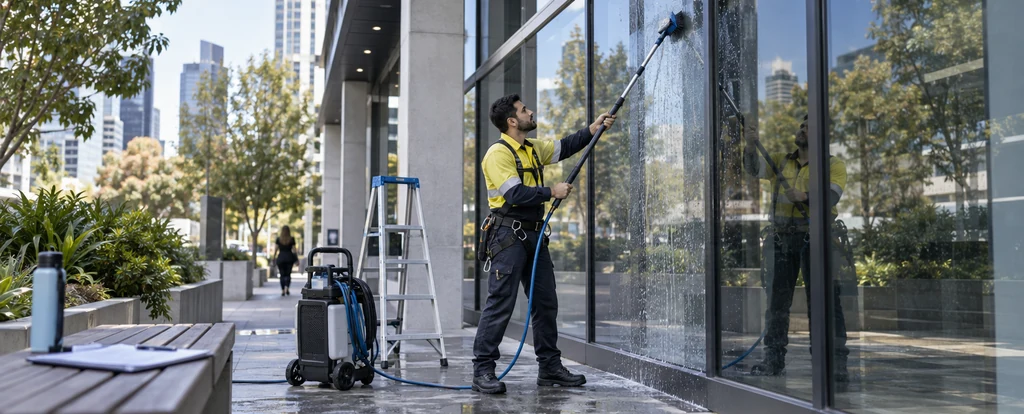
Window cleaners clean the glass, frames and sills of homes and commercial buildings, keeping the outside of a property clean and presentable.
- Median salary*
- $54,600
3.8%vs last year, before tax
- People employed
- 2,800
0.0%vs last year
- Projected growth*
- +2.5%
to 2035
- AI exposure*
- Low
- automation risk
- Average hours*
- 40/wk
matches all-jobs average
- Shortage status*
- Not in shortage
national
Window cleaners work outside in all weather, removing dirt, dust and bird droppings from glass and the frames and sills around it. The job is narrower than general cleaning: it is mostly glass and the surrounding exterior, reached from ladders, water-fed poles or elevated work platforms. Most have a regular round of homes and shops, while commercial and high-rise contracts usually call for extra qualifications and equipment.
How much do window cleaners earn?
The median full-time salary for a window cleaner is $54,600 per annum, before tax, up $11,300 since 2018.
Pay depends heavily on whether you work as an employee or as a sole trader quoting your own jobs. Employees are usually paid under the Cleaning Services Award, which sets penalty rates for early starts and weekend work, while sole traders set their own rates and carry the cost of travel, equipment and insurance. Commercial and high-rise work tends to pay more than domestic rounds because it needs additional licences and gear, and rates vary between cities and regional areas.
What does a window cleaner do day to day?
The list below is what fills most weeks; the exact mix shifts with seniority and whatever stage the current work is at.
- Cleaning glass with a squeegee by hand or a water-fed pole from the ground
- Wiping down frames, sills and tracks where dirt collects around the glass
- Setting up ladders, harnesses and elevated work platforms safely before starting
- Quoting jobs, scheduling the round and invoicing regular customers
- Checking the finished work with the client and noting cracked panes or damaged seals
What skills do window cleaners need?
Employers look for cleaning and grounds maintenance, plant and equipment operation, driving and transport operations, backed by Squeegee fluency and strong safety and compliance awareness.
Specialist skills
- Cleaning and grounds maintenance
- Plant and equipment operation
- Driving and transport operations
Software and tools
- Squeegee
- Water-fed pole system
- Ladder
- Pressure washer
- ServiceM8
General skills
- Safety and compliance awareness
- Physical stamina and dexterity
- Customer service
- Attention to detail
Is the job growing?
About 2,800 people work as window cleaners in Australia, and employment is projected to grow 2.5% over the decade to 2035. That's modest growth: demand is steady rather than booming.
How do you become a window cleaner?
Here's the path most window cleaners take, step by step.
- 1Get a start with a cleaning firm or an established window cleaner
There is no required qualification to clean windows, and most people learn the squeegee, the pole and the safety habits on the job. Working as an employee or subbie for a year or two gives you a round to practise on and a look at how jobs are quoted.
- 2Learn the equipment properly
A water-fed pole with a pure water system lets you reach upper floors from the ground and is standard on commercial work, while traditional squeegee work is still expected on many domestic jobs. Getting fast without leaving streaks is the skill that decides how many jobs you can fit into a day.
- 3Sort out working at heights requirements
Construction sites require a White Card before you can work on them. Operating a boom lift or scissor lift needs a high risk work licence, and the rules on ladder work and roof access are set by state and territory regulators, so check what applies where you work.
- 4Build your own round or take on commercial contracts
Regular customers are what make the work reliable, and many window cleaners start by adding Saturday jobs around a day job. Commercial contracts are usually quoted per visit on a monthly or quarterly cycle.
- 5Set up the business side if you go out on your own
That means an ABN, public liability insurance, and often a booking and invoicing app. Insurance matters most on commercial sites, where building managers will ask for a certificate of currency before you start.
Ready to apply as a window cleaner?
Whether you're working toward becoming a window cleaner or already are one and want a hand with the next step (sharpening your resume for ATS screening, tightening your cover letter, or knowing what you'll actually be asked at interview), here are examples grounded in this specific role, not generic templates.
What jobs can a window cleaner move to?
Moving into Restoration Technician typically comes with the biggest pay rise, worth $15,600 a year more on average.
| Move to | Typical pay change | Overlap | Retraining |
|---|---|---|---|
| Restoration Technician Window cleaners understand surface care and site work, and restoration work adds water damage, mould and insurance repair skills through further study. | +$15,600 | 38% | reskill |
| Gutter Cleaner Window cleaners work safely at height on exteriors, and gutter cleaning builds on that with roof access, debris removal and safety training. | +$10,400 | 36% | reskill |
| Carpet Cleaner Window cleaners already handle cleaning chemicals and customer sites, so carpet cleaning adds equipment skills and can expand a cleaning business. | +$7,800 | 63% | minimal |
Moves are chosen from Jobs and Skills Australia's Data on Occupation Mobility, which follows income tax records between 2011-12 and 2020-21, together with entry requirements and skill overlap. A known move is one people were seen making in that data. Pay change compares median full-time pay for the two roles.
Who works as a window cleaner?
The typical window cleaner is 43 years old; 88% are men, 26% work full-time, and full-timers average 40 hours a week.
- 43
- Median age
- 12%
- Female share
- 26%
- Full-time
- +0h
- vs all-jobs avg
What's it like being a window cleaner?
The work has a steady rhythm of booked jobs, early starts and a lot of driving between them, with the pace set by how quickly you can clean and move. Rain and wind interrupt the schedule, so the week often reshuffles itself. It suits someone who likes finishing a job they can see, working outdoors, and having some control over their own day.
What people like
- You see the result immediately. A dirty pane turns clear in a few strokes, and customers notice the difference the same day. That feedback comes at the end of every job rather than at the end of a project.
- Most of the day is spent outdoors and moving. You are on your feet, up and down ladders and packing gear in and out of a vehicle. It suits people who would rather not sit at a desk.
- Regular rounds bring predictable work. Many customers book the same window every few months, which fills the calendar without new quoting every week. A solid round makes it easier to plan income and time off.
- Running your own show is a realistic goal. The equipment is affordable, you can start part time, and the business is small enough to run alone. Growing means adding services or staff rather than finding capital for a premises.
What people find hard
- The weather decides your week. Wind makes pole work unsafe and rain leaves streaks, so booked jobs get pushed to the next fine day. That means lost days and reshuffled schedules you cannot control.
- The physical load adds up. Shoulders, wrists and knees take the strain of repeated squeezing, reaching and ladder work, and it wears people down over years. Good technique and resting between heavy jobs matter more than most people expect.
- Sole traders carry the unpaid hours. Quoting, travel between jobs, chasing invoices and equipment maintenance all happen outside the paid work. A day that looks fully booked can be a shorter paid day than it seems.
- Access and height bring real risks. Windows above gardens, sloping ground, air conditioners and fragile roofs all restrict how you can set up. The trade-off between reaching a window and staying safe is a judgement you make several times a day.
Based on our synthesis of professional-body surveys and public accounts of the role, not first-person verified reviews.
Which industries employ window cleaners?
Administrative and Support Services employs the largest share of window cleaners, followed by Construction.
Top employing industries
- 1Administrative and Support Services
- 2Construction
- 3Other Services
Ranked by employment share; the source doesn't publish an exact percentage per industry.
| Certificate III/IV | 34% | |
|---|---|---|
| Diploma / Advanced Diploma | 26% | |
| Bachelor degree | 20% | |
| Year 12 or below | 20% |
Will AI replace window cleaners?
AI and automation reach very little of this work. Machines that clean large facades exist, but they are expensive, need building access, and cannot handle window frames, sills or a typical suburban house. The exposed part is the admin: quoting tools, scheduling apps and invoicing software now handle much of what a sole trader used to do at night.
Share of typical working time by exposure level
- Cleaning glass with a squeegee or water-fed poleThe finish depends on technique, water quality and reading the glass, and a customer can see a streak from the driveway.45%low
- Setting up ladders, poles and elevated work platformsChoosing where to put a ladder on sloping ground or over a garden bed is a live safety decision that no software makes for you.20%low
- Quoting jobs, scheduling rounds and invoicing customersApps such as ServiceM8 already generate quotes, send reminders and chase payment, cutting hours of admin each week.20%high
- Checking the finish with the customer and sorting access or damageTalking a homeowner through a scratched pane or a gate that cannot be opened needs someone who was on site.15%moderate
Common questions about becoming a window cleaner
Straight answers to the questions people ask most.
How much do window cleaners earn?
Window cleaners earn a median of $54,600 per year before tax. That figure comes from full-time employees, so it sits above a quiet first year as a sole trader and below what a busy commercial operator with staff takes home. Rates move with the type of work, whether you hold the licences for high-rise access, and how much of your week goes on travel and quoting rather than cleaning.
How do you become a window cleaner?
No formal qualification is required, and most people learn the work from an established cleaner or a small firm. If you want commercial or construction sites, you will usually need a White Card, and operating a boom lift or scissor lift requires a high risk work licence. Rules on ladder work and roof access are set by state and territory regulators, so check the requirements where you plan to work.
Are window cleaners in demand?
Window cleaners are currently not in shortage, and employment is projected to grow 2.5% over the decade to 2035. Demand tracks the number of homes, shops and offices that need cleaning rather than the wider economy, so established rounds tend to hold up. A new cleaner usually builds work by taking on jobs that existing operators have passed on or by offering a second service such as gutter or carpet cleaning.
Will AI or robots replace window cleaners?
The physical work is not easily automated: robots and drones clean glass on some large facades, but they are costly, need building access, and cannot handle domestic windows, frames and sills. Booking, quoting and invoicing software already handles much of the admin side, which reduces the office time for a sole trader but does not clean a window. The judgement about safe access and a streak-free finish still sits with the person on the job.
What can window cleaners move into?
Adding carpet cleaning or gutter cleaning to your services is the common step, because it uses the same customers, equipment knowledge and site access; carpet cleaning pays $7,800 more and gutter cleaning $10,400 more. Moving into restoration work is a bigger change and usually needs further study, and it pays $15,600 more. Many window cleaners end up running their own business or a small crew, which is often where earnings grow.
Related roles
Not sure this is you? Take the career quiz and get a ranked shortlist of roles that fit how you like to work.