Local Councillor
Local councillors are elected to set the direction of a council: the services, rates and infrastructure their community lives with.
- Median salary*
- $52,000
4.0%vs last year, before tax
- People employed
- 1,300
0.0%vs last year
- Projected growth
- +10.9%
to 2035
- AI exposure*
- Low
- automation risk
- Average hours
- 47/wk
+7h vs all jobs
- Shortage status*
- Not in shortage
national
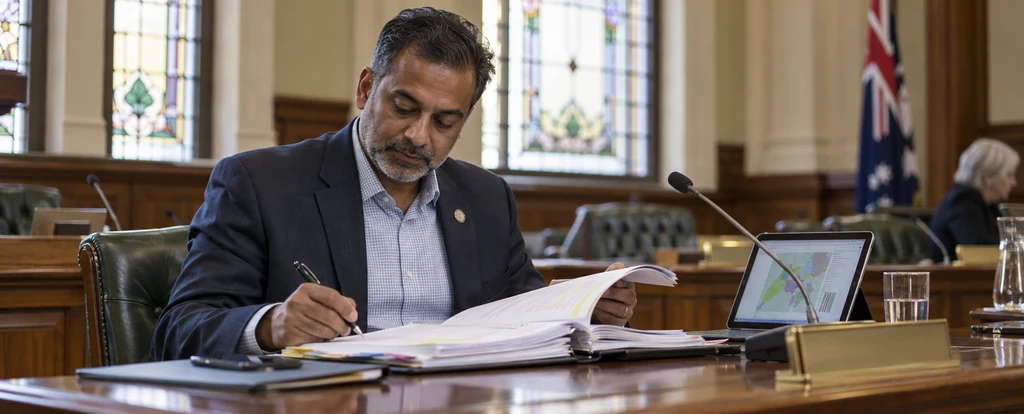
Local councillors are the elected arm of a council, while the planners, engineers and customer service staff who deliver its services are council employees. The work happens in council chambers and committee rooms, and often at a kitchen table at night, because meetings usually come at the end of a long day rather than the start of one. Most councillors hold another job as well, and the role sits closer to local planning and services than to the party politics of state or federal parliament.
How much do local councillors earn?
The median full-time salary for a local councillor is $52,000 per annum, before tax, up $10,800 since 2018.
Councillor pay is set by a remuneration tribunal or panel in each state and territory rather than by negotiation, so it varies with the size of the council and with the role you hold, since a mayor or chair is paid more than an ordinary councillor. Many councillors treat it as a part-time income alongside another job, and allowances for travel, technology or childcare sit on top in some councils. Check your state body's current determination rather than relying on a national figure.
What does a local councillor do day to day?
The list below is what fills most weeks; the exact mix shifts with seniority and whatever stage the current work is at.
- Sitting through council and committee meetings, from planning panels to audit and risk
- Reading the agenda papers beforehand, which can run to hundreds of pages
- Meeting residents and community groups about local issues
- Setting the annual budget and the rates that fund it
- Answering constituent enquiries about everything from bin collections to development applications
What skills do local councillors need?
Employers look for community engagement, policy analysis and advice, regulatory compliance, backed by Microsoft Office fluency and strong stakeholder management.
Specialist skills
- Community engagement
- Policy analysis and advice
- Regulatory compliance
Software and tools
- Microsoft Office
- InfoCouncil
- Objective
- Zoom
- Microsoft Teams
General skills
- Stakeholder management
- People leadership
- Written communication
- Problem solving
Is the job growing?
About 1,300 people work as local councillors in Australia, and employment is projected to grow 10.9% over the decade to 2035. That's healthy, above-average growth, and the role should stay in solid demand.
How do you become a local councillor?
Here's the path most local councillors take, step by step.
- 1Check you are eligible to stand
You generally need to be 18 or over, an Australian citizen and enrolled to vote in the council area. Disqualifications such as undischarged bankruptcy or certain criminal convictions vary by state, so read your state electoral commission's candidate guide.
- 2Learn how your council actually works
Attend council meetings, read the community plan and the budget, and join a community committee or progress association. Knowing how a motion gets from a staff report to a vote makes the first term far less overwhelming.
- 3Nominate through your state electoral commission
Local government elections run on a four-year cycle in most states and are conducted by the state electoral commission, not the council. Nominations open a few weeks out and usually need nominators and, in some states, a deposit.
- 4Campaign in your ward or shire
Councillor elections are usually undemocratic in the sense that name recognition counts, so doorknocking, local forums, letters and a clear position on two or three local issues do more than a party label in most areas.
- 5Take office and learn governance
Once elected you swear an oath, sign a code of conduct and complete mandatory training in most states, covering conflict of interest, meeting procedure and financial duties. The term runs four years, and the learning curve is steepest in the first six months.
Ready to apply as a local councillor?
Whether you're working toward becoming a local councillor or already are one and want a hand with the next step (sharpening your resume for ATS screening, tightening your cover letter, or knowing what you'll actually be asked at interview), here are examples grounded in this specific role, not generic templates.
What jobs can a local councillor move to?
Moving into Member of Parliament typically comes with the biggest pay rise, worth $182,000 a year more on average.
| Move to | Typical pay change | Overlap | Retraining |
|---|---|---|---|
| Member of Parliament Local councillors move naturally to parliament, using council experience in representation, policy and community advocacy; a short course covers campaign skills. | +$182,000 | 50% | short course |
| Social Worker Local councillors bring community advocacy and knowledge of local services to social work, though a new degree is required.Known move | +$60,900 | 38% | requalify |
| Liaison Officer Local councillors understand government processes and community needs, making them suited to liaison work that connects agencies and residents. | +$42,600 | 60% | short course |
| Community Development Officer Local councillors bring community consultation and local service knowledge to paid community development roles, with a short course filling formal gaps.Known move | +$23,000 | 47% | short course |
| Union Organiser Local councillors bring advocacy, negotiation and community networks to union organising, where campaign and workplace representation skills transfer directly. | +$12,500 | 71% | minimal |
Moves are chosen from Jobs and Skills Australia's Data on Occupation Mobility, which follows income tax records between 2011-12 and 2020-21, together with entry requirements and skill overlap. A known move is one people were seen making in that data. Pay change compares median full-time pay for the two roles.
Who works as a local councillor?
The typical local councillor is 57 years old; 52% are women, 53% work full-time, and full-timers average 47 hours a week.
- 57
- Median age
- 52%
- Female share
- 53%
- Full-time
- +7h
- vs all-jobs avg
What's it like being a local councillor?
The rhythm of the job runs on the meeting cycle: papers arrive, you read, you meet residents, you argue a position in public, then you answer for it. The pace is slower than the workload suggests, because a decision usually passes through consultation, a staff report and a budget round before anything changes on the ground. It suits people who like local detail, can hold their temper in a public room and are content to be one vote of nine or eleven rather than the person in charge.
What people like
- You can see the result in your own street. A footpath, a playground upgrade or a changed speed limit is a decision you can point to, in a way that few jobs allow.
- The role keeps you across the whole council. One week it is a planning application, the next a rates policy, a road rebuild or a library service review, so the subject matter keeps moving.
- Residents tell you what matters. The feedback is direct and often specific, and it is a useful check on decisions that look tidy on paper but fail in practice.
- You work alongside people who volunteered to be there. Community groups, sporting clubs and other councillors have usually chosen the work, which makes the meetings more purposeful than the average committee.
What people find hard
- Meetings land in the evening. Most councils meet after hours and committee work sits on top of that, so the role eats into the time most people spend with family.
- Change moves slowly. A good idea can take years, passing through consultation, staff assessment and a budget cycle before a single works crew turns up.
- You take criticism in public. Planning decisions create winners and losers, and residents, local media and social media direct the frustration at you by name.
- Conflict of interest rules follow you everywhere. You declare interests in writing, leave the room for some debates and can be disqualified from a vote, which reaches into your friendships, business and family.
Based on our synthesis of professional-body surveys and public accounts of the role, not first-person verified reviews.
Which industries employ local councillors?
Public Administration and Safety employs the largest share of local councillors, followed by Health Care and Social Assistance.
Top employing industries
- 1Public Administration and Safety
- 2Health Care and Social Assistance
Ranked by employment share; the source doesn't publish an exact percentage per industry.
| Bachelor degree | 27.5% | |
|---|---|---|
| Year 12 or below | 21.6% | |
| Postgraduate | 19.6% | |
| Diploma / Advanced Diploma | 13.8% | |
| Certificate III/IV | 11.7% |
Will AI replace local councillors?
AI exposure for this role is low. The core of the job is a vote taken in a public meeting and a relationship with residents, neither of which a system can hold. Software already handles the paperwork: agenda systems such as InfoCouncil and Objective distribute reports and record decisions, and drafting tools can summarise a 300-page business paper, but that does not change who decides or who answers to the community.
Share of typical working time by exposure level
- Meeting residents and community groupsA conversation at a hall or a shopfront is where you hear what a road closure or a new development actually means for people, which no summary captures.30%low
- Debating and voting in council meetingsMotions, amendments and the recorded vote are a public, accountable act, and a councillor cannot delegate a position to a chatbot.28%low
- Reading agenda papers and staff reportsSummarising tools can pull the key points from a long business paper, which saves hours, but you still need to understand the planning or financial detail before you vote on it.22%moderate
- Correspondence, newsletters and social media updatesDraft replies to constituent emails and community newsletter copy are already quick to generate, though you still sign off on the position taken.20%high
Common questions about becoming a local councillor
Straight answers to the questions people ask most.
How much do local councillors get paid?
The median is $52,000 per year before tax. The actual figure is set by the remuneration panel in your state or territory, so it depends on the size of the council and whether you hold a leadership role such as mayor.
How do you become a local councillor?
You stand as a candidate at your council's next election, usually held every four years and run by the state electoral commission. You need to be 18 or over, an Australian citizen and enrolled in the council area, and you win by attracting enough votes in your ward or shire.
Do you need a degree to be a councillor?
No formal qualification is required to nominate. About 28% of the current workforce holds a Bachelor degree, and governance training, meeting procedure and financial duties are covered in mandatory induction once you are elected.
Are local councillors in demand?
Local councillors are currently not in shortage, and employment is projected to grow 10.9% over the decade to 2035. Seats are fixed by state legislation and filled at council elections, so vacancies appear on that cycle or when a councillor resigns or passes away mid-term.
Will AI replace local councillors?
AI exposure for this role is low. Drafting tools can summarise long agenda papers, prepare constituent replies and help with newsletters, but a decision is still made by a vote in a public meeting and the representation work depends on being known and trusted in your community.
What can you do after being a councillor?
Councillors often move into paid community roles after their term. Community development officer suits the consultation and program side of the work and pays $23,000 more, while union organiser draws on the same advocacy, negotiation and member representation and pays $12,500 more. Some go on to state or federal parliament, where the pay is $182,000 more and the advocacy skills carry over.
Related roles
- Community Development Officer
- Member of Parliament
- Union Organiser
- Liaison Officer
- Social Worker
- Community Development Officer
Not sure this is you? Take the career quiz and get a ranked shortlist of roles that fit how you like to work.