Marriage Celebrant
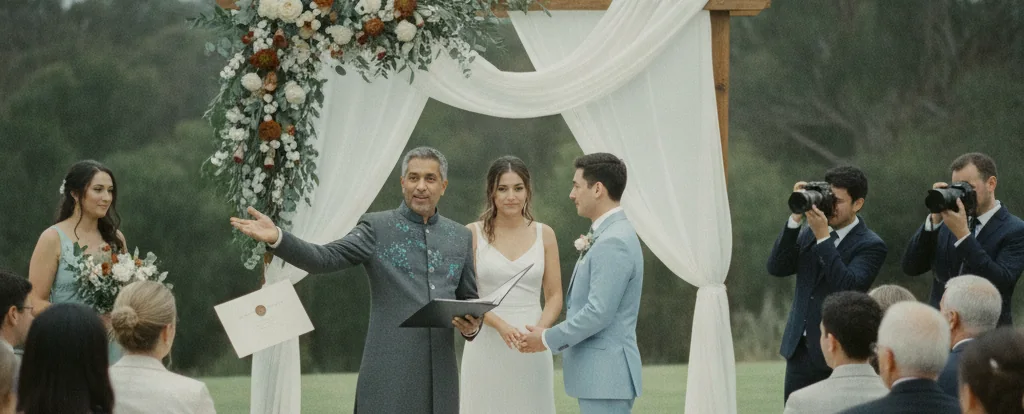
A marriage celebrant is authorised by law to conduct wedding ceremonies, and works with each couple to shape a service that fits them.
- Median salary*
- $49,300
4.0%vs last year, before tax
- People employed
- 1,100
0.0%vs last year
- Projected growth
- +11.5%
to 2035
- AI exposure*
- Low
- automation risk
- Average hours
- 40/wk
matches all-jobs average
- Shortage status
- Not in shortage
national
Marriage celebrants work for themselves, taking bookings directly from couples and meeting them at home, in a cafe or at the venue rather than in an office. They are authorised under the Commonwealth Marriage Celebrants Program, a separate path from religious celebrants appointed through a recognised faith. Ceremonies cluster on weekends and through the warmer months, so the work is usually built around other commitments.
How much do marriage celebrants earn?
The median full-time salary for a marriage celebrant is $49,300 per annum, before tax, up $10,300 since 2018.
Most celebrants are sole traders who set their own fee per ceremony, so annual earnings depend on how many weddings they take on and what they charge rather than on an award rate. Fees track the work involved: a short registry-style ceremony costs less to deliver than a fully personalised one with meetings, a rehearsal and travel. Many celebrants work part time alongside another job, which brings annual earnings below what a full booking load would suggest.
What does a marriage celebrant do day to day?
The list below is what fills most weeks; the exact mix shifts with seniority and whatever stage the current work is at.
- Meeting couples in the months beforehand to learn their story and how they want it told
- Writing a ceremony script that balances personal touches with the legal wording the Marriage Act requires
- Lodging the Notice of Intended Marriage and checking identity documents ahead of the day
- Officiating at weekend and evening ceremonies, from backyards and beaches to registry offices
- Signing the certificates with witnesses and lodging the paperwork with the registry afterwards
What skills do marriage celebrants need?
Employers look for regulatory compliance, backed by Microsoft Word fluency and strong written communication.
Specialist skills
- Regulatory compliance
Software and tools
- Microsoft Word
- Marriage Act 1961 reference documents
- Audio recording device
- Wedding planning software (e.g. The Knot, WeddingWire)
- Digital calendar and scheduling apps
General skills
- Written communication
- Stakeholder management
- Client relationships and advisory
- Presenting and data storytelling
- Empathy and interpersonal care
- Attention to detail
Is the job growing?
About 1,100 people work as marriage celebrants in Australia, and employment is projected to grow 11.5% over the decade to 2035. That's healthy, above-average growth, and the role should stay in solid demand.
How do you become a marriage celebrant?
Here's the path most marriage celebrants take, step by step.
- 1Check that you are eligible
Applicants must be at least 18, an Australian citizen or permanent resident, and able to satisfy a fit and proper person check run by the Attorney-General's Department.
- 2Complete the Certificate IV in Celebrancy
The course covers ceremony writing, the legal requirements of the Marriage Act 1961 and the business side of the work, and many providers deliver it online over several months. It is not paid training, and fees vary between providers.
- 3Apply to the Marriage Celebrants Program
Applications go to the Attorney-General's Department with the qualification, referee reports and police checks. Religious celebrants are authorised differently, through a recognised faith body.
- 4Keep your registration current
Registered celebrants pay an annual fee, complete ongoing professional development each year and keep their contact and ceremony details on the public register.
- 5Build the bookings
Registration gives you the legal authority to marry people, not a client list, so most celebrants start with small ceremonies for people they know and grow through referrals, listings and their own website.
Ready to apply as a marriage celebrant?
Whether you're working toward becoming a marriage celebrant or already are one and want a hand with the next step (sharpening your resume for ATS screening, tightening your cover letter, or knowing what you'll actually be asked at interview), here are examples grounded in this specific role, not generic templates.
What jobs can a marriage celebrant move to?
Moving into Counsellor typically comes with the biggest pay rise, worth $62,700 a year more on average.
| Move to | Typical pay change | Overlap | Retraining |
|---|---|---|---|
| Counsellor A marriage celebrant brings relationship guidance, active listening and ceremony experience, which supports clients in a counselling role after further study. | +$62,700 | 44% | reskill |
| Mediator A marriage celebrant brings client interviewing, ceremony management and legal process knowledge, which supports couples in mediation. | +$46,900 | 80% | short course |
| Funeral Director A marriage celebrant brings ceremony planning, public speaking and calm support for families, which carries directly into funeral directing. | +$19,300 | 62% | minimal |
Moves are chosen from Jobs and Skills Australia's Data on Occupation Mobility, which follows income tax records between 2011-12 and 2020-21, together with entry requirements and skill overlap. A known move is one people were seen making in that data. Pay change compares median full-time pay for the two roles.
Who works as a marriage celebrant?
The typical marriage celebrant is 56 years old; 79% are women, 19% work full-time, and full-timers average 40 hours a week.
- 56
- Median age
- 79%
- Female share
- 19%
- Full-time
- +0h
- vs all-jobs avg
What's it like being a marriage celebrant?
The rhythm runs on the couples: quiet stretches of meetings and writing, then a run of weekend ceremonies through spring and summer. Much of the preparation is done alone, and on the day you need to be composed and warm in front of a crowd that includes people you have never met. It suits someone organised and comfortable with public speaking, who likes moving between paperwork and personal storytelling.
What people like
- You are in the room for a genuinely happy day. Much of the job is hearing how two people met and what they mean to each other, then helping them say it out loud in front of the people they love.
- Every ceremony is a fresh brief. Couples arrive with different families, beliefs and ideas, so the writing never settles into the same template week after week.
- The public part is short. A ceremony runs for perhaps half an hour, and the rest of the job is meetings and paperwork you can schedule around other commitments.
- You choose your couples and your calendar. As a sole trader you can decline bookings, cap your weekends at what you can manage and raise your fee as demand allows.
What people find hard
- Staying registered costs money before you earn anything. Training, the annual registration fee, public liability insurance, professional development and equipment all come out of your own pocket.
- The admin does not appear in the photos. Notices of Intended Marriage, identity checks, certificates and lodgement deadlines have to be right every time, and mistakes carry legal weight.
- Weekends and summer belong to the job. Most weddings happen when everyone else is free, so Saturdays and a crowded December are the norm rather than the exception.
- It can be a solitary business. Between bookings you are on your own, marketing, invoicing and chasing enquiries with no team around you.
Based on our synthesis of professional-body surveys and public accounts of the role, not first-person verified reviews.
Which industries employ marriage celebrants?
Other Services employs the largest share of marriage celebrants.
Top employing industries
- 1Other Services
Ranked by employment share; the source doesn't publish an exact percentage per industry.
| Bachelor degree | 26.1% | |
|---|---|---|
| Certificate III/IV | 21.1% | |
| Diploma / Advanced Diploma | 18.4% | |
| Year 12 or below | 15.5% | |
| Postgraduate | 13.9% |
Will AI replace marriage celebrants?
AI reaches the edges of this job rather than the centre of it. Couples increasingly use AI to draft vows or find readings, and celebrants can use the same tools to tidy a script or manage a booking calendar, but the legal authority to marry someone sits with a registered person who checks documents and signs in person. Standing in front of a couple's family and friends and reading the room on the day is not something software does.
Share of typical working time by exposure level
- Officiating on the dayReading the ceremony aloud to a crowd, adjusting when a ring is dropped or a late guest arrives, and signing the certificates with witnesses all happen live.35%low
- Meeting couples and planning the ceremonyMost of the job is sitting with a couple, hearing their story and working out how they want the ceremony to feel, which depends on picking up what they are and are not saying.30%low
- Writing the ceremony scriptA drafting tool can turn out a serviceable structure or suggest readings, but the details that make the ceremony theirs come from the meetings.20%moderate
- Paperwork and registry lodgementThe Notice of Intended Marriage, identity checks and lodgement forms are document-driven and partly templated, though an error carries legal weight.15%moderate
Common questions about becoming a marriage celebrant
Straight answers to the questions people ask most.
How much does a marriage celebrant earn?
The median for a full-time marriage celebrant is $49,300 per year before tax. Because most celebrants are sole traders who set their own fees, what you actually earn depends on how many ceremonies you book and what you charge for each one. Celebrants who work part time around another job earn less than the full-time figure suggests.
How do you become a marriage celebrant?
You complete the Certificate IV in Celebrancy (CHC41015), then apply to the Attorney-General's Department's Marriage Celebrants Program, which assesses your qualification, referees and police checks. Once registered, you pay an annual fee and complete ongoing professional development each year to stay on the register. Religious celebrants are authorised through a recognised faith body instead.
Are marriage celebrants in demand?
Marriage celebrants are currently not in shortage, and employment in the role is projected to grow 11.5% over the decade to 2035. Because couples book a celebrant directly, work comes through referrals and the public register rather than advertised vacancies, so a local reputation matters as much as the national picture.
Will AI replace marriage celebrants?
AI exposure for this role is low. Script-writing tools can suggest a structure, a tone or a set of readings, and scheduling software handles bookings, but the legal authority to marry a couple rests with a registered person who checks identity documents and signs the certificates in person. Reading a ceremony to a room full of a couple's family and friends is live work that software cannot take over.
What can a marriage celebrant move into?
Funeral directing is a close fit: the ceremony conducting, public speaking and support for families carry over with minimal retraining, and funeral directors earn $19,300 more. Mediation uses the same client interviewing and legal process knowledge, with pay around $46,900 more, while counselling is a longer path requiring further study and pays $62,700 more. Most celebrants stay self-employed, and growing the practice through referrals and higher fees is often where earnings improve.
Can you work as a marriage celebrant part time?
Yes, and many do. Ceremonies cluster on weekends and through the warmer months, so the role fits around another job, study or caring responsibilities, though the paperwork and meetings still have to happen in the weeks beforehand.
Related roles
Not sure this is you? Take the career quiz and get a ranked shortlist of roles that fit how you like to work.