Embalmer
Embalmers prepare deceased bodies for funeral services, preserving and restoring them so families can see the person they knew.
- Median salary*
- $65,000
3.8%vs last year, before tax
- People employed*
- 1,200
0.0%vs last year
- Projected growth*
- +3%
to 2035
- AI exposure*
- Low
- automation risk
- Average hours*
- 38/wk
−2h vs all jobs
- Shortage status*
- Not in shortage
national
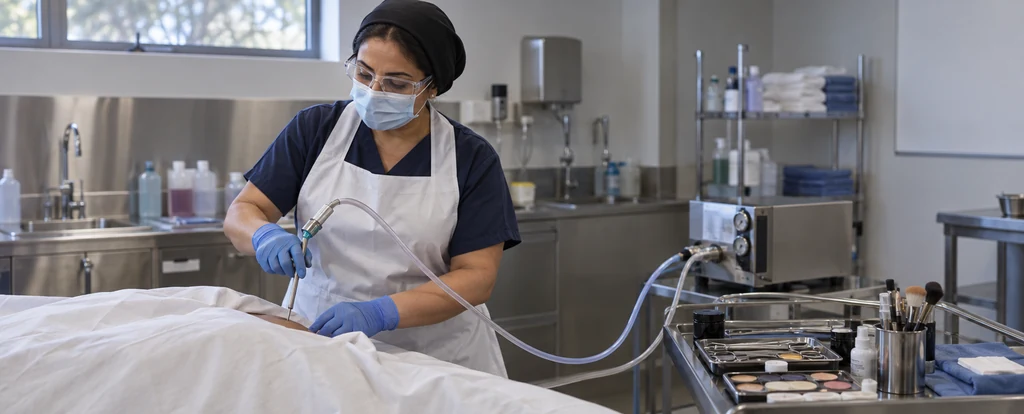
Embalmers work in mortuaries attached to funeral homes, hospitals and some public facilities, where they sanitise, preserve and restore a body before a viewing or burial. The job sits behind the scenes of a funeral, which separates it from a funeral director's work of arranging services and supporting the family. Most embalmers are employed by funeral companies, and many are on call because deaths do not keep office hours. They are distinct from mortuary technicians, who are more often involved in autopsy support and hospital post-mortem work.
How much do embalmers earn?
The median full-time salary for an embalmer is $65,000 per annum, before tax, up $13,500 since 2018.
Pay depends more on the employer than on the qualification: private funeral companies, hospital mortuaries and public sector facilities each set their own rates, and the large funeral groups generally pay more than small family firms. Experience lifts it further, particularly for people who take on after-hours and on-call work or handle complex reconstruction cases. Casual and relief positions are common in this field, so it is worth asking whether a role is permanent and how often you would be rostered on call.
What does an embalmer do day to day?
The list below is what fills most weeks; the exact mix shifts with seniority and whatever stage the current work is at.
- Washing and disinfecting the body, then checking for marks, injuries or medical devices before preservation begins
- Injecting preservative fluid through the vascular system and treating the internal organs with a trocar
- Reconstructing features after injury or surgery and applying cosmetics to restore a natural appearance
- Dressing and positioning the body in the coffin so it looks settled for a viewing
- Cleaning the embalming machine, recording the chemicals used and keeping case notes for the funeral director
What skills do embalmers need?
Employers look for infection control and hygiene, regulatory compliance, personal care services, backed by Embalming machine fluency and strong attention to detail.
Specialist skills
- Infection control and hygiene
- Regulatory compliance
- Personal care services
Software and tools
- Embalming machine
- Trocar and cannula
- Cosmetics and restoration kit
- Formaldehyde-based preservatives
- Personal protective equipment
General skills
- Attention to detail
- Empathy and interpersonal care
- Safety and compliance awareness
- Physical stamina and dexterity
- Customer service
Is the job growing?
About 1,200 people work as embalmers in Australia, and employment is projected to grow 3% over the decade to 2035. That's modest growth: demand is steady rather than booming.
How do you become an embalmer?
Here's the path most embalmers take, step by step.
- 1Meet the employer's entry requirements
Most workplaces ask for a driver's licence, a police check and current immunisations, because the work involves bloodborne pathogens and body fluids. There is no national licence to practise embalming in Australia, so entry comes down to the employer's checks and your willingness to work closely with deceased people.
- 2Study a Certificate IV in embalming
This is the usual qualification, or a funeral services course with an embalming stream, covering anatomy, infection control, preservation chemistry and restoration techniques. Many people study while working in a funeral company, since the practical hours form part of the course.
- 3Start as a mortuary or funeral services assistant
Most embalmers begin as mortuary assistants, drivers or funeral services assistants and move into preparation work as their skills build. The work is paid, and training happens under an experienced embalmer who signs off on your cases.
- 4Keep your compliance and training current
Chemical handling, infection control and workplace safety requirements sit under state and territory work health and safety law, not a single national scheme. Refresher training and membership of an industry association help when you move between employers or states.
Ready to apply as an embalmer?
Whether you're working toward becoming an embalmer or already are one and want a hand with the next step (sharpening your resume for ATS screening, tightening your cover letter, or knowing what you'll actually be asked at interview), here are examples grounded in this specific role, not generic templates.
What jobs can an embalmer move to?
Moving into Mortuary Technician typically comes with the biggest pay rise, worth $5,700 a year more on average.
| Move to | Typical pay change | Overlap | Retraining |
|---|---|---|---|
| Mortuary Technician Embalmers preserve and handle deceased bodies, so they can take on mortuary work including autopsy support after further training. | +$5,700 | 33% | reskill |
| Funeral Director Embalmers understand body preparation and presentation, so they can move into arranging and directing funerals with further training. | +$3,600 | 24% | reskill |
Moves are chosen from Jobs and Skills Australia's Data on Occupation Mobility, which follows income tax records between 2011-12 and 2020-21, together with entry requirements and skill overlap. A known move is one people were seen making in that data. Pay change compares median full-time pay for the two roles.
Who works as an embalmer?
The typical embalmer is 45 years old; 55% are men, 70% work full-time, and full-timers average 38 hours a week.
- 45
- Median age
- 45%
- Female share
- 70%
- Full-time
- −2h
- vs all-jobs avg
What's it like being an embalmer?
Embalming is methodical work in a quiet setting, with a rhythm set by callouts rather than by a clock. The pressure comes from getting the restoration right for one particular family and from handling preservative chemicals and infection risk safely every day. It suits people who are steady, respectful and comfortable working alone with a body, and who can move between technical care and brief, gentle contact with grieving relatives.
What people like
- Work you can finish properly. Each case has a clear end point: the body is prepared, the family sees it and the funeral goes ahead, which suits people who like to see a task through.
- A small, close team. Mortuaries run with a handful of staff, so you know your colleagues well and the handover between embalmer, assistant and funeral director is direct.
- Visible craft. Restoration and cosmetic work is skilled, and the result shows immediately in how a person looks for a viewing.
- Respectful independence. Once a case is under way you often work alone, and the role carries a quiet responsibility that many embalmers value.
What people find hard
- On-call and weekend work. Deaths happen at any hour and funerals are booked around family needs, so rosters include evenings, weekends and calls at short notice.
- Working with preservative chemicals. Formaldehyde-based fluids need good ventilation, protective equipment and careful handling, and long-term exposure is a genuine concern in poorly set up mortuaries.
- Emotionally heavy cases. Deaths involving children, accidents or advanced decomposition stay with you, even when you keep a professional distance.
- Few employers to choose from. Work is concentrated in funeral companies and hospital mortuaries, so changing jobs can mean moving town or waiting for a vacancy.
Based on our synthesis of professional-body surveys and public accounts of the role, not first-person verified reviews.
Which industries employ embalmers?
Funeral, Crematorium and Cemetery Services employs the largest share of embalmers, followed by Hospitals.
Top employing industries
- 1Funeral, Crematorium and Cemetery Services
- 2Hospitals
- 3Public Administration and Safety
Ranked by employment share; the source doesn't publish an exact percentage per industry.
| Certificate III/IV | 34% | |
|---|---|---|
| Diploma / Advanced Diploma | 26% | |
| Bachelor degree | 20% | |
| Year 12 or below | 20% |
Will AI replace embalmers?
Embalming has low exposure to AI and automation, because the core work is physical and cannot be done at a distance: preserving a body takes hands, judgement about tissue and an eye for how a face will look in a coffin. Digital tools have already changed the paperwork, with case management software, digital records and scheduling systems replacing paper files. Imaging and 3D printing can help plan a reconstruction after injury, but the restoration itself stays with the embalmer.
Share of typical working time by exposure level
- Preserving and restoring the bodyFluid injection, cavity treatment and tissue restoration depend on feel and visual judgement made on the body in front of you.50%low
- Preparing the body for a viewingDressing, positioning and cosmetic work are adjusted case by case to match how a family wants to remember the person.25%low
- Planning and discussing presentationDigital photographs and, for complex cases, 3D-printed facial prosthetics help plan a restoration before work begins.15%moderate
- Case records and chemical logsSoftware now handles case notes, preservation fluid records and the schedule shared with funeral directors.10%high
Common questions about becoming an embalmer
Straight answers to the questions people ask most.
How much do embalmers earn?
Embalmers earn a median of $65,000 per year before tax. That figure is a midpoint across full-time workers, and pay varies with the employer, your experience and how much on-call and after-hours work you take on.
How do you become an embalmer?
The usual route is a Certificate IV in embalming, or a funeral services qualification with an embalming stream, combined with paid work in a funeral company or mortuary. Because there is no national licence to practise, employers set their own requirements, and most people learn the practical side under an experienced embalmer.
Are embalmers in demand?
Embalmers are currently not in shortage, and employment is projected to grow 3% over the decade to 2035. The work follows population and death rates rather than the economic cycle, so it stays steady, but the occupation is small and local openings often depend on staff turnover.
Will AI or automation replace embalmers?
Not in any substantial way, because preservation and restoration are physical, hands-on tasks involving one particular body and one family's wishes. Software has taken over much of the paperwork, including case records, chemical logs and scheduling, and digital imaging or 3D printing can help plan a reconstruction. The preparation itself stays with the embalmer.
What other jobs can embalmers move into?
Funeral directing is a common move, since you already understand body preparation and presentation, and the pay is around $3,600 more. Mortuary technician work pays about $5,700 more and uses similar handling and infection control skills with more autopsy support. People also come into embalming from beauty therapy and mortuary work, because cosmetic and restoration skills carry across with further training.
Do embalmers need a licence?
There is no national registration or licence for embalming in Australia. Requirements come from your employer and from state and territory work health and safety law, which covers chemical handling, infection control and protective equipment.
Related roles
Not sure this is you? Take the career quiz and get a ranked shortlist of roles that fit how you like to work.