Eyelash Technician
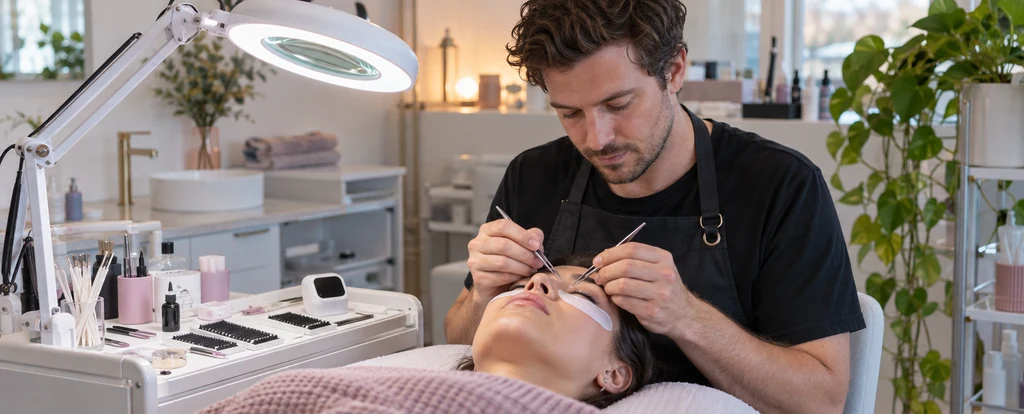
Eyelash technicians apply semi-permanent lash extensions, isolating one natural lash at a time so the finished set looks even and the client's eyes stay healthy.
- Median salary*
- $51,000
3.9%vs last year, before tax
- People employed*
- 4,500
0.0%vs last year
- Projected growth
- +10.6%
to 2035
- AI exposure*
- Low
- automation risk
- Average hours*
- 38/wk
−2h vs all jobs
- Shortage status
- In shortage
national
Most eyelash technicians work in beauty salons, day spas or a home studio, and plenty travel to clients as a mobile service. The work is narrower than beauty therapy, concentrating on lash consultations, application and refills rather than skin, nails or waxing, though many technicians add other treatments once they have a client base. Precision and hygiene count for more than speed, because adhesive sits millimetres from the eye and a poorly isolated lash can pull a natural one out.
How much do eyelash technicians earn?
The median full-time salary for an eyelash technician is $51,000 per annum, before tax, up $10,600 since 2018.
How the work is set up matters as much as experience: an employee in a salon is usually paid an hourly rate plus commission on treatments, while a technician who rents a chair or runs a mobile business keeps the treatment fee and covers their own supplies, insurance and super. A full client book and repeat refill clients are what lift earnings, so income builds gradually rather than with a promotion. Experience, speed and the treatments you are qualified to offer all move the figure.
What does an eyelash technician do day to day?
The list below is what fills most weeks; the exact mix shifts with seniority and whatever stage the current work is at.
- Consulting with clients on curl, length and thickness before a set
- Isolating a single natural lash and bonding one extension to it
- Working with adhesive in a ventilated space and judging its curing time
- Patch testing new clients and keeping tweezers and supplies sterile
- Booking and filling refill appointments, often every two to three weeks
What skills do eyelash technicians need?
Employers look for personal care services, hair and beauty services, craft and handmade production, backed by Lash extension tweezers fluency and strong attention to detail.
Specialist skills
- Personal care services
- Hair and beauty services
- Craft and handmade production
Software and tools
- Lash extension tweezers
- Eyelash extension adhesive
- Synthetic lash trays
- Fresha
- Timely
General skills
- Attention to detail
- Customer service
- Written communication
- Safety and compliance awareness
Is the job growing?
About 4,500 people work as eyelash technicians in Australia, and employment is projected to grow 10.6% over the decade to 2035. That's healthy, above-average growth, and the role should stay in solid demand.
How do you become an eyelash technician?
Here's the path most eyelash technicians take, step by step.
- 1Take a short course in eyelash extensions
Private training providers run lash courses over a day or a few days, covering isolation, adhesive handling, patch testing and hygiene. The certificate is what most insurers ask for before they will cover you, and it is the quickest way into paid work.
- 2Practise on models until your sets are consistent
Client-ready speed comes from repetition. Most new technicians need several months of practice to apply a full set in a reasonable time without sticking lashes together, and many salons hire on that demonstrated speed rather than on qualifications alone.
- 3Consider a Certificate III or IV in beauty services
A nationally recognised qualification broadens what you can offer and opens salon roles that combine lashes with waxing, tinting or skincare. It takes longer and costs more than a lash short course, but it supports the move into beauty therapy or dermal work later.
- 4Arrange insurance and check the rules for your workplace
Public liability and professional indemnity cover are standard requirements, whether you rent a chair, work from home or travel to clients. If you run a home studio, local council rules on home-based businesses apply, and requirements vary by state.
Ready to apply as an eyelash technician?
Whether you're working toward becoming an eyelash technician or already are one and want a hand with the next step (sharpening your resume for ATS screening, tightening your cover letter, or knowing what you'll actually be asked at interview), here are examples grounded in this specific role, not generic templates.
What jobs can an eyelash technician move to?
Moving into Salon Manager typically comes with the biggest pay rise, worth $14,000 a year more on average.
| Move to | Typical pay change | Overlap | Retraining |
|---|---|---|---|
| Salon Manager Experienced eyelash technicians can move into salon management, adding rostering and business duties to their treatment expertise. | +$14,000 | 19% | reskill |
| Hairdresser Salon client service and manual dexterity transfer to hairdressing, though a full apprenticeship is needed to qualify.Known move | +$11,900 | 60% | requalify |
| Beauty Therapist An eyelash technician brings precision and hygiene to broader beauty treatments, with further study to qualify as a beauty therapist. | +$10,300 | 60% | reskill |
| Dermal Therapist An eyelash technician can progress into skin treatments, with further study in dermal therapies and client assessment. | +$8,800 | 29% | reskill |
| Makeup Artist Precision and client care carry into makeup artistry, with a short course to build product and styling skills. | −$1,600 | 53% | short course |
Moves are chosen from Jobs and Skills Australia's Data on Occupation Mobility, which follows income tax records between 2011-12 and 2020-21, together with entry requirements and skill overlap. A known move is one people were seen making in that data. Pay change compares median full-time pay for the two roles.
Who works as an eyelash technician?
The typical eyelash technician is 30 years old; 95% are women, 45% work full-time, and full-timers average 38 hours a week.
- 30
- Median age
- 95%
- Female share
- 45%
- Full-time
- −2h
- vs all-jobs avg
What's it like being an eyelash technician?
The job runs on appointments, so the day is a series of short bursts of very close, careful work with a client lying still beside you. Patience and a steady hand matter more than a bubbly manner, and technicians who enjoy the detail tend to last longer than those who treat it as a quick entry to beauty work. Income and pace both depend on how full the book is, which is why refills and regulars shape the week.
What people like
- A set that comes together evenly. Symmetry is visible immediately, and there is real satisfaction in finishing a full set where every extension sits straight and the two eyes match.
- Clients who book their refills before they leave. Lash work runs on a two to three week cycle, so regular clients give you a predictable week and a base income rather than a constant hunt for new bookings.
- Quiet, focused work. Much of the day is spent in close concentration, and some clients sleep through their appointment. If you like detailed handwork more than a busy salon floor, that suits.
- Several ways to structure the work. You can rent a chair in a salon, run a mobile service, set up a home studio or combine lashes with other treatments. That flexibility is unusual in entry-level beauty roles.
What people find hard
- The physical toll of close work. Hours bent over a lash bed strain the neck, shoulders, back and wrists, and staring at fine lashes through the day tires your eyes. Posture and breaks matter more than most new technicians expect.
- Cancellations and no-shows cost you directly. If you are paid per treatment, a late cancellation is lost income and a gap you cannot easily fill at short notice. Deposits and confirmation messages help but do not remove the problem.
- Building a client book takes time. The first year is often slow, especially for mobile technicians and home studios with no passing traffic. Word of mouth, social media and returning clients do most of the work.
- Adhesive reactions happen. Some clients react to cyanoacrylate adhesive and cannot continue, even when the application was correct. Patch testing, ventilation and careful product choice reduce the risk rather than removing it.
Based on our synthesis of professional-body surveys and public accounts of the role, not first-person verified reviews.
Which industries employ eyelash technicians?
Beauty salons employs the largest share of eyelash technicians, followed by Day spas and wellness centres.
Top employing industries
- 1Beauty salons
- 2Day spas and wellness centres
- 3Mobile beauty services
- 4Cosmetic and beauty retail
Ranked by employment share; the source doesn't publish an exact percentage per industry.
| Certificate III/IV | 34% | |
|---|---|---|
| Diploma / Advanced Diploma | 26% | |
| Bachelor degree | 20% | |
| Year 12 or below | 20% |
Will AI replace eyelash technicians?
Exposure is low. The application itself is close, manual work done one lash at a time, and adhesive placement near the eye is not something automation currently handles. Software such as Fresha and Timely has already changed the administrative side, taking over booking, reminders, deposits and marketing messages, but the treatment still takes place in person.
Share of typical working time by exposure level
- Applying lash extensionsIsolating a natural lash and bonding an extension to it needs a steady hand and constant visual judgement, which is why it stays with the technician.55%low
- Bookings, pricing and client recordsPlatforms like Fresha and Timely handle appointments, reminders, deposits and follow-up messages, which replaces most of the diary and admin work.20%high
- Client consultations and style choicesTools can suggest curl and length combinations from a photo, but the decision still comes from looking at the client's eye shape and asking what they want.15%moderate
- Hygiene, patch testing and aftercareSterilising tweezers, patch testing new clients and checking for irritation run through every appointment and depend on the technician's own habits.10%low
Common questions about becoming an eyelash technician
Straight answers to the questions people ask most.
How much do eyelash technicians earn?
Eyelash technicians earn a median of $51,000 per year, before tax, for full-time work. Earnings vary widely with how the work is structured, since commission, chair rent and whether you run your own bookings change the take-home figure more than seniority does.
How do I become an eyelash technician?
Most people start with a short lash extension course from a private provider, then practise on models until their sets are quick and consistent, and take out public liability and professional indemnity insurance. A Certificate III or IV in beauty services is worth adding if you want salon employment or plan to offer treatments beyond lashes.
Are eyelash technicians in demand?
Eyelash technicians are currently in shortage nationally, and their numbers are projected to grow 10.6% over the decade to 2035. Demand is spread across small salons and sole operators, so the openings are mostly built by attracting local clients rather than advertised in bulk.
Will AI replace eyelash technicians?
Exposure is low, because the core task is fine manual work around a client's eye that no current technology performs. Booking platforms such as Fresha and Timely already handle reminders, deposits and marketing, which removes admin rather than the application itself.
What can an eyelash technician move into?
Beauty therapy is a common next step and pays $10,300 more, with further study covering skin, waxing and other treatments. Dermal therapy suits technicians who want to focus on skin, and salon management adds rostering and business duties for those who prefer running a team.
Can eyelash technicians run their own business?
Yes, and many do, by renting a chair, working mobile or opening a home studio, which is often where earnings grow because you keep the treatment fee. You will need your own insurance, supplies, super and tax arrangements, and a booked client base before the move pays off.
Related roles
Not sure this is you? Take the career quiz and get a ranked shortlist of roles that fit how you like to work.