Salon Assistant
Salon assistants keep a salon clean, stocked and running to time, and they are often the first person a client meets at the door.
- Median salary*
- $49,900
4.4%vs last year, before tax
- People employed
- 1,400
0.0%vs last year
- Projected growth
- +11.5%
to 2035
- AI exposure*
- Low
- automation risk
- Average hours
- 34/wk
−6h vs all jobs
- Shortage status
- Not in shortage
national
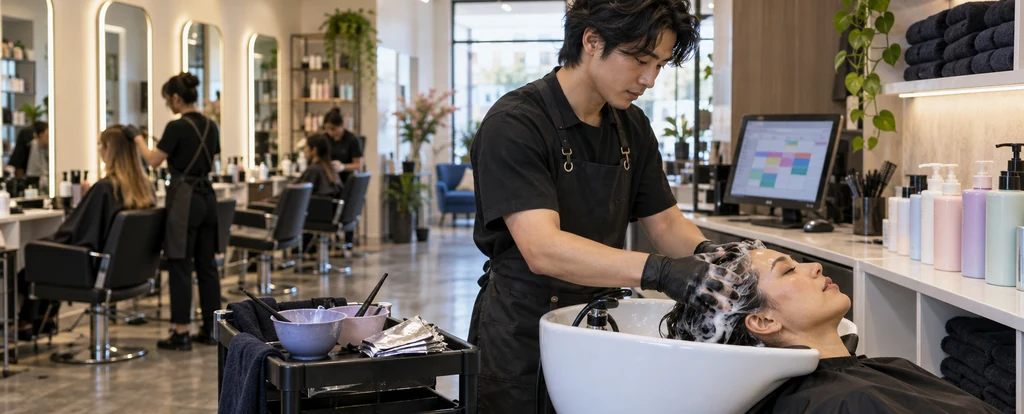
Salon assistants work in hairdressing salons, barbershops, beauty clinics and day spas, usually in a small team of two to ten people. Unlike a hairdresser or beauty therapist, they are not qualified to cut, colour or treat clients on their own, and their work supports whoever is. Most roles are part time, and Saturday is the busiest day of the week.
How much do salon assistants earn?
The median full-time salary for a salon assistant is $49,900 per annum, before tax, up $10,500 since 2018.
Most salon assistants are paid under the Hair and Beauty Industry Award, which sets minimum rates that step up with age and experience, so junior and trainee pay sits below the figure above. Casual work and weekend shifts attract penalty rates and loadings, which can lift take-home pay, and some salons add commission on retail products sold.
What does a salon assistant do day to day?
The list below is what fills most weeks; the exact mix shifts with seniority and whatever stage the current work is at.
- Greeting clients, answering the phone and booking appointments in the salon's scheduling software
- Shampooing and conditioning clients' hair and applying treatment masks
- Sterilising tools, sweeping floors and keeping basins, mirrors and workstations clean
- Mixing colour and passing foils to the stylist, then helping with the blow-dry
- Folding towels, ordering supplies and restocking retail products on the shelf
What skills do salon assistants need?
Employers look for cleaning and grounds maintenance, personal care services, hair and beauty services, backed by Timely fluency and strong customer service.
Specialist skills
- Cleaning and grounds maintenance
- Personal care services
- Hair and beauty services
Software and tools
- Timely
- Kitomba
- Phorest
- Square Appointments
General skills
- Customer service
- Attention to detail
- Written communication
- Digital literacy
Is the job growing?
About 1,400 people work as salon assistants in Australia, and employment is projected to grow 11.5% over the decade to 2035. That's healthy, above-average growth, and the role should stay in solid demand.
How do you become a salon assistant?
Here's the path most salon assistants take, step by step.
- 1Start without a qualification
There is no minimum entry requirement. About 70% of salon assistants have Year 12 or below as their highest level of study, so you can apply straight from school with no prior training.
- 2Do a Certificate II in Salon Assistant
This is the standard entry qualification and takes about six months to a year at TAFE or a private registered training organisation. It covers shampooing, hygiene, client service and salon routines, and it is often delivered as a traineeship so you earn while you learn.
- 3Find a traineeship or entry-level job
Small salons hire on attitude and reliability more than experience, and school-based traineeships let you finish Year 12 while working weekends. Pay during a traineeship follows the award trainee rates.
- 4Add a Certificate III if you want to go further
A Certificate III in Hairdressing (SHB30416) or a beauty therapy qualification is what lets you treat clients yourself, usually through an apprenticeship of three to four years. This is the step that moves you from assistant pay towards hairdresser or beauty therapist pay.
- 5Consider a short course in a specialty
Short courses in nail technology or eyelash extensions take weeks rather than years and build directly on the hygiene and client handling you already do, which makes them a quicker route to more qualified work.
Ready to apply as a salon assistant?
Whether you're working toward becoming a salon assistant or already are one and want a hand with the next step (sharpening your resume for ATS screening, tightening your cover letter, or knowing what you'll actually be asked at interview), here are examples grounded in this specific role, not generic templates.
What jobs can a salon assistant move to?
Moving into Hairdresser typically comes with the biggest pay rise, worth $13,000 a year more on average.
| Move to | Typical pay change | Overlap | Retraining |
|---|---|---|---|
| Hairdresser Salon assistants already know salon routines and client care, and a hairdressing apprenticeship builds cutting and colouring skills.Known move | +$13,000 | 33% | requalify |
| Barber Salon assistants bring client service and salon hygiene to barbering, with an apprenticeship needed for clipper and razor work.Known move | +$13,000 | 32% | requalify |
| Beauty Therapist Salon assistants understand salon operations and client service, and a beauty therapy diploma adds facial and skin treatment skills.Known move | +$11,400 | 60% | reskill |
| Eyelash Technician Salon assistants bring salon hygiene and client handling, and a short course covers eyelash extension application.Known move | +$1,100 | 53% | short course |
| Nail Technician Salon assistants already handle hygiene and client care, and nail technician training adds manicure and pedicure techniques.Known move | −$500 | 75% | minimal |
Moves are chosen from Jobs and Skills Australia's Data on Occupation Mobility, which follows income tax records between 2011-12 and 2020-21, together with entry requirements and skill overlap. A known move is one people were seen making in that data. Pay change compares median full-time pay for the two roles.
Who works as a salon assistant?
The typical salon assistant is 19 years old; 92% are women, 11% work full-time, and full-timers average 34 hours a week.
- 19
- Median age
- 92%
- Female share
- 11%
- Full-time
- −6h
- vs all-jobs avg
What's it like being a salon assistant?
The job has a clear rhythm: set up before the first client, keep the floor moving through the day, and reset at the end. It suits people who like being on their feet, working with their hands and being around other people all day, and who do not mind that the busiest hours are evenings and Saturdays. The work is physical and repetitive in parts, but it is also sociable and easy to leave at the salon door.
What people like
- You see the result straight away. A client walks out with clean, styled hair and thanks whoever washed it. That feedback comes several times a day, which is more immediate than most entry-level jobs offer.
- It fits around study. Many salons need cover on Saturdays, late nights and school holidays, so part-time and casual shifts suit someone finishing Year 12 or studying.
- A good salon runs as a team. In a small team you know everyone's clients and habits, and experienced stylists often teach assistants how colour, foils and blow-dries actually work.
- It is a real way into the industry. You start without qualifications and finish with salon experience, which counts towards a hairdressing or beauty therapy apprenticeship.
What people find hard
- A lot of the work is cleaning. Floors, basins, towels and tools are your responsibility all day, and it is not glamorous work, even in a high-end salon.
- Saturdays and late nights are the busy times. The hours that suit the business are the ones that cut into your own weekends, and swapping shifts is not always easy in a small team.
- Pay starts low. Junior and trainee rates sit at the bottom of the award, so the first year or two is hard to live on without support or a second job.
- Busy stretches can be relentless. On a packed Saturday you may be washing hair, folding towels and answering the phone at once, and clients can be impatient when the salon is running behind.
Based on our synthesis of professional-body surveys and public accounts of the role, not first-person verified reviews.
Which industries employ salon assistants?
Other Services employs the largest share of salon assistants.
Top employing industries
- 1Other Services
Ranked by employment share; the source doesn't publish an exact percentage per industry.
| Year 12 or below | 70.4% | |
|---|---|---|
| Certificate III/IV | 13.1% | |
| Diploma / Advanced Diploma | 6.8% | |
| Bachelor degree | 4.7% | |
| Postgraduate | 1.4% |
Will AI replace salon assistants?
Salon assistant work is only lightly exposed to AI. Booking, rostering and stock systems already handle much of the scheduling and record keeping, and that will keep expanding, but the core of the job is physical and hands-on. Washing hair, sterilising tools, folding towels and keeping a client comfortable are not tasks software can do.
Share of typical working time by exposure level
- Shampooing and conditioningWashing a client's hair means judging water temperature, pressure and how the scalp feels, and that stays with the assistant.30%low
- Assisting with colour and blow-dryingMixing colour to the stylist's formula and passing foils is guided work that depends on what is happening in front of you.25%low
- Cleaning, sterilising and stockAutomatic reordering and stock software reduce the counting, but the physical washing, sweeping and sterilising of tools does not change.25%moderate
- Bookings, reminders and client recordsSalon software such as Timely or Kitomba now sends appointment reminders and stores client history automatically, which removes some phone and paper work.20%moderate
Common questions about becoming a salon assistant
Straight answers to the questions people ask most.
How much do salon assistants earn?
Salon assistants earn a median of $49,900 per year before tax in full-time work. Casual and part-time roles are common and junior rates apply to younger workers, so actual pay varies widely. Penalty rates for weekends and late nights are where most of the extra money comes from.
How do I become a salon assistant?
Most people apply directly to salons with no qualification, or start a Certificate II in Salon Assistant (SHB20216) as a traineeship. The qualification covers shampooing, hygiene and client service, and takes about six months to a year. Reliability and a friendly manner matter more to employers than prior experience.
Are salon assistants in demand?
Salon assistants are currently not in shortage, and employment is projected to grow 11.5% over the decade to 2035. The occupation is small, with about 1,400 people nationally, so openings tend to be local and appear as staff move on. Applying in person to salons near you works better than waiting for advertised vacancies.
Will AI replace salon assistants?
Booking, rostering and stock software already handles the scheduling and record keeping, and that side of the job will keep shrinking. The rest is physical and personal: washing hair, sterilising tools, folding towels and looking after a client who is sitting in the chair. A salon still needs someone in the room to do it.
What can a salon assistant move on to?
The usual moves are into hairdressing, barbering, nail technology or beauty therapy, and each needs its own qualification. Hairdressers earn $13,000 more, while nail technicians earn $500 less after a short course that builds on the hygiene and client care you already do. Running your own salon or renting a chair is a common longer-term step, and it is often where earnings grow.
Do I need a qualification to be a salon assistant?
No, salon assistant is an entry-level role and many people start with no formal training at all. A Certificate II in Salon Assistant helps you stand out and teaches the hygiene and shampooing skills employers check. If you plan to go on to hairdressing, starting the traineeship early counts towards the apprenticeship.
Related roles
Not sure this is you? Take the career quiz and get a ranked shortlist of roles that fit how you like to work.