Hairdresser
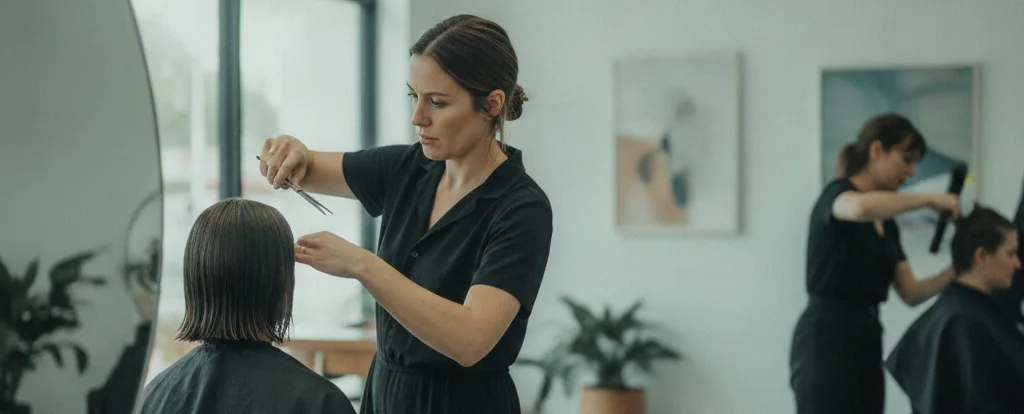
Hairdressers cut, colour and style hair, working with each client to find a look that suits them and that they can keep up at home.
- Median salary
- $62,900
4.1%vs last year, before tax
- People employed
- 65,400
0.6%vs last year
- Projected growth
- +5.6%
to 2035
- AI exposure*
- Low
- automation risk
- Average hours
- 40/wk
matches all-jobs average
- Shortage status
- In shortage
national
Hairdressers cut, colour and style hair in salons, and many also straighten, treat and extend hair as part of a normal week. Most qualify through a Certificate III in Hairdressing, usually completed as a paid apprenticeship over about three years while working under a qualified stylist. It is a different job from barbering, which centres on clipper work and shorter men's cuts, though plenty of hairdressers add barbering later.
How much do hairdressers earn?
The median full-time salary for a hairdresser is $62,900 per annum, before tax, up $13,200 since 2018.
How you are paid matters as much as where you work: some salons pay an hourly rate under the Hair and Beauty Industry Award, others pay commission on the services and products you sell, and some stylists rent a chair and keep their own takings. Weekend, evening and public holiday penalty rates lift the hourly rate, and a steady clientele usually does more for your earnings than changing salons. Award rates also differ by state and territory, and pay rises with the share of your week spent on higher-priced colour and chemical work.
What does a hairdresser do day to day?
The list below is what fills most weeks; the exact mix shifts with seniority and whatever stage the current work is at.
- Cutting, colouring and styling a booked column of clients, often with little gap between appointments
- Standing and reaching over basins and chairs for most of a shift, including the late nights and Saturdays when salons are busiest
- Consulting with each client about what suits their hair and what they can realistically keep up at home
- Mixing and timing colour and chemical treatments so the result is even and the hair is not damaged
- Building a client base that rebooks and will follow you if you move salons
What skills do hairdressers need?
Employers look for hair and beauty services, craft and handmade production, backed by Hair scissors and clippers fluency and strong customer service.
Specialist skills
- Hair and beauty services
- Craft and handmade production
Software and tools
- Hair scissors and clippers
- Hair dryers and straighteners
- Colour mixing and application equipment
- Salon management software
- Sterilisation equipment
General skills
- Customer service
- Written communication
- Attention to detail
- Empathy and interpersonal care
- Problem solving
Is the job growing?
About 65,400 people work as hairdressers in Australia, and employment is projected to grow 5.6% over the decade to 2035. That's modest growth: demand is steady rather than booming.
How do you become a hairdresser?
Here's the path most hairdressers take, step by step.
- 1Find a salon apprenticeship
The standard way in is a paid apprenticeship, often started after Year 10 or Year 12 and sometimes while still at school as a school-based apprenticeship. You work in a salon from day one and learn on real clients while you study.
- 2Complete the Certificate III in Hairdressing
The qualification takes about three years full time, delivered through TAFE or a private registered training organisation alongside your salon work. It covers cutting, colour, chemical services, hair and scalp science and client consultation, and it is what employers ask for even though hairdressing is not a licensed occupation in Australia.
- 3Build a clientele as a qualified stylist
Once qualified you are paid as a stylist rather than an apprentice, and your value to a salon comes from clients who ask for you by name. Rebooking, product advice and running your own column reliably are what start to move your pay.
- 4Add specialist skills
Short courses in barbering, colour correction, extensions or bridal styling widen what you can take on and what you can charge. They are not required, but they are how stylists set themselves apart.
- 5Move towards management or chair rental
Experienced hairdressers often step into salon management, rent a chair and run their own books, or open a salon of their own. Management usually calls for some business or retail training on top of the trade qualification.
Ready to apply as a hairdresser?
Whether you're working toward becoming a hairdresser or already are one and want a hand with the next step (sharpening your resume for ATS screening, tightening your cover letter, or knowing what you'll actually be asked at interview), here are examples grounded in this specific role, not generic templates.
What jobs can a hairdresser move to?
Moving into Store Manager typically comes with the biggest pay rise, worth $21,300 a year more on average.
| Move to | Typical pay change | Overlap | Retraining |
|---|---|---|---|
| Store Manager Hairdressers with client service and retail salon experience can move into store management, though a retail management qualification is usually needed.Known move | +$21,300 | 8% | reskill |
| Salon Manager Experienced hairdressers can step up to salon manager, overseeing operations and staff, usually with a business or management qualification. | +$2,100 | 21% | reskill |
| Barber Hairdressers can specialise in barbering, applying their cutting skills to men's grooming after a short barbering course. | +$0 | 35% | short course |
| Beauty Therapist Hairdressers can build on their salon skills to become beauty therapists, providing skin and beauty treatments after a short course.Known move | −$1,600 | 47% | short course |
| Eyelash Technician Hairdressers can specialise in eyelash extensions, using their fine motor skills and client care experience after a short course.Known move | −$11,900 | 60% | short course |
Moves are chosen from Jobs and Skills Australia's Data on Occupation Mobility, which follows income tax records between 2011-12 and 2020-21, together with entry requirements and skill overlap. A known move is one people were seen making in that data. Pay change compares median full-time pay for the two roles.
Who works as a hairdresser?
The typical hairdresser is 36 years old; 76% are women, 51% work full-time, and full-timers average 40 hours a week.
- 36
- Median age
- 76%
- Female share
- 51%
- Full-time
- +0h
- vs all-jobs avg
What's it like being a hairdresser?
The work has a steady rhythm: appointments arrive, you finish one look and start the next, and the day ends with something visible to show for it. Salons are busiest on late nights and Saturdays, so the week usually includes evening finishes and weekend work rather than a Monday to Friday pattern. It suits people who like using their hands and talking with a wide range of clients, and it rewards patience with the unglamorous parts, such as basin work, sweeping up and the standing that never really stops.
What people like
- You see the result straight away. A cut or colour is finished within the appointment, and the client leaves looking different. There is little waiting to find out whether the work landed.
- Regulars who come back for years. Hairdressing runs on relationships. Clients who book with you every six weeks for a decade are the backbone of the job, and the conversation is a real part of the work.
- A hands-on skill that travels. Cutting and colouring are learned in your hands and stay with you, and the qualification is recognised in most countries if you want to work overseas.
- The day finishes at the salon. Unlike office roles, very little of the work follows you home. Clients, stock and paperwork stay behind when you lock up.
What people find hard
- Standing all day. Shifts are spent on your feet, reaching across basins and chairs. Feet, knees, shoulders and wrists take the strain over a career, and good shoes and posture matter more than most people expect.
- Quiet chairs cost you money. When pay includes commission or chair rental, a slow week or a run of cancellations shows up in your income. Public holidays and January can be noticeably quieter.
- Evenings and Saturdays. That is when clients can come in, so those are the shifts you work. Days off often fall on Sundays and Mondays, when friends in other jobs are free.
- A colour that goes wrong is expensive. Chemical work carries real risk: a patch test missed, or a client who asked for something their hair cannot take. Fixing it can take hours and eat into your day.
Based on our synthesis of professional-body surveys and public accounts of the role, not first-person verified reviews.
Which industries employ hairdressers?
Other Services employs the largest share of hairdressers.
Top employing industries
- 1Other Services
Ranked by employment share; the source doesn't publish an exact percentage per industry.
| Certificate III/IV | 72% | |
|---|---|---|
| Year 12 or below | 15.7% | |
| Diploma / Advanced Diploma | 7.1% | |
| Bachelor degree | 1.8% | |
| Postgraduate | 0.4% |
Will AI replace hairdressers?
Hairdressing carries low exposure to AI and automation because the core of the job is physical: hands on a client's actual hair, judged by eye and adjusted as you go. Salon software has already taken over the diary, reminders, client records and stock, and colour apps can suggest a formula, but none of that cuts or applies anything. What changes is the admin around the chair, not the work in it.
Share of typical working time by exposure level
- Cutting and stylingChoosing a shape and cutting it to suit the head in front of you is done with scissors, clippers and judgement, and no tool currently does that for you.40%low
- Colour, lightening and chemical servicesSoftware can suggest a shade, but mixing, applying and watching how the hair responds during processing is a decision made on the spot with real hair.30%low
- Client consultation and rebookingWorking out what a client wants, whether their hair will take it and what they can maintain at home is conversation and trust rather than a task that can be handed over.20%low
- Bookings, stock and promotionSalon management systems run the diary, reminders and client history, and rostering or social media captions can be drafted automatically, which trims admin time but not the styling.10%moderate
Common questions about becoming a hairdresser
Straight answers to the questions people ask most.
How much do hairdressers earn in Australia?
Hairdressers earn a median of $62,900 per year before tax, though pay is often built from an hourly rate, commission or chair rental rather than a flat salary. Weekend and evening penalty rates, a full column of clients and a high share of colour and chemical work all lift it.
How do you become a hairdresser?
The usual route is a Certificate III in Hairdressing (SHB30416) completed as a paid apprenticeship in a salon over about three years. You need an employer willing to take you on, then you study through TAFE or a private training provider while you work. Hairdressing is not a licensed occupation, so there is no separate registration, but employers expect the Certificate III.
Are hairdressers in demand in Australia?
Hairdressers are currently in shortage nationally, and employment is projected to grow 5.6% over the decade to 2035. For someone qualified and willing to work late nights and Saturdays, that usually means salons are hiring, though a junior with no clients yet still has to prove themselves in the chair.
Will AI replace hairdressers?
Cutting and colouring real hair on a real head is still done by hand, which keeps AI exposure low for this job. Salon software already handles bookings, reminders and client records, and apps can suggest colour formulas, but they speed up the admin rather than the styling. The consultation and the relationship with a regular client stay human.
What can hairdressers move into?
Beauty therapy and eyelash extensions are common moves, because much of the salon routine and client care carries over after a short course; beauty therapy pay is $1,600 less and eyelash work is $11,900 less. Experienced stylists often step up to salon manager, where pay is $2,100 more, or move into retail store management with a qualification. Many also rent a chair, work for themselves or open their own salon, which is often where earnings grow.
Do hairdressers work weekends?
Usually yes, because that is when most clients can get in. Salons commonly roster one late night, often Thursday, plus Saturday, and plenty close on Sundays and Mondays to balance it. Your days off will often fall outside the standard Monday to Friday week.
Related roles
Not sure this is you? Take the career quiz and get a ranked shortlist of roles that fit how you like to work.