Mortuary Technician
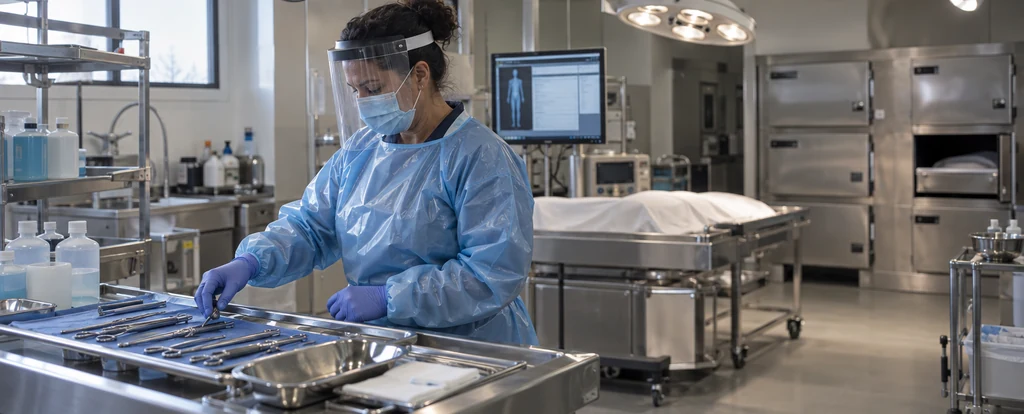
Mortuary technicians care for deceased people in hospital mortuaries and forensic facilities, preparing bodies for autopsy, viewing and release to a funeral director.
- Median salary*
- $70,700
3.7%vs last year, before tax
- People employed*
- 2,100
0.0%vs last year
- Projected growth*
- +6%
to 2035
- AI exposure*
- Moderate
- automation risk
- Average hours*
- 38/wk
−2h vs all jobs
- Shortage status*
- Not in shortage
national
Most mortuary technicians work in public hospital mortuaries, with others in coronial and forensic pathology services, funeral businesses and university anatomy departments. The job sits closer to laboratory and clinical practice than to funeral directing, because the emphasis is on identification, infection control and assisting a pathologist rather than arranging a service. Mortuary teams are small, so new technicians usually learn the routine alongside an experienced colleague.
How much do mortuary technicians earn?
The median full-time salary for a mortuary technician is $70,700 per annum, before tax, up $14,600 since 2018.
Pay follows the employer more than the job title. Hospital mortuary staff are usually covered by a state health award or enterprise agreement, where shift work, weekend rosters, on-call and public holiday penalties add to the base rate, while funeral businesses set their own conditions. Taking on supervisory or embalming duties, or moving into a forensic service, changes the classification you sit under, and the award that applies varies by state.
What does a mortuary technician do day to day?
The list below is what fills most weeks; the exact mix shifts with seniority and whatever stage the current work is at.
- Receiving deceased people into the mortuary, confirming identity and recording the details in the body tracking system
- Setting up the table and instruments, then assisting the pathologist through a post-mortem examination
- Cleaning, disinfecting and sterilising instruments, tables and equipment after every case
- Reconstructing and cosmetically preparing bodies, then dressing them for viewing or release
- Managing refrigeration space and releasing bodies to funeral directors, families or coronial services
What skills do mortuary technicians need?
Employers look for infection control and hygiene, regulatory compliance, laboratory analysis, backed by Mortuary management and body tracking software fluency and strong attention to detail.
Specialist skills
- Infection control and hygiene
- Regulatory compliance
- Laboratory analysis
- Medical administration and records
- Process improvement
Software and tools
- Mortuary management and body tracking software
- Dissection and post-mortem instruments
- Embalming and cosmetic preparation equipment
- Personal protective equipment (PPE)
- Cold storage and mortuary refrigeration systems
General skills
- Attention to detail
- Safety and compliance awareness
- Written communication
Is the job growing?
About 2,100 people work as mortuary technicians in Australia, and employment is projected to grow 6% over the decade to 2035. That's modest growth: demand is steady rather than booming.
How do you become a mortuary technician?
Here's the path most mortuary technicians take, step by step.
- 1Finish Year 12 or its equivalent
There is no set prerequisite, but biology, chemistry and mathematics help, and some employers accept Year 10 with relevant work experience.
- 2Complete a Certificate III or IV in funeral services
TAFE and private providers offer these certificates, which cover embalming, mortuary practice, infection control and funeral operations, with an embalming stream at Certificate IV level. Study can be done part time while you work.
- 3Apply for an entry-level mortuary role
Hospital mortuaries, forensic pathology services and funeral businesses take on assistants and train them in their own procedures. A police check, hepatitis B immunisation and a driver licence are usually required.
- 4Build forensic or coronial experience
Assisting at coronial post-mortems and handling identification work builds the experience senior mortuary positions ask for, and coronial services may require extra clearances. Requirements differ between states.
- 5Study further for senior or specialist roles
A Diploma of Laboratory Technology (MSL50122), or a degree in forensic science or health science, supports supervisory, research and teaching positions.
Ready to apply as a mortuary technician?
Whether you're working toward becoming a mortuary technician or already are one and want a hand with the next step (sharpening your resume for ATS screening, tightening your cover letter, or knowing what you'll actually be asked at interview), here are examples grounded in this specific role, not generic templates.
What jobs can a mortuary technician move to?
Moving into Operating Theatre Technician typically comes with the biggest pay rise, worth $9,900 a year more on average.
| Move to | Typical pay change | Overlap | Retraining |
|---|---|---|---|
| Operating Theatre Technician A mortuary technician brings sterile technique, anatomy knowledge and calm handling of surgical instruments to operating theatre work. | +$9,900 | 24% | reskill |
| Anaesthetic Technician A mortuary technician brings anatomy knowledge, sterile technique and attention to detail to anaesthetic technician work. | +$9,900 | 24% | reskill |
| Sterilisation Technician A mortuary technician brings infection control, instrument handling and attention to detail to sterilisation technician work. | −$8,300 | 50% | short course |
Moves are chosen from Jobs and Skills Australia's Data on Occupation Mobility, which follows income tax records between 2011-12 and 2020-21, together with entry requirements and skill overlap. A known move is one people were seen making in that data. Pay change compares median full-time pay for the two roles.
Who works as a mortuary technician?
The typical mortuary technician is 42 years old; 52% are men, 76% work full-time, and full-timers average 38 hours a week.
- 42
- Median age
- 48%
- Female share
- 76%
- Full-time
- −2h
- vs all-jobs avg
What's it like being a mortuary technician?
The day is shaped by the case list rather than by appointments, so work moves between quiet preparation and the concentrated effort of a post-mortem. Technicians keep several bodies tracked and stored at once, stay ahead of cleaning and sterilisation, and absorb the disruption of a coronial case arriving without notice. It suits people who are methodical, comfortable treating death as ordinary work, and content to spend long stretches on their own or in a very small team.
What people like
- Each case has a clear finish. You receive a body, prepare or assist with it, and see it released, so the work closes instead of carrying over to the next day.
- The craft improves with practice. Embalming and facial reconstruction reward repetition, and the results show in how a person presents for viewing.
- Rosters are usually known in advance. Hospital mortuaries run to a published roster, so you know which weekends and after-hours shifts are yours ahead of time.
- A quiet, ordered workplace. Mortuaries are controlled spaces staffed by a small team, which suits people who prefer focused work over a busy public-facing environment.
What people find hard
- The sensory side is constant. Odours, embalming chemicals and the physical weight of lifting and turning bodies mean PPE and ventilation are part of every shift rather than occasional precautions.
- Shift work and on-call. Deaths do not keep office hours, so weekend rosters, night shifts and being called in after hours are normal in hospital and forensic mortuaries.
- Grief sits close to the work. You prepare people who died suddenly or young, and you deal with families, police and coronial staff while they are in the middle of it.
- Few senior positions. The occupation is small, so supervisory and specialist roles are limited, and a step up often means changing employer, moving into forensic work or taking on teaching.
Based on our synthesis of professional-body surveys and public accounts of the role, not first-person verified reviews.
Which industries employ mortuary technicians?
Hospitals (public and private) employs the largest share of mortuary technicians, followed by Forensic and coronial services.
Top employing industries
- 1Hospitals (public and private)
- 2Forensic and coronial services
- 3Funeral services
- 4Pathology and diagnostic laboratories
- 5Tertiary education and medical research
Ranked by employment share; the source doesn't publish an exact percentage per industry.
| Certificate III/IV | 34% | |
|---|---|---|
| Diploma / Advanced Diploma | 26% | |
| Bachelor degree | 20% | |
| Year 12 or below | 20% |
Will AI replace mortuary technicians?
Mortuary technician work is moderately exposed to automation. The record keeping, body tracking and sterilisation logging around the job are already software-driven, while the physical handling of deceased people is not. The core tasks need hands, an eye for how a body will look and presence in a restricted facility, so technology changes how the paperwork is done rather than who does the work.
Share of typical working time by exposure level
- Assisting at post-mortem examinationsHolding, weighing and photographing organs and passing instruments to the pathologist is hands-on work in a room, and no current tool does it.35%low
- Embalming and cosmetic preparationRestoring features and matching skin tone is judged by eye and by how the family will see the person, which is a craft task rather than a software one.25%low
- Body tracking and case recordsMortuary management software and barcode tags log admission, storage location and release details, which removes most handwritten registers but still needs someone to check the tag against the paperwork.20%moderate
- Cleaning, sterilising and maintaining equipmentAutomated washer-disinfectors run and log their own cycles, but loading, checking and fault-finding stay with the technician.20%moderate
Moves least exposed to AI
These career moves from mortuary technician work are rated low for AI exposure:
- Operating Theatre Technician
Some skill overlap (24%), reskill to get there, and a low automation-risk profile.
Common questions about becoming a mortuary technician
Straight answers to the questions people ask most.
How much do mortuary technicians earn?
Mortuary technicians earn a median of $70,700 per year before tax. That figure covers full-time workers across hospitals, forensic services and funeral businesses, and it will sit differently depending on which of those you join and what penalties apply. Treat it as a national reference point rather than an offer.
How do you become a mortuary technician?
There is no single entry requirement, and hospital mortuaries and funeral businesses often train people on the job. A Certificate III or IV in funeral services is common preparation, especially if you want to do embalming and preparation work. Employers usually ask for a police check, current immunisation including hepatitis B, and a driver licence, and coronial services may add their own clearances.
Are mortuary technicians in demand?
Mortuary technicians are currently not in shortage, and employment is projected to grow 6% over the decade to 2035. With about 2,100 people in the role nationally, a small number of new positions has a visible effect on that figure. Hospital and coronial services are the main employers, so their job listings are worth watching alongside funeral businesses.
Will AI replace mortuary technicians?
Automation is changing the paperwork around the work more than the work itself. Mortuary management systems now handle body tracking, barcode identification and case records, and automated washer-disinfectors log their own sterilisation cycles, but assisting at a post-mortem, reconstructing a body and preparing it for a family to see all remain hands-on. The practical effect is less time on registers and the same demand for careful manual work.
What can mortuary technicians move into?
Operating theatre technician and anaesthetic technician are the closest moves, because both use the sterile technique, anatomy knowledge and instrument handling you build in a mortuary, and both pay $9,900 more. Sterilisation technician work is a smaller step that leans on the same infection control skills. The theatre and anaesthetic roles need a reskilling qualification, while sterilisation work usually takes a short course.
Do you need a university degree to work as a mortuary technician?
No, a degree is not a standard requirement, and Certificate III/IV is the most common qualification among people doing the job, at about 34% of the workforce. That describes what current technicians hold rather than what every employer asks for, and most hospital and forensic services look for a certificate or diploma plus on-the-job experience. A degree helps mainly if you want to move into research, teaching or senior coronial work.
Related roles
- Operating Theatre Technician
- Anaesthetic Technician
- Sterilisation Technician
- Sterilisation Technician
- Medical Receptionist
- Clinical Coder
Not sure this is you? Take the career quiz and get a ranked shortlist of roles that fit how you like to work.