Anaesthetic Technician
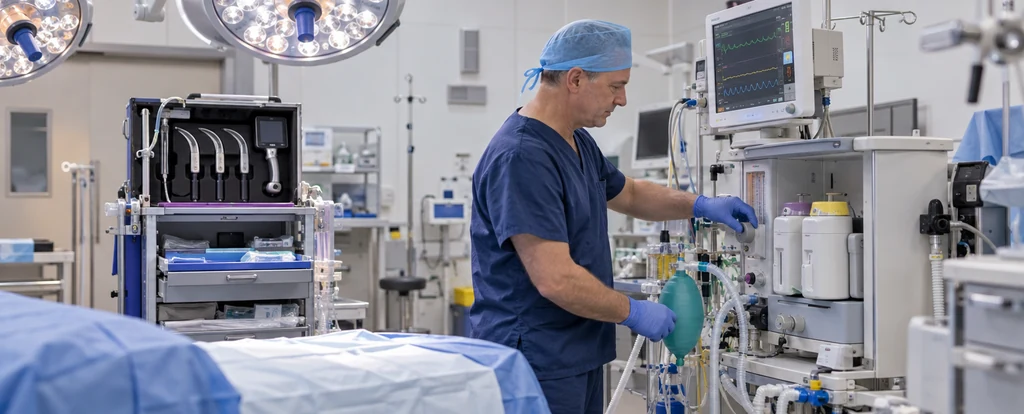
Anaesthetic technicians prepare, check and run the anaesthetic machine, monitors and airway equipment during surgery, supporting the anaesthetist while a patient is under anaesthesia.
- Median salary*
- $80,600
3.6%vs last year, before tax
- People employed
- 740
5.7%vs last year
- Projected growth
- +17.4%
to 2035
- AI exposure*
- Moderate
- automation risk
- Average hours
- 40/wk
matches all-jobs average
- Shortage status
- Not in shortage
national
Anaesthetic technicians work in operating theatres and day surgery units, mostly in public and private hospitals, alongside anaesthetists and theatre nurses. Where a theatre nurse looks after the surgical field, they look after everything on the anaesthetic side: the machine, the airway trolley, the monitors and the drugs in the anaesthetist's hands. Theatres start early and emergency cases run late, so shift work and on-call are part of the job.
How much do anaesthetic technicians earn?
The median full-time salary for an anaesthetic technician is $80,600 per annum, before tax, up $17,200 since 2018.
Rates are set by the relevant state health award or the hospital's enterprise agreement, so the same job can pay differently at two hospitals a few kilometres apart. Shift loadings, night and weekend penalties and on-call allowances add a noticeable amount for technicians who cover after-hours emergency theatres. Classification level matters too, because hospitals assess experience and additional competencies against their own scales.
What does an anaesthetic technician do day to day?
The list below is what fills most weeks; the exact mix shifts with seniority and whatever stage the current work is at.
- Checking the anaesthetic machine, monitors and airway trolley before each list, and logging the results
- Assisting the anaesthetist during induction, when the airway is secured and the patient goes under
- Drawing up and labelling drugs and fluids under the anaesthetist's direction
- Watching vital signs through the case and flagging changes in blood pressure, heart rhythm or breathing
- Cleaning, restocking and turning over the anaesthetic equipment between cases, and troubleshooting faults mid-list
What skills do anaesthetic technicians need?
Employers look for patient care and support, infection control and hygiene, plant and equipment operation, backed by Anaesthetic machine (Drager, GE) fluency and strong safety and compliance awareness.
Specialist skills
- Patient care and support
- Infection control and hygiene
- Plant and equipment operation
Software and tools
- Anaesthetic machine (Drager, GE)
- Physiological monitor
- Video laryngoscope
- Difficult airway trolley
- Operating theatre management system
General skills
- Safety and compliance awareness
- Attention to detail
- Written communication
- Problem solving
Is the job growing?
About 740 people work as anaesthetic technicians in Australia, and employment is projected to grow 17.4% over the decade to 2035. That's healthy, above-average growth, and the role should stay in solid demand.
How do you become an anaesthetic technician?
Here's the path most anaesthetic technicians take, step by step.
- 1Finish Year 12 with English and maths
Most diploma courses ask for Year 12 or an equivalent, and a science subject helps with the anatomy, physiology and pharmacology covered in the course.
- 2Complete the Diploma of Anaesthetic Technology and Practice
This is the standard qualification, taking around 18 months to two years full time through TAFE or a private provider, and it includes supervised clinical placement in operating theatres.
- 3Use placement to learn the theatre routine
Placement is where you learn how a machine is laid out, how a list runs and how the anaesthetist likes things set up, and it is often how students get their first job offer.
- 4Apply for a hospital position
Public health services advertise through their own careers sites, often as pool or casual rounds, while private hospitals hire directly. A police check, a working with children check and vaccination evidence are standard.
- 5Keep up in-service competency checks
Anaesthetic technicians are not registered with AHPRA, so hospitals run their own assessments and in-service training. Some technicians later specialise in cardiac or respiratory testing, or take a bachelor degree to move into other clinical work.
Ready to apply as an anaesthetic technician?
Whether you're working toward becoming an anaesthetic technician or already are one and want a hand with the next step (sharpening your resume for ATS screening, tightening your cover letter, or knowing what you'll actually be asked at interview), here are examples grounded in this specific role, not generic templates.
What jobs can an anaesthetic technician move to?
Moving into Cardiac Technician typically comes with the biggest pay rise, worth $6,800 a year more on average.
| Move to | Typical pay change | Overlap | Retraining |
|---|---|---|---|
| Cardiac Technician Their monitoring and equipment skills transfer to cardiac diagnostics, where they can specialise in heart rhythm and stress testing. | +$6,800 | 75% | minimal |
| Operating Theatre Technician Anaesthetic technicians bring sterile field awareness and surgical support skills to operating theatre work, needing little retraining. | +$0 | 86% | minimal |
| Respiratory and Sleep Technician They already understand ventilation and airway equipment, so a short course extends their skills to sleep and respiratory testing. | −$500 | 58% | short course |
Moves are chosen from Jobs and Skills Australia's Data on Occupation Mobility, which follows income tax records between 2011-12 and 2020-21, together with entry requirements and skill overlap. A known move is one people were seen making in that data. Pay change compares median full-time pay for the two roles.
Who works as an anaesthetic technician?
The typical anaesthetic technician is 46 years old; 57% are women, 65% work full-time, and full-timers average 40 hours a week.
- 46
- Median age
- 57%
- Female share
- 65%
- Full-time
- +0h
- vs all-jobs avg
What's it like being an anaesthetic technician?
The work has a steady rhythm: set up, assist, turn over, repeat, with the pace set by the operating list. It suits people who like working with their hands and keeping their attention on one patient at a time, and who are comfortable being the second pair of eyes in a room where things can change quickly. The trade-off is the hours, with early starts and emergency cases that run into the night.
What people like
- Your preparation is what makes the case run smoothly. A machine checked properly and a trolley laid out in the right order save the anaesthetist time when a patient is going under, so the setup matters as much as the visible work.
- Hands-on time with serious equipment. You get to know the anaesthetic machine, the video laryngoscope and the difficult airway trolley well enough to troubleshoot them mid-case, and that skill stays with you.
- A close team and one patient at a time. You work with the same anaesthetists and theatre nurses list after list, and the work is contained in one room rather than spread across a ward.
- Clear boundaries. You work under the anaesthetist's direction, so the clinical decisions and the responsibility that comes with them are not yours to carry home.
What people find hard
- Early starts and on-call. Lists often begin at 7am, and someone has to cover the emergency theatre overnight and at weekends.
- Long stretches on your feet. A complex case can run for hours, and you stay standing at the machine rather than sitting down between tasks.
- Equipment faults arrive without warning. When a monitor drops out or a breathing circuit leaks mid-case, you have to sort it out quickly while the anaesthetist keeps the patient stable.
- A small occupation with few employers. Most jobs sit in hospital theatre suites, so changing towns or moving between employers can mean waiting for a vacancy to come up.
Based on our synthesis of professional-body surveys and public accounts of the role, not first-person verified reviews.
Which industries employ anaesthetic technicians?
Health Care and Social Assistance employs the largest share of anaesthetic technicians.
Top employing industries
- 1Health Care and Social Assistance
Ranked by employment share; the source doesn't publish an exact percentage per industry.
| Diploma / Advanced Diploma | 45.3% | |
|---|---|---|
| Bachelor degree | 18.1% | |
| Postgraduate | 17.8% | |
| Certificate III/IV | 9.4% | |
| Year 12 or below | 1.2% |
Will AI replace anaesthetic technicians?
Automation reaches the record-keeping and the routine machine checks more than the patient-facing work. Anaesthetic machines run their own self-tests and theatre management systems log drugs, vital signs and stock automatically, but securing an airway, positioning a patient and fixing a leaking circuit mid-case still need hands in the room. That mix keeps the role's overall exposure moderate.
Share of typical working time by exposure level
- Supporting the anaesthetist during induction and airway managementHanding over the laryngoscope, adjusting the head position and being ready with suction are physical, immediate tasks that depend on reading the room.30%low
- Turnaround, cleaning and restocking between casesWiping down the machine, changing circuits and rebuilding the trolley for the next patient is manual work done against a tight list timetable.30%low
- Pre-use checks on the anaesthetic machine and monitorsMachines self-test and log the results, but someone still has to confirm the breathing circuit, gas supply and suction are right for the list ahead.25%moderate
- Documenting the anaesthetic record and consumablesTheatre management systems now capture doses, observations and stock use as the case runs, leaving the technician to verify the record rather than write it out.15%high
Moves least exposed to AI
These career moves from anaesthetic technician work are rated low for AI exposure:
- Operating Theatre Technician
High skill overlap (86%), little retraining to get there, and a low automation-risk profile.
Common questions about becoming an anaesthetic technician
Straight answers to the questions people ask most.
How much do anaesthetic technicians earn in Australia?
$80,600 per year before tax for full-time work. Pay comes from state health awards or hospital enterprise agreements, so shift loadings and on-call allowances lift actual earnings for technicians who cover nights and weekends, and the median is a midpoint rather than a guaranteed starting rate.
How do you become an anaesthetic technician?
Complete the Diploma of Anaesthetic Technology and Practice (HLT57921), which includes supervised placement in operating theatres, then apply for a position in a hospital theatre suite. There is no AHPRA registration for the occupation, but hospitals check your qualification and run their own competency assessments.
Are anaesthetic technicians in demand?
Anaesthetic technicians are currently not in shortage, and employment is projected to grow 17.4% over the decade to 2035. The occupation is small, with about 740 people in it nationally, so the number of new positions in any year is limited in absolute terms.
Will AI replace anaesthetic technicians?
Automation is changing parts of the job rather than removing it. Anaesthetic machines already run their own self-tests and theatre systems log drugs, vital signs and consumables, but securing an airway, positioning a patient and troubleshooting a faulty circuit mid-case still need someone in the room.
Can you move into anaesthetic technology from another hospital role?
Yes, and the clinical background helps. Hospital orderlies know patient handling and theatre workflows and can retrain towards anaesthetic duties, where pay is $19,200 more, and assistants in nursing bring direct patient care experience into a role paying $15,600 more.
Where can anaesthetic technicians move next?
Operating theatre technician work pays about the same and draws on a similar skill set, with an overlap of about 86%. Cardiac technician roles pay $6,800 more and build on the monitoring side of the job, while respiratory and sleep technician work pays $500 less and extends the ventilation and airway knowledge you already have.
Related roles
- Operating Theatre Technician
- Cardiac Technician
- Respiratory and Sleep Technician
- Dialysis Technician
- Hospital Orderly
- Assistant in Nursing
Not sure this is you? Take the career quiz and get a ranked shortlist of roles that fit how you like to work.