Home Manufacturing & Production
Meat Inspector
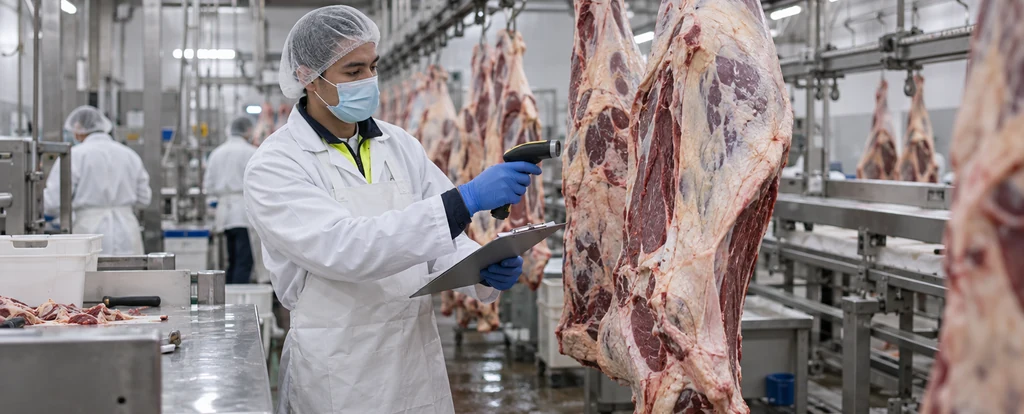
Meat inspectors check livestock and carcases for disease and contamination, which keeps Australian meat safe to eat and cleared for export.
- Median salary*
- $77,000
4.1%vs last year, before tax
- People employed
- 490
2.0%vs last year
- Projected growth
- +5.4%
to 2035
- AI exposure*
- Moderate
- automation risk
- Average hours
- 42/wk
+2h vs all jobs
- Shortage status
- Not in shortage
national
Meat inspectors work on the kill floor and in boning rooms, checking animals in the lairage before slaughter and carcases afterwards for signs of disease, contamination or defects. They are employed by state and territory food safety regulators, by the Commonwealth in export-accredited plants, and by processing companies themselves, so they work beside the production line rather than in a separate office. The role sits above meat processing work: inspectors make and record the judgement, while process workers carry out the cutting and packing.
How much do meat inspectors earn?
The median full-time salary for a meat inspector is $77,000 per annum, before tax, up $16,100 since 2018.
Who employs you shapes the pay here more than most things: state and territory regulators and the Commonwealth set rates through public sector agreements, while processing companies set their own rates and rosters. Shift work, early starts, overtime and penalty rates add to base pay, and so does the level of inspection authorisation you hold. Inspectors who move into auditing or senior inspection work earn more than those staying on the chain full time.
What does a meat inspector do day to day?
The list below is what fills most weeks; the exact mix shifts with seniority and whatever stage the current work is at.
- Checking livestock in the lairage for signs of disease or injury before slaughter
- Inspecting carcases, offal and lymph nodes on the chain after slaughter
- Recording defects and condemning carcases or parts that fail inspection
- Applying meat hygiene and food safety standards alongside plant staff
- Completing inspection records and export certification paperwork
What skills do meat inspectors need?
Employers look for regulatory compliance, process improvement, backed by National Livestock Identification System (NLIS) fluency and strong attention to detail.
Specialist skills
- Regulatory compliance
- Process improvement
Software and tools
- National Livestock Identification System (NLIS)
- On-plant inspection recording systems
- Meat Standards Australia (MSA) grading references
- Microsoft Excel
General skills
- Attention to detail
- Safety and compliance awareness
- Written communication
- Problem solving
- Time and deadline management
Is the job growing?
About 490 people work as meat inspectors in Australia, and employment is projected to grow 5.4% over the decade to 2035. That's modest growth: demand is steady rather than booming.
How do you become a meat inspector?
Here's the path most meat inspectors take, step by step.
- 1Start in a meat processing plant
A common way in is from the floor. Working as a meat process worker, boner or slaughterer builds the carcase knowledge and hygiene habits the job depends on, and it is paid work while you work out whether inspection suits you.
- 2Complete a Certificate IV in Meat Processing (Meat Safety)
This is the qualification employers and regulators look for, delivered through a registered training organisation and often partly on the plant. Some people do a Certificate III in meat processing (AMP30622) first, particularly if they are already working in the industry.
- 3Build competency under supervision
Trainee inspectors work alongside an experienced inspector, learning antemortem and postmortem technique until they can assess a carcase unaided. Assessment is practical and takes months rather than weeks.
- 4Get authorised by the relevant regulator
Inspectors in export-accredited plants are authorised under Commonwealth rules, while domestic plants fall under state and territory food safety regulators, so requirements differ depending on where you work.
- 5Consider further study for senior or auditing roles
A diploma or degree in food science, meat technology or quality management opens up senior inspector, auditing and quality roles, and it is usually the point where pay moves up.
Ready to apply as a meat inspector?
Whether you're working toward becoming a meat inspector or already are one and want a hand with the next step (sharpening your resume for ATS screening, tightening your cover letter, or knowing what you'll actually be asked at interview), here are examples grounded in this specific role, not generic templates.
What jobs can a meat inspector move to?
Moving into Quality Manager typically comes with the biggest pay rise, worth $70,900 a year more on average.
| Move to | Typical pay change | Overlap | Retraining |
|---|---|---|---|
| Quality Manager Meat inspectors move into quality management with their hygiene and standards knowledge, though further study in quality systems and auditing is needed. | +$70,900 | 38% | reskill |
| Biosecurity Officer Meat inspectors bring inspection and compliance skills to biosecurity work, checking animals and goods for disease and pests; further study is required.Known move | +$14,000 | 33% | reskill |
Moves are chosen from Jobs and Skills Australia's Data on Occupation Mobility, which follows income tax records between 2011-12 and 2020-21, together with entry requirements and skill overlap. A known move is one people were seen making in that data. Pay change compares median full-time pay for the two roles.
Who works as a meat inspector?
The typical meat inspector is 45 years old; 85% are men, 87% work full-time, and full-timers average 42 hours a week.
- 45
- Median age
- 15%
- Female share
- 87%
- Full-time
- +2h
- vs all-jobs avg
What's it like being a meat inspector?
The day is set by the chain: inspections happen at line speed, in a cold and wet part of the plant, with early starts and rotating shifts. The work rewards consistency, because the same standard has to be applied to carcase after carcase for a whole shift, and each call has consequences for the plant and for the food supply. People who do well tend to be careful and comfortable making a decision they may have to explain to a supervisor later.
What people like
- Your sign-off has a visible result. A carcase either passes or it doesn't, and that call is what keeps contaminated meat out of the food supply and keeps a plant's export accreditation in place.
- The standard is written down. Inspection follows national hygiene rules and plant procedures, so you know what good work looks like and can back a decision with the record behind it.
- You can enter without a degree. Training runs through a certificate and practical competency assessment on the plant, which suits people who would rather learn the job by doing it.
- A close view of how the industry works. You work alongside veterinarians, quality staff and production crews, and see the chain from livestock delivery through to packed carton.
What people find hard
- Cold, wet and physical conditions. Boning rooms are chilled and the floors stay wet, and you spend most of the shift on your feet in protective gear.
- Line speed sets your pace. You have seconds to assess each carcase, and the chain does not pause while you weigh up a borderline one.
- Decisions that upset production. Condemning carcases or slowing the line works against the plant's targets, and you may have to explain the call to a supervisor under pressure.
- Early starts and set rosters. Full-time hours average 42 a week, shifts often begin before dawn, and plants that run continuously bring weekend and public holiday work.
Based on our synthesis of professional-body surveys and public accounts of the role, not first-person verified reviews.
Which industries employ meat inspectors?
Manufacturing employs the largest share of meat inspectors, followed by Administrative and Support Services.
Top employing industries
- 1Manufacturing
- 2Administrative and Support Services
- 3Public Administration and Safety
Ranked by employment share; the source doesn't publish an exact percentage per industry.
| Certificate III/IV | 49.8% | |
|---|---|---|
| Year 12 or below | 18% | |
| Bachelor degree | 10.3% | |
| Diploma / Advanced Diploma | 8.3% | |
| Postgraduate | 3.6% |
Will AI replace meat inspectors?
Meat inspection sits in the middle of AI's reach: the recording, reporting and grading data around the job are steadily moving into on-plant systems, while the physical examination of a moving carcase is not. Cameras and automated grading already measure some carcase characteristics in larger plants, but they do not yet recognise the range of disease signs an inspector looks for. Regulatory judgement, and the accountability that comes with an export certificate, stay with the authorised inspector.
Share of typical working time by exposure level
- Postmortem inspection on the chainPalpating lymph nodes, incising organs and deciding on a suspect carcase happens at line speed, and automated systems can flag a carcase but not clear it.35%low
- Working with plant staff on hygiene and corrective actionPlant monitoring dashboards help you show a hygiene breach, but explaining a downgrade to a supervisor and agreeing a fix is still a conversation.25%moderate
- Antemortem checks of livestockYou watch how animals move and behave in the lairage and pull out the ones that need a closer look, which is a reading of the animal rather than a measurement.20%low
- Recording findings and certificationOn-plant systems and NLIS-linked records now capture inspection results and export certification data, which cuts manual entry but not the judgement behind it.20%high
Common questions about becoming a meat inspector
Straight answers to the questions people ask most.
How much do meat inspectors earn?
Meat inspectors earn $77,000 per annum, before tax. Pay depends on the employer, with public sector regulators and private processing companies setting different rates, and shift work, overtime and penalty rates adding to the base figure.
How do you become a meat inspector?
The usual route is a Certificate IV in Meat Processing (Meat Safety) plus on-plant training under an experienced inspector, followed by authorisation from the relevant regulator. Some people start as meat process workers, boners or slaughterers and study while they keep working.
Are meat inspectors in demand?
Meat inspectors are currently not in shortage, and employment is projected to grow 5.4% over the decade to 2035. With about 490 people in the role, it is a small occupation, so it pays to approach individual plants and regulators directly rather than waiting for a broad recruitment round.
Will AI replace meat inspectors?
Not the inspection itself, though it is changing the paperwork around it. Cameras and automated grading systems already measure some carcase characteristics in larger plants, and on-plant software captures more of the recording and certification data, but judging a suspect carcase for disease still needs an inspector's eyes and hands.
What is the difference between a meat inspector and a meat process worker?
Meat process workers cut, trim and pack meat, while meat inspectors check the animal and the carcase for disease and contamination and decide whether it can enter the food supply. The two roles work side by side on the same floor, and moving from processing into inspection is common with further training.
Where can meat inspectors move to?
Biosecurity work uses the same inspection and compliance skills on animals and goods, and pays around $14,000 more, but it needs further study. Quality management is another option for inspectors who want to move off the chain, and it usually takes study in quality systems and auditing first.
Related roles
- Biosecurity Officer
- Quality Manager
- Meat Process Worker
- Meat Boner and Slicer
- Slaughterer
- Sewing Machinist
Not sure this is you? Take the career quiz and get a ranked shortlist of roles that fit how you like to work.