Home Manufacturing & Production
Meat Boner and Slicer
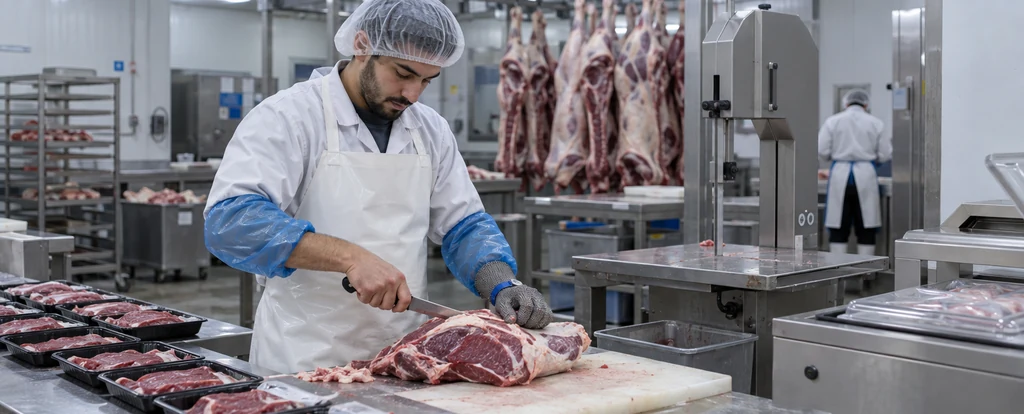
Meat boners and slicers break down carcases into cuts, removing bones and slicing meat to the weights and sizes a plant or customer needs.
- Median salary*
- $59,800
3.6%vs last year, before tax
- People employed
- 6,100
0.0%vs last year
- Projected growth
- −3.4%
to 2035
- AI exposure*
- Moderate
- automation risk
- Average hours
- 40/wk
matches all-jobs average
- Shortage status
- Not in shortage
national
Most meat boners and slicers work in the boning room of a meat processing plant, with smaller numbers in wholesale butchers and food service suppliers. The carcases arrive dressed and chilled and leave as boxed cuts, so the job sits between slaughtering and packing rather than in a shop. Unlike a butcher, who serves customers and makes smallgoods, a boner and slicer works to a yield figure and a specification set by the plant or the buyer.
How much do meat boner and slicers earn?
The median full-time salary for a meat boner and slicer is $59,800 per annum, before tax, up $12,800 since 2018.
Pay comes from the Meat Industry Award or a plant's enterprise agreement, so the rate depends on the site and the classification you are placed at. Shift work, overtime and time in cold or freezer areas attract loadings, and casual positions usually carry a loading in place of paid leave. Boners who handle a wider range of cuts, or work quickly without losing yield, tend to move up the classifications.
What does a meat boner and slicer do day to day?
The list below is what fills most weeks; the exact mix shifts with seniority and whatever stage the current work is at.
- Breaking down carcases into primal cuts with boning knives and powered saws
- Removing bones, sinew and excess fat so each cut matches the specification
- Slicing and portioning meat to set weights while watching yield, because trim and offcuts add up across a shift
- Setting up and running bandsaws, slicers, mincers and vacuum packaging equipment
- Sharpening knives through the shift and following hygiene, protective equipment and cold chain rules in a chilled room
What skills do meat boner and slicers need?
Employers look for hand and power tool work, food safety and hygiene, plant and equipment operation, backed by Boning knife fluency and strong attention to detail.
Specialist skills
- Hand and power tool work
- Food safety and hygiene
- Plant and equipment operation
Software and tools
- Boning knife
- Bandsaw
- Meat slicer
- Vacuum packaging machine
- Chainmail glove
General skills
- Attention to detail
- Physical stamina and dexterity
- Safety and compliance awareness
Is the job growing?
About 6,100 people work as meat boner and slicers in Australia, and employment is projected to decline 3.4% over the decade to 2035. That's a real decline, worth weighing carefully before training into the role.
How do you become a meat boner and slicer?
Here's the path most meat boner and slicers take, step by step.
- 1Get a start in a boning room
Year 12 or below is the highest qualification for 62% of people in the role, which reflects how much of the training happens at the plant. Most people begin as a labourer or meat process worker, and employers generally provide the initial knife and hygiene training themselves.
- 2Do a traineeship or certificate in meat processing
A Certificate II or III in meat processing is the standard qualification and is often delivered as a paid traineeship, combining shifts with study through a registered training organisation. It covers knife use, food safety, hygiene and the equipment on the floor.
- 3Build speed and move up the classifications
Boning is learnt by repetition, across different species and cuts. Boners who keep up with line speed and hold their yield tend to move into the higher classifications set out in the plant's agreement.
- 4Choose a direction if you want to move on
A butcher apprenticeship, usually the Certificate III in meat processing (AMP30622) (meat retailing), opens retail and smallgoods work, while meat inspection or quality assurance needs further study. Plants often support that training for workers who want it.
Ready to apply as a meat boner and slicer?
Whether you're working toward becoming a meat boner and slicer or already are one and want a hand with the next step (sharpening your resume for ATS screening, tightening your cover letter, or knowing what you'll actually be asked at interview), here are examples grounded in this specific role, not generic templates.
What jobs can a meat boner and slicer move to?
Moving into Butcher typically comes with the biggest pay rise, worth $20,800 a year more on average.
| Move to | Typical pay change | Overlap | Retraining |
|---|---|---|---|
| Butcher A meat boner and slicer brings meat cutting skills to butchery, though an apprenticeship is required to qualify fully.Known move | +$20,800 | 56% | requalify |
| Meat Inspector A meat boner and slicer can become a meat inspector with further study, using meat knowledge to check quality and safety.Known move | +$17,200 | 10% | reskill |
| Slaughterer A meat boner and slicer moves into slaughtering with minimal retraining, as both roles share meat handling and hygiene skills.Known move | +$2,600 | 80% | minimal |
Moves are chosen from Jobs and Skills Australia's Data on Occupation Mobility, which follows income tax records between 2011-12 and 2020-21, together with entry requirements and skill overlap. A known move is one people were seen making in that data. Pay change compares median full-time pay for the two roles.
Who works as a meat boner and slicer?
The typical meat boner and slicer is 35 years old; 80% are men, 79% work full-time, and full-timers average 40 hours a week.
- 35
- Median age
- 20%
- Female share
- 79%
- Full-time
- +0h
- vs all-jobs avg
What's it like being a meat boner and slicer?
A shift is physical and repetitive, built around a line speed you do not set: meat arrives at your station, you cut it and pass it on. The room is cold, the knives are sharp, and the work rewards steady hands and a good eye for where the bone sits. People who like measurable output and finishing cleanly at the end of a shift tend to settle in, while the cold and the pace wear others down.
What people like
- Knife work that rewards skill. A clean, quick breakdown with little wasted meat is visible to everyone on the line, and experienced boners are valued for it.
- Output you can see. You finish a shift knowing exactly what came through your station, and the work does not follow you home.
- Working with the same crew. Boning rooms run on teams who know each other's stations, and the talk along the line is a big part of the day.
- Set shifts and available overtime. Plants run fixed shifts with regular start times, and there is usually overtime on offer if you want the extra hours.
What people find hard
- Cold rooms and long hours on your feet. Boning rooms are chilled and you stand on hard floors for most of the shift, often in wet gear or a freezer jacket.
- Strain on hands, wrists and shoulders. Knife work is repetitive, and soreness builds over years rather than days; stations get rotated, but the movements are similar.
- Line speed and yield targets. The line does not slow down for an awkward carcase, and being the station that falls behind is noticed.
- Early starts and shift work. Many shifts begin before dawn, and afternoon and night shifts are common at plants running around the clock.
Based on our synthesis of professional-body surveys and public accounts of the role, not first-person verified reviews.
Which industries employ meat boner and slicers?
Manufacturing employs the largest share of meat boner and slicers.
Top employing industries
- 1Manufacturing
Ranked by employment share; the source doesn't publish an exact percentage per industry.
| Year 12 or below | 61.7% | |
|---|---|---|
| Certificate III/IV | 16.7% | |
| Bachelor degree | 6.2% | |
| Diploma / Advanced Diploma | 3.8% | |
| Postgraduate | 0.9% |
Will AI replace meat boner and slicers?
Automation has changed boning rooms steadily: X-ray portion cutters, automated slicers and powered saws now handle a lot of the slicing, portioning and packing, and that equipment keeps improving. Taking bones out of a carcase is messier, because no two carcases are shaped the same, so the knife work that defines the job is still largely manual. Expect the tools around you to get smarter rather than the job to disappear.
Share of typical working time by exposure level
- Boning and trimming by handReading a carcase and finding the seams between muscle and bone is a hand skill, and machines still cannot take a variable carcase apart reliably.40%low
- Slicing and portioning to specificationAutomated slicers and X-ray portion cutters handle many standard cuts, so more of this work is set by the machine rather than the hand.25%moderate
- Running bandsaws, slicers and vacuum packaging equipmentSetting up, feeding and cleaning this equipment is increasingly automated, which moves the job towards monitoring the line and correcting it when something jams.20%moderate
- Knife maintenance, hygiene and cold chain checksSharpening, cleaning down and hygiene and temperature records still need someone on the floor, although more of the recording now happens on a screen.15%low
Common questions about becoming a meat boner and slicer
Straight answers to the questions people ask most.
How much do meat boners and slicers earn?
Full-time meat boners and slicers earn a median of $59,800 per year before tax. The rate depends on the plant's enterprise agreement or the Meat Industry Award and on your classification, so shift and overtime loadings can lift take-home pay noticeably.
How do you become a meat boner and slicer?
Most people start as a labourer or meat process worker in a boning room and learn on the job. A Certificate II or III in meat processing, often through a paid traineeship, is the usual formal qualification, and no licence is required to work with knives.
Are meat boners and slicers in demand?
Meat boners and slicers are currently not in shortage, and employment is projected to decline 3.4% over the decade to 2035. That describes the total number of jobs rather than your chances at a particular site, so it is worth checking vacancies at the processing plants within reach of where you live.
Will automation replace meat boners and slicers?
Partly. Automated slicers, X-ray portion cutters and bandsaw feeders already handle much of the slicing, portioning and packing, and that equipment keeps improving. Taking a variable carcase apart by hand is harder to automate, so boning and trimming remain largely manual work.
What can a meat boner and slicer move into?
Slaughtering needs little retraining because both roles share meat handling, knife work and hygiene practice, and it pays $2,600 more. Becoming a butcher means completing an apprenticeship first, but it opens retail and smallgoods work and pays $20,800 more. Meat inspection uses the same meat knowledge on the quality and safety side and requires further study, paying $17,200 more.
Is meat boning and slicing hard on the body?
It can be. The work is repetitive, cold and mostly done standing, and the strain on hands, wrists and shoulders accumulates over years. Plants rotate stations and supply protective gear, but looking after your hands and wrists outside work matters if you stay in the job long term.
Related roles
Not sure this is you? Take the career quiz and get a ranked shortlist of roles that fit how you like to work.