Home Manufacturing & Production
Butcher
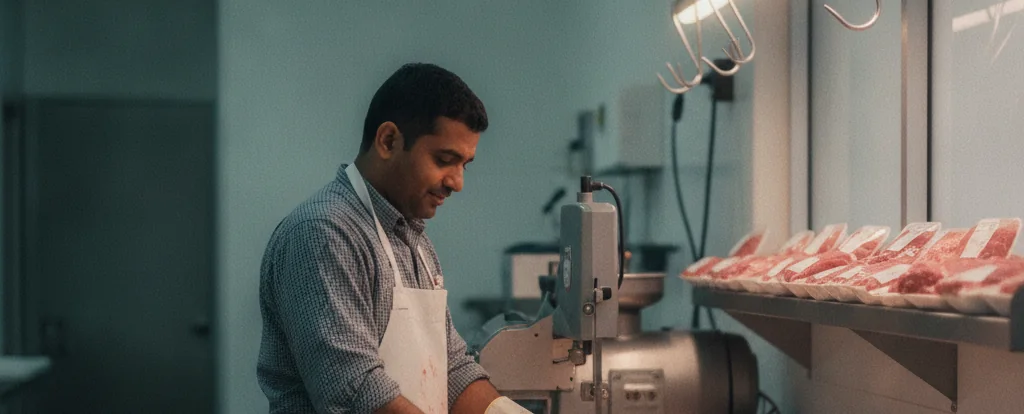
Butchers cut, prepare and sell meat, turning whole carcases into the cuts customers take home or cook with.
- Median salary
- $80,600
4.4%vs last year, before tax
- People employed
- 14,300
1.4%vs last year
- Projected growth
- +9.5%
to 2035
- AI exposure*
- Moderate
- automation risk
- Average hours
- 45/wk
+5h vs all jobs
- Shortage status
- In shortage
national
Butchers break down carcases and prepare retail cuts, mince, sausages and marinated products for sale in supermarkets, independent shops or meat processing plants. The work follows strict food safety and hygiene rules, and most butchers also serve customers directly, advising on cuts and cooking methods. Unlike a cook, who prepares meat for a plate, a butcher prepares it for sale, often working through a whole animal rather than a single dish.
How much do butchers earn?
The median full-time salary for a butcher is $80,600 per annum, before tax, up $17,000 since 2018.
Most butchers work under the Meat Industry Award, which sets minimum rates plus penalty loadings for early starts, weekends and public holidays, and larger supermarket or processing employers often pay above it on an enterprise agreement. Qualified butchers who take on a retail management role, or specialise in boning, slicing or smallgoods, tend to earn more than those doing straight counter work in a small shop. Location matters less than the employer: steady full-time hours with a chain usually beat casual hours in a shop that trades only part of the week.
What does a butcher do day to day?
The list below is what fills most weeks; the exact mix shifts with seniority and whatever stage the current work is at.
- Breaking down carcases into retail cuts with a knife, bandsaw and power saw
- Mincing, trimming and shaping sausages, patties and marinated lines to a set recipe
- Serving customers at the counter, talking through cuts, quantities and cooking methods
- Rotating stock and checking use-by dates so the display holds only saleable meat
- Cleaning benches, saws and cool rooms and logging temperature checks against the food safety program
What skills do butchers need?
Employers look for food safety and hygiene, food preparation and cooking, hand and power tool work, backed by Band saw fluency and strong attention to detail.
Specialist skills
- Food safety and hygiene
- Food preparation and cooking
- Hand and power tool work
Software and tools
- Band saw
- Butcher's knife
- Meat grinder
- Vacuum sealer
- Weighing scales
General skills
- Attention to detail
- Safety and compliance awareness
- Physical stamina and dexterity
- Customer service
Is the job growing?
About 14,300 people work as butchers in Australia, and employment is projected to grow 9.5% over the decade to 2035. That's modest growth: demand is steady rather than booming.
How do you become a butcher?
Here's the path most butchers take, step by step.
- 1Start a retail butchery apprenticeship
The usual entry is an Australian Apprenticeship in meat processing (retail butcher), which combines paid work in a shop with training through a TAFE or registered training organisation over about three to four years. You earn a wage from day one, which is why many people start straight from school.
- 2Complete the food safety training your state requires
Retail food businesses work to a food safety program, and several states require a food safety supervisor certificate for the shop. The certificate takes a day or two and is a common condition of employment, so it is worth doing early.
- 3Build cutting skill and product knowledge on the bench
Carcase knowledge, knife technique and yield are learned by repetition under a qualified butcher. People arriving from processing work, such as boning or slaughtering, already handle meat and knives but still need the apprenticeship to add retail cutting, presentation and counter skills.
- 4Finish the Certificate III in Meat Processing (Retail Butcher)
The Certificate III is the trade qualification employers recognise, and finishing it is what moves you from apprentice to qualified butcher and to the higher rates that come with it.
- 5Choose the part of the trade you want
Qualified butchers work in supermarket meat departments, independent shops, wholesale and boning rooms, smallgoods production or meat inspection. Each has a different mix of cutting, customer contact and hours, and it is common to try more than one before settling.
Ready to apply as a butcher?
Whether you're working toward becoming a butcher or already are one and want a hand with the next step (sharpening your resume for ATS screening, tightening your cover letter, or knowing what you'll actually be asked at interview), here are examples grounded in this specific role, not generic templates.
What jobs can a butcher move to?
Moving into Store Manager typically comes with the biggest pay rise, worth $3,600 a year more on average.
| Move to | Typical pay change | Overlap | Retraining |
|---|---|---|---|
| Store Manager Butchers can step into store management in meat retail, using product knowledge while learning rostering, stock and sales.Known move | +$3,600 | 4% | reskill |
| Meat Inspector Meat inspection builds on a butcher's knowledge of cuts and hygiene, with further study in food safety and quality assurance. | −$3,600 | 9% | reskill |
| Cook Butchers can apply meat preparation and knife skills as cooks, picking up commercial cooking methods through a short course. | −$6,100 | 50% | short course |
| Chef Butchers bring knife skills and meat knowledge to chef roles, though a cooking apprenticeship or equivalent training is needed.Known move | −$6,600 | 38% | requalify |
| Smallgoods Maker Butchers move into smallgoods making to specialise in sausages and cured meats, adding fermentation and smoking training. | −$15,600 | 41% | reskill |
Moves are chosen from Jobs and Skills Australia's Data on Occupation Mobility, which follows income tax records between 2011-12 and 2020-21, together with entry requirements and skill overlap. A known move is one people were seen making in that data. Pay change compares median full-time pay for the two roles.
Who works as a butcher?
The typical butcher is 40 years old; 90% are men, 74% work full-time, and full-timers average 45 hours a week.
- 40
- Median age
- 10%
- Female share
- 74%
- Full-time
- +5h
- vs all-jobs avg
What's it like being a butcher?
Butchery is a trade of repetition and precision: the same cuts done faster and cleaner over time, in a room kept cold enough that you only feel comfortable once you are moving. Shifts often start before dawn so the cabinet is full for opening, and the physical load builds through the day in the hands, wrists and back. People who enjoy it tend to like following a whole animal through to the counter, and the regulars who come back for the same order every week.
What people like
- You follow a whole animal through. A butcher sees the carcase come in and the roasts, schnitzels and sausages go out, which is more satisfying than working on one small part of a process.
- Knife skills you can measure. Cutting gets quicker and neater with practice, and the difference shows in how much usable meat comes off a primal and how little goes to waste.
- Regulars who know your counter. Independent shops run on repeat customers who ask for you by name and take your advice on what to cook, which makes the retail side more social than it sounds.
- A trade without a degree. The apprenticeship is paid and the qualification is a Certificate III, so you can be working as a qualified butcher in your early twenties without university debt.
What people find hard
- Cold rooms and early starts. Most cutting happens in a chiller kept near zero degrees, and the day often begins at five or six so the display is ready when the doors open.
- Hands, wrists and back take the load. Cutting and lifting carcases is repetitive and heavy, so sore wrists, elbows and lower backs are common; technique and regular breaks matter more than most newcomers expect.
- The retail side is not optional. In a shop you serve customers, weigh, wrap and keep the cabinet stocked, and not everyone enjoys switching between the bench and the counter all day.
- Weekends and public holidays. Shops trade on Saturdays and many open on Sundays, so rosters include weekend shifts and early starts that cut into family time.
Based on our synthesis of professional-body surveys and public accounts of the role, not first-person verified reviews.
Which industries employ butchers?
Retail Trade employs the largest share of butchers, followed by Manufacturing.
Top employing industries
- 1Retail Trade
- 2Manufacturing
Ranked by employment share; the source doesn't publish an exact percentage per industry.
| Certificate III/IV | 56.6% | |
|---|---|---|
| Year 12 or below | 33.1% | |
| Bachelor degree | 2.5% | |
| Diploma / Advanced Diploma | 2.2% | |
| Postgraduate | 0.5% |
Will AI replace butchers?
Butchery is moderately exposed to AI: the trade itself is hands-on, but the systems around it are increasingly automated. Computerised scales, label printers and stock systems already handle pricing, traceability and ordering, and large processors use machine cutting and vision grading for standard lines. The knife work, the judgement on each carcase and the conversation at the counter stay with the butcher.
Share of typical working time by exposure level
- Breaking down carcases and cutting to orderReading a carcase and cutting to a customer's spec takes a hand and an eye, and no machine on the market does that reliably across species and sizes.35%low
- Stock, ordering, labelling and food safety recordsScales linked to a till print the price and use-by label, and stock systems reorder automatically, which removes most of the paperwork from the bench.25%high
- Making sausages, mince and marinated linesMixers and fillers are computer-controlled in larger plants, but judging fat ratio, texture and seasoning still comes down to touch and taste.20%moderate
- Serving customers at the counterSelf-serve cabinets and online ordering take some sales, yet advice on cuts, quantities and cooking is what keeps people coming back to a person.20%moderate
Moves least exposed to AI
These career moves from butcher work are rated low for AI exposure:
- Chef
Some skill overlap (38%), requalify to get there, and a low automation-risk profile.
- Cook
Solid skill overlap (50%), short course to get there, and a low automation-risk profile.
Common questions about becoming a butcher
Straight answers to the questions people ask most.
How much does a butcher earn?
Butchers earn a median of $80,600 per year before tax, based on full-time figures for the trade. What moves that figure is the employer and the award or enterprise agreement you work under, along with penalty rates for early starts, weekends and public holidays. Qualified butchers in supervisory or specialist roles earn more than those doing counter work in a small shop.
How do you become a butcher in Australia?
Most butchers start as an apprentice and complete a Certificate III in Meat Processing (Retail Butcher) (AMP30815), which takes around three to four years and is paid work rather than full-time study. Employers look for reliability, an interest in food and comfort with knives, cold rooms and long stretches on your feet. A food safety supervisor certificate, required by several states for retail food businesses, helps you stand out before you start.
Are butchers in demand?
Butchers are currently in shortage nationally, and employment is projected to grow 9.5% over the decade to 2035. A lot of demand comes from experienced butchers leaving the trade, so shops and supermarket meat departments are often hiring. Your chances still depend on the state you live in and whether you hold the Certificate III, since most employers want a qualified cutter.
Will AI replace butchers?
AI reaches the paperwork around the trade before it reaches the knife. Computerised scales, label printers and traceability systems already handle pricing, use-by dates and ordering, and large processors use machine cutting and vision grading for standard lines. Breaking down a carcase to order and advising a customer at the counter remain hands-on work.
What can a butcher move into?
Butchers often step into store management in meat retail, which uses the same product knowledge and pays $3,600 more. Others specialise in smallgoods making, adding fermentation and smoking training, or move into meat inspection with further study in food safety. Opening or taking a share in your own shop is a common long-term path, and it is often where earnings grow, though the hours and the risk sit with you.
Do you need a qualification to work as a butcher?
There is no licence to work as a butcher, but the Certificate III in Meat Processing (Retail Butcher) is the trade qualification employers recognise and what qualified rates are based on. Certificate III/IV is what 57% of the people in the trade hold, which tells you what today's workforce has rather than what every employer requires. Some people start in a shop doing basic preparation and take up the apprenticeship later.
Related roles
Not sure this is you? Take the career quiz and get a ranked shortlist of roles that fit how you like to work.