Gallery or Museum Technician
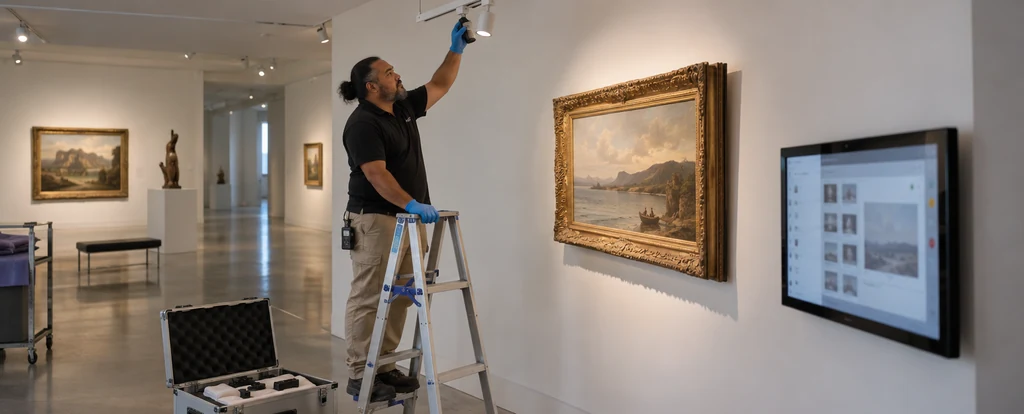
A gallery or museum technician prepares, installs and looks after the objects in a collection, working behind the scenes so exhibitions are safe to display and open to the public.
- Median salary*
- $64,500
3.7%vs last year, before tax
- People employed
- 270
10.0%vs last year
- Projected growth
- +7%
to 2035
- AI exposure*
- Low
- automation risk
- Average hours
- 38/wk
−2h vs all jobs
- Shortage status
- Not in shortage
national
The work happens in storerooms, conservation areas and on the gallery floor itself, usually for museums, galleries and other collecting institutions, or for the firms that build and install their display cases. Where conservation and curatorial roles lean towards research, this one is hands-on: the technician is the person who makes sure an object is safe to move, display and store. Much of the week goes on condition checks, record keeping and preventive care rather than on any single exhibition.
How much do gallery or museum technicians earn?
The median full-time salary for a gallery or museum technician is $64,500 per annum, before tax, up $13,300 since 2018.
Pay depends heavily on the employer: large state and national institutions usually sit above small regional museums and local historical societies, and public sector roles follow the relevant state award or enterprise agreement. Casual and project work is common, particularly around exhibition changeovers, and often carries a loading instead of paid leave. A conservation, registration or curatorial qualification can move you into a different pay band over time.
What does a gallery or museum technician do day to day?
The list below is what fills most weeks; the exact mix shifts with seniority and whatever stage the current work is at.
- Preparing and installing exhibition displays, including mounting, framing and lighting objects
- Condition-checking objects and keeping their records and photographs up to date
- Packing, moving and storing collection items using the right materials and handling methods
- Building mounts, supports and display furniture from timber, metal and foam board
- Monitoring temperature, humidity, light levels and pest activity in galleries and stores
What skills do gallery or museum technicians need?
Employers look for craft and handmade production, installation and maintenance, inventory management, backed by Vernon CMS fluency and strong attention to detail.
Specialist skills
- Craft and handmade production
- Installation and maintenance
- Inventory management
Software and tools
- Vernon CMS
- MuseumPlus
- The Museum System (TMS)
- Adobe Photoshop
- AutoCAD
General skills
- Attention to detail
- Digital literacy
- Written communication
- Stakeholder management
Is the job growing?
About 270 people work as gallery or museum technicians in Australia, and employment is projected to grow 7% over the decade to 2035. That's modest growth: demand is steady rather than booming.
How do you become a gallery or museum technician?
Here's the path most gallery or museum technicians take, step by step.
- 1Finish year 12 or a certificate in a related area
Year 12 is the usual starting point, though about 25% of people in the role hold year 12 or below, so a certificate or practical experience can be enough to get a first start.
- 2Take a museum or heritage qualification
A Certificate III or IV in museum practice, or a diploma in cultural heritage, covers object handling, documentation and preventive conservation, and is often enough for entry-level technical work. A bachelor degree in museum studies or conservation opens up more of the permanent collection roles.
- 3Volunteer or work casually in a collection
Regional museums, historical societies and local galleries rely on volunteers, and this is where most people learn to condition-check, pack and install objects. Casual art-handling and install work around exhibition changeovers is paid and counts as experience.
- 4Learn the collection management systems
Most institutions run Vernon CMS, MuseumPlus or The Museum System, and technicians are expected to enter and search records accurately. Basic photography and Adobe Photoshop help with documentation, and AutoCAD is useful for drawing mounts and cases.
- 5Choose a direction
Technicians who want to stay hands-on specialise in mount-making, framing, registration or art handling. Those who want to move into conservation or curatorial work take on the additional degree that those roles require.
Ready to apply as a gallery or museum technician?
Whether you're working toward becoming a gallery or museum technician or already are one and want a hand with the next step (sharpening your resume for ATS screening, tightening your cover letter, or knowing what you'll actually be asked at interview), here are examples grounded in this specific role, not generic templates.
What jobs can a gallery or museum technician move to?
Moving into Curator typically comes with the biggest pay rise, worth $22,900 a year more on average.
| Move to | Typical pay change | Overlap | Retraining |
|---|---|---|---|
| Curator Museum technicians can progress to curatorial work, using collection knowledge, with a degree and curatorial experience required. | +$22,900 | 12% | requalify |
| Arts Administrator Museum technicians can move into arts administration, using collection and exhibition knowledge, with a degree needed for funding and program roles. | +$16,100 | 8% | requalify |
| Conservator Museum technicians can specialise in conservation, applying object handling and care skills, with a conservation degree required. | +$13,500 | 22% | requalify |
| Visual Artist Museum technicians with studio practice can move into visual art practice, building a professional exhibition record. | −$2,100 | 15% | reskill |
Moves are chosen from Jobs and Skills Australia's Data on Occupation Mobility, which follows income tax records between 2011-12 and 2020-21, together with entry requirements and skill overlap. A known move is one people were seen making in that data. Pay change compares median full-time pay for the two roles.
Who works as a gallery or museum technician?
The typical gallery or museum technician is 42 years old; 64% are men, 51% work full-time, and full-timers average 38 hours a week.
- 42
- Median age
- 36%
- Female share
- 51%
- Full-time
- −2h
- vs all-jobs avg
What's it like being a gallery or museum technician?
The rhythm of the job follows the exhibition calendar: quiet weeks of condition checking and documentation give way to intense install periods when crates arrive, cases are built and everything has to be right by opening night. It suits people who like careful, patient work with their hands, who take pride in a mount nobody notices, and who don't mind that most of the job happens out of public view. The trade-off is modest pay and a lot of contract-based work in exchange for daily contact with original objects.
What people like
- Objects up close. You handle things most visitors only see behind glass, and you usually see them before they go on display, with the maker's marks and old repairs visible.
- Problem-solving with your hands. An awkward object needs its own mount or support, and designing something that holds it securely without leaving a mark is real engineering work.
- Small teams and a clear finish line. Install crews, registrars and conservators work closely together, and an exhibition opening gives the whole team a visible endpoint.
- Range across a collection. One week can involve a colonial painting, a taxidermied bird and a box of ceramics, each needing different handling, packing and storage.
What people find hard
- Long stretches of routine care. Climate logs, pest traps and condition reports repeat on a fixed cycle, and much of the record keeping is done carefully by hand.
- Install weeks run long. Changeovers mean early starts, late finishes and weekend work, and the opening date doesn't move to suit the schedule.
- Funding-driven job security. Many positions are casual, part-time or tied to a grant or a specific exhibition, so contracts can end when the project does.
- Physical and dusty conditions. Crates are heavy, stores can be cold and cramped, and older buildings rarely have generous lifts or loading access.
Based on our synthesis of professional-body surveys and public accounts of the role, not first-person verified reviews.
Which industries employ gallery or museum technicians?
Arts and Recreation Services employs the largest share of gallery or museum technicians, followed by Manufacturing.
Top employing industries
- 1Arts and Recreation Services
- 2Manufacturing
- 3Public Administration and Safety
Ranked by employment share; the source doesn't publish an exact percentage per industry.
| Bachelor degree | 31.9% | |
|---|---|---|
| Year 12 or below | 25.3% | |
| Postgraduate | 20.1% | |
| Certificate III/IV | 11.7% | |
| Diploma / Advanced Diploma | 8.8% |
Will AI replace gallery or museum technicians?
AI exposure in this job is low, because the core of the work is physical: objects have to be handled, supported, packed and moved by someone who can feel whether a mount is stable and whether a surface has changed. Collection systems such as Vernon CMS, MuseumPlus and The Museum System have already automated parts of cataloguing and searching, and image tools speed up documentation photography. What changes is the pace of the paperwork, not the mount-making, the install or the care of the objects themselves.
Share of typical working time by exposure level
- Building mounts and display supportsCutting foam, bending brass and shaping a support that holds an irregular object without marking it depends on hand skill and a physical trial fit that software can only help plan.30%low
- Condition checking and reportingSoftware can compare photographs taken at intervals and flag areas that look different, but judging whether a crack has widened or a surface has dulled still means looking at the object under good light.25%moderate
- Installing, packing and moving objectsCrating, carrying, hanging and lighting work is done in the room with real weights, doorways and floor loadings, and no tool substitutes for a trained pair of hands.25%low
- Collection records and documentation photographyAutomated transcription, metadata suggestions and batch image processing can draft catalogue entries and caption photographs, though each entry still has to be checked against the object and its accession number.20%high
Common questions about becoming a gallery or museum technician
Straight answers to the questions people ask most.
How much does a gallery or museum technician earn?
$64,500 per year before tax is the median for full-time gallery or museum technicians. Public institutions on state awards or enterprise agreements usually pay above small regional museums and historical societies, and casual install work often carries a loading instead of paid leave.
How do you become a gallery or museum technician?
Most people combine a qualification in museum studies, cultural heritage or conservation with hands-on experience in a collection. At entry level, careful handling skills and confidence with a collection management system matter more than which institution issued your certificate.
Are gallery or museum technicians in demand?
Gallery or museum technicians are currently not in shortage, and employment is projected to grow 7% over the decade to 2035. About 270 people work in the role, so openings tend to come from retirements, grant-funded projects and short exhibition contracts, and vacancies are often advertised through institutions and sector networks.
Will AI replace gallery or museum technicians?
AI has limited reach into this job because so much of it is physical work with real objects. Cataloguing, transcription and documentation photography are the parts most affected, with software generating draft records and image metadata that staff still check against the object. Handling, mount-making and installation stay with people.
Where can gallery or museum technicians move to?
Conservation and curatorial work are the main longer-term moves, and both need further study: a conservation qualification for a conservator role, where median pay is $13,500 more, or a curatorial qualification for curator work, where median pay is $22,900 more. Some technicians move into arts administration, where median pay is $16,100 more, using the collection and exhibition knowledge they already have.
Do you need a degree to work as a gallery or museum technician?
Not necessarily, though it helps for permanent collection roles. Around 32% of people working as gallery or museum technicians hold a bachelor degree, often in museum studies, cultural heritage or conservation. Larger institutions are more likely than small volunteer-run museums to ask for one.
Related roles
Not sure this is you? Take the career quiz and get a ranked shortlist of roles that fit how you like to work.