Museum Guide
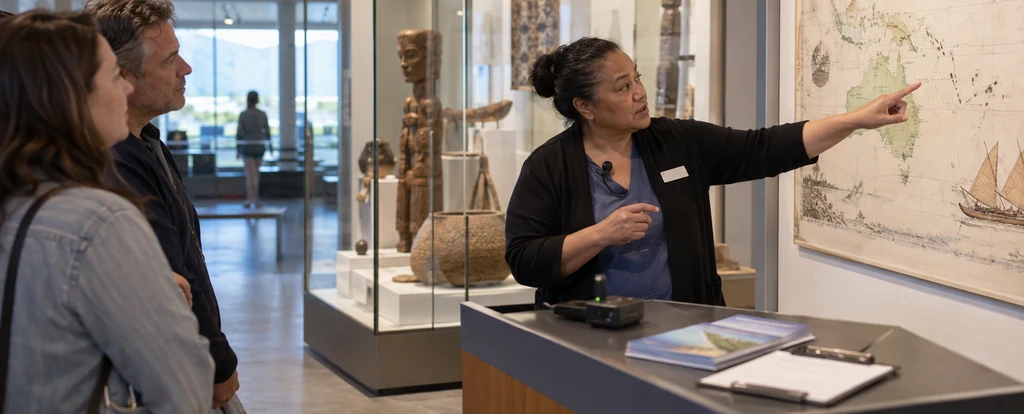
Museum guides show visitors around exhibitions, explaining what they are looking at and why it matters.
- Median salary*
- $54,600
4.4%vs last year, before tax
- People employed
- 1,300
0.0%vs last year
- Projected growth
- +9.3%
to 2035
- AI exposure*
- Moderate
- automation risk
- Average hours
- 39/wk
−1h vs all jobs
- Shortage status
- In shortage
national
Most museum guides work on the gallery floor of a museum, art gallery or heritage site, moving between scheduled tours, booked school groups and visitors who stop to ask a question. Curators decide what an exhibition says and guides are the ones who say it out loud, which is why the job leans on both subject knowledge and the ability to read a room. Shifts usually include weekends and public holidays, since that is when galleries are busiest.
How much do museum guides earn?
The median full-time salary for a museum guide is $54,600 per annum, before tax, up $11,500 since 2018.
How the role is set up matters as much as the museum: casual and part-time contracts usually carry a loading, and weekend and public holiday shifts attract penalty rates. Larger institutions and government-run museums tend to pay above the award, while small volunteer-run heritage sites may cover little more than expenses. Guides who move into education, interpretation or programming work, or who coordinate a volunteer team, generally see their rate rise.
What does a museum guide do day to day?
The list below is what fills most weeks; the exact mix shifts with seniority and whatever stage the current work is at.
- Leading scheduled tours through current exhibitions, adjusting the route when a gallery is closed or a group runs late
- Taking school and community groups through education programs, and fielding the questions that come once the planned material runs out
- Answering visitor enquiries from a front desk or a gallery post, from where the lifts are to why a painting is hung the way it is
- Learning the content of a new exhibition before it opens, reading curatorial notes and walking the space so the detail is ready for the first tour
- Setting up audio guides and other interpretation tools, and keeping an eye on the gallery floor while it is open
What skills do museum guides need?
Employers look for teaching and instruction, event coordination, front-of-house service, backed by Tessitura fluency and strong written communication.
Specialist skills
- Teaching and instruction
- Event coordination
- Front-of-house service
Software and tools
- Tessitura
- Blackbaud Altru
- PastPerfect Museum Software
- Microsoft Office
- Audio guide systems
General skills
- Written communication
- Customer service
- Attention to detail
- Digital literacy
Is the job growing?
About 1,300 people work as museum guides in Australia, and employment is projected to grow 9.3% over the decade to 2035. That's modest growth: demand is steady rather than booming.
How do you become a museum guide?
Here's the path most museum guides take, step by step.
- 1Finish secondary school
Year 12 is the usual base and no degree is required for most entry roles, though subjects in history, art, drama or a language help with the material you will be presenting.
- 2Build customer-facing experience
Retail, hospitality and tourism work teach the parts of guiding that are hardest to train: greeting strangers, managing a group and answering the same question politely a dozen times.
- 3Volunteer or start casual at a museum
Larger museums often take on volunteers and casual visitor services staff first, and that is how many guides learn a collection and get a foot in the door before applying for paid work.
- 4Add a qualification if you want to specialise
A TAFE certificate in guiding or tourism supports paid front-of-house roles, while education programs, interpretation and curatorial work usually ask for a degree in history, art history, archaeology or education.
- 5Check the clearances your state requires
Guides working with school groups need a Working with Children Check, and some heritage sites ask for first aid. Requirements vary by state and by employer.
Ready to apply as a museum guide?
Whether you're working toward becoming a museum guide or already are one and want a hand with the next step (sharpening your resume for ATS screening, tightening your cover letter, or knowing what you'll actually be asked at interview), here are examples grounded in this specific role, not generic templates.
What jobs can a museum guide move to?
Moving into Project Coordinator typically comes with the biggest pay rise, worth $56,200 a year more on average.
| Move to | Typical pay change | Overlap | Retraining |
|---|---|---|---|
| Project Coordinator Organising tours, events and visitor programs builds scheduling and coordination skills that transfer to project coordination, with further study.Known move | +$56,200 | 9% | reskill |
| Curator A museum guide's knowledge of collections and visitor interpretation supports curatorial work, though a degree in the field is required.Known move | +$32,800 | 8% | requalify |
| Arts Administrator Front-of-house experience with exhibitions and public programs carries into arts administration, but a degree is needed for most roles.Known move | +$26,000 | 17% | requalify |
| Gallery or Museum Technician Hands-on familiarity with displays and collections carries into technician work, and a certificate in gallery practice adds the practical skills.Known move | +$9,900 | 13% | reskill |
| Administration Officer Record keeping, bookings and visitor enquiries build administrative skills that carry into office support roles, with short further study.Known move | +$3,600 | 16% | reskill |
Moves are chosen from Jobs and Skills Australia's Data on Occupation Mobility, which follows income tax records between 2011-12 and 2020-21, together with entry requirements and skill overlap. A known move is one people were seen making in that data. Pay change compares median full-time pay for the two roles.
Who works as a museum guide?
The typical museum guide is 36 years old; 72% are women, 20% work full-time, and full-timers average 39 hours a week.
- 36
- Median age
- 72%
- Female share
- 20%
- Full-time
- −1h
- vs all-jobs avg
What's it like being a museum guide?
The shape of a guide's week follows the exhibition calendar: quiet stretches for learning content and training, busy ones filled with back-to-back tours and school bookings. Most of the day is spent on the floor talking to people, so the job suits someone who likes an audience and can stay patient and clear when a group is restless or a question has no easy answer. Much of the work is casual or part-time and spread across weekends, which shapes both the income and the week around it.
What people like
- You get to know the collection properly. Guiding forces you to learn the objects, the makers and the history behind them, and that knowledge builds with every tour you give.
- Every group is different. A script only carries a tour so far. Working out what the people in front of you are interested in is the part that keeps the job fresh.
- You see the moment something clicks. Watching a school group or a first-time visitor connect with an object is the clearest reward of the role.
- The setting itself is a draw. Working among exhibitions, historic buildings and collections suits people who want to spend their day in that environment rather than at a desk.
What people find hard
- Weekends and public holidays are the busy times. Museums fill up when most people are off work, so rosters routinely include Saturdays, Sundays and public holidays.
- The same tour, over and over. In a large exhibition you may give the same tour several times a day for months, and keeping it alive for each new group takes effort.
- Many roles are casual or part-time. Permanent full-time guiding positions are limited, so income can be uneven and enough shifts may mean working across more than one site.
- You are on your feet most of the shift. Tours and gallery posts mean hours of standing and walking, often in spaces kept cool for the collections rather than for the staff.
Based on our synthesis of professional-body surveys and public accounts of the role, not first-person verified reviews.
Which industries employ museum guides?
Arts and Recreation Services employs the largest share of museum guides, followed by Public Administration and Safety.
Top employing industries
- 1Arts and Recreation Services
- 2Public Administration and Safety
Ranked by employment share; the source doesn't publish an exact percentage per industry.
| Bachelor degree | 39.1% | |
|---|---|---|
| Year 12 or below | 19.8% | |
| Postgraduate | 19.4% | |
| Diploma / Advanced Diploma | 10.3% | |
| Certificate III/IV | 7.7% |
Will AI replace museum guides?
Museum guiding sits in the middle of the range. The scripted half of the job, recorded commentary, translation and basic visitor information, is already partly automated, while a live tour is a conversation that software handles poorly. AI can draft a fact sheet or translate an audio guide, but someone still has to know the collection well enough to answer a question the script never covered.
Share of typical working time by exposure level
- Leading live tours and school programsReading a group, changing pace and taking questions on the spot is the part of the job that stays with the guide.40%low
- Learning new exhibition content before openingAI can summarise curatorial notes quickly, but guides still walk the space and learn the objects well enough to speak about them.25%moderate
- Delivering recorded or scripted exhibition commentaryAudio guides and translation apps already carry set commentary in several languages, and AI makes producing that cheaper.20%moderate
- Answering front-desk and wayfinding enquiriesWebsites and chatbots handle opening hours, entry prices and directions, so the enquiries that reach a person are the less predictable ones.15%moderate
Moves least exposed to AI
These career moves from museum guide work are rated low for AI exposure:
- Gallery or Museum Technician
Some skill overlap (13%), reskill to get there, and a low automation-risk profile.
Common questions about becoming a museum guide
Straight answers to the questions people ask most.
How much does a museum guide earn?
Museum guides earn $54,600 per year before tax, based on full-time hours in the role. Casual and part-time contracts are common, so what you take home depends on how many shifts you pick up and whether they fall on weekends and public holidays, which attract penalty rates.
How do you become a museum guide?
There is no single qualification; most guides start with customer-facing work and real interest in the collection. Experience in retail, hospitality or tourism, volunteering at a museum or heritage site, and a TAFE certificate in guiding or tourism are the usual way in, while education and interpretation roles often ask for a degree in history, art history or education.
Are museum guides in demand?
Museum guides are currently in shortage nationally, and employment is projected to grow 9.3% over the decade to 2035. Hiring follows the funding and visitor numbers of museums, galleries and tourism operators, and many openings are filled through visitor services teams, so volunteering or starting casual at an institution you like is a practical first step.
Will AI replace museum guides?
Not the live part of the job. Recorded audio guides, translation apps and chatbots already handle scripted commentary and basic visitor information, which is a moderate share of the work, but a tour is a conversation and someone still has to read a restless group and answer a question the script never anticipated.
What can a museum guide move into?
Guides often move into gallery or museum technician work, which builds on the hands-on side of the job and pays $9,900 more. Arts administration is another common step, since front-of-house experience with exhibitions and public programs overlaps with it, though most roles there ask for a degree. Curatorial work is the harder move and usually means returning to study first.
Do museum guides work full time?
About 20% of museum guides work full time, and the average full-time week is 39 hours. Part-time and casual contracts are common, and rosters usually include weekends and public holidays because that is when museums are busiest.
Related roles
- Curator
- Arts Administrator
- Gallery or Museum Technician
- Project Coordinator
- Administration Officer
- Gallery or Museum Technician
Not sure this is you? Take the career quiz and get a ranked shortlist of roles that fit how you like to work.