Music Producer
Music producers shape how a recording sounds, working with artists from the first demo through to the finished master.
- Median salary*
- $78,000
4.4%vs last year, before tax
- People employed*
- 4,800
2.1%vs last year
- Projected growth
- +18.9%
to 2035
- AI exposure*
- Moderate
- automation risk
- Average hours*
- 42/wk
+2h vs all jobs
- Shortage status
- Not in shortage
national
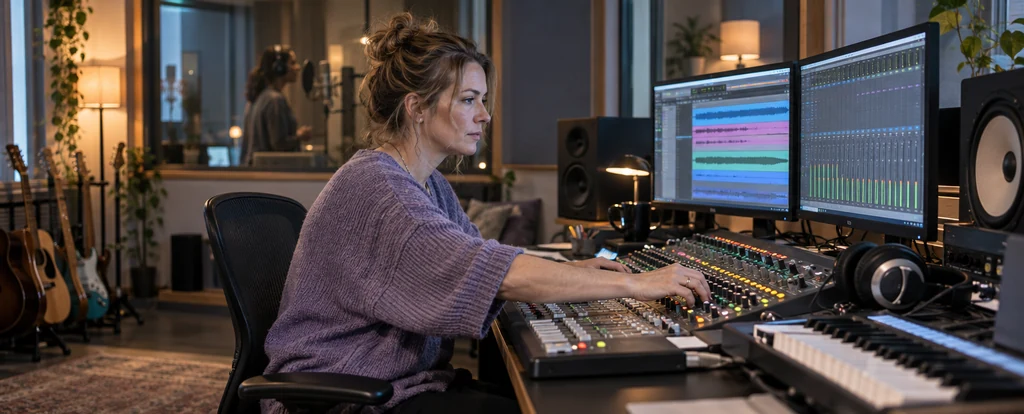
Music producers work in commercial studios, home setups and wherever an artist happens to be recording, carrying a project from rough demos to a released track. The role is wider than a recording or mixing engineer's: a producer shapes the songs, the arrangements and the sound, and usually the budget and schedule as well. Most are freelance and paid per project rather than by the hour, so a career builds on credits and repeat clients across pop, hip hop, rock, electronic music, advertising and film.
How much do music producers earn?
The median full-time salary for a music producer is $78,000 per annum, before tax, up $16,500 since 2018.
Freelance producers are usually paid a fee per project, and that fee often has to cover weeks of studio time, session players and equipment, so annual income swings widely. Rates rise with credits and with how well the artists you work with sell, and royalties or publishing income can keep paying long after a session ends. Salaried work in studios, advertising, broadcasting and film production tends to be steadier.
What does a music producer do day to day?
The list below is what fills most weeks; the exact mix shifts with seniority and whatever stage the current work is at.
- Directing recording sessions with artists, session musicians and vocalists
- Choosing and arranging songs, beats and instrumentation for a project
- Editing and mixing multitrack recordings, from rough takes to a finished master
- Programming synthesisers, samplers and drum machines to build a track's sound
- Managing studio budgets, session fees and release schedules, including delivery to streaming platforms
What skills do music producers need?
Employers look for content creation and writing, creative software production, project management, backed by Ableton Live fluency and strong client relationships and advisory.
Specialist skills
- Content creation and writing
- Creative software production
- Project management
Software and tools
- Ableton Live
- Pro Tools
- Logic Pro
- FL Studio
- Universal Audio plug ins
General skills
- Client relationships and advisory
- Written communication
- Attention to detail
- Time and deadline management
- People leadership
Is the job growing?
About 4,800 people work as music producers in Australia, and employment is projected to grow 18.9% over the decade to 2035. That's healthy, above-average growth, and the role should stay in solid demand.
How do you become a music producer?
Here's the path most music producers take, step by step.
- 1Learn a digital audio workstation
Get fluent in one DAW, such as Ableton Live, Logic Pro, Pro Tools or FL Studio, and record, edit and mix your own material. This is where the technical base comes from, and you can start without access to a professional studio.
- 2Study music production or audio
Bachelor degrees, diplomas and certificates in music production or audio engineering are offered at universities, TAFE and private colleges, and they come with studio time and a cohort of collaborators. The qualification matters less to clients than the recordings you finish while you are there.
- 3Build credits by assisting
Take work as a studio assistant, runner or production assistant, or produce EPs for emerging artists, sometimes for little or no fee. Credits are what artists, managers and labels look at, and assisting an established producer teaches session craft faster than working alone.
- 4Register for royalties and read your agreements
Join APRA AMCOS as a songwriter or composer so performance and broadcast royalties come to you, and check what each contract says about master ownership and points on a record. Those terms decide what a successful release pays you years later.
- 5Go freelance or take a staff role
Producers either build a client base and quote per project, or take salaried work with a studio, advertising agency, broadcaster or film production company. Freelance work gives you more say over what you take on but comes with gaps between projects, while staff roles bring steadier income and less control over the material.
Ready to apply as a music producer?
Whether you're working toward becoming a music producer or already are one and want a hand with the next step (sharpening your resume for ATS screening, tightening your cover letter, or knowing what you'll actually be asked at interview), here are examples grounded in this specific role, not generic templates.
What jobs can a music producer move to?
Moving into Video Editor typically comes with the biggest pay rise, worth $24,700 a year more on average.
| Move to | Typical pay change | Overlap | Retraining |
|---|---|---|---|
| Video Editor Music producers bring audio editing, timing and post-production judgement to video editing work.Known move | +$24,700 | 80% | minimal |
| Art Director Music producers bring visual storytelling and creative leadership to art direction, adding design skills through a short course.Known move | +$24,700 | 50% | short course |
| Video Producer Music producers bring budgeting, scheduling and creative direction to producing video projects.Known move | +$15,600 | 61% | minimal |
| Film and Television Director Music producers bring session leadership, creative judgement and artist direction to film and television directing.Known move | +$2,600 | 67% | minimal |
| Composer Music producers bring arrangement, studio craft and production sense to composing for artists and screen. | −$7,800 | 93% | minimal |
Moves are chosen from Jobs and Skills Australia's Data on Occupation Mobility, which follows income tax records between 2011-12 and 2020-21, together with entry requirements and skill overlap. A known move is one people were seen making in that data. Pay change compares median full-time pay for the two roles.
Who works as a music producer?
The typical music producer is 34 years old; 79% are men, 55% work full-time, and full-timers average 42 hours a week.
- 34
- Median age
- 21%
- Female share
- 55%
- Full-time
- +2h
- vs all-jobs avg
What's it like being a music producer?
The work has a rhythm of intense studio days followed by quieter stretches of preparation, admin and chasing the next project. A producer has to hold a clear creative opinion while keeping the artist comfortable, because a performance only comes good when the person in the booth feels safe enough to give it. People who enjoy both the craft of sound and the company of musicians tend to settle into the job, while the hours and the uneven income suit some temperaments better than others.
What people like
- Hearing a rough idea become a record. A demo turning into something that sounds finished is the moment the job is about, and you know exactly which decisions got it there.
- Close work with artists. Producers spend long hours with musicians and singers while they are at their most exposed, and those relationships usually lead to the next project.
- Range across genres and rooms. One month might be a pop single, the next a jazz record, a film cue or an ad campaign, all using the same set of listening and arrangement skills.
- Creative control. Once an artist trusts you, the arrangement, the sounds and the final shape of the mix are yours to decide, which is the part many producers want most.
What people find hard
- Income arrives in lumps. Fees come per project with gaps between them, which makes it harder to budget for equipment, studio rent and quiet months.
- Sessions run long. Tracking and mixing often happen in the evening and at weekends, when artists are free and studio time is cheaper, so the working week rarely looks like 9 to 5.
- Revisions can go on. An artist or label can send a mix back several times, and that extra work has to fit inside the fee already agreed.
- Credit without control. Release dates, single choices and marketing sit with the artist or label, so a producer can do strong work on a record that never reaches an audience.
Based on our synthesis of professional-body surveys and public accounts of the role, not first-person verified reviews.
Which industries employ music producers?
Music and sound recording activities employs the largest share of music producers, followed by Performing arts operation.
Top employing industries
- 1Music and sound recording activities
- 2Performing arts operation
- 3Broadcasting (except internet)
- 4Advertising and marketing services
- 5Film and video production
Ranked by employment share; the source doesn't publish an exact percentage per industry.
| Bachelor degree | 38% | |
|---|---|---|
| Diploma / Advanced Diploma | 24% | |
| Certificate III/IV | 20% | |
| Postgraduate | 10% | |
| Other | 8% |
Will AI replace music producers?
Music production already runs on software, and that software is getting more capable, with digital audio workstations now offering automatic tuning, stem separation, mix suggestions and instant mastering. That takes over much of the mechanical editing and cleanup, while the decisions that define a record, what it should feel like, which take is honest, how to draw a performance out of a nervous singer, stay with the producer. The overall exposure is moderate: routine processing is being automated, but the session and the taste holding a project together are not.
Share of typical working time by exposure level
- Balancing and finishing a mixAutomated mix suggestions and AI mastering services handle balance, loudness and delivery formats, but the producer decides how the record should feel and when it is done.30%moderate
- Editing, comping and tuning takesTools can align timing, separate stems and clean up a vocal take in minutes, though someone still has to decide which take is the right one.25%high
- Directing sessions with artists and musiciansReading a room, settling a disagreement about an arrangement and getting a second good take out of a tired singer all happen face to face.25%low
- Choosing songs, arrangements and soundsDeciding which beat suits an artist and what the record should sound like depends on taste, trust and knowledge of the artist's audience.20%low
Moves least exposed to AI
These career moves from music producer work are rated low for AI exposure:
- Film and Television Director
High skill overlap (67%), little retraining to get there, and a low automation-risk profile.
Common questions about becoming a music producer
Straight answers to the questions people ask most.
How much do music producers earn?
Music producers earn a median of $78,000 per year before tax, based on full-time workers. Freelance income is uneven, so a good year can sit above that figure and a quiet one below it, depending on how many projects are booked and how each fee is structured.
How do you become a music producer?
Most producers start by learning a digital audio workstation, recording and mixing their own material, then build credits by assisting in studios or producing for emerging artists. Formal study in music production or audio helps with studio access and networks, but artists and labels hire on the strength of finished records.
Are music producers in demand?
Music producers are currently not in shortage, and employment is projected to grow 18.9% over the decade to 2035. Most work is project-based and comes through networks, so steady relationships with artists, managers and studios tend to matter more than applying for advertised jobs.
Will AI replace music producers?
AI is changing parts of the job rather than replacing the producer. Tools can tune vocals, separate stems, suggest a mix balance and master a track automatically, which removes some repetitive editing, while choosing the songs, directing the session and knowing when a mix is finished still depend on someone in the room.
What can a music producer move into?
Many producers run their own studio or freelance practice, and that is often where earnings grow as clients and credits accumulate. The editing and post-production side of the work carries into video editing, where pay is $24,700 more, and the session leadership side carries into directing film and television, where pay is $2,600 more.
Do you need a degree to become a music producer?
No, though qualifications are common: about 38% of people working as music producers hold a bachelor degree, and diplomas or certificates in music production and audio are also widely held. What artists and labels look at first is the body of released work you can point to.
Related roles
Not sure this is you? Take the career quiz and get a ranked shortlist of roles that fit how you like to work.