Nurse Researcher
Nurse researchers design and run studies into how nursing care is delivered, then turn the findings into the guidelines, policies and ward practices that hospitals and health services use.
- Median salary*
- $106,600
4.1%vs last year, before tax
- People employed
- 1,300
0.0%vs last year
- Projected growth
- +23.2%
to 2035
- AI exposure*
- Moderate
- automation risk
- Average hours
- 39/wk
−1h vs all jobs
- Shortage status
- Not in shortage
national
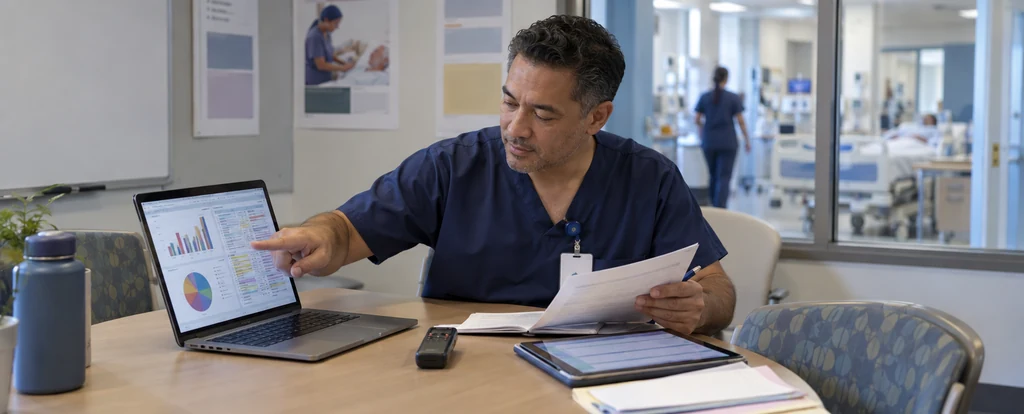
Most nurse researchers work in hospitals, universities and medical research institutes, often splitting the week between a study and a clinical or teaching role. What separates the job from clinical nursing is the method: instead of assessing one patient, they design a study, win ethics approval and analyse data across hundreds of them. Many positions are funded by grants, so contracts run for the length of the project rather than indefinitely.
How much do nurse researchers earn?
The median full-time salary for a nurse researcher is $106,600 per annum, before tax, up $22,300 since 2018.
Pay depends heavily on where the role sits: a nurse researcher employed by a hospital generally falls under the nursing enterprise agreement, while one employed by a university is paid on an academic classification, and the two can differ for similar work. Grant funding and seniority matter too, since a fellowship or a named investigator role on a funded study usually pays more than a fixed-term project position. Part-time and fractional appointments are common, so full-time figures describe a full-time equivalent.
What does a nurse researcher do day to day?
The list below is what fills most weeks; the exact mix shifts with seniority and whatever stage the current work is at.
- Designing studies, from framing the research question and choosing a method to planning how participants will be recruited
- Preparing ethics applications and grant submissions, then answering reviewers' questions before a project can start
- Collecting and cleaning data in tools such as REDCap, then analysing it in SPSS or NVivo
- Interviewing patients, nurses and managers, or pulling clinical data from hospital records
- Writing findings for peer-reviewed journals and presenting them to the clinical teams who may change their practice as a result
What skills do nurse researchers need?
Employers look for clinical assessment and treatment, patient care and support, data analysis, backed by REDCap fluency and strong written communication.
Specialist skills
- Clinical assessment and treatment
- Patient care and support
- Data analysis
- Statistical modelling
- Project management
Software and tools
- REDCap
- SPSS
- NVivo
- EndNote
- Microsoft Excel
General skills
- Written communication
- Attention to detail
- Stakeholder management
Is the job growing?
About 1,300 people work as nurse researchers in Australia, and employment is projected to grow 23.2% over the decade to 2035. That's very strong growth. Few roles in Australia are expanding this fast, and it points to solid demand for years to come.
How do you become a nurse researcher?
Here's the path most nurse researchers take, step by step.
- 1Complete a nursing degree and register
A Bachelor of Nursing, usually three years full time, plus registration with AHPRA as a registered nurse is the base for every pathway into this work, and it is where the clinical grounding for research questions comes from.
- 2Work clinically for a few years
Most nurse researchers spend several years on the ward first, because the questions worth studying come out of practice and employers expect you to understand how care is actually delivered.
- 3Add a postgraduate research qualification
An honours year, a research master's or a PhD in nursing or a health field is the usual entry credential. About 47% of people working in the role hold a postgraduate qualification.
- 4Start in a research-adjacent role
Research assistant, clinical trials nurse and project officer positions are the common way in. They are often fixed-term and paid, and they give you a funded study to put on your record before you apply for anything larger.
- 5Build a publication and grant record
Appointments are competitive and short-term, so a few peer-reviewed papers, a conference presentation and named involvement in a funded study are what turn one contract into the next.
Ready to apply as a nurse researcher?
Whether you're working toward becoming a nurse researcher or already are one and want a hand with the next step (sharpening your resume for ATS screening, tightening your cover letter, or knowing what you'll actually be asked at interview), here are examples grounded in this specific role, not generic templates.
What jobs can a nurse researcher move to?
Moving into University Lecturer typically comes with the biggest pay rise, worth $45,400 a year more on average.
| Move to | Typical pay change | Overlap | Retraining |
|---|---|---|---|
| University Lecturer Nurse researchers bring clinical expertise and research methods to teach and supervise nursing and health students.Known move | +$45,400 | 3% | requalify |
| Research and Development Manager Nurse researchers bring research design, evidence synthesis and clinical knowledge to lead health and science research programs.Known move | +$43,500 | 13% | requalify |
| Director of Nursing Nurse researchers bring evidence, clinical governance and research leadership to senior nursing management roles. | +$28,600 | 23% | requalify |
| Nurse Educator Nurse researchers bring research skills and clinical knowledge to educate and support nursing staff and students.Known move | +$2,600 | 12% | requalify |
Moves are chosen from Jobs and Skills Australia's Data on Occupation Mobility, which follows income tax records between 2011-12 and 2020-21, together with entry requirements and skill overlap. A known move is one people were seen making in that data. Pay change compares median full-time pay for the two roles.
Who works as a nurse researcher?
The typical nurse researcher is 46 years old; 93% are women, 54% work full-time, and full-timers average 39 hours a week.
- 46
- Median age
- 93%
- Female share
- 54%
- Full-time
- −1h
- vs all-jobs avg
What's it like being a nurse researcher?
The work runs in projects, so the shape of a year is set by a protocol, a recruitment target and a reporting deadline rather than a shift roster. It suits people who like methodical work and can live with long stretches where the answer is not clear yet, and who accept that a study may take years to change practice. Much of the day is reading, writing and analysis, with clinical contact arriving in short bursts during recruitment or data collection.
What people like
- Evidence that changes practice. Seeing a hospital protocol or a national guideline updated because of a study you ran is the clearest payoff in the job.
- Time to follow one question properly. Ward nursing is interrupted constantly. Research lets you stay with a problem for months and get to know it in detail.
- Working across clinical and academic teams. Projects usually involve nurses, doctors, statisticians and health service managers, so you learn how decisions get made outside your own discipline.
- Some control over where and when you work. Analysis and writing can often be done away from the ward, and part-time or fractional appointments are common enough that the job can fit around other commitments.
What people find hard
- Funding uncertainty. Many positions last only as long as the grant, so you can be job-hunting again in two or three years even when the project went well.
- Slow timelines. Ethics approval, recruitment and peer review can each take months, and a study may run for years before anything changes on the ward.
- Administration around the research. Grant applications, ethics amendments, progress reports and data management take up a large share of the working week.
- Rejection as a routine event. Journal knockbacks are normal, and rewriting a paper for a second or third submission is part of the work rather than a sign something went wrong.
Based on our synthesis of professional-body surveys and public accounts of the role, not first-person verified reviews.
Which industries employ nurse researchers?
Health Care and Social Assistance employs the largest share of nurse researchers, followed by Professional, Scientific and Technical Services.
Top employing industries
- 1Health Care and Social Assistance
- 2Professional, Scientific and Technical Services
- 3Education and Training
Ranked by employment share; the source doesn't publish an exact percentage per industry.
| Postgraduate | 47.2% | |
|---|---|---|
| Bachelor degree | 43.7% | |
| Diploma / Advanced Diploma | 7.3% | |
| Certificate III/IV | 0.2% | |
| Year 12 or below | 0.2% |
Will AI replace nurse researchers?
Nurse research sits in the middle for AI exposure: the analysis and literature side of the job is already being reshaped by tools that screen papers, clean data and run standard tests, while the clinical and ethical judgement holding a study together is not. What changes is the time spent sorting papers and running routine analysis; what does not change is deciding what a result means for practice, which needs clinical knowledge and a grasp of the study's limits.
Share of typical working time by exposure level
- Statistical analysis of study dataScripted packages and AI-assisted tools handle standard tests quickly, but choosing the right model for a messy clinical data set still takes someone who understands the data.30%moderate
- Literature searching and abstract screeningSoftware now deduplicates search results and screens thousands of abstracts against inclusion criteria, leaving you to check the borderline ones.25%high
- Writing protocols, ethics applications and grant submissionsDrafting assistance speeds up a first version, while the study design, budget and justification for the research remain yours.25%moderate
- Recruiting participants and collecting data on the wardConsent conversations, patient interviews and pulling data from clinical records depend on being in the room and reading the situation.20%low
Moves least exposed to AI
These career moves from nurse researcher work are rated low for AI exposure:
- Research and Development Manager
Some skill overlap (13%), requalify to get there, and a low automation-risk profile.
- Director of Nursing
Some skill overlap (23%), requalify to get there, and a low automation-risk profile.
Common questions about becoming a nurse researcher
Straight answers to the questions people ask most.
How much do nurse researchers earn?
Nurse researchers earn $106,600 per year before tax at the median for full-time work. Pay moves with the employer: hospital roles sit under nursing enterprise agreements while university roles use academic classifications, and a fellowship or chief investigator role on a funded study typically pays more than a fixed-term project position.
How do you become a nurse researcher?
Register as a nurse, work clinically for a few years, then add a research qualification, usually an honours year, a research master's or a PhD. From there you enter through a research assistant, clinical trials nurse or project role and build a publication record from it.
Are nurse researchers in demand?
Nurse researchers are currently not in shortage, and employment is projected to grow 23.2% over the decade to 2035 over the decade to 2035. The occupation is small, so openings tend to appear when a study or fellowship is funded rather than through steady hiring, which makes a track record more useful than a general job search.
Will AI replace nurse researchers?
AI is changing how the work is done rather than removing the role. Literature searching, abstract screening and routine statistical tests are increasingly automated, but designing a study, recruiting participants and working out what a result means for practice still call on clinical knowledge and an understanding of the study's limits.
What can a nurse researcher move into?
Experienced nurse researchers move into research and development management, where pay is $43,500 more, or into university lecturing, where pay is $45,400 more; both draw on the same study design and evidence skills. A move into a director of nursing role, where pay is $28,600 more, suits those who want to stay closer to health service management.
Do you need a PhD to be a nurse researcher?
Not for every role, but it helps. About 47% of people in the role hold a postgraduate qualification, and a PhD is usually expected for positions that lead a study or apply for grants in their own name, while research assistant and clinical trials roles often accept a bachelor degree plus experience.
Related roles
- Research and Development Manager
- University Lecturer
- Director of Nursing
- Nurse Educator
- Registered Nurse
- Nurse Practitioner
Not sure this is you? Take the career quiz and get a ranked shortlist of roles that fit how you like to work.