Photography Assistant
Photography assistants support photographers on shoots, preparing cameras, lighting and files so a session runs smoothly and the images come back to brief.
- Median salary*
- $52,000
4.0%vs last year, before tax
- People employed
- 800
0.0%vs last year
- Projected growth
- +13.9%
to 2035
- AI exposure*
- Moderate
- automation risk
- Average hours
- 38/wk
−2h vs all jobs
- Shortage status
- Not in shortage
national
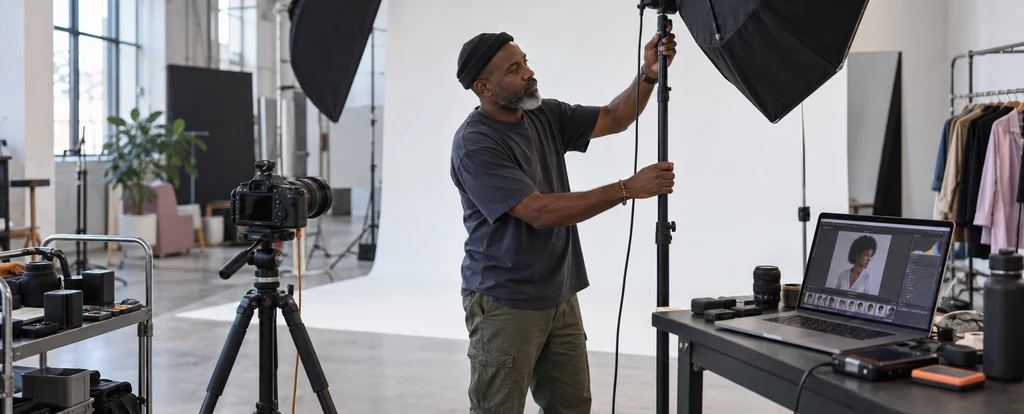
Photography assistants work in studios, on location and on set, usually alongside one photographer or a small crew. Their job is to have the gear ready, the light right and the files safe, which leaves the photographer free to concentrate on the shot. It differs from being a photographer in that an assistant rarely directs the image, and it is often the first paid work someone does in the industry.
How much do photography assistants earn?
The median full-time salary for a photography assistant is $52,000 per annum, before tax, up $10,800 since 2018.
Assistants are often paid by the hour or by the day, and casual or per-shoot work is common, so weekly earnings move around a lot. Rates depend on the photographer's market, the sector, since weddings and events pay differently to studio product work, and how much of the kit you can manage on your own. Studio roles with a set roster are the steadiest, while freelance assisting may carry a higher day rate with gaps between jobs.
What does a photography assistant do day to day?
The list below is what fills most weeks; the exact mix shifts with seniority and whatever stage the current work is at.
- Setting up and testing cameras, lenses and lighting before a shoot
- Adjusting lights and checking exposure while the photographer works
- Downloading, backing up and naming image files during and after a session
- Keeping the studio, props and backdrops ready between shoots
- Carrying and tracking equipment on location, from light stands to spare batteries
What skills do photography assistants need?
Employers look for creative software production, visual design, inventory management, backed by Adobe Photoshop fluency and strong attention to detail.
Specialist skills
- Creative software production
- Visual design
- Inventory management
- Operations management
Software and tools
- Adobe Photoshop
- Adobe Lightroom
- Capture One
- Canon EOS R
- Profoto lighting
General skills
- Attention to detail
- Written communication
- Customer service
Is the job growing?
About 800 people work as photography assistants in Australia, and employment is projected to grow 13.9% over the decade to 2035. That's healthy, above-average growth, and the role should stay in solid demand.
How do you become a photography assistant?
Here's the path most photography assistants take, step by step.
- 1Start building a portfolio while you are still at school
School results matter less than showing you can use a camera and turn up reliably. Around 26% of people working as photography assistants finished at Year 12 or below, so a set of your own images and a willingness to learn on the job count for a lot.
- 2Study photography or photo imaging
A Certificate IV or diploma in photography and photo imaging at TAFE covers lighting, camera technique and file workflow, and a bachelor degree in photography or visual arts opens up editorial and commercial studios. Around 32% of the current workforce holds a bachelor degree, but it is not the only route in.
- 3Get on set, even unpaid at first
Student films, community events and small weddings are where beginners learn how a shoot actually runs. Photographers hire assistants they have already seen work calmly under time pressure, so a few volunteer days often lead to paid ones.
- 4Learn the software and the file workflow
Studios expect an assistant to import, cull, rate and back up images in Lightroom, Capture One or Photoshop without being told twice. Handling files well is what keeps you on the call sheet for the next job.
- 5Move into second shooting or digital tech work
Once you know the gear and the pace, second shooting and digital tech roles let you build your own images and client contacts, which is what the step up to photographer usually depends on.
Ready to apply as a photography assistant?
Whether you're working toward becoming a photography assistant or already are one and want a hand with the next step (sharpening your resume for ATS screening, tightening your cover letter, or knowing what you'll actually be asked at interview), here are examples grounded in this specific role, not generic templates.
What jobs can a photography assistant move to?
Moving into Camera Operator typically comes with the biggest pay rise, worth $43,900 a year more on average.
| Move to | Typical pay change | Overlap | Retraining |
|---|---|---|---|
| Camera Operator On-set support work carries into camera operation, though the move requires substantial training in framing, movement and camera equipment. | +$43,900 | 38% | reskill |
| Photographer Assisting on shoots builds lighting, equipment and client awareness, so the step up to photographer needs further study in technique and business.Known move | +$43,700 | 35% | reskill |
| Photo Lab Technician Image handling and shoot preparation transfer to photo lab work, with further training in processing, printing and colour management. | +$21,100 | 23% | reskill |
Moves are chosen from Jobs and Skills Australia's Data on Occupation Mobility, which follows income tax records between 2011-12 and 2020-21, together with entry requirements and skill overlap. A known move is one people were seen making in that data. Pay change compares median full-time pay for the two roles.
Who works as a photography assistant?
The typical photography assistant is 35 years old; 64% are women, 45% work full-time, and full-timers average 38 hours a week.
- 35
- Median age
- 64%
- Female share
- 45%
- Full-time
- −2h
- vs all-jobs avg
What's it like being a photography assistant?
The work is physical and varied: one day might mean hauling cases up stairs at a wedding, the next sitting quietly at a laptop culling images. Shoots start early or run late, and the pace is set by the photographer and the client rather than by you. It suits people who want to be close to the craft, enjoy solving problems quickly and do not mind the unglamorous parts being their job.
What people like
- You learn the craft from the inside. Watching an experienced photographer read light, direct people and fix problems on the spot teaches things a course cannot, and you are paid to be there.
- The days do not repeat. Weddings, product shoots, portraits and editorial work each run to a different rhythm, and the locations change with them.
- It is a recognised way into the industry. Every shoot adds contacts, references and a sense of how different photographers work, which is how most assistants hear about the next job.
- You work with creative people. Stylists, models, producers and clients are all part of a shoot day, so the job suits people who like being around a team rather than alone at a desk.
What people find hard
- Long days on your feet. Carrying cases, standing for hours and early call times are normal, and the heaviest work often happens before the photography starts.
- Hours that follow the work. Weekend weddings, evening events and last-minute bookings make it hard to plan around, and quiet stretches between jobs are common.
- Little control over the image. You set up the shot but rarely choose it, and your name does not appear on the finished photograph.
- You carry the blame for small mistakes. A flat battery, a missing card or a mislabelled file can derail a shoot, and the photographer is the one who answers to the client.
Based on our synthesis of professional-body surveys and public accounts of the role, not first-person verified reviews.
Which industries employ photography assistants?
Professional, Scientific and Technical Services employs the largest share of photography assistants, followed by Information Media and Telecommunications.
Top employing industries
- 1Professional, Scientific and Technical Services
- 2Information Media and Telecommunications
- 3Other Services
Ranked by employment share; the source doesn't publish an exact percentage per industry.
| Bachelor degree | 32% | |
|---|---|---|
| Year 12 or below | 26.3% | |
| Diploma / Advanced Diploma | 23% | |
| Certificate III/IV | 10.7% | |
| Postgraduate | 5.6% |
Will AI replace photography assistants?
Photography assisting sits in the middle: the back-end of the job, such as culling, batch editing and file management, is increasingly automated by Lightroom and Capture One, and generative tools now handle basic retouching and background clean-up. The on-set half is much less exposed, because rigging a softbox, checking focus on a moving subject and keeping a shoot on schedule are physical and social tasks. The role is likely to keep its shape, with more of an assistant's desk time spent supervising software rather than doing the repetitive steps by hand.
Share of typical working time by exposure level
- Lighting setup and adjustment on setPositioning stands, fitting modifiers and tethering strobes to a meter depends on the room, the subject and the look the photographer wants, and changes shot by shot.30%low
- Equipment preparation and checksCharging batteries, cleaning sensors, packing cases and testing bodies against a shot list all happen in the real world, though some studios now use asset tracking software to log kit.25%low
- File handling, culling and backupImporting cards, backing up to two drives and rating the best frames is where automation has moved fastest, with AI culling in Lightroom and Capture One now ranking sharpness, focus and expressions.25%high
- Client and crew support on the dayGreeting a wedding party, keeping a model comfortable between setups and relaying instructions from the photographer are interpersonal, timing-dependent tasks that software does not touch.20%low
Moves least exposed to AI
These career moves from photography assistant work are rated low for AI exposure:
- Camera Operator
Some skill overlap (38%), reskill to get there, and a low automation-risk profile.
Common questions about becoming a photography assistant
Straight answers to the questions people ask most.
How much do photography assistants earn?
$52,000 per year before tax for full-time workers. How the work is arranged moves that figure most: casual and per-shoot assisting is usually paid by the hour or the day, while a studio role with a set roster pays a steady wage.
How do you become a photography assistant?
There is no licence or single qualification, so most people start by approaching photographers whose work they like and offering to help on a shoot. A Certificate IV or diploma in photography and photo imaging helps with lighting and file workflow, and reliability on the day is what gets you asked back.
Are photography assistants in demand?
Photography assistants are currently not in shortage, and employment is projected to grow 13.9% over the decade to 2035 over the decade. The work is found mostly through the photographers and studios you have assisted before, so a good reputation on set matters more than applying cold.
Will AI replace photography assistants?
Parts of the job are already automated, particularly culling, batch editing, file naming and basic retouching, which is why the role carries moderate exposure rather than low. The on-set work is harder to hand over: rigging lights, reading a client's mood and knowing which lens the photographer will reach for next still depend on being in the room.
What can photography assistants move into?
The most direct move is to photographer, where your lighting and client-handling experience carries over and pay rises by $43,700 more; many photographers work freelance, and running your own practice is often where earnings grow. Camera operation and photo lab technician work are other options, drawing on the on-set and file-handling skills the role builds.
Do photography assistants work full time?
45% of photography assistants work full time, averaging 38 hours a week, though the hours land when the work does, with weekend weddings, evening events and early studio calls all normal. Casual and freelance assisting is common, so a second job or study alongside shoots is manageable.
Related roles
Not sure this is you? Take the career quiz and get a ranked shortlist of roles that fit how you like to work.