Snake Catcher
Snake catchers answer calls from homes and businesses, catch the snake safely and release it somewhere it will not cause a problem.
- Median salary*
- $67,600
3.5%vs last year, before tax
- People employed*
- 400
0.0%vs last year
- Projected growth*
- +5%
to 2035
- AI exposure*
- Low
- automation risk
- Average hours*
- 40/wk
matches all-jobs average
- Shortage status*
- Not in shortage
national
Most snake catchers work on their own and on call, covering the suburbs, farms and industrial sites where snakes turn up. The job sits between pest control and wildlife rescue: the snake is removed rather than killed, and it is protected under state wildlife law. Work is seasonal, busy from spring through to autumn and quiet in the cooler months when snakes are less active.
How much do snake catchers earn?
The median full-time salary for a snake catcher is $67,600 per annum, before tax, up $14,400 since 2018.
Pay depends heavily on how the work is arranged. A licensed relocator running their own call-out business charges a fee per job and carries the equipment and insurance costs, while someone employed by a council or a pest control company earns a wage for set hours. Call volumes follow the seasons, so a busy summer has to carry a quiet winter, and after-hours or emergency call-outs usually attract a higher fee.
What does a snake catcher do day to day?
The list below is what fills most weeks; the exact mix shifts with seniority and whatever stage the current work is at.
- Taking call-outs from residents and asking enough questions to work out how urgent the job is
- Identifying the species from a photo or a description before deciding how to approach it
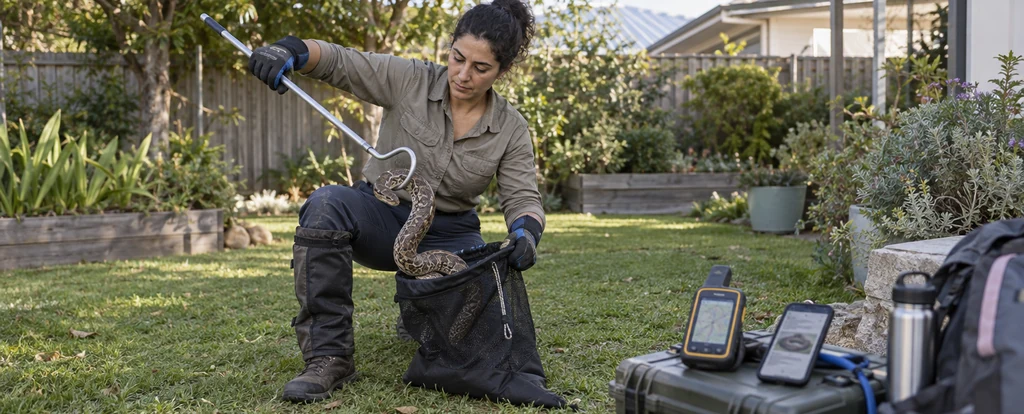
- Catching the snake with a hook and bag and keeping it secure while the caller settles
- Releasing the snake at a suitable site away from houses and recording where it went
- Talking clients through what to do next time, including keeping grass short and knowing snakebite first aid
What skills do snake catchers need?
Employers look for animal care and handling, emergency response, backed by Snake hook fluency and strong written communication.
Specialist skills
- Animal care and handling
- Emergency response
Software and tools
- Snake hook
- Snake bag
- GPS mapping app
- Species identification app
- Protective gaiters
General skills
- Written communication
- Customer service
- Problem solving
- Attention to detail
- Physical stamina and dexterity
- Safety and compliance awareness
Is the job growing?
About 400 people work as snake catchers in Australia, and employment is projected to grow 5% over the decade to 2035. That's modest growth: demand is steady rather than booming.
How do you become a snake catcher?
Here's the path most snake catchers take, step by step.
- 1Build reptile handling experience
Volunteer with a wildlife rescue group or a reptile park, or keep and handle non-venomous species under the relevant state permit. Licensing bodies and employers look for hours of hands-on handling rather than a single course.
- 2Complete a venomous snake handling and relocation course
These run over one or two days through registered training providers and wildlife organisations, and cover species identification, safe capture, bagging and transport, and emergency procedures. Most state wildlife authorities require a course like this before they will license you.
- 3Apply for the state or territory wildlife licence or permit
Snake catching is regulated under wildlife law and the requirements differ around the country: some states license individual relocators, others authorise the work under a wildlife or pest control licence. Check the rules for the state or territory where you intend to work.
- 4Get equipment, first aid training and insurance in place
A snake hook, bag, bite-resistant gaiters and a first aid kit are the basics, along with current snakebite first aid training and public liability insurance, which councils and commercial clients ask to see.
- 5Start taking call-outs
Some snake catchers work through a local council, wildlife service or pest control company, while others build their own business on word of mouth, a website and a place on their council's list of contacts.
Ready to apply as a snake catcher?
Whether you're working toward becoming a snake catcher or already are one and want a hand with the next step (sharpening your resume for ATS screening, tightening your cover letter, or knowing what you'll actually be asked at interview), here are examples grounded in this specific role, not generic templates.
What jobs can a snake catcher move to?
Moving into Veterinary Nurse typically comes with the biggest pay rise, worth $19,100 a year more on average.
| Move to | Typical pay change | Overlap | Retraining |
|---|---|---|---|
| Veterinary Nurse Snake catchers have animal handling skills, but veterinary nursing requires formal training in clinical care and domestic species. | +$19,100 | 12% | reskill |
| Animal Health Officer Snake catchers bring wildlife knowledge and field experience, but moving into animal health regulation requires further study in compliance and disease control. | +$10,400 | 21% | reskill |
| Zookeeper Snake catchers bring hands-on reptile handling and safe capture techniques, which transfer directly to caring for reptiles in a zoo setting. | −$1,200 | 50% | short course |
Moves are chosen from Jobs and Skills Australia's Data on Occupation Mobility, which follows income tax records between 2011-12 and 2020-21, together with entry requirements and skill overlap. A known move is one people were seen making in that data. Pay change compares median full-time pay for the two roles.
Who works as a snake catcher?
The typical snake catcher is 42 years old; 85% are men, 65% work full-time, and full-timers average 40 hours a week.
- 42
- Median age
- 15%
- Female share
- 65%
- Full-time
- +0h
- vs all-jobs avg
What's it like being a snake catcher?
The job runs on call-outs, so the day is shaped by the phone rather than a roster. Peak season can bring several jobs in an afternoon spread across a wide area, and most of the work happens alone in someone else's yard with an audience watching. It suits people who stay calm around animals and are comfortable being the person everyone expects to know what to do.
What people like
- Every job ends with a release. The snake goes back into bushland rather than being killed, which is the reason many people take up the work in the first place.
- You mostly work for yourself. Many snake catchers run their own call-out business, setting their own hours and keeping the fee, though the phone can ring at any time.
- The work is varied and outdoors. One afternoon might bring a python in a chook shed, a brown snake near a back step and a carpet snake in a ceiling, each needing a different approach.
- You get good at reading a situation. Experience builds a real skill in judging how a snake is moving and the safest way in, and clients notice when it looks effortless.
What people find hard
- The work is seasonal. Call volumes drop away in winter, so income is uneven unless you have another line of work to carry you through.
- Some calls are distressing. Callers are often frightened, and a few want the snake killed, which puts you in an awkward spot when the animal is protected by law.
- You are on call and usually alone. Evenings, weekends and public holidays are when people notice a snake, and there is rarely anyone else on site to help.
- The rules differ by state. Licensing, reporting and what you are allowed to do with a captured snake vary between states and territories, and keeping on top of that takes time.
Based on our synthesis of professional-body surveys and public accounts of the role, not first-person verified reviews.
Which industries employ snake catchers?
Pest Control Services employs the largest share of snake catchers, followed by Wildlife and Conservation Services.
Top employing industries
- 1Pest Control Services
- 2Wildlife and Conservation Services
- 3Local Government Administration
- 4Environmental Services
- 5Agriculture and Farming
Ranked by employment share; the source doesn't publish an exact percentage per industry.
| Certificate III/IV | 34% | |
|---|---|---|
| Diploma / Advanced Diploma | 26% | |
| Bachelor degree | 20% | |
| Year 12 or below | 20% |
Will AI replace snake catchers?
Snake catching sits at the low end of AI exposure. The central task is walking into an unfamiliar yard, finding a live venomous animal and getting it into a bag, which no current tool does for you. Software helps around the edges: identification apps narrow down a species from a photo, GPS records where a snake was released, and booking systems manage the call-outs.
Share of typical working time by exposure level
- Catching and bagging the snakeReading how an animal is moving in a chook shed or under a pallet and getting the hook and bag in the right place is entirely hands-on work.45%low
- Releasing the snake and recording the jobChoosing a release site that suits the species, tipping the snake out of the bag cleanly and filing the record with the wildlife authority are all things you do yourself.30%low
- Taking calls and scheduling jobsBooking and mapping software handles the who, where and when, but choosing which call to take first when two arrive at once is still your judgement.15%moderate
- Identifying the speciesPhone apps and online groups can suggest a species from a photo, which helps you prepare, though the identification that matters is the one you make with the snake in front of you.10%moderate
Common questions about becoming a snake catcher
Straight answers to the questions people ask most.
How much do snake catchers earn?
Snake catchers earn a median of $67,600 per year before tax. What moves that figure is how the work is arranged rather than how long you have been doing it: sole traders set their own call-out fees and carry their own costs, while those employed by councils or pest control firms earn a wage.
How do you become a snake catcher?
You need a venomous snake handling and relocation course and, in most states and territories, a wildlife licence or permit before you can take call-outs. Hands-on reptile experience, current snakebite first aid training and public liability insurance round out what licensing bodies and clients expect.
Are snake catchers in demand?
Snake catchers are currently not in shortage, and employment is projected to grow 5% over the decade to 2035. The occupation is small, at about 400 people, so openings come through councils, wildlife services and pest control firms rather than large-scale hiring, and they cluster in the warmer months.
Will AI replace snake catchers?
Catching and transporting a live venomous snake is physical, unpredictable work that no current tool handles for you. Software helps around the edges: identification apps narrow down a species from a photo, GPS records release sites, and booking systems manage the call-outs.
What else can a snake catcher do?
Zookeeping draws on the same reptile handling and safe capture skills, and pay is $1,200 less. Moving into animal health officer or veterinary nurse work pays $10,400 more and $19,100 more, but both need further study in clinical care and compliance.
Is snake catching dangerous?
Yes, the job carries real risk, because you are handling venomous animals in tight spaces with no one to help. Training, bite-resistant gaiters, working with a hook rather than hands, and up-to-date snakebite first aid are what keep that risk manageable.
Related roles
Not sure this is you? Take the career quiz and get a ranked shortlist of roles that fit how you like to work.