Stage Manager
Stage managers run the backstage side of a production, keeping rehearsals, cues and cast on schedule so every performance runs the same way.
- Median salary*
- $71,800
4.1%vs last year, before tax
- People employed
- 310
3.3%vs last year
- Projected growth
- +19.1%
to 2035
- AI exposure*
- Low
- automation risk
- Average hours
- 40/wk
matches all-jobs average
- Shortage status
- Not in shortage
national
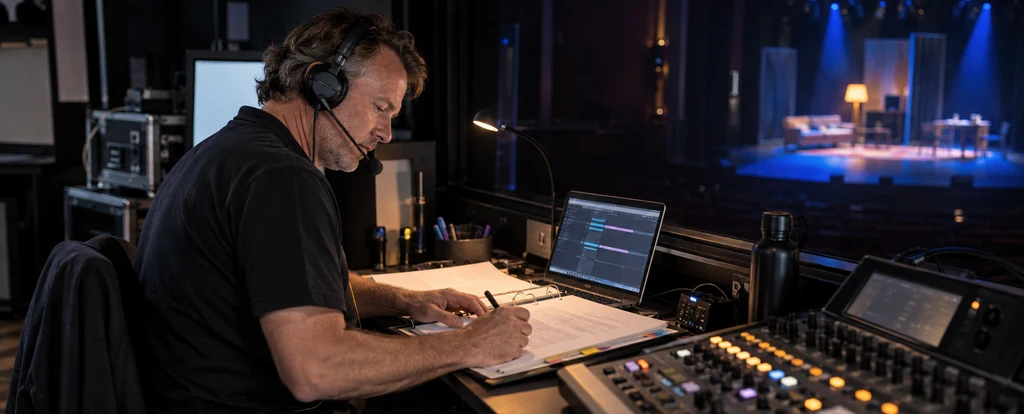
The work happens in rehearsal rooms, backstage and in the wings of theatres, opera houses, concert halls, festival sites and event venues, and it follows a production calendar rather than a nine-to-five week. A stage manager sits between the director and the crew: the director decides what the show should be, and the stage manager makes sure it happens that way at every performance. Most are employed by performing arts companies, touring producers, festivals and education providers, and much of the work comes as short contracts rather than ongoing roles.
How much do stage managers earn?
The median full-time salary for a stage manager is $71,800 per annum, before tax, up $15,000 since 2018.
Who employs you matters more than the job title: a large subsidised company or a touring producer generally pays better than a small independent or community theatre, and enterprise agreements set minimum rates in many venues. Evening, weekend and public holiday work usually attracts penalty rates, which lifts the weekly amount during a season. Because many stage managers work production by production, income can stop between contracts, so plenty of them take venue shifts, event work or teaching to fill the gaps.
What does a stage manager do day to day?
The list below is what fills most weeks; the exact mix shifts with seniority and whatever stage the current work is at.
- Scheduling and running rehearsals in consultation with the director
- Compiling the prompt copy and recording blocking, cues and technical notes as they are set
- Calling lighting, sound, fly and automation cues from the prompt desk during performances
- Coordinating backstage crew, wardrobe, props and scene changes so each change lands on time
- Managing cast and crew sign-in, breaks, safety and welfare across rehearsals and shows
What skills do stage managers need?
Employers look for project management, operations management, event coordination, backed by QLab fluency and strong written communication.
Specialist skills
- Project management
- Operations management
- Event coordination
Software and tools
- QLab
- Stage Write
- Microsoft Office
- Google Workspace
- Dropbox
General skills
- Written communication
- Attention to detail
- Problem solving
- Time and deadline management
- People leadership
Is the job growing?
About 310 people work as stage managers in Australia, and employment is projected to grow 19.1% over the decade to 2035. That's healthy, above-average growth, and the role should stay in solid demand.
How do you become a stage manager?
Here's the path most stage managers take, step by step.
- 1Get on a crew
Start as a stagehand, follow-spot operator or production assistant with community theatre, student productions or festivals. You learn the running order, backstage etiquette and how a show is put together before you are responsible for one.
- 2Study stage management or live production
A bachelor degree in production or stage management at a school such as NIDA, WAAPA or the Victorian College of the Arts is the most common route, and a Diploma of Live Production and Technical Services at TAFE is a practical alternative. Around 50% of stage managers hold a Bachelor degree, the most common level in the workforce, though it is not a formal licensing requirement.
- 3Learn the paperwork and the tools
The prompt copy, cue sheets, running lists and daily schedules are the core of the job, along with software such as QLab, Stage Write and shared folders for production documents. Practising these on a small show is what convinces a producer to hand you a bigger one.
- 4Work up from assistant stage manager
Paid assistant stage manager and production assistant roles, or casual venue crew work, are the usual entry points. Taking on a small production as stage manager, even a short festival run, gives you a credit you can point to.
- 5Build your network and join the union
Live performance work is passed between people who have worked together, so staying in touch with directors, production managers and venues between contracts is part of the job. The Media, Entertainment and Arts Alliance covers stage managers and can advise on agreements and rates.
Ready to apply as a stage manager?
Whether you're working toward becoming a stage manager or already are one and want a hand with the next step (sharpening your resume for ATS screening, tightening your cover letter, or knowing what you'll actually be asked at interview), here are examples grounded in this specific role, not generic templates.
What jobs can a stage manager move to?
Moving into Technical Director typically comes with the biggest pay rise, worth $42,600 a year more on average.
| Move to | Typical pay change | Overlap | Retraining |
|---|---|---|---|
| Technical Director Stage managers bring cue calling, scheduling and live production oversight, and a short course adds technical direction for larger productions. | +$42,600 | 56% | short course |
| Event Coordinator Stage managers bring run sheets, vendor liaison and live event logistics, transferring to event coordination with a short course. | +$13,200 | 47% | short course |
| Store Manager Stage managers bring rostering, budgeting and people coordination, retraining for retail store management.Known move | +$12,400 | 21% | reskill |
| Production Coordinator Stage managers bring scheduling, logistics and production coordination, moving into screen production with a short course. | +$8,800 | 56% | short course |
| Publishing Editor Stage managers bring script reading, scheduling and creative project management, retraining for editorial publishing. | −$6,800 | 39% | reskill |
Moves are chosen from Jobs and Skills Australia's Data on Occupation Mobility, which follows income tax records between 2011-12 and 2020-21, together with entry requirements and skill overlap. A known move is one people were seen making in that data. Pay change compares median full-time pay for the two roles.
Who works as a stage manager?
The typical stage manager is 33 years old; 58% are women, 63% work full-time, and full-timers average 40 hours a week.
- 33
- Median age
- 58%
- Female share
- 63%
- Full-time
- +0h
- vs all-jobs avg
What's it like being a stage manager?
The rhythm of the job runs on the production calendar: quiet weeks of planning and rehearsal, then long days through technical rehearsals and previews, then a season where the same show is called night after night. It suits someone who likes being the calm centre of a busy room, keeping track of many small details at once and speaking up when something is out of step. The hours are social, the responsibility is real, and the work is over when the show closes.
What people like
- Every night is live. The performance depends on cues landing at the right moment, and you are the person making that happen. There is a particular satisfaction in a show that runs cleanly because the calls were right.
- You watch a production take shape. You are there from the first read-through to closing night, and you see how a director's idea becomes a set, a sound world and a running order. Few people on a production see the whole arc.
- The company relies on you. Cast and crew come to you with questions about the schedule, the running time and what happens next. Being the person who knows is its own reward.
- The work changes with each show. A musical, an opera, a dance season and a corporate awards night each need different paperwork, different calls and a different pace. The variety keeps the job interesting across a career.
What people find hard
- Evenings, weekends and long technical rehearsals. Shows happen when audiences are free, so nights and weekends are the working week. Technical rehearsal days can stretch well past midnight, and the following day starts on schedule regardless.
- You carry the schedule. When a rehearsal runs over, a cast member is unwell or a set piece is not ready, the knock-on effects land on your running order. Rebuilding the day around a problem is a constant part of the job.
- Tension in the room. You relay the director's notes, enforce breaks and hold the line on timing, which sometimes means being the bearer of unwelcome news to people you work closely with.
- Work comes in contracts. Many stage management roles last for one production, so there are gaps between shows and no guarantee of the next one. Managing those gaps is part of building a career in the field.
Based on our synthesis of professional-body surveys and public accounts of the role, not first-person verified reviews.
Which industries employ stage managers?
Arts and Recreation Services employs the largest share of stage managers, followed by Information Media and Telecommunications.
Top employing industries
- 1Arts and Recreation Services
- 2Information Media and Telecommunications
- 3Education and Training
Ranked by employment share; the source doesn't publish an exact percentage per industry.
| Bachelor degree | 50.2% | |
|---|---|---|
| Year 12 or below | 19.3% | |
| Diploma / Advanced Diploma | 15.1% | |
| Certificate III/IV | 11.1% | |
| Postgraduate | 3.6% |
Will AI replace stage managers?
Stage management has low exposure to AI because the work happens in real time, in a physical space, with people who improvise. Scheduling software, digital prompt copies and cue playback tools such as QLab have absorbed some of the paperwork and the button pushing, but someone still has to call a standby when an actor is out of position and rework the running order when a performer is unwell. The technology changes how the records are kept, not who calls the show.
Share of typical working time by exposure level
- Running the backstage during a performanceManaging quick changes, props, fly cues and cast welfare in the wings is physical, hands-on work that has to respond to whatever the stage throws up that night.30%low
- Calling the show from the prompt deskCues are called live over headset in response to what is happening on stage, so timing, missed entrances and safety calls stay with the person watching the performance.25%low
- Building and updating the prompt copyDigital scripts, shared documents and tools like Stage Write speed up recording blocking and cue notes, but you still decide what needs to be written down and when a change is settled.25%moderate
- Scheduling rehearsals, crew and company movesRostering and rehearsal software handles the clash checking, while you negotiate the changes when a director wants more time on a scene or a venue double-books the space.20%moderate
Common questions about becoming a stage manager
Straight answers to the questions people ask most.
How much do stage managers earn?
Stage managers earn a median of $71,800 per annum, before tax. The figure moves with the employer, with whether the role is an ongoing venue position or a single production contract, and with the penalty rates attached to night and weekend work.
How do you become a stage manager?
Most stage managers start on a crew as a stagehand or production assistant, then study production or stage management at a drama school or TAFE and work up through assistant stage manager roles. The qualification opens doors, but the credits from shows you have actually run matter just as much.
Are stage managers in demand?
Stage managers are currently not in shortage, and employment is projected to grow 19.1% over the decade to 2035. The occupation is small, with about 310 people working in it, so openings tend to come up one production at a time rather than in batches. Staying known to production managers and venues is usually how the next contract arrives.
Will AI replace stage managers?
No, and the job has low exposure to automation because it happens live, in a room, with people who do not always do what was planned. Scheduling tools, digital prompt copies and software such as QLab have taken over some paperwork and cue playback, which frees you to watch the stage. When a fly line jams mid-scene or a performer misses an entrance, working out whether to hold the curtain, send a standby or call the next cue still comes down to what you can see from the desk.
What can a stage manager move into?
Technical direction, production coordination and event coordination all draw on the scheduling, cue calling and live production oversight the job teaches. Production coordination and event coordination typically pay $8,800 more and $13,200 more respectively, and the move into technical direction or screen production usually takes a short course rather than a new degree.
Do stage managers work full time?
Many do, but the pattern is uneven: 63% of stage managers work full time and the average full-time week runs about 40 hours, with longer days during technical rehearsals and load-ins. Outside a season, work often drops back to planning, venue shifts or unrelated jobs until the next production starts.
Related roles
- Technical Director
- Production Coordinator
- Event Coordinator
- Publishing Editor
- Store Manager
- Lighting Technician
Not sure this is you? Take the career quiz and get a ranked shortlist of roles that fit how you like to work.