Technical Director
A technical director runs the technical side of a production, setting up the pipelines and tools a creative team works with and keeping them running through to delivery.
- Median salary*
- $114,400
3.8%vs last year, before tax
- People employed
- 480
4.0%vs last year
- Projected growth
- +19.1%
to 2035
- AI exposure*
- Low
- automation risk
- Average hours
- 41/wk
+1h vs all jobs
- Shortage status
- Not in shortage
national
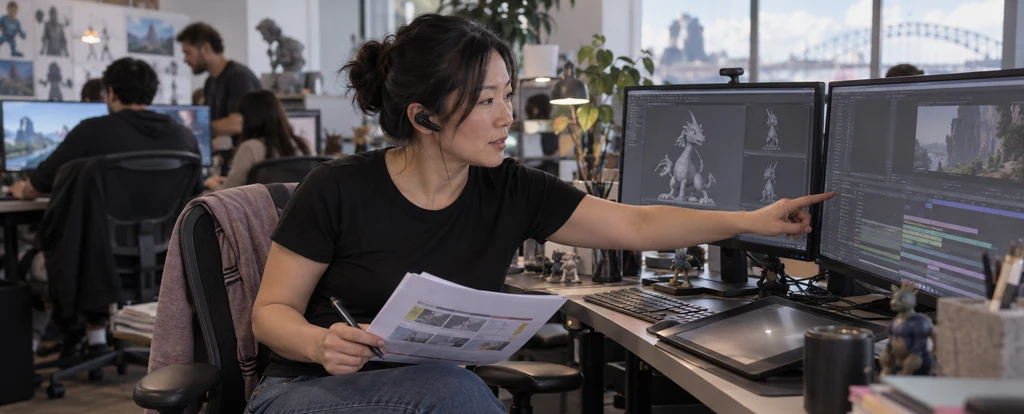
Technical directors work in film, television, animation, visual effects and games, usually as the senior technical figure on a production or inside a studio's pipeline team. The role sits between the creative leads and the artists, turning a director's or producer's intentions into workflows that can actually be built and repeated across a series or a game. It is not the same job as a creative director, who owns the look and feel, because the technical director owns whether the tools, scripts and team structure can deliver it.
How much do technical directors earn?
The median full-time salary for a technical director is $114,400 per annum, before tax, up $23,700 since 2018.
Pay varies with the size and type of studio, and with whether the job is a permanent staff position or a contract tied to one production. Contract technical directors often negotiate a day rate that has to cover the gaps between shows, while salaried roles trade a lower rate for steadier work. Long delivery periods add overtime or loading in some studios, though many technical director roles are salaried and do not pay extra for them.
What does a technical director do day to day?
The list below is what fills most weeks; the exact mix shifts with seniority and whatever stage the current work is at.
- Designing and maintaining the production pipeline from asset handover to final render
- Leading a small technical team of artists, developers and support staff
- Testing and rolling out new versions of tools such as Maya, Nuke or Unreal Engine
- Troubleshooting faults that stall a shot or a build, often close to a delivery date
- Budgeting and scheduling technical work with producers and department heads
What skills do technical directors need?
Employers look for project management, operations management, creative software production, backed by Autodesk Maya fluency and strong people leadership.
Specialist skills
- Project management
- Operations management
- Creative software production
Software and tools
- Autodesk Maya
- Unreal Engine
- ShotGrid
- The Foundry Nuke
- Adobe Creative Suite
General skills
- People leadership
- Problem solving
- Written communication
- Time and deadline management
- Stakeholder management
Is the job growing?
About 480 people work as technical directors in Australia, and employment is projected to grow 19.1% over the decade to 2035. That's healthy, above-average growth, and the role should stay in solid demand.
How do you become a technical director?
Here's the path most technical directors take, step by step.
- 1Build a production specialism first
Nearly everyone in the role arrives from hands-on work as an artist, animator, developer, sound engineer or technician, so the first few years are about a showreel or portfolio that proves you can deliver finished work.
- 2Study something relevant
About 33% of people in the role hold a bachelor degree, usually in animation, visual effects, games, computing or media, though studios also hire on portfolio. A TAFE diploma or a studio-run course covers the same tools in less time and for less money.
- 3Learn the pipeline, not just one tool
Fluency in Maya, Nuke, Unreal Engine or ShotGrid is a starting point; technical directors also need scripting, usually in Python, and an understanding of how assets move between departments and where they break.
- 4Move into coordination and leadership
Lead artist, pipeline TD and technical supervisor roles are the usual bridge, because that is where scheduling, budgeting and crew management start to matter more than your own output.
- 5Consider further study if you are changing fields
People moving across from live events, audio or theatre often take a graduate certificate or masters in visual effects, games or screen production to cover the gaps in pipeline and project management.
Ready to apply as a technical director?
Whether you're working toward becoming a technical director or already are one and want a hand with the next step (sharpening your resume for ATS screening, tightening your cover letter, or knowing what you'll actually be asked at interview), here are examples grounded in this specific role, not generic templates.
What jobs can a technical director move to?
None of the roles technical directors typically move into pay more than the role itself. Broadcast Program Director is the closest match. If a bigger salary is the goal, moving up into a senior or principal position within the role is usually the faster route than moving sideways.
| Move to | Typical pay change | Overlap | Retraining |
|---|---|---|---|
| Broadcast Program Director Technical directors bring live production systems and crew leadership to broadcast program directing, though editorial and studio directing skills need formal study. | −$20,800 | 45% | reskill |
Moves are chosen from Jobs and Skills Australia's Data on Occupation Mobility, which follows income tax records between 2011-12 and 2020-21, together with entry requirements and skill overlap. A known move is one people were seen making in that data. Pay change compares median full-time pay for the two roles.
Who works as a technical director?
The typical technical director is 43 years old; 82% are men, 88% work full-time, and full-timers average 41 hours a week.
- 43
- Median age
- 18%
- Female share
- 88%
- Full-time
- +1h
- vs all-jobs avg
What's it like being a technical director?
The rhythm follows the production schedule: quieter stretches building tools and setting up a pipeline, then long days when shots run late or a build breaks the night before delivery. Technical directors spend more of the week in meetings, schedules and spreadsheets than the title suggests, and the work suits people who enjoy solving other people's problems and seeing a whole production through. Much of it is negotiation, since every creative lead wants more than the schedule allows.
What people like
- Your tools shape the whole production. A decision about how the pipeline works ripples through every department, so a good fix is visible for months rather than days.
- The problems keep changing. One week it is a render farm, the next it is a rig that breaks under a new version of Maya, so the work rarely settles into routine.
- You see a finished thing. A series or a game ships with your pipeline underneath it, which is a different satisfaction from finishing a single shot.
- You work with capable people. Artists, developers and producers in this part of the industry are usually skilled at what they do, and mentoring junior technical staff is part of the job.
What people find hard
- Deadline pressure lands on you. When a render fails or an asset corrupts the night before delivery, finding the technical fix is your responsibility.
- Meetings and budgets. A senior technical director can spend most of the week in scheduling and budget conversations rather than in the tools.
- Work ends when a show wraps. Much of the screen and games industry runs on project contracts, so a technical director can be looking for the next production every year or two.
- Long hours near delivery. Crunch periods at the end of a production are common, and salaried roles do not always compensate for them.
Based on our synthesis of professional-body surveys and public accounts of the role, not first-person verified reviews.
Which industries employ technical directors?
Information Media and Telecommunications employs the largest share of technical directors.
Top employing industries
- 1Information Media and Telecommunications
Ranked by employment share; the source doesn't publish an exact percentage per industry.
| Bachelor degree | 33.4% | |
|---|---|---|
| Year 12 or below | 19.8% | |
| Diploma / Advanced Diploma | 18.5% | |
| Certificate III/IV | 12.2% | |
| Postgraduate | 9.7% |
Will AI replace technical directors?
Technical direction sits low on AI exposure because the job is mostly coordination and judgement: deciding how a pipeline should work, who does what, and what has to give when a deadline moves. Automation and AI tools are already part of the workflow, from machine-learning rotoscoping and upscaling to log analysis and code assistants inside Maya and Nuke, and they change how quickly routine work gets finished. They do not take over the part where a technical director has to weigh a cheaper fix against a correct one.
Share of typical working time by exposure level
- Running the technical teamHiring, mentoring and settling priority disputes between departments is still done in conversation, and it takes a large share of the week.30%low
- Building and maintaining the production pipelineTools such as ShotGrid and Unreal Engine now flag bottlenecks automatically, but someone still decides what the pipeline is meant to do.30%moderate
- Writing scripts and toolsAI coding assistants draft Python for Maya and Nuke faster than before, which speeds up small fixes but still needs a technical director to specify, test and maintain them.20%high
- Troubleshooting shots under deadlineLog analysis narrows down a broken render or a corrupted asset, though the fix usually depends on knowing that particular show.20%moderate
Common questions about becoming a technical director
Straight answers to the questions people ask most.
How much does a technical director earn in Australia?
The median for full-time technical directors is $114,400 per annum, before tax, and the spread around that figure is wide. Pay depends on the size and type of studio and on whether you are on staff or on a contract for a single production. Treat it as a starting point for negotiating a rate rather than a figure for any one job.
How do you become a technical director?
Most people get there after several years in a hands-on production role, then a lead or pipeline role where they take on scheduling and crew management. A degree or diploma in animation, visual effects, games or computing helps, but a strong showreel and a record of delivered work matter at least as much. The step up usually happens inside a studio rather than through an external application.
Are technical directors in demand in Australia?
Technical directors are currently not in shortage. Employment in the role is projected to grow 19.1% over the decade to 2035, and about 480 people work as technical directors, so the number of new positions sitting behind any percentage change is small. Hiring is concentrated in visual effects, animation and games studios, and word of mouth matters as much as job ads.
Will AI replace technical directors?
Not in the near term: the job is mostly coordination and judgement, which is the part current tools handle least well. AI already speeds up specific tasks such as rotoscoping, log analysis and writing short Python scripts, and machine-learning upscaling has changed how some finishing work is done. What remains with the technical director is deciding how a pipeline should work, who does which job and what gets cut when a deadline moves.
What can a technical director move into?
Moving into broadcast program directing is a realistic sideways step, because a technical director already runs live production systems and crews, though editorial and studio directing skills need formal study and the pay change is $20,800 less. In the other direction, stage managers bring cue calling and scheduling across, worth $42,600 more, and lighting technicians bring rigging and show operation, worth $44,200 more. Some experienced technical directors set up their own studio or pipeline consultancy, which is often where earnings grow.
How many hours do technical directors work?
Full-time technical directors average about 41 hours a week, and the figure hides a schedule that is uneven rather than long every week. Set-up periods before a production starts are closer to office hours, while the weeks around a delivery can run well past them.
Related roles
- Broadcast Program Director
- Sound Engineer
- Stage Manager
- Lighting Technician
- Production Coordinator
- Film and Television Director
Not sure this is you? Take the career quiz and get a ranked shortlist of roles that fit how you like to work.