Workplace Coach
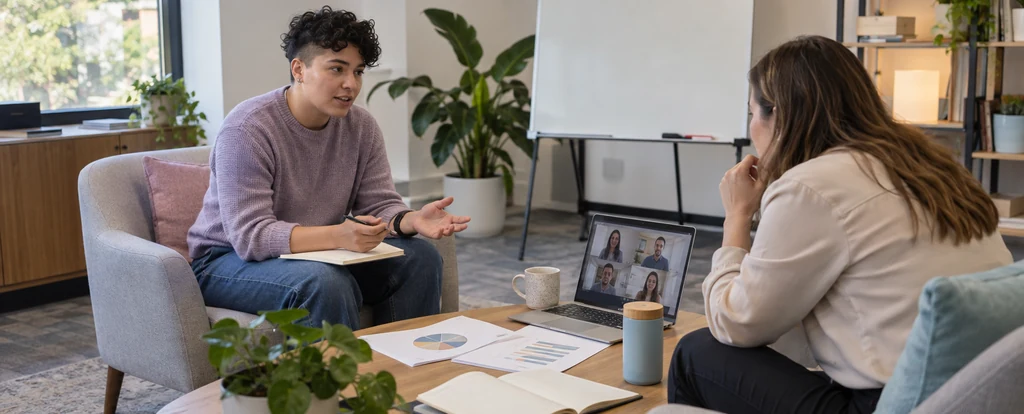
Workplace coaches work one on one or in small groups with employees and managers to build skills, work through performance problems and plan what comes next.
- Median salary*
- $96,200
3.7%vs last year, before tax
- People employed*
- 4,200
0.0%vs last year
- Projected growth*
- +8.5%
to 2035
- AI exposure*
- Low
- automation risk
- Average hours*
- 38/wk
−2h vs all jobs
- Shortage status*
- Not in shortage
national
Workplace coaches run structured conversations with individuals or small teams, using goal setting, feedback and assessment tools rather than therapy or direct instruction. Many work as external contractors moving between client organisations for a set number of sessions tied to a specific goal, such as a promotion or a difficult team dynamic, while others are employed in house in professional services firms, banks or government agencies. The role is often confused with mentoring or line management, but a coach is trained to draw the answer out of the client rather than share their own experience or give direction.
How much do workplace coachs earn?
The median full-time salary for a workplace coach is $96,200 per annum, before tax, up $20,500 since 2018.
Contract coaches usually bill per session or as a day rate, so annual earnings depend on how much work they take on and how much unpaid time goes into finding it. In-house coaches are paid a salary under their employer's classification and enterprise agreement, and pay tends to be higher in professional services, finance and government than in smaller organisations. Accreditation and a steady client base also lift what a coach can charge per session.
What does a workplace coach do day to day?
The list below is what fills most weeks; the exact mix shifts with seniority and whatever stage the current work is at.
- Running one-on-one coaching sessions, often over video call, to clarify what a client wants to change and what is getting in the way
- Using DISC or similar personality assessments and 360-degree feedback so a client can see patterns in how others experience their work
- Drafting a development plan that sets out specific actions and a timeframe, built around the person's strengths and gaps
- Facilitating group workshops on communication, feedback or team dynamics for a manager's direct reports
- Checking in at agreed intervals to track progress against the plan and shifting the approach when it is not landing
What skills do workplace coachs need?
Employers look for , backed by 360-degree feedback platforms fluency and strong people leadership.
Specialist skills
Software and tools
- 360-degree feedback platforms
- DISC or personality assessment tools
- video conferencing software
- learning management systems
General skills
- People leadership
- Written communication
- Stakeholder management
- Problem solving
- Client relationships and advisory
- Presenting and data storytelling
- Empathy and interpersonal care
Is the job growing?
About 4,200 people work as workplace coachs in Australia, and employment is projected to grow 8.5% over the decade to 2035. That's modest growth: demand is steady rather than booming.
How do you become a workplace coach?
Here's the path most workplace coachs take, step by step.
- 1Build a qualification and some workplace experience
A bachelor degree is the most common background, held by around 52% of people in the role, usually in psychology, human resources, business or education. Just as important is a few years working with people in HR, line management, learning and development or a similar field, because coaching depends on understanding how workplaces actually run.
- 2Complete coach-specific training
Coaching is a distinct skill from managing or mentoring, so employers and clients expect a recognised program, typically one accredited by the International Coaching Federation or a comparable body. Certificate and diploma courses range from a few days to a year, and the longer supervised programs lead to credentials such as ACC and PCC.
- 3Log supervised coaching hours
Credentialing bodies ask for a set number of coaching hours plus mentor coaching before you can apply for accreditation. New coaches build those hours through volunteer programs, internal coaching at their own employer, or low-cost clients, recording each session as evidence.
- 4Choose in-house or independent practice
Employed coaches sit inside HR, learning and development or wellbeing teams, which suits people who want a salary and steady work but less say over who they coach. Independent coaches contract to organisations for a fixed block of sessions, which pays more per day but means finding your own clients and running a business.
- 5Keep your practice current
Accreditation requires continuing professional development, and many coaches use supervision or peer coaching to keep their own practice honest. Specialising in an area such as leadership, career transition or neurodiversity helps when pitching to clients.
Ready to apply as a workplace coach?
Whether you're working toward becoming a workplace coach or already are one and want a hand with the next step (sharpening your resume for ATS screening, tightening your cover letter, or knowing what you'll actually be asked at interview), here are examples grounded in this specific role, not generic templates.
What jobs can a workplace coach move to?
Moving into Organisational Development Consultant typically comes with the biggest pay rise, worth $30,900 a year more on average.
| Move to | Typical pay change | Overlap | Retraining |
|---|---|---|---|
| Organisational Development Consultant Coaching and facilitation skills suit organisational development, though a degree is needed for this consulting role. | +$30,900 | 21% | requalify |
| Change Manager Workplace coaches support people through change, and can move into change management with formal study in change methods. | +$15,600 | 31% | reskill |
| HR Advisor Workplace coaches understand performance and employee development, moving into HR advisory work with further study in employment relations. | +$6,200 | 29% | reskill |
| Learning and Development Specialist Coaching experience in skill building transfers to designing training programs, with study in adult learning and instructional design. | +$5,500 | 16% | reskill |
| Mediator Workplace coaches bring facilitation and conflict resolution skills, and can move into mediation with a short accreditation course. | +$0 | 45% | short course |
Moves are chosen from Jobs and Skills Australia's Data on Occupation Mobility, which follows income tax records between 2011-12 and 2020-21, together with entry requirements and skill overlap. A known move is one people were seen making in that data. Pay change compares median full-time pay for the two roles.
Who works as a workplace coach?
The typical workplace coach is 42 years old; 58% are women, 82% work full-time, and full-timers average 38 hours a week.
- 42
- Median age
- 58%
- Female share
- 82%
- Full-time
- −2h
- vs all-jobs avg
What's it like being a workplace coach?
A coach's week is a run of scheduled conversations, so the work has a steady rhythm but little of the spontaneous teamwork that comes with other jobs. Sessions are confidential and often carry real weight, and the coach has to stay neutral while a client works through a conflict with their manager. The people who enjoy it tend to be curious about how others see the world and comfortable letting a client find their own answer.
What people like
- Watching a client change how they work. Coaching is slow, so progress shows up in small moments: a manager who stops avoiding a difficult conversation, or an employee who takes on a project they had been dodging.
- Confidential one-on-one work. You hear what people cannot say in a team meeting, which many coaches find the most interesting part of the job.
- Variety across industries. A contracting coach might spend Monday with a bank, Wednesday with a hospital and Friday with a school, and each setting brings its own pressures and language.
- Control over how you work. Much of the work happens over video, so independent coaches can set their own hours and workload once the client base is established.
What people find hard
- Clients who want advice instead of coaching. Plenty of people booked into coaching expect the coach to solve the problem, and redirecting that expectation takes tact and can take a whole session.
- The unpaid side of contracting. Independent coaches spend a lot of time marketing, writing proposals, chasing invoices and preparing sessions, none of which is billed.
- Sessions that go nowhere. Coaching only works if the person acts between sessions, and some clients repeat the same pattern for months despite a clear plan.
Based on our synthesis of professional-body surveys and public accounts of the role, not first-person verified reviews.
Which industries employ workplace coachs?
Professional services employs the largest share of workplace coachs, followed by Financial and insurance services.
Top employing industries
- 1Professional services
- 2Financial and insurance services
- 3Public administration and safety
- 4Education and training
Ranked by employment share; the source doesn't publish an exact percentage per industry.
| Bachelor degree | 52% | |
|---|---|---|
| Postgraduate | 26% | |
| Diploma / Advanced Diploma | 13% | |
| Other | 9% |
Will AI replace workplace coachs?
Workplace coaching rates low for AI exposure because the value sits in a live, confidential conversation, where a coach picks up hesitation, changes tack mid-session and holds a client to a commitment. Tools have taken over the paperwork around the work, compiling 360-degree feedback, drafting development plans and transcribing sessions, which frees up time rather than replacing the coach. What AI cannot do is earn the trust that makes a client honest about what is really going wrong.
Share of typical working time by exposure level
- One-on-one coaching sessionsReading a client's hesitation and deciding when to stay quiet instead of filling the silence is the part no tool can do.35%low
- Client relationships, contracting and referralsWinning and keeping organisational clients comes down to reputation and trust built in person, which software does not supply.30%low
- Development plans, session notes and adminA development plan or a session summary is largely template work that AI drafts well from a few prompts and a set of notes.20%high
- Interpreting assessments and 360-degree feedbackPlatforms now compile survey results and flag themes automatically, but the coach still works out what the pattern means for this person and how to raise it.15%moderate
Common questions about becoming a workplace coach
Straight answers to the questions people ask most.
How much do workplace coaches earn?
Workplace coaches earn a median of $96,200 per year before tax. Pay depends heavily on whether you are employed in house or contracting, the sector you work in, and how established your client base is. Contract income also varies year to year with how much work you take on.
How do you become a workplace coach?
Most people arrive with a degree and several years of people-facing work, then add a recognised coaching qualification and supervised coaching hours before seeking accreditation. Coaching-specific training matters more than the field your degree is in. From there you either join an organisation's internal coaching or development team, or build a client base as a contractor.
Are workplace coaches in demand?
Workplace coaches are currently not in shortage, and employment is projected to grow 8.5% over the decade to 2035 over the decade to 2035. Most of the work sits in professional services, finance, government and education, so openings move with those organisations' training and development budgets. Entry happens through both in-house roles and contract work, and each route is worth weighing up.
Will AI replace workplace coaches?
The role rates low for AI exposure because the core of the job is a real-time conversation that depends on reading tone, pausing at the right moment and responding to what the client says next. Software already compiles 360-degree feedback, drafts development plans and takes session notes, which trims the admin rather than the coaching. Recruitment, contracting and trust with clients are the parts least touched.
What can a workplace coach move into?
Coaching skills travel well. Some coaches move into change management, where pay is $15,600 more and the work leans on the same facilitation and one-on-one support during restructures, or into HR advisory roles at $6,200 more after study in employment relations. Mediation is a shorter step, with pay about the same and a short accreditation course as the main requirement. Experienced coaches also build their own practice or consultancy, which is often where earnings grow.
Do you need a psychology degree to be a workplace coach?
No, though most workplace coaches hold a bachelor degree, commonly in psychology, human resources, business or education, and the coaching qualification usually matters more than the field of study. If you want to work on mental health, that is a different job: the title psychologist is protected and requires registration with AHPRA.
Related roles
- Mediator
- HR Advisor
- Learning and Development Specialist
- Change Manager
- Organisational Development Consultant
- Life Coach
Not sure this is you? Take the career quiz and get a ranked shortlist of roles that fit how you like to work.