Workplace Rehabilitation Consultant
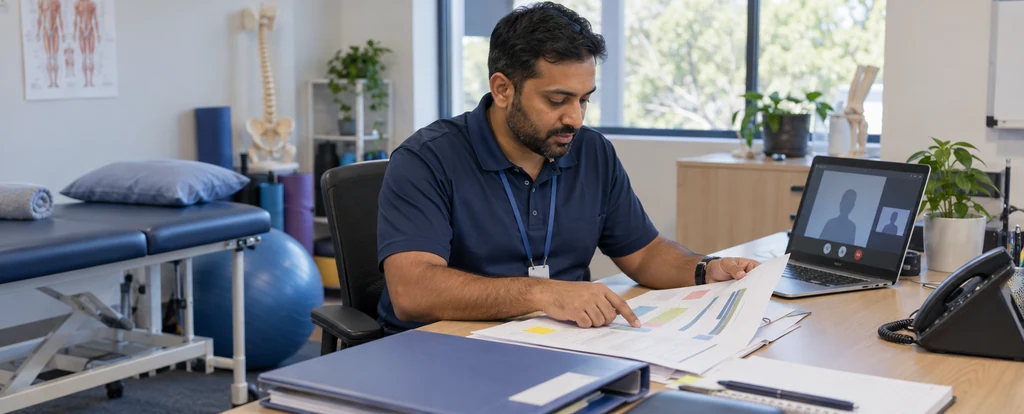
Workplace rehabilitation consultants help people who have been injured return to work, coordinating recovery plans with employers, insurers and treating health professionals.
- Median salary*
- $91,000
4.2%vs last year, before tax
- People employed
- 3,600
0.0%vs last year
- Projected growth*
- +10%
to 2035
- AI exposure*
- Moderate
- automation risk
- Average hours*
- 38/wk
−2h vs all jobs
- Shortage status*
- In shortage
national
Workplace rehabilitation consultants manage a caseload of injured workers, assessing what they can do and building a plan to get them back into a job. Most work for occupational rehabilitation providers, insurers or government injury schemes, visiting worksites, clinics and homes rather than treating one client at a time in a single workplace. That caseload model is what separates the role from an occupational therapist or physiotherapist doing clinical treatment, even though the two often share a degree.
How much do workplace rehabilitation consultants earn?
The median full-time salary for a workplace rehabilitation consultant is $91,000 per annum, before tax, up $19,100 since 2018.
Pay depends less on an award than on who employs you and which injury scheme you work under, so a consultant with an insurer, a large national rehabilitation provider and a government scheme can be on quite different arrangements. Some employers add caseload or outcome bonuses on top of base pay, which makes total earnings harder to compare between roles. Registration in a clinical profession, seniority and the complexity of the files you carry all move pay upward.
What does a workplace rehabilitation consultant do day to day?
The list below is what fills most weeks; the exact mix shifts with seniority and whatever stage the current work is at.
- Assessing an injured worker's functional capacity, medical restrictions and rehabilitation needs
- Developing a return-to-work plan with the worker, their treating doctor and their employer
- Visiting worksites to look at the actual job and identify suitable duties or equipment changes
- Coordinating with treating doctors, allied health professionals and the insurer's claims manager
- Writing progress reports and case notes that go to insurers, employers and scheme regulators
What skills do workplace rehabilitation consultants need?
Employers look for rehabilitation and therapy, casework and client support, care planning and coordination, backed by Microsoft Office fluency and strong stakeholder management.
Specialist skills
- Rehabilitation and therapy
- Casework and client support
- Care planning and coordination
Software and tools
- Microsoft Office
- Outlook
- Client management systems
- Telehealth platforms
- Zoom
General skills
- Stakeholder management
- Written communication
- Empathy and interpersonal care
- Problem solving
Is the job growing?
About 3,600 people work as workplace rehabilitation consultants in Australia, and employment is projected to grow 10% over the decade to 2035. That's healthy, above-average growth, and the role should stay in solid demand.
How do you become a workplace rehabilitation consultant?
Here's the path most workplace rehabilitation consultants take, step by step.
- 1Complete a relevant bachelor degree
Occupational therapy, physiotherapy, psychology, nursing, exercise physiology, social work and rehabilitation counselling are the common entry degrees, and they take three to four years full time. Many consultants come to the role after working clinically first.
- 2Get registered or join the relevant professional body
Occupational therapists, psychologists, nurses and physiotherapists register with AHPRA, and exercise physiologists with Exercise and Sports Science Australia. Rehabilitation counsellors generally join the Australian Society of Rehabilitation Counsellors. Which one applies depends on your original qualification.
- 3Learn injury management and return-to-work legislation
Each state and territory runs its own scheme, such as WorkSafe in Victoria and Western Australia, icare in New South Wales and ReturnToWorkSA in South Australia, and the rules differ. A short course in injury management or vocational rehabilitation covers the framework before you take on files.
- 4Start with an occupational rehabilitation provider
Graduate and entry-level consultant roles are usually with national rehabilitation providers, insurer panels or scheme administrators, and you build a caseload under supervision. Expect a mix of assessments, worksite visits and reporting from the first few months.
- 5Develop a specialty or move into senior case management
Experienced consultants often specialise in complex psychological injury, vocational assessment or occupational rehabilitation for a particular industry. Others move into injury management advisory roles inside large employers, or into scheme and insurer claims roles.
Ready to apply as a workplace rehabilitation consultant?
Whether you're working toward becoming a workplace rehabilitation consultant or already are one and want a hand with the next step (sharpening your resume for ATS screening, tightening your cover letter, or knowing what you'll actually be asked at interview), here are examples grounded in this specific role, not generic templates.
What jobs can a workplace rehabilitation consultant move to?
None of the roles workplace rehabilitation consultants typically move into pay more than the role itself. Behaviour Support Practitioner is the closest match. If a bigger salary is the goal, moving up into a senior or principal position within the role is usually the faster route than moving sideways.
| Move to | Typical pay change | Overlap | Retraining |
|---|---|---|---|
| Behaviour Support Practitioner A workplace rehabilitation consultant brings injury and return-to-work expertise, but moving into behaviour support requires substantial study in positive behaviour approaches. | −$2,600 | 45% | reskill |
| Rehabilitation Counsellor A rehabilitation counsellor uses the same degree and client-centred skills, making this a natural adjacent move with little additional training. | −$5,200 | 63% | minimal |
Moves are chosen from Jobs and Skills Australia's Data on Occupation Mobility, which follows income tax records between 2011-12 and 2020-21, together with entry requirements and skill overlap. A known move is one people were seen making in that data. Pay change compares median full-time pay for the two roles.
Who works as a workplace rehabilitation consultant?
The typical workplace rehabilitation consultant is 40 years old; 61% are women, 75% work full-time, and full-timers average 38 hours a week.
- 40
- Median age
- 61%
- Female share
- 75%
- Full-time
- −2h
- vs all-jobs avg
What's it like being a workplace rehabilitation consultant?
The work runs on a cycle of referral, assessment, plan and review, and a consultant might be juggling twenty or more files at different points of that cycle. The pressure comes from deadlines set by insurers and scheme rules, and from holding the line between a worker who wants to return, an employer who may not have suitable duties and a doctor with a medical opinion. It suits people who are organised, comfortable negotiating with people who want different things, and happy to spend part of the week driving between sites and writing up what they found.
What people like
- The result is visible. You often know within weeks whether a plan is working, and a worker returning to their old job or into a new one after months off is a concrete outcome rather than a long treatment relationship.
- Days are varied and mobile. A week can include a worksite visit, a case conference with a treating doctor, a meeting with an employer and a home visit, with office time fitted around them.
- You manage your own caseload. Most consultants run their files with limited supervision and decide the day to day sequence themselves, though the outcome is closely measured by the insurer.
- The skills carry across sectors. Injury management, casework and stakeholder communication transfer to insurers, government schemes, large employers and allied health, which gives you options later.
What people find hard
- The reporting load. Every contact generates case notes, and every milestone a formal report, so a real slice of the week is documentation rather than people.
- Conflicting expectations. The worker, the employer, the treating doctor and the insurer can each want something different, and the consultant is the one holding that in the middle.
- Caseload and outcome targets. Providers measure file closures and return-to-work rates, which shapes how many files you carry and how quickly you are expected to move them.
- Travel adds hours. Regional and outer-suburban roles often mean long drives between worksites and clients, and that time is not always counted as billable.
Based on our synthesis of professional-body surveys and public accounts of the role, not first-person verified reviews.
Which industries employ workplace rehabilitation consultants?
Health Care and Social Assistance employs the largest share of workplace rehabilitation consultants, followed by Public Administration and Safety.
Top employing industries
- 1Health Care and Social Assistance
- 2Public Administration and Safety
- 3Professional, Scientific and Technical Services
- 4Financial and Insurance Services
- 5Administrative and Support Services
Ranked by employment share; the source doesn't publish an exact percentage per industry.
| Bachelor degree | 52% | |
|---|---|---|
| Postgraduate | 26% | |
| Diploma / Advanced Diploma | 13% | |
| Other | 9% |
Will AI replace workplace rehabilitation consultants?
AI and automation have a moderate foothold in this job, concentrated in the paperwork. Providers already use templates, speech-to-text and drafting tools that turn case notes into a first version of a return-to-work plan or an insurer report, which shortens the admin but does not decide what the plan should say. The assessment work, the worksite visits and the negotiation between worker, employer and doctor stay with the consultant, because they depend on judgement and on being present.
Share of typical working time by exposure level
- Functional assessments and worksite visitsObserving a worker lift a crate or assessing a workstation against the medical restrictions requires being there and adjusting the plan as you go.30%low
- Writing return-to-work plans and insurer reportsDrafting tools can assemble a plan from your notes and the medical file, which is why providers are rolling them out for standard files.25%high
- Talking with workers, employers and treating practitionersGetting an employer to create suitable duties or a doctor to agree with a graduated return needs a conversation, not a report.25%low
- Case notes and file administrationSpeech-to-text and summarising tools already cut the time spent turning a client meeting into file-ready notes.20%high
Moves least exposed to AI
These career moves from workplace rehabilitation consultant work are rated low for AI exposure:
- Rehabilitation Counsellor
High skill overlap (63%), little retraining to get there, and a low automation-risk profile.
- Behaviour Support Practitioner
Solid skill overlap (45%), reskill to get there, and a low automation-risk profile.
Common questions about becoming a workplace rehabilitation consultant
Straight answers to the questions people ask most.
How much do workplace rehabilitation consultants earn?
The median is $91,000 per year before tax, based on full-time workers in this role. Pay moves with your employer and scheme, whether you hold registration in a clinical profession, and how senior or complex your caseload is. It is a national figure, so a graduate role with a smaller provider will often sit below it.
How do you become a workplace rehabilitation consultant?
Most people enter through a degree in occupational therapy, physiotherapy, psychology, nursing, rehabilitation counselling, exercise physiology or social work. From there, a short course in injury management or vocational rehabilitation covers the state or territory return-to-work framework, and providers hire at graduate level. Some experienced case managers and disability support coordinators also move across with additional study.
Are workplace rehabilitation consultants in demand?
They are currently in shortage nationally, and employment is projected to grow 10% over the decade to 2035. Injury schemes operate in every state and territory, so demand follows the schemes and insurer panels rather than one industry. Registration or association membership in a clinical profession widens the roles you can apply for.
Will AI replace workplace rehabilitation consultants?
Not the whole job. The documentation side is exposed: drafting tools and templates can already turn notes into a first-pass return-to-work plan or insurer report, and that is a large share of the week. The assessments, worksite visits and negotiations with workers, employers and doctors stay with the consultant, because they depend on being in the room and reading a situation that is not written down anywhere.
What can workplace rehabilitation consultants move into?
A Case Manager can move into this role with coordination and client management skills already in place, needing only a short course in injury management and return-to-work legislation, and pay is $22,400 more. A Disability Support Coordinator brings care coordination experience, and pay is $10,400 more, but that move requires substantial study to meet the degree-level requirements. In the other direction, a move into Behaviour Support Practitioner work keeps the injury and return-to-work knowledge but needs substantial study in positive behaviour approaches.
Do you need registration to work as a workplace rehabilitation consultant?
Not for the role itself, but most employers expect you to hold registration or association membership in your original profession. Occupational therapists, psychologists, nurses and physiotherapists register with AHPRA, and exercise physiologists with Exercise and Sports Science Australia. Rehabilitation counsellors usually join the Australian Society of Rehabilitation Counsellors, and some scheme providers set their own minimum requirements.
Related roles
- Rehabilitation Counsellor
- Behaviour Support Practitioner
- Rehabilitation Counsellor
- Case Manager
- Disability Support Coordinator
- Aged Care Coordinator
Not sure this is you? Take the career quiz and get a ranked shortlist of roles that fit how you like to work.