What goes in the cover letter and what goes in the resume
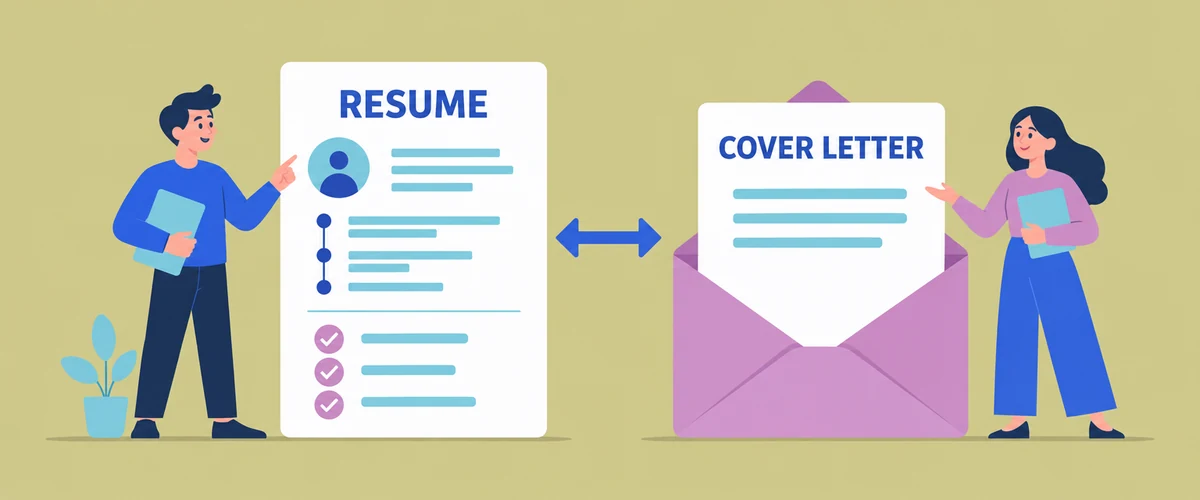
Your resume is the full record of what you've done: your jobs, dates, qualifications and skills, set out so an employer can scan it quickly. Your cover letter is a short case for one particular job. It picks out the parts of that record that matter most for the role, explains how they fit, and covers anything the resume can't say on its own, such as why you're applying or why you're changing direction.
The two documents are read together, so they work best when each one has its own job. A common problem is a cover letter that retells the resume in sentences, which uses up the letter's one page without telling the employer anything new. Below is a quick guide to where each kind of information belongs, an example of the difference in practice, and what to do when an employer asks for a statement instead of a letter.
Where each piece of information belongs
This table is a starting point for most private sector applications. Some items appear in both documents, but they do a different job in each.
| Information | Resume | Cover letter |
|---|---|---|
| Job titles, employers and dates | Yes, in full | Only the role that's most relevant, and only if you're drawing on it |
| Qualifications, licences and tickets | Yes | Mention one if the ad lists it as essential |
| Full list of skills and software | Yes | No, choose the two or three the ad asks for most |
| Achievements and results | Yes, as short bullet points | Pick one or two and explain the context behind them |
| Why you want this job with this employer | No | Yes |
| A career change, a gap or a move to a new city | Dates only, if at all | A sentence or two of explanation |
| Availability, start date or relocation plans | Usually not | Yes, briefly, if it affects the application |
| Referees | Yes, or "available on request" | No |
For more on the last row, the guide to references on your resume covers whether to list names or leave them off.
Why a cover letter shouldn't repeat your resume
By the time someone reads your cover letter, your resume is usually attached to the same application. If the letter walks through your jobs in order, the reader gets the same facts twice and still doesn't know which of them you think matter for this role, or why you want it.
The Victorian Government's Youth Central guidance makes the same point. It advises against cutting and pasting your resume into your letter, suggests rewording the information so it isn't simply repeated, and says to keep the letter short and let the resume tell the whole story.
A useful way to think about it is that the resume answers "what have you done?" and the cover letter answers "why does that make you suitable for this job?" The second question depends on the job ad, so a good letter changes from one application to the next far more than the resume does.
What the resume is there to do
A resume needs to be complete enough that an employer can check your history without asking. That means every relevant role with its dates, your qualifications, and the skills and tools you can use, written in short bullet points that are easy to scan.
It still needs tailoring. Youth Central recommends adjusting your resume for each application: putting your most relevant skills first, choosing achievements that match what the job requires, and using the words and phrases from the ad. The difference is that tailoring a resume mostly means reordering and trimming, while the facts stay the same. If you're unsure which skills to include, the guide to skills for your resume explains how to match them to the role.
What the cover letter is there to do
A cover letter connects your experience to the job. Youth Central's guidance says a letter should show that your skills and experience match what the job needs, and that if you say you have a skill, you should show how you've used it or where you gained it. Where a position description lists essential requirements, it suggests responding to all of them.
That gives the letter a clear role. It can take a requirement from the ad and point to the part of your background that meets it. Then it can add the detail a bullet point leaves out: what the situation was, what you did and why it's relevant to this employer.
The letter is also the only place for information that has no natural home on a resume. If you're moving from one industry to another, returning to work after time away, relocating, or applying for a role that looks like a step sideways, a sentence or two can explain it before the reader draws their own conclusion. Your reasons for wanting the job belong here too, as long as they're specific to the role or the organisation.
An example of the difference
Here's a fictional applicant, a venue supervisor in hospitality applying for an office coordinator role. The ad lists staff scheduling and accounts support as the main duties. Two lines from their resume read:
A cover letter paragraph that repeats the resume might say:
Everything in that paragraph would already be on the resume. A paragraph that does the cover letter's job might say:
The second version uses the same two facts. What it adds is the link to the ad, what the experience involved, and a reason for the move out of hospitality that the resume can't give.
An example of the difference
- Build weekly rosters for 18 casual and part-time staff across seven-day trading
- Reconcile supplier invoices against deliveries and report discrepancies to the venue manager
An example of the difference (2)
In my current role as venue supervisor, I build weekly rosters for 18 staff and reconcile supplier invoices. Before this I worked as a waiter for three years and was promoted to supervisor in 2024.
An example of the difference (3)
Your ad puts scheduling and accounts support at the centre of this role, and they're the parts of my hospitality work I've come to enjoy most. Rostering 18 people around study, second jobs and seven-day trading has taught me to plan a week in advance and adjust it quickly when someone calls in sick. Checking supplier invoices against deliveries each week has made me careful with figures and comfortable raising a discrepancy early. I'm looking to do this work in an office, where it's the main focus of the job instead of something fitted around service.
A simple way to divide the information
If you're writing both documents for the same application, it can help to work in this order:
- Finish your resume first, so you have the complete record in front of you.
- Read the job ad or position description and mark the three or four requirements that seem to matter most.
- For each one, find the line on your resume that shows you meet it.
- Use the cover letter to explain the strongest two or three of those matches, adding the context the resume line leaves out.
- Add anything the employer would otherwise wonder about, such as a career change or your availability.
- Read the letter beside the resume. If a sentence could be pasted into the resume as a bullet point without changing anything, either cut it or add the explanation that makes it belong in the letter.
When an employer asks for a statement instead
Some applications don't ask for a cover letter at all. Many public sector roles ask for a written statement against selection criteria, or a short "pitch" setting out why you suit the job. The Australian Public Service Commission's guidance for people applying to APS jobs says that most of the time a CV alone won't be enough, and that an application may need a statement or pitch alongside it.
In that case, the pitch or statement does the job a cover letter would otherwise do, and the same division applies. The APSC suggests trying not to duplicate information that's already in your CV, and using specific examples or achievements that show you can do the role. Check the information pack for word or page limits, and whether a separate cover letter is wanted as well.
If you're still deciding whether an application needs a cover letter in the first place, the article on whether you need a cover letter covers when it's expected and when it's reasonable to leave one out.
Related articles

Do you still need a cover letter in 2026?
Most advice online says skip the cover letter unless the ad asks for one. Australian government careers guidance says include one by default. This explains where the two positions differ and how to keep yours readable by an automated screen.
How long should a cover letter be
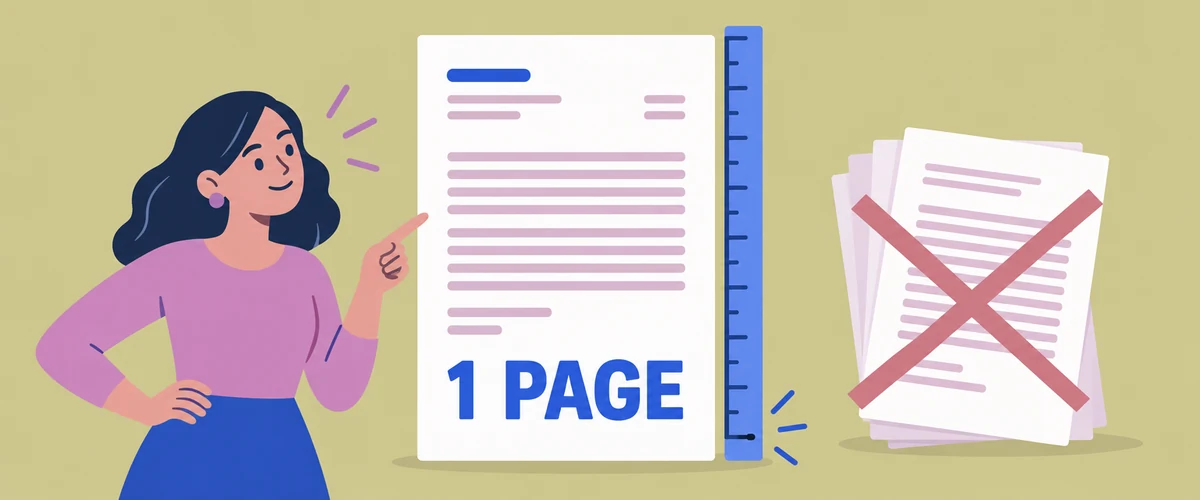
A cover letter should usually fit on one page. That's the standard in Australian government careers guidance.

How to start a cover letter
Starting a cover letter comes down to two decisions: who you address it to, and what your first paragraph says.