Amusement Centre Manager
Amusement centre managers run the day-to-day operation of arcades, indoor play centres and family entertainment venues, keeping the games working, the staff rostered and the customers safe.
- Median salary*
- $71,800
3.6%vs last year, before tax
- People employed
- 2,800
0.0%vs last year
- Projected growth
- +12.1%
to 2035
- AI exposure*
- Moderate
- automation risk
- Average hours
- 43/wk
+3h vs all jobs
- Shortage status
- Not in shortage
national
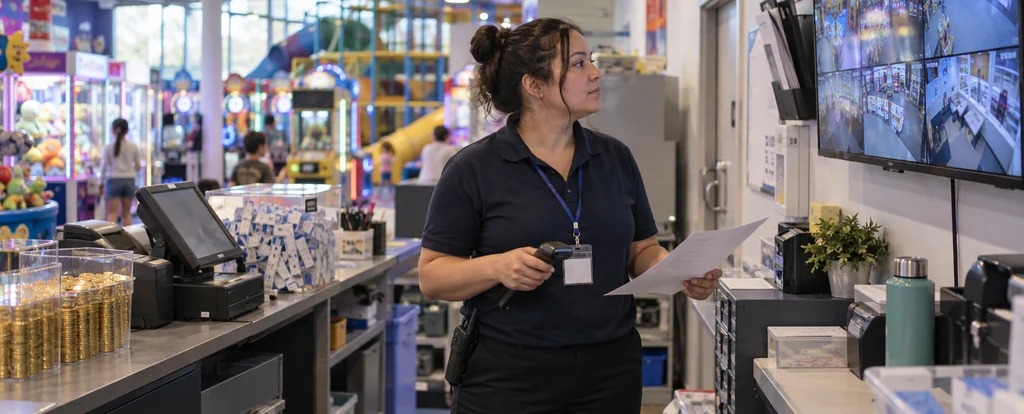
Amusement centre managers work on the floor of venues such as arcades, indoor play centres and family entertainment complexes, usually for a chain or a single owner-operator. The job sits between hospitality and retail: the venue sells time and entertainment rather than a product, so the manager watches both the takings per machine and how smoothly customers move through the space. It is not the same as an events manager, who plans one-off functions, because this role runs the same venue day after day, through school holidays, busy weekends and quiet weekdays.
How much do amusement centre managers earn?
The median full-time salary for an amusement centre manager is $71,800 per annum, before tax, up $14,800 since 2018.
Pay depends heavily on the size of the venue and whether it belongs to a chain, with larger multi-attraction sites usually paying above the median. Awards and enterprise agreements set the base for many managers, evening, weekend and public holiday shifts can attract loadings, and at some sites a bonus tied to revenue or cost targets makes up a bigger share of total pay.
What does an amusement centre manager do day to day?
The list below is what fills most weeks; the exact mix shifts with seniority and whatever stage the current work is at.
- Rostering casual staff around school holidays, weekends and peak trading hours
- Reconciling cash, card and token payments and checking takings against targets
- Coordinating repairs and servicing for games, rides and play equipment
- Taking bookings for birthday parties, group events and school holiday programs
- Walking the floor to check supervision rules, machine faults and safety hazards
What skills do amusement centre managers need?
Employers look for operations management, rostering and venue operations, budgeting and forecasting, backed by Point of sale systems fluency and strong customer service.
Specialist skills
- Operations management
- Rostering and venue operations
- Budgeting and forecasting
- Inventory management
Software and tools
- Point of sale systems
- Rostering platforms
- CCTV monitoring systems
- Microsoft Excel
- Machine fault reporting software
General skills
- Customer service
- People leadership
- Safety and compliance awareness
Is the job growing?
About 2,800 people work as amusement centre managers in Australia, and employment is projected to grow 12.1% over the decade to 2035. That's healthy, above-average growth, and the role should stay in solid demand.
How do you become an amusement centre manager?
Here's the path most amusement centre managers take, step by step.
- 1Start in a front-of-venue job
Party host, redemption counter attendant and front desk roles need no qualification and teach you how a centre actually runs: how tokens are priced, how machines are loaded and what a busy Saturday feels like. Most managers are promoted from this floor work.
- 2Learn the operating systems
Ask to take on opening and closing, cash reconciliation, stock ordering and the fault log. Point of sale, rostering and machine fault reporting software are the tools you use every day, and confidence with them is what makes a supervisor role straightforward.
- 3Move into a supervisor or duty manager role
Running a shift on your own, including the roster, the safety checks and the cash, is the step employers read as management experience. Titles vary and include duty manager, shift manager and venue supervisor.
- 4Add a qualification for larger venues
A Diploma of Hospitality Management (SIT50422) or a business qualification helps for bigger sites and multi-site groups, covering budgeting, licensing and employment obligations. Many managers instead build this knowledge through internal training with a chain.
- 5Get the checks and licences employers ask for
A first aid certificate is common, an RSA is required if the venue serves alcohol, and rules on Working with Children Checks differ by state, so check the requirement where you work.
Ready to apply as an amusement centre manager?
Whether you're working toward becoming an amusement centre manager or already are one and want a hand with the next step (sharpening your resume for ATS screening, tightening your cover letter, or knowing what you'll actually be asked at interview), here are examples grounded in this specific role, not generic templates.
What jobs can an amusement centre manager move to?
Moving into General Manager typically comes with the biggest pay rise, worth $76,400 a year more on average.
| Move to | Typical pay change | Overlap | Retraining |
|---|---|---|---|
| General Manager Amusement centre managers bring operational and financial management to a general manager role, though broader business study is needed.Known move | +$76,400 | 30% | reskill |
| Club Manager Managing amusement venues builds staff, cash and patron safety skills that suit a club manager role, with a short course in licensed operations. | +$20,000 | 52% | short course |
| Store Manager Retail store management is a common move, building on rostering, stock and customer service skills, with further training in retail operations.Known move | +$12,400 | 36% | reskill |
| Sports Centre Manager An amusement centre manager brings venue operations, rostering and safety compliance to a sports centre, needing little extra training. | +$11,400 | 63% | minimal |
| Cinema and Theatre Manager Entertainment venue management, ticketing and customer safety carry across to a cinema or theatre manager role with a short induction. | +$2,000 | 57% | short course |
Moves are chosen from Jobs and Skills Australia's Data on Occupation Mobility, which follows income tax records between 2011-12 and 2020-21, together with entry requirements and skill overlap. A known move is one people were seen making in that data. Pay change compares median full-time pay for the two roles.
Who works as an amusement centre manager?
The typical amusement centre manager is 33 years old; 57% are men, 65% work full-time, and full-timers average 43 hours a week.
- 33
- Median age
- 43%
- Female share
- 65%
- Full-time
- +3h
- vs all-jobs avg
What's it like being an amusement centre manager?
The rhythm of this job follows the school calendar. School holidays, Friday nights and wet weekends are the busiest trading periods, so the roster, the cash reconciliation and the repair queue all have to hold up at once, and the quiet weeks are when maintenance, training and stocktake happen. Managers who enjoy it tend to like being visible on the floor and solving problems in real time rather than working from a desk.
What people like
- You can see whether a decision worked. Nightly takings and redemption counts show quickly whether a new game, a price change or a party package brought people in.
- The work changes through the day. Opening checks, a party booking, a machine fault, a roster gap and a stock delivery can all land in one shift, so the job rarely settles into one task.
- Watching a casual team get good. Many staff are teenagers or students in their first job, and training them to handle a queue or a lost child calmly is a visible result.
- You are on the floor, not in an office. The job suits people who would rather be among customers in a noisy venue than working alone at a desk.
What people find hard
- Weekends and school holidays are the job. The venue trades hardest when most people are off, so time away tends to fall on quiet weekdays.
- Casual staff turnover. No-shows and last-minute gaps are common in a casual workforce, and the manager often ends up covering the shift.
- Breakdowns at the worst moment. A ride or a claw machine failing on a busy Saturday means refunds, unhappy customers and a wait for a technician.
- Tight margins. Power, prizes, licences and wages all come out of takings, so every hour of staffing on a quiet afternoon has to be justified.
Based on our synthesis of professional-body surveys and public accounts of the role, not first-person verified reviews.
Which industries employ amusement centre managers?
Arts and Recreation Services employs the largest share of amusement centre managers, followed by Accommodation and Food Services.
Top employing industries
- 1Arts and Recreation Services
- 2Accommodation and Food Services
Ranked by employment share; the source doesn't publish an exact percentage per industry.
| Year 12 or below | 35% | |
|---|---|---|
| Bachelor degree | 22.3% | |
| Diploma / Advanced Diploma | 17% | |
| Certificate III/IV | 16.6% | |
| Postgraduate | 6.1% |
Will AI replace amusement centre managers?
AI exposure for this role is moderate. Rostering software, point of sale analytics and machine fault reporting already handle scheduling and reporting that used to be done on paper, and CCTV systems can flag incidents automatically. The physical and social side of the job stays with the manager: resetting a game, calming a queue of children and deciding whether a machine earns its floor space are still done on shift.
Share of typical working time by exposure level
- Tracking takings and reconciling paymentsPoint of sale systems report revenue per machine and per hour automatically, and card and token totals reconcile without manual counting in most venues.30%high
- Planning rosters for casual staffRostering software drafts shifts from availability and trading history, but school holiday demand and last-minute gaps still need a manager's call.25%moderate
- Coordinating repairs and servicing of machinesFault reporting software logs which game is down, but a technician still attends and the manager decides whether to repair, move or replace it.25%low
- Supervising customers and enforcing safety rulesCCTV analytics can flag crowding or a fall, but staff still walk the floor, manage behaviour and make the call on whether a play area stays open.20%low
Common questions about becoming an amusement centre manager
Straight answers to the questions people ask most.
How much does an amusement centre manager earn?
Amusement centre managers earn a median of $71,800 per year before tax. Pay rises with the size of the venue, the number of attractions and whether the site belongs to a chain, and some managers also earn a bonus tied to revenue or cost targets.
How do you become an amusement centre manager?
Most managers start on the floor as a casual attendant, party host or counter operator and move up through supervisor and duty manager roles. No degree is required, and about 17% of people in the role hold a diploma or advanced diploma, usually in hospitality or business. A first aid certificate, an RSA if the venue serves alcohol, and a Working with Children Check where the state requires one are the usual conditions.
Are amusement centre managers in demand?
Employment for amusement centre managers is projected to grow 12.1% over the decade to 2035, and they are currently not in shortage. The occupation is small, so a few new venues or closures move the numbers noticeably, and openings often come through staff turnover rather than expansion.
Will AI replace amusement centre managers?
Parts of the job are already automated: point of sale systems track takings per machine, rostering software drafts shifts and CCTV analytics can flag incidents. The floor work is harder to hand over, because resetting a game, managing behaviour and deciding whether a machine earns its space still take a person on shift.
What can an amusement centre manager move into?
Amusement centre managers move into other venue-based management roles, because rostering, cash handling and patron safety carry across almost unchanged. A move to sports centre manager pays $11,400 more, and club manager pays $20,000 more for those who add a short course in licensed operations. With broader business study, some managers move into a general manager role, which pays $76,400 more, or start a venue of their own.
What are the hours like?
Full-time managers work about 43 hours a week on average, and 65% of people in the role work full time. Much of that falls in the evenings, on weekends and during school holidays, which is when the venue is busiest.
Related roles
Not sure this is you? Take the career quiz and get a ranked shortlist of roles that fit how you like to work.