Home Manufacturing & Production
Chemical Plant Operator
Chemical plant operators run the reactors, vessels and pumps that turn raw materials into fuels, plastics and industrial chemicals, keeping output within specification and the plant safe.
- Median salary*
- $106,600
3.6%vs last year, before tax
- People employed
- 1,600
0.0%vs last year
- Projected growth*
- −3%
to 2035
- AI exposure*
- Moderate
- automation risk
- Average hours*
- 42/wk
+2h vs all jobs
- Shortage status*
- Not in shortage
national
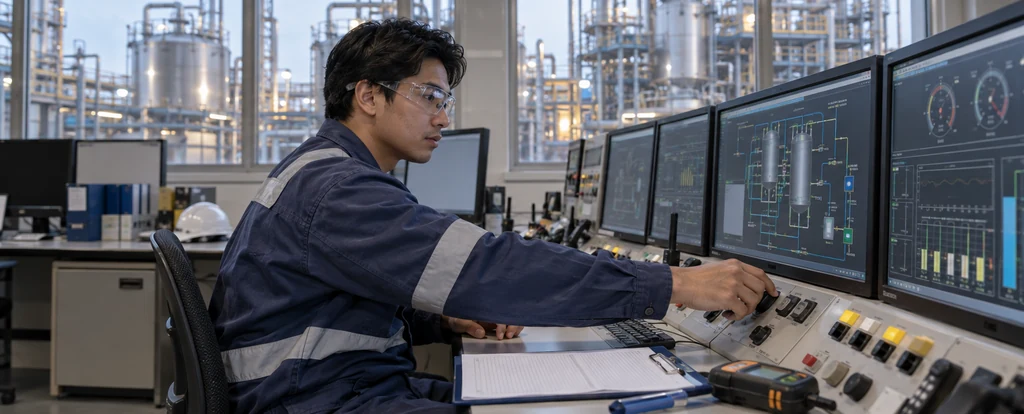
Chemical plant operators control and monitor process equipment in chemical, petroleum, gas and mineral processing plants, working from a control room panel and out on the plant floor during the same shift. They adjust temperatures, pressures and flows, take samples and respond when an alarm or a failed pump interrupts the process. The role sits between the trades who maintain the plant and the engineers who design it, and most operators come in through a traineeship rather than a degree.
How much do chemical plant operators earn?
The median full-time salary for a chemical plant operator is $106,600 per annum, before tax, up $22,700 since 2018.
Base rates are set by the enterprise agreement at each site, and oil, gas and mining agreements generally sit above the manufacturing award. Shift loadings, overtime and the roster pattern you work affect take-home pay more than the base rate does, particularly on continuous plants that run through nights and weekends. Remote and fly-in fly-out sites usually add an allowance on top.
What does a chemical plant operator do day to day?
The list below is what fills most weeks; the exact mix shifts with seniority and whatever stage the current work is at.
- Monitoring temperatures, pressures and flows on the control panel and adjusting the process to keep product within specification
- Starting, stopping and isolating pumps, compressors, reactors and valves during field rounds or ahead of maintenance
- Collecting samples from process streams and running routine tests on them
- Raising permits and completing shift logs and handover notes so the next crew knows what changed
- Responding to alarms by tracing the cause, stabilising the unit and calling maintenance when equipment has failed
What skills do chemical plant operators need?
Employers look for operations management, plant and equipment operation, process improvement, backed by Honeywell Experion DCS fluency and strong safety and compliance awareness.
Specialist skills
- Operations management
- Plant and equipment operation
- Process improvement
Software and tools
- Honeywell Experion DCS
- Emerson DeltaV
- Siemens SIMATIC PLC
- Yokogawa CENTUM VP
- OSIsoft PI historian
General skills
- Safety and compliance awareness
- Attention to detail
- Problem solving
- Written communication
Is the job growing?
About 1,600 people work as chemical plant operators in Australia, and employment is projected to decline 3% over the decade to 2035. That's a real decline, worth weighing carefully before training into the role.
How do you become a chemical plant operator?
Here's the path most chemical plant operators take, step by step.
- 1Get onto a plant in any role
Many operators start as process workers, trade assistants, laboratory assistants or contractors at the same site and apply internally when an operator vacancy opens. That route gives you plant familiarisation and a referee who has seen you work a shift.
- 2Complete a Certificate III in Process Plant Operations
This is the standard qualification, and it is usually done as a traineeship, so you earn while you learn and the employer releases you for training. Year 12 maths and chemistry help you get the traineeship, but they are not required for the job itself.
- 3Add the site competencies your plant requires
Confined space entry, gas test atmospheres, working at heights, chemical handling and a forklift licence are common requirements, and most employers put new operators through them during induction. These are site specific, so the list varies from plant to plant.
- 4Move onto the panel
Operators typically spend a few years on field rounds before taking a console role, learning how each unit behaves during start-ups, shutdowns and upsets. Larger sites also run internal training on the control system they use.
Ready to apply as a chemical plant operator?
Whether you're working toward becoming a chemical plant operator or already are one and want a hand with the next step (sharpening your resume for ATS screening, tightening your cover letter, or knowing what you'll actually be asked at interview), here are examples grounded in this specific role, not generic templates.
What jobs can a chemical plant operator move to?
Moving into Gas Plant Operator typically comes with the biggest pay rise, worth $77,100 a year more on average.
| Move to | Typical pay change | Overlap | Retraining |
|---|---|---|---|
| Gas Plant Operator Chemical plant operators bring reactor and pump operation to gas processing, with reskilling in gas-specific hazards and equipment. | +$77,100 | 36% | reskill |
| Power Station Operator Chemical plant operators bring vessel and pump operation to power station roles, needing a short course in steam cycle systems. | −$2,600 | 58% | short course |
| Water Treatment Operator Chemical plant operators bring chemical dosing and process monitoring to water treatment, with reskilling in water-specific regulations. | −$10,400 | 40% | reskill |
| Boiler Operator Chemical plant operators bring reactor and pump control skills to boiler operation, requiring minimal retraining. | −$14,000 | 63% | minimal |
Moves are chosen from Jobs and Skills Australia's Data on Occupation Mobility, which follows income tax records between 2011-12 and 2020-21, together with entry requirements and skill overlap. A known move is one people were seen making in that data. Pay change compares median full-time pay for the two roles.
Who works as a chemical plant operator?
The typical chemical plant operator is 47 years old; 93% are men, 92% work full-time, and full-timers average 42 hours a week.
- 47
- Median age
- 7%
- Female share
- 92%
- Full-time
- +2h
- vs all-jobs avg
What's it like being a chemical plant operator?
The job runs to the rhythm of the plant rather than the calendar: crews hand over at shift change, watch trends for hours, then deal with a fault in minutes. Plants handling flammable, corrosive or toxic materials keep safety procedures tight around nearly everything you do, from gas testing a vessel to signing off a permit. It suits people who like technical detail and steady monitoring but stay calm and methodical when something goes wrong.
What people like
- You can see what your adjustments do. Change a setpoint and the effect shows on the trend within minutes, so the cause and effect of the work stays visible instead of disappearing into a report.
- Genuine technical depth. Reaction chemistry, distillation, heat transfer and the control system all come into the job, and experienced operators are the people engineers ring when a unit misbehaves.
- Days off when everyone else is at work. Rotating rosters put some of your time off on weekdays, which makes appointments, study and school pick-ups easier to manage than a Monday to Friday job.
- Small shift teams that rely on each other. A crew of three or four runs a large plant, so people know each other's strengths and the handover is a real conversation rather than a formality.
What people find hard
- Rotating shifts wear you down. Nights, early starts and swing rosters interrupt sleep and family routines, and it can take a few days to adjust after a run of night shifts.
- Hazardous materials leave no room for shortcuts. Gas testing, permits, isolation procedures and personal protective equipment are non-negotiable, and the paperwork around them adds up over a shift.
- Long stretches of monitoring. A well-behaved plant can run steadily for hours, and watching trends for small drifts is a large part of the job that some people find tedious.
- Few employers, often in remote places. Plants cluster at a handful of industrial sites and resource regions, so changing jobs can mean relocating or taking a fly-in fly-out roster.
Based on our synthesis of professional-body surveys and public accounts of the role, not first-person verified reviews.
Which industries employ chemical plant operators?
Chemical product manufacturing employs the largest share of chemical plant operators, followed by Oil and gas extraction.
Top employing industries
- 1Chemical product manufacturing
- 2Oil and gas extraction
- 3Petroleum and coal product manufacturing
- 4Metal ore mining
- 5Electricity, gas, water and waste services
Ranked by employment share; the source doesn't publish an exact percentage per industry.
| Certificate III/IV | 34% | |
|---|---|---|
| Diploma / Advanced Diploma | 26% | |
| Bachelor degree | 20% | |
| Year 12 or below | 20% |
Will AI replace chemical plant operators?
Automation reaches a fair way into this job. Distributed control systems, process historians and alarm management software already handle much of the routine monitoring, logging and setpoint adjustment that once filled a shift, and that reach keeps growing as plants add advanced process control. What holds the line is the plant itself: pumps, valves and vessels need physical attention, and abnormal situations call for a person on site who can isolate equipment, take samples and judge what to do next.
Share of typical working time by exposure level
- Monitoring the process on the control panel and adjusting setpointsThe control system can hold a steady unit on its own and advanced control handles much of the tuning, but an operator still watches for drift and steps in when a loop fights back.30%moderate
- Responding to alarms and tracing faults with maintenanceAlarm software sorts and prioritises the flood, but working out why a compressor tripped and what to do about the unit downstream is judgement built from years on that plant.30%moderate
- Field rounds, starting and stopping equipment, and isolating linesOpening a valve, changing a filter or locking out a pump for maintenance is hands-on work at the equipment, and the plant is built for people to reach it.25%low
- Sampling process streams and running routine testsOnline analysers and laboratory instruments do more of the measuring, though someone still has to draw the sample safely and interpret a result that looks wrong.15%moderate
Common questions about becoming a chemical plant operator
Straight answers to the questions people ask most.
How much do chemical plant operators earn?
Chemical plant operators earn $106,600 per year before tax. What moves that figure most is the enterprise agreement at your site and the roster you work, because shift loadings and overtime sit on top of the base rate.
How do you become a chemical plant operator?
Most operators enter through a traineeship in process plant operations, or move across from a process, trade or labouring job at the same site. A Certificate III in Process Plant Operations (PMA30120) is the standard qualification, and employers usually add site competencies such as confined space entry and gas testing. Year 12 maths and chemistry help with getting a traineeship but are not the main entry route.
Are chemical plant operators in demand?
Chemical plant operators are currently not in shortage, and employment is projected to decline 3% over the decade to 2035 over the decade to 2035. The occupation is small and concentrated at particular plants, so openings tend to appear at specific sites rather than across the market, and a traineeship or process plant experience is the most reliable way in.
Will AI replace chemical plant operators?
Automation already reaches a fair way into this job, with distributed control systems, historians and alarm management software handling much of the routine monitoring and logging. What keeps operators on site is the physical plant and the abnormal situations, since a leaking flange or a reaction running away needs someone to isolate, sample and decide, often alongside maintenance.
What careers can a chemical plant operator move into?
Power station operator roles use the same panel and pump skills and need a short course in steam cycle systems, while water treatment operation carries over the dosing and process monitoring and requires reskilling in water regulations. Moving to gas plant operation pays $77,100 more and draws on reactor and pump experience, though gas specific hazards mean retraining on new equipment.
What hours do chemical plant operators work?
Full-time chemical plant operators work about 42 hours a week, usually on a rotating roster of day and night shifts. Continuous plants run 24 hours, so expect nights, weekends and public holidays somewhere in the cycle.
Related roles
- Boiler Operator
- Power Station Operator
- Water Treatment Operator
- Gas Plant Operator
- Plastics Machine Operator
- Paper Machine Operator
Not sure this is you? Take the career quiz and get a ranked shortlist of roles that fit how you like to work.