Home Manufacturing & Production
Plastics Machine Operator
Plastics machine operators set up and run the machines that mould and extrude plastic products, keeping a production line making parts to specification.
- Median salary*
- $65,000
4.2%vs last year, before tax
- People employed
- 2,000
0.0%vs last year
- Projected growth
- +5.1%
to 2035
- AI exposure*
- Moderate
- automation risk
- Average hours
- 42/wk
+2h vs all jobs
- Shortage status
- Not in shortage
national
Plastics machine operators run injection moulding, extrusion or blow moulding machines in a manufacturing plant, turning resin pellets into parts, packaging and components. What separates the job from general machine operating is the material: temperatures, pressures and cooling times are set around how a particular polymer behaves, so a change of product means a changeover rather than a new posting. Most work is in plastics and packaging manufacturing, often on rotating shifts in a plant that runs around the clock.
How much do plastics machine operators earn?
The median full-time salary for a plastics machine operator is $65,000 per annum, before tax, up $13,700 since 2018.
Pay for this job is set by the Manufacturing and Associated Industries and Occupations Award or a site enterprise agreement, and shift loadings are often the biggest difference between two operators doing similar work. Afternoon and night shifts, weekend rosters and overtime all add to the base rate, while operators who handle their own setup and changeover work are classified higher than those who only run machines. Plant size and how continuously the site runs matter as much as where you work.
What does a plastics machine operator do day to day?
The list below is what fills most weeks; the exact mix shifts with seniority and whatever stage the current work is at.
- Setting up and changing over moulds, dies or extrusion lines for a new production run.
- Watching temperatures, pressures and cycle times on the machine controls and adjusting them as the run settles.
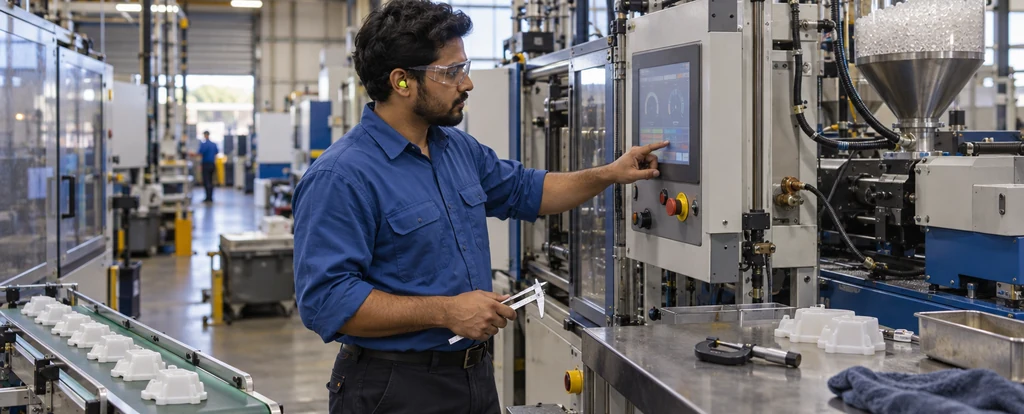
- Checking finished parts with callipers and micrometers, because a mould that drifts out of tolerance keeps producing bad parts until someone stops it.
- Loading resin or pellets into hoppers and keeping the machine fed through the shift.
- Cleaning, lubricating and doing minor repairs between runs, and logging faults for the maintenance fitter.
What skills do plastics machine operators need?
Employers look for operations management, plant and equipment operation, process improvement, backed by Injection moulding machines fluency and strong attention to detail.
Specialist skills
- Operations management
- Plant and equipment operation
- Process improvement
Software and tools
- Injection moulding machines
- Extrusion lines
- Callipers and micrometers
- SCADA/HMI systems
- MES/ERP software
General skills
- Attention to detail
- Problem solving
- Safety and compliance awareness
- Physical stamina and dexterity
Is the job growing?
About 2,000 people work as plastics machine operators in Australia, and employment is projected to grow 5.1% over the decade to 2035. That's modest growth: demand is steady rather than booming.
How do you become a plastics machine operator?
Here's the path most plastics machine operators take, step by step.
- 1Finish Year 12 or a pre-vocational course
There is no degree requirement, and about 54% of the people in the job list Year 12 or below as their highest qualification. A pre-apprenticeship or Certificate II in Polymer Processing can help you get a first interview, but plenty of operators start straight from school.
- 2Get a start on the factory floor
Most people enter as a process worker, production assistant or machine offsider and learn the machines on the job. It is paid work from the first shift, and employers tend to prefer someone who has already spent time on a production line.
- 3Add a Certificate II or III in Polymer Processing if you want to move up
These qualifications cover materials, moulds and process control, and are usually done part-time while you work. They help most for setup, technician and leading hand roles rather than for getting the first job.
- 4Pick up the licences and qualifications your site uses
A forklift licence is useful in most plants, and some sites ask for chemical handling or confined space training. Employers commonly pay for these once you are on staff.
Ready to apply as a plastics machine operator?
Whether you're working toward becoming a plastics machine operator or already are one and want a hand with the next step (sharpening your resume for ATS screening, tightening your cover letter, or knowing what you'll actually be asked at interview), here are examples grounded in this specific role, not generic templates.
What jobs can a plastics machine operator move to?
Moving into Production Manager typically comes with the biggest pay rise, worth $54,500 a year more on average.
| Move to | Typical pay change | Overlap | Retraining |
|---|---|---|---|
| Production Manager Plastics machine operators bring production floor experience to a management role, needing further training in leadership, planning and staff supervision.Known move | +$54,500 | 40% | reskill |
| Machine Operator Plastics machine operators bring experience with production machinery and quality checks to broader machine operator roles, with a short course covering different equipment.Known move | +$15,800 | 47% | short course |
| Process Worker Plastics machine operators bring skills in monitoring production lines and maintaining quality to process worker roles, with a short course adapting to different processes.Known move | +$14,000 | 56% | short course |
| Plastics Technician Plastics machine operators bring hands-on machine operation and polymer knowledge to a technician role, requiring further study to deepen technical and troubleshooting skills.Known move | +$9,900 | 35% | reskill |
Moves are chosen from Jobs and Skills Australia's Data on Occupation Mobility, which follows income tax records between 2011-12 and 2020-21, together with entry requirements and skill overlap. A known move is one people were seen making in that data. Pay change compares median full-time pay for the two roles.
Who works as a plastics machine operator?
The typical plastics machine operator is 48 years old; 84% are men, 89% work full-time, and full-timers average 42 hours a week.
- 48
- Median age
- 16%
- Female share
- 89%
- Full-time
- +2h
- vs all-jobs avg
What's it like being a plastics machine operator?
The day is paced by the machine cycle, so the work is a mix of close watching, quick adjustments and physical jobs between runs. Changeovers, quality sampling and stoppages set the rhythm, and full-time weeks average 42 hours, often across a rotating roster. It suits people who like seeing a concrete result and don't mind heat, noise or shift work.
What people like
- You can see the result of the shift. Parts come off the machine every few seconds, so you know by the end of the day how the run went and roughly how many good ones you made.
- Faults have causes you can find. A warped part or a short shot usually traces back to a temperature, pressure or material setting, and narrowing down which one is where the skill sits.
- The work is hands-on and self-contained. A changeover is a physical job with a clear finish: the tooling is in, the first samples pass and the line is running again.
- Skills that carry across manufacturing. Machine operating experience transfers to food, packaging, automotive and building products plants, which is useful if you move or the local industry shifts.
What people find hard
- Rotating shifts and weekend work. Many plants run around the clock, and full-time weeks average 42 hours before overtime, so roster patterns and loadings are worth asking about before you accept a job.
- Heat, noise and fumes. Machines give off heat, the floor is loud, and some processes release fumes, so hearing protection and other PPE are part of the job rather than optional.
- Long stretches of watching. A settled run can be hours of the same cycle with little to do beyond sampling and checking.
- When the line stops, the pressure is on. Stoppages cost the plant output, and the operator is usually the first person expected to work out whether it is a machine fault, a material problem or a setting that has drifted.
Based on our synthesis of professional-body surveys and public accounts of the role, not first-person verified reviews.
Which industries employ plastics machine operators?
Manufacturing employs the largest share of plastics machine operators.
Top employing industries
- 1Manufacturing
Ranked by employment share; the source doesn't publish an exact percentage per industry.
| Year 12 or below | 54.3% | |
|---|---|---|
| Certificate III/IV | 22.6% | |
| Diploma / Advanced Diploma | 7.2% | |
| Bachelor degree | 7% | |
| Postgraduate | 1.9% |
Will AI replace plastics machine operators?
Plastics machine operation sits in the middle: presses and extrusion lines are heavily instrumented, and process monitoring, alarms and quality logging now run through SCADA and MES systems, but tooling changes, material problems and troubleshooting still happen on the floor. Newer all-electric presses hold a cycle far more precisely than the machines they replaced, which shifts the operator's day towards setup, sampling and fault-finding rather than constant adjustment.
Share of typical working time by exposure level
- Watching the runMonitoring temperatures, pressures and cycle times on the control screen and reacting to alarms, which sensors and automatic reject systems now handle for many faults, though warping, short shots and colour drift are often noticed by the operator first.30%high
- Machine setup and changeoversFitting and aligning moulds, dies and tooling, then running first-off samples until the part meets the drawing; presses can store settings for a job, but alignment and the first good part are still manual work.25%moderate
- Cleaning, maintenance and material handlingLoading resin, purging the barrel between materials, cleaning and lubricating the machine and flagging faults for the maintenance fitter, which is physical, hands-on work no current system does on its own.25%low
- Quality checks and measurementsChecking parts with callipers and micrometers, weighing shots and recording results; vision inspection is common on high-volume lines, but sampling and the call on a borderline part stay with the operator.20%moderate
Common questions about becoming a plastics machine operator
Straight answers to the questions people ask most.
How much do plastics machine operators earn?
Plastics machine operators earn $65,000 per year before tax at the median for full-time work. Shift loadings, overtime and the classification you are hired at move that figure most, so ask about the roster and the enterprise agreement rather than comparing base rates alone.
How do you become a plastics machine operator?
Most people start as a process worker, production assistant or machine offsider and learn the machines on the job. A Certificate II or III in Polymer Processing is the usual formal qualification, and a forklift licence helps you get a start in many plants.
Are plastics machine operators in demand?
Plastics machine operators are currently not in shortage, and employment is projected to grow 5.1% over the decade to 2035. The occupation is small, with around 2,000 people working in it, so openings tend to come from people leaving or retiring as much as from new positions. A packaging or plastics plant near you is where the vacancies are most likely to appear.
Will AI and automation replace plastics machine operators?
Process monitoring, alarms and quality logging are the parts most exposed: modern presses hold a cycle precisely, log faults and reject bad parts automatically. Setup and changeovers, material handling and fault-finding still need an operator on the floor, so the mix of tasks has shifted towards those jobs rather than away from them.
What other jobs can a plastics machine operator move into?
A short course is usually enough to move into broader machine operator or process worker roles, which pay $15,800 more and $14,000 more. Plastics technician work builds on the same polymer knowledge but needs further study, and production manager roles need training in leadership and production planning, with pay around $54,500 more. Assemblers and process workers also move into plastics machine operation from the other direction, picking up the machine skills on the job.
Do plastics machine operators have to work shifts?
Often, yes. Many plastics plants run continuously, and operators work rotating rosters with afternoon, night and weekend shifts that carry loadings. Some smaller plants run day shift only, so it is worth asking about the roster before you accept a job.
Related roles
Not sure this is you? Take the career quiz and get a ranked shortlist of roles that fit how you like to work.