Home Manufacturing & Production
Assembler
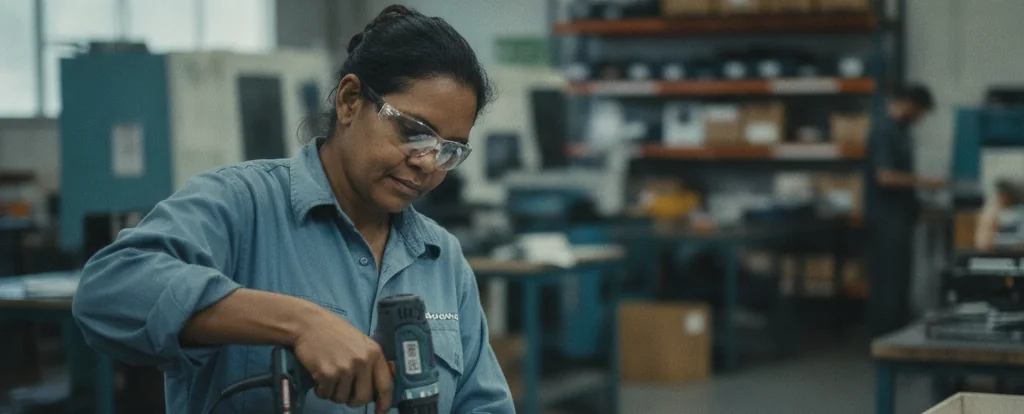
Assemblers fit, fasten and join components into finished products, usually working one station on a manufacturing line.
- Median salary
- $62,200
3.8%vs last year, before tax
- People employed
- 24,500
0.4%vs last year
- Projected growth
- +7.4%
to 2035
- AI exposure*
- High
- automation risk
- Average hours
- 40/wk
matches all-jobs average
- Shortage status*
- Not in shortage
national
Assemblers build products piece by piece in a factory or workshop, following technical drawings and quality specifications as each item takes shape. Most work a single station on a production line, fitting or fastening one part before the item moves on, though smaller operations sometimes have one person build more of the product from start to finish. The role sits close to a machine operator's, but an assembler typically works by hand or with hand tools rather than running automated equipment.
How much do assemblers earn?
The median full-time salary for an assembler is $62,200 per annum, before tax, up $12,900 since 2018.
Pay for assemblers usually follows the Manufacturing and Associated Industries Award or a site enterprise agreement, so base rates are similar across many employers. The shift roster moves it most, because afternoon and night work attract loadings, along with overtime and the skill level of the build: assembling electrical, hydraulic or precision components pays more than general fitting. Sector matters as well, since aerospace, medical device and transport manufacturers tend to pay above general metal fabrication.
What does an assembler do day to day?
The list below is what fills most weeks; the exact mix shifts with seniority and whatever stage the current work is at.
- Reading the job sheet or drawing for a run, then laying out the components and subassemblies the station needs
- Fitting, joining and fastening parts by hand and with power tools, working from an assembly jig or fixture
- Tightening bolts to a set torque with a torque wrench and checking alignment with gauges and other measuring instruments
- Inspecting each unit against the specification and flagging faults before it moves down the line
- Recording completed counts and scrap, and swapping stations when a run changes or someone is away
What skills do assemblers need?
Employers look for reading plans and specifications, hand and power tool work, fabrication and finishing, backed by Hand tools (screwdrivers, spanners, hammers) fluency and strong attention to detail.
Specialist skills
- Reading plans and specifications
- Hand and power tool work
- Fabrication and finishing
- Worksite safety management
- Plant and equipment operation
Software and tools
- Hand tools (screwdrivers, spanners, hammers)
- Power drills and impact drivers
- Torque wrenches
- Assembly jigs and fixtures
- Precision measuring instruments
General skills
- Attention to detail
- Problem solving
Is the job growing?
About 24,500 people work as assemblers in Australia, and employment is projected to grow 7.4% over the decade to 2035. That's modest growth: demand is steady rather than booming.
How do you become an assembler?
Here's the path most assemblers take, step by step.
- 1Finish Year 10 or Year 12
Most employers ask for secondary schooling rather than a formal qualification, because the fitting and checking is taught on the job. Any subjects that build hand skills or mechanical understanding help, and a pre-apprenticeship course such as a Certificate II in Engineering Pathways (MEM20422) is a common way in for school leavers.
- 2Apply for entry-level assembly roles
Manufacturers and labour hire firms advertise assembler positions directly, and labour hire is how many people get their first placement on a line. You will usually be asked about hand tool experience, reliability and whether you can stand for a full shift.
- 3Learn your station and the tools
The first weeks are spent learning the sequence, the jig or fixture, the torque settings and the checks the run requires. Once you can hold the expected pace and meet the quality standard without supervision, you are doing the job properly.
- 4Add a qualification if you want to move up
A Certificate III in Engineering - Production Systems (MEM30119) at TAFE, often studied part time while you work, supports moves into machine operating, set-up or leading hand roles. It is not required to stay an assembler.
- 5Pick up the licences your site needs
A forklift licence helps if the role includes moving stock or finished goods, and a White Card is needed where assembly happens on a construction site or in prefabricated building work. Employers sometimes fund these, so it is worth asking.
Ready to apply as an assembler?
Whether you're working toward becoming an assembler or already are one and want a hand with the next step (sharpening your resume for ATS screening, tightening your cover letter, or knowing what you'll actually be asked at interview), here are examples grounded in this specific role, not generic templates.
What jobs can an assembler move to?
Moving into Machine Operator typically comes with the biggest pay rise, worth $18,600 a year more on average.
| Move to | Typical pay change | Overlap | Retraining |
|---|---|---|---|
| Machine Operator Assemblers already work with production machinery and components, so machine operating is a natural step up, needing further training to set and run machines.Known move | +$18,600 | 33% | reskill |
| Process Worker Assemblers bring hands-on fitting and line experience to process work, which broadens into monitoring and running production equipment.Known move | +$16,800 | 21% | reskill |
| Quality Inspector Assemblers know component fit and faults, so moving into quality inspection builds on checking work, with further training in standards and testing. | +$10,800 | 19% | reskill |
| Forklift Operator Assemblers understand factory flow and safe handling, so forklift operating suits them once they complete the required ticket and training.Known move | +$7,500 | 43% | reskill |
Moves are chosen from Jobs and Skills Australia's Data on Occupation Mobility, which follows income tax records between 2011-12 and 2020-21, together with entry requirements and skill overlap. A known move is one people were seen making in that data. Pay change compares median full-time pay for the two roles.
Who works as an assembler?
The typical assembler is 42 years old; 74% are men, 90% work full-time, and full-timers average 40 hours a week.
- 42
- Median age
- 26%
- Female share
- 90%
- Full-time
- +0h
- vs all-jobs avg
What's it like being an assembler?
Assembly work has a steady, repeating rhythm: the same fittings, the same checks and the same count at the end of the shift, with the line setting how long each unit should take. That suits people who like a clear standard and the satisfaction of finishing something they can see, and it grinds on people who need variety in their day. The first fortnight is usually the hardest, as you learn the sequence and build up to the pace the run expects.
What people like
- You finish something you can see. At the end of a run there are completed units counted and stacked, which is different from work that disappears into a report or a folder. For many assemblers that tangible result is the main draw.
- The standard is clear. A drawing, jig or gauge tells you whether the part is right, so you know when you have done the job well rather than guessing. That clarity makes the work easy to learn and hard to fake.
- You can start without a qualification. Most assemblers are trained on the job, which makes this one of the more accessible ways into manufacturing work. It also gives you a base to build a trade, a machine operating role or a supervisor's position from later.
- The work is physical rather than screen-based. You spend the day on your feet with tools in your hands, and the shift ends when the run does. Many people prefer that to desk work, though it does take a physical toll.
What people find hard
- The repetition is real. A single fitting can be repeated hundreds of times in a shift, and boredom is the most common complaint about the job. Some plants rotate stations to break it up, but the work itself does not change much.
- The line sets your pace. Each station has an expected time per unit, and slowing down holds up everyone downstream. That pressure is steady rather than dramatic, but you cannot simply take a slower day when you are tired.
- Standing, reaching and gripping all day. Wrists, shoulders and backs carry the load over a full shift, especially on heavier assemblies. Anti-fatigue matting and regular rotation help, and lifting aids are used for the weighty parts.
- Shift work and rotating rosters. Many plants run afternoon or night shifts alongside day shift, and rotating rosters disrupt sleep and family routines. Larger manufacturers often pay loadings for it, so the hours are a trade-off rather than a given.
Based on our synthesis of professional-body surveys and public accounts of the role, not first-person verified reviews.
Which industries employ assemblers?
Manufacturing employs the largest share of assemblers, followed by Other Services.
Top employing industries
- 1Manufacturing
- 2Other Services
Ranked by employment share; the source doesn't publish an exact percentage per industry.
| Year 12 or below | 54.5% | |
|---|---|---|
| Certificate III/IV | 20.4% | |
| Bachelor degree | 9.1% | |
| Diploma / Advanced Diploma | 7.1% | |
| Postgraduate | 2.6% |
Will AI replace assemblers?
Assembly sits at the sharp end of automation: long, unchanging production runs are already handled by robots and fixed automated cells, and the equipment takes on more of that work each year. What keeps people in the job is everything that isn't a fixed run, such as short batches, awkward components, set-ups and faults that need someone to work out what went wrong, along with the loading, checking and maintaining that machines still require. The direction is fewer assemblers on repetitive high-volume lines and more on varied or specialist builds.
Share of typical working time by exposure level
- Fitting and fastening parts on a set runRobots and automated cells handle long, low-variation runs best, so a line building the same unit by the thousand is the most exposed work in the job.35%high
- Picking up faults and reworking parts that don't fitDiagnosing why a subassembly won't seat, or filing and adjusting a part to bring it into tolerance, is the part of assembly that resists automation most.30%low
- Reading drawings and setting up a station for a new runSoftware can put the drawing and torque settings on a screen, but working out how the jig, fixtures and parts go together for a new batch is still a person's job.20%moderate
- Tightening to torque and checking alignment with gaugesPowered torque tools and inline measurement record each result automatically on routine runs, though safety-critical and one-off builds still get a manual check.15%high
Moves least exposed to AI
These career moves from assembler work are rated low for AI exposure:
- Forklift Operator
Solid skill overlap (43%), reskill to get there, and a low automation-risk profile.
Common questions about becoming an assembler
Straight answers to the questions people ask most.
How much does an assembler earn?
Assemblers earn $62,200 per year before tax as a full-time median, and individual pay varies with the roster and the site. Shift loadings, overtime, the enterprise agreement and the type of assembly all move it, with electrical, hydraulic and precision work paying above general fitting. Treat the figure as a midpoint rather than a starting rate.
How do you become an assembler?
Most people start by applying directly to manufacturers or labour hire firms, since no formal qualification is required and training happens on the job. A Certificate II in Engineering Pathways (MEM20422) helps school leavers get a first placement, and a Certificate III in Engineering - Production Systems (MEM30119) supports later moves into set-up or machine operating work.
Are assemblers in demand?
Assemblers are currently not in shortage, and employment is projected to grow 7.4% over the decade to 2035 over the decade to 2035. Because the work is taught on site, entry-level roles stay open to people without prior manufacturing experience, so the practical step is to approach employers and labour hire firms in your area.
Will AI and automation replace assemblers?
Automation reaches assembly work directly, and high-volume repetitive runs are the most exposed part of the job. What keeps people on the line is the work that isn't a fixed run: short batches, awkward components, set-ups, and faults that need someone to work out why a part won't seat. The shift is toward fewer assemblers on long repetitive runs and more on varied or specialist builds.
What can an assembler move into?
Machine operator is a common step, paying $18,600 more and building on the production machinery you already work alongside, though it needs further training to set and run machines. Quality inspector suits assemblers who know component fit and faults, paying $10,800 more with training in standards and testing. A forklift operator role pays $7,500 more once you complete the licence.
Do you need experience to start as an assembler?
No, most assembler jobs are entry level and come with on-the-job training. Employers look for reliability, hand skills and the ability to follow a specification and hold a pace, rather than previous assembly experience or a qualification.
Related roles
Not sure this is you? Take the career quiz and get a ranked shortlist of roles that fit how you like to work.