Home Manufacturing & Production
Plastics Technician
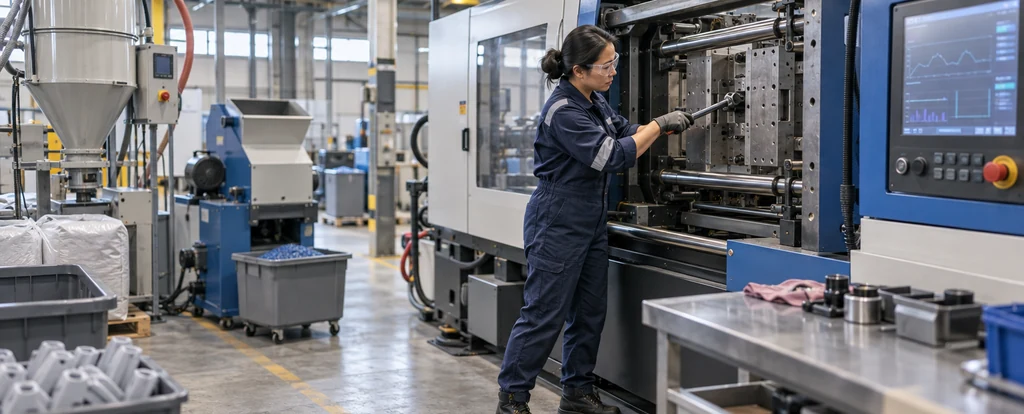
Plastics technicians set up and run the machines that turn polymer resin into moulded and extruded parts, keeping the process within specification so the parts coming off the line are fit to sell.
- Median salary*
- $74,900
4.3%vs last year, before tax
- People employed
- 210
5.0%vs last year
- Projected growth
- +13.9%
to 2035
- AI exposure*
- Moderate
- automation risk
- Average hours
- 41/wk
+1h vs all jobs
- Shortage status
- Not in shortage
national
Most work on factory floors in plastics manufacturing, on injection moulding, extrusion or blow moulding lines, and the role sits between the machine operator who runs the line day to day and the engineers who design the process. A plastics technician owns the setup: the mould or die, the temperature and pressure settings, and the trials that get a new job running properly. The occupation is small, and much of the work is organised around shift rosters because the machines rarely stop.
How much do plastics technicians earn?
The median full-time salary for a plastics technician is $74,900 per annum, before tax, up $15,800 since 2018.
Pay moves most with the roster and the agreement you are on: rotating shifts, night shift and regular overtime add loadings on top of a base rate, and many plants set terms through an enterprise agreement rather than the award. A technician who can set up and prove a difficult job, or who takes on tooling and process improvement work, is generally worth more to a plant than someone running a line on fixed settings.
What does a plastics technician do day to day?
The list below is what fills most weeks; the exact mix shifts with seniority and whatever stage the current work is at.
- Setting up moulds, dies and tooling and running first-off samples to prove a job before production starts
- Adjusting temperature, pressure, cycle time and cooling settings to hold parts within tolerance
- Troubleshooting faults such as short shots, warping, flash and sink marks, and working out whether the cause is the material, the tool or the machine
- Checking parts against drawings and specifications and recording the results for quality and customer records
- Maintaining and cleaning tooling and auxiliary equipment such as dryers, chillers and granulators, then handing the machine over to operators
What skills do plastics technicians need?
Employers look for plant and equipment operation, process improvement, installation and maintenance, backed by Moldflow fluency and strong attention to detail.
Specialist skills
- Plant and equipment operation
- Process improvement
- Installation and maintenance
- Reading plans and specifications
- Worksite safety management
Software and tools
- Moldflow
- SolidWorks
- Minitab
- SAP
- Injection moulding machine controllers
General skills
- Attention to detail
- Problem solving
- Time and deadline management
Is the job growing?
About 210 people work as plastics technicians in Australia, and employment is projected to grow 13.9% over the decade to 2035. That's healthy, above-average growth, and the role should stay in solid demand.
How do you become a plastics technician?
Here's the path most plastics technicians take, step by step.
- 1Finish Year 12 or an equivalent
There is no single prerequisite, but Year 12 with maths and a science subject makes the polymer and process theory easier to pick up. Around 39% of people working as plastics technicians have Year 12 or below, so a school certificate is a common starting point rather than a barrier.
- 2Get onto a production floor
Most technicians begin as machine operators, process workers or trade assistants, learning the machines and materials on a paid shift. A traineeship combines that work with study, which is the usual route for someone entering without a qualification.
- 3Complete a Certificate III in polymer processing
The certificate covers polymer materials, machine setup and quality control, and is often delivered through a traineeship over roughly two to three years while you work. TAFE and private registered training organisations offer it, sometimes on day release.
- 4Add a Certificate IV or specialise
A Certificate IV in polymer technology, or short courses in injection moulding, extrusion or blow moulding, opens up setup, lead hand and team leader roles. Some technicians later move into tooling, quality or process engineering support, which may need further study in engineering.
Ready to apply as a plastics technician?
Whether you're working toward becoming a plastics technician or already are one and want a hand with the next step (sharpening your resume for ATS screening, tightening your cover letter, or knowing what you'll actually be asked at interview), here are examples grounded in this specific role, not generic templates.
What jobs can a plastics technician move to?
Moving into Production Manager typically comes with the biggest pay rise, worth $44,600 a year more on average.
| Move to | Typical pay change | Overlap | Retraining |
|---|---|---|---|
| Production Manager Plastics technicians bring polymer processing and quality control knowledge to production management, but need formal management training.Known move | +$44,600 | 14% | reskill |
Moves are chosen from Jobs and Skills Australia's Data on Occupation Mobility, which follows income tax records between 2011-12 and 2020-21, together with entry requirements and skill overlap. A known move is one people were seen making in that data. Pay change compares median full-time pay for the two roles.
Who works as a plastics technician?
The typical plastics technician is 49 years old; 97% are men, 90% work full-time, and full-timers average 41 hours a week.
- 49
- Median age
- 3%
- Female share
- 90%
- Full-time
- +1h
- vs all-jobs avg
What's it like being a plastics technician?
The work runs to the rhythm of the machine: a setup or a tool change, then long stretches of monitoring while the line holds its settings. The pressure comes from downtime, because a stopped moulding machine costs the plant money by the minute, and from shift work, since many lines run nights and weekends. It suits people who like diagnosing a physical problem with their hands and their instruments, and who are comfortable on a factory floor.
What people like
- Bringing a bad run back into spec. When parts start warping or short-shotting, the cause is somewhere in the material, the tool or the settings, and working through it until the line runs clean again is the part of the job that keeps it interesting.
- Something physical at the end of a shift. You can hold the parts you made and see the numbers that say they are right, which suits people who prefer a tangible result to a purely desk-based day.
- Skills that carry between plants and materials. Setup, tooling and troubleshooting experience transfers across injection moulding, extrusion and blow moulding, and between industries, so a technician is not tied to one employer or one product.
- A small, practical team. A plastics line usually runs with a handful of people, so you get to know the operators, the maintenance fitter and the shift supervisor well and can get a decision made quickly.
What people find hard
- Shift rosters. Because the machines run continuously, many roles involve rotating shifts, nights and weekend work, and that shapes your sleep and family life more than the job itself does.
- Downtime pressure. A stopped machine costs the plant money every minute, so a stubborn fault can mean working under time pressure with production staff waiting on you.
- Heat, noise and fumes. Factory floors are warm and loud, particularly around dryers, and there are polymer smells to get used to, though plants manage ventilation and expect hearing protection to be worn.
- Long stretches of monitoring. Once a job is running well, the work becomes watching settings and checking samples, which can feel repetitive across a long production run.
Based on our synthesis of professional-body surveys and public accounts of the role, not first-person verified reviews.
Which industries employ plastics technicians?
Manufacturing employs the largest share of plastics technicians, followed by Construction.
Top employing industries
- 1Manufacturing
- 2Construction
- 3Other Services
Ranked by employment share; the source doesn't publish an exact percentage per industry.
| Year 12 or below | 39.3% | |
|---|---|---|
| Certificate III/IV | 39.2% | |
| Bachelor degree | 8.1% | |
| Diploma / Advanced Diploma | 6.2% | |
| Postgraduate | 1.4% |
Will AI replace plastics technicians?
Automation already runs much of a plastics line: machine controllers hold temperatures and pressures in a closed loop, simulation software such as Moldflow predicts how a tool will fill, and plant systems log output automatically. That takes some of the guesswork out of routine monitoring and record keeping, but it does not set a mould, prove a new job or work out why an unfamiliar material is behaving badly. Exposure is moderate rather than high because the technician still has hands on the machine and makes the calls when a standard recipe fails.
Share of typical working time by exposure level
- Setting, clamping and proving moulds and toolingPositioning and clamping a mould, connecting cooling and hydraulics, and running first-off samples to prove a job is physical work that a controller cannot take over.30%low
- Watching process parameters and adjusting settingsClosed-loop controllers and software such as Moldflow hold settings tighter and flag drifting shots earlier, though choosing what to change when a new material behaves differently still comes down to the technician.25%high
- Checking parts and investigating faultsVision systems and gauges catch routine dimensional problems automatically, but interpreting a borderline result or tracing a warping fault back to the tool or the drying is technician work.25%moderate
- Recording production and quality dataSAP and machine monitoring systems capture most run data without anyone writing it down, which shifts the job towards reading the data and deciding what it means.20%moderate
Common questions about becoming a plastics technician
Straight answers to the questions people ask most.
How much do plastics technicians earn?
Full-time plastics technicians earn a median of $74,900 per annum, before tax. Shift loadings, overtime and enterprise agreements move actual earnings either side of that figure, so the roster matters as much as the base rate.
How do you become a plastics technician?
The usual route is into a plastics plant as a machine operator or trainee, then a Certificate III in polymer processing (PMB30121) while you work. Employers look for people who are comfortable around machinery and can follow specifications, and most of the polymer knowledge is learned on the job.
Are plastics technicians in demand?
Plastics technicians are currently not in shortage, and employment is projected to grow 13.9% over the decade to 2035. It is a small occupation of about 210 people, so openings come from technicians retiring or leaving as much as from new positions, which makes the local plant picture worth asking about.
Will AI replace plastics technicians?
Not outright, but process monitoring is already changing: machine controllers and simulation software such as Moldflow hold settings closer and flag drifting shots earlier than someone watching gauges can. The physical work of setting and clamping a mould, proving a new job and diagnosing a fault in an unfamiliar material still needs hands and judgement on the floor.
What can a plastics technician move into?
The common move is into production management, where the polymer processing and quality control knowledge carries across, though a management qualification or formal training is usually part of the step, which brings roughly $44,600 more. Plastics machine operators and plastics fabricators also move into technician roles once they have covered setup and quality control through further study or a short course.
What is the difference between a plastics technician and a machine operator?
An operator runs a line on settings that are already proven, watching output and reporting faults. A technician sets the machine up, proves the job, works out what is causing a fault and signs off whether the parts meet specification.
Related roles
- Production Manager
- Plastics Machine Operator
- Plastics Fabricator
- Process Worker
- Stone Machine Operator
- Boiler Operator
Not sure this is you? Take the career quiz and get a ranked shortlist of roles that fit how you like to work.