Choreographer
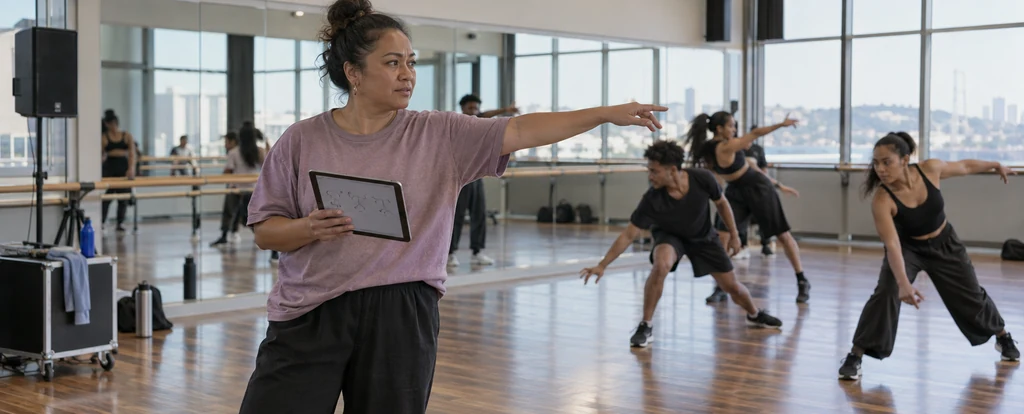
Choreographers create the movement in a production and teach it to the dancers who perform it.
- Median salary*
- $65,000
3.8%vs last year, before tax
- People employed*
- 1,000
0.0%vs last year
- Projected growth*
- +2%
to 2035
- AI exposure*
- Low
- automation risk
- Average hours*
- 40/wk
matches all-jobs average
- Shortage status*
- Not in shortage
national
Choreographers work wherever bodies move to a purpose: mainstage dance companies, musical theatre, film and television sets, festivals, schools and community programs. What separates them from the dancers they direct is that the movement is theirs to invent, cut and reshape in rehearsal. Most work project to project as freelancers, so a year might hold three or four contracts rather than one steady job.
How much do choreographers earn?
The median full-time salary for a choreographer is $65,000 per annum, before tax, up $13,500 since 2018.
Who employs you shapes the money: a salaried position with a dance company or a school is steadier than freelance contracts, and screen or commercial work often pays better per day than a small stage production. Freelancers quote per project or per rehearsal week, so annual income depends on how much work they book. Teaching, movement direction and workshop programs are common ways to bridge the gaps between contracts.
What does a choreographer do day to day?
The list below is what fills most weeks; the exact mix shifts with seniority and whatever stage the current work is at.
- Mapping out movement for a scene, a song or a full-length work, then cutting it back in rehearsal
- Running rehearsals and coaching dancers through counts, timing and intention
- Working with directors, composers and designers so the movement fits the set, score and lighting
- Auditioning dancers and casting the people who can carry the choreography
- Restaging a work for a different venue, camera angle or touring cast
What skills do choreographers need?
Employers look for teaching and instruction, project management, event coordination, backed by Dance notation software (e.g., LabanWriter) fluency and strong people leadership.
Specialist skills
- Teaching and instruction
- Project management
- Event coordination
- Creative software production
Software and tools
- Dance notation software (e.g., LabanWriter)
- Video editing software (e.g., Adobe Premiere Pro)
- Music editing software (e.g., Ableton Live)
- Stage management software (e.g., StageWrite)
General skills
- People leadership
- Written communication
- Attention to detail
Is the job growing?
About 1,000 people work as choreographers in Australia, and employment is projected to grow 2% over the decade to 2035. That's modest growth: demand is steady rather than booming.
How do you become a choreographer?
Here's the path most choreographers take, step by step.
- 1Train seriously in dance
Most choreographers spend years as dancers first, through studio classes, a vocational course or a pre-professional program. The movement vocabulary you build there becomes the raw material you draw on later.
- 2Complete a qualification
A bachelor degree in dance or a diploma of dance or performance is the common route, and it gives you structured time to make your first works. Some come through musical theatre or physical theatre training instead.
- 3Choreograph anything you can
Student productions, showcase nights, festivals and independent projects build a folio and let you practise directing other people. Each short work is evidence for the next application.
- 4Work as an assistant or movement director
Assisting an established choreographer, or handling movement for film and television, shows you how a professional rehearsal room runs and introduces you to producers.
- 5Set up the business side
Freelance choreographers need an ABN, a simple contract, insurance and a way of quoting a project, because work is arranged one contract at a time.
Ready to apply as a choreographer?
Whether you're working toward becoming a choreographer or already are one and want a hand with the next step (sharpening your resume for ATS screening, tightening your cover letter, or knowing what you'll actually be asked at interview), here are examples grounded in this specific role, not generic templates.
What jobs can a choreographer move to?
Moving into Artistic Director typically comes with the biggest pay rise, worth $54,600 a year more on average.
| Move to | Typical pay change | Overlap | Retraining |
|---|---|---|---|
| Artistic Director Choreographers bring creative vision and production leadership, stepping into programming and leading a company or arts organisation. | +$54,600 | 35% | reskill |
| Theatre Director Choreographers bring staging, storytelling and rehearsal leadership, moving into directing plays and musicals with additional directing experience. | +$20,800 | 40% | reskill |
| Community Arts Worker Choreographers bring workshop leadership and movement knowledge, moving into community dance projects and participatory arts programs with a short course. | +$0 | 59% | short course |
Moves are chosen from Jobs and Skills Australia's Data on Occupation Mobility, which follows income tax records between 2011-12 and 2020-21, together with entry requirements and skill overlap. A known move is one people were seen making in that data. Pay change compares median full-time pay for the two roles.
Who works as a choreographer?
The typical choreographer is 42 years old; 65% are women, 55% work full-time, and full-timers average 40 hours a week.
- 42
- Median age
- 65%
- Female share
- 55%
- Full-time
- +0h
- vs all-jobs avg
What's it like being a choreographer?
The work runs in cycles: an intense creation period of weeks or months, then a performance season, then a gap while the next contract is negotiated. Rehearsal days are physical and social, spent in a studio with the same small group making decisions against a production deadline. Choreographers tend to enjoy the collaborative pressure of a full room and the freedom to solve a problem with movement rather than words.
What people like
- Making something that did not exist before. You start with a piece of music or a scene and finish with movement no one else has performed.
- The rehearsal room. Choreography is a group activity, and the hours in the studio with dancers are the heart of the job.
- Variety of settings. A single year might include a musical, a film shoot and a school workshop, each with different demands and different people.
- Seeing dancers take ownership. Once a cast knows the work well enough to perform it without you in the room, the piece has a life of its own.
What people find hard
- Income arrives in lumps. Contracts end before the next one is signed, so budgeting across a year takes discipline and a buffer.
- Rehearsal time is usually short. You often get fewer weeks than the work needs, and cuts and changes happen late in the process.
- Hard on your own body. Demonstrating and repeating movement for hours takes a toll, and an injury can interrupt the next contract.
- Limited control over the production. Schedules, budgets and casting decisions sit with directors and producers, not with the choreographer.
Based on our synthesis of professional-body surveys and public accounts of the role, not first-person verified reviews.
Which industries employ choreographers?
Performing Arts Companies employs the largest share of choreographers, followed by Education and Training.
Top employing industries
- 1Performing Arts Companies
- 2Education and Training
- 3Film, Television and Video Production
- 4Events and Festivals
Ranked by employment share; the source doesn't publish an exact percentage per industry.
| Bachelor degree | 38% | |
|---|---|---|
| Diploma / Advanced Diploma | 24% | |
| Certificate III/IV | 20% | |
| Postgraduate | 10% | |
| Other | 8% |
Will AI replace choreographers?
Choreography is a low-exposure job, because the core of it happens in a room with live dancers and depends on reading how bodies move in real time. Software helps with notation, video reference and rehearsal planning, and AI can suggest movement material, but it does not run a rehearsal or make the calls a choreographer makes under a production deadline. The tools change the paperwork around the work more than the work itself.
Share of typical working time by exposure level
- Creating and shaping movementInventing phrases for a scene or a score, then cutting them in rehearsal, is the part of the job that resists automation most.30%low
- Running rehearsals and coaching dancersTeaching counts, timing and intention to a room of performers depends on live feedback and physical demonstration.30%low
- Documenting and restaging the workDance notation software and video review tools can speed up recording a work so another cast can perform it later.20%moderate
- Pitching, scheduling and grant paperworkBudgets, tour logistics and grant applications follow templates that AI tools can draft or check quickly.20%high
Common questions about becoming a choreographer
Straight answers to the questions people ask most.
How much do choreographers earn?
Choreographers earn a median of $65,000 per year before tax. That figure covers both salaried positions with dance companies and schools and freelance contract work, and annual income varies most with how many contracts you book and whether any of them are for screen or commercial productions.
How do you become a choreographer?
There is no single entry requirement, but most choreographers dance professionally for years before they start making work for others. A degree or diploma in dance, plus a folio of short pieces you have created, is the usual starting point.
Are choreographers in demand?
Choreographers are currently not in shortage, and employment is projected to grow 2% over the decade to 2035. Work is concentrated in performing arts companies, education and screen production, and many openings are short contracts rather than ongoing positions, so contacts and a strong folio carry a lot of weight.
Will AI replace choreographers?
AI can generate movement sequences and has been used experimentally in games and screen work, but it does not run a rehearsal or respond to a room of tired dancers on a deadline. The tools are more likely to sit alongside the job, helping with notation, video reference and documentation.
What can choreographers move into?
Many move into directing, where staging and rehearsal leadership carry across, and theatre directors earn $20,800 more. Artistic direction is the bigger step into programming and running a company, paying $54,600 more, while community arts work draws on workshop and project skills and pays about the same. Others teach, or run their own studio or independent company, which is often where earnings grow over time.
Do choreographers need a degree?
It is not mandatory, but a degree or diploma gives you structured training and time to make work with other students. What producers look at is your folio and the people you have worked with.
Related roles
Not sure this is you? Take the career quiz and get a ranked shortlist of roles that fit how you like to work.