Circus Performer
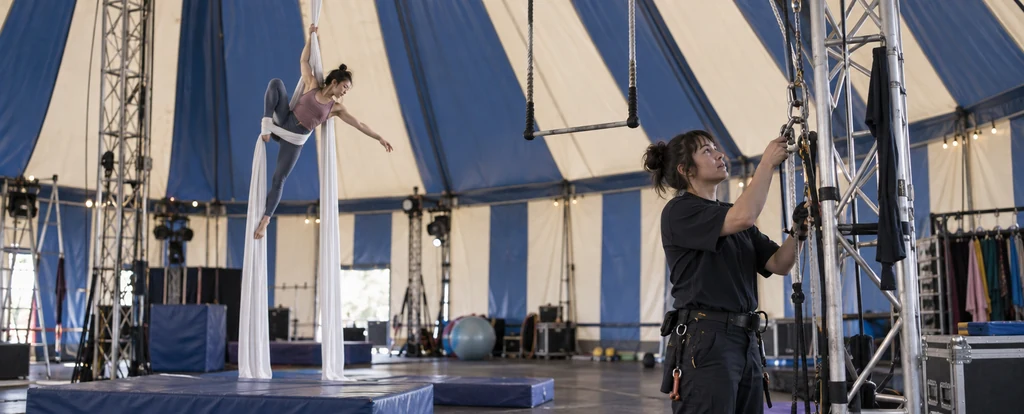
Circus performers rehearse and perform acrobatic, aerial and object manipulation acts for live audiences in touring shows, festivals and events.
- Median salary*
- $52,000
4.0%vs last year, before tax
- People employed
- 810
1.3%vs last year
- Projected growth*
- +5%
to 2035
- AI exposure*
- Low
- automation risk
- Average hours*
- 40/wk
matches all-jobs average
- Shortage status*
- Not in shortage
national
Circus performers work wherever a show can be staged: big tops, theatres, town halls, festival sites and cruise ships. The role is broader than dance or gymnastics because one performer often covers acrobatics, aerials and object manipulation, and most also rig and inspect their own apparatus. Work is almost always contract based, so teaching, corporate appearances and event work usually sit alongside performing as additional income.
How much do circus performers earn?
The median full-time salary for a circus performer is $52,000 per annum, before tax, up $10,800 since 2018.
Pay follows the contract rather than the job title, so a long season with a major company or a cruise ship engagement is more secure than a run of one-off festival shows. Rates for festival, corporate and workshop work are set by the hirer, which means they can vary a lot between engagements. Rehearsal periods that are unpaid lower what a contract is worth across a full year.
What does a circus performer do day to day?
The list below is what fills most weeks; the exact mix shifts with seniority and whatever stage the current work is at.
- Rehearsing acrobatic, aerial and balance routines, often for weeks before a season opens
- Performing live acts in shows, festivals and touring productions
- Maintaining physical conditioning and injury prevention routines
- Setting up and inspecting rigging, apparatus and safety equipment before each show
- Collaborating with directors, choreographers and fellow performers on new acts
What skills do circus performers need?
Employers look for event coordination, backed by Aerial silks fluency and strong physical stamina and dexterity.
Specialist skills
- Event coordination
Software and tools
- Aerial silks
- Trapeze bar
- Crash mats
- Rigging hardware
- Google Workspace
General skills
- Physical stamina and dexterity
- Written communication
- Attention to detail
- Problem solving
- Safety and compliance awareness
- Presenting and data storytelling
Is the job growing?
About 810 people work as circus performers in Australia, and employment is projected to grow 5% over the decade to 2035. That's modest growth: demand is steady rather than booming.
How do you become a circus performer?
Here's the path most circus performers take, step by step.
- 1Build a physical base early
Most circus performers come out of gymnastics, dance or calisthenics, and that foundation is usually built through childhood and teenage training rather than picked up as an adult.
- 2Train at a circus school
The National Institute of Circus Arts in Melbourne offers degree and diploma level training in circus arts, and private schools and youth circus companies around the country run certificate and diploma courses. Around 38% of people working as circus performers hold a bachelor degree, which usually reflects that formal training.
- 3Add rigging and safety competence
Employers expect performers to inspect and set their own apparatus, and working at height brings its own licences and qualifications, so training in rigging and safe work practices widens the jobs you can take on.
- 4Build a showreel and get in front of producers
Bookings come through auditions, agents, festival programs and direct approaches to companies, and a short video of finished acts is usually what earns you the audition in the first place.
- 5Take teaching and workshop work while you build
Casual teaching, youth circus coaching and workshop gigs are paid work that keeps skills sharp and covers the gaps between contracts, and plenty of performers keep some of it permanently.
Ready to apply as a circus performer?
Whether you're working toward becoming a circus performer or already are one and want a hand with the next step (sharpening your resume for ATS screening, tightening your cover letter, or knowing what you'll actually be asked at interview), here are examples grounded in this specific role, not generic templates.
What jobs can a circus performer move to?
Moving into Stunt Performer typically comes with the biggest pay rise, worth $20,800 a year more on average.
| Move to | Typical pay change | Overlap | Retraining |
|---|---|---|---|
| Stunt Performer Circus performers bring acrobatic skill, physical control and stage presence to stunt work, though extra training in fight and wire work is needed. | +$20,800 | 42% | reskill |
| Stage Manager Circus performers understand staging and production, allowing a move into stage management, though organisational and scheduling skills must be learned. | +$19,800 | 35% | reskill |
| Dancer Circus performers often have dance training and can move into dance roles, though they may need to refine specific styles and technique. | +$2,600 | 33% | reskill |
Moves are chosen from Jobs and Skills Australia's Data on Occupation Mobility, which follows income tax records between 2011-12 and 2020-21, together with entry requirements and skill overlap. A known move is one people were seen making in that data. Pay change compares median full-time pay for the two roles.
Who works as a circus performer?
The typical circus performer is 30 years old; 52% are women, 28% work full-time, and full-timers average 40 hours a week.
- 30
- Median age
- 52%
- Female share
- 28%
- Full-time
- +0h
- vs all-jobs avg
What's it like being a circus performer?
Circus work runs in cycles of rehearsal, season and travel, with the physical load sitting underneath all of it. Performers usually hold several contracts a year, so finding the next job is as much a part of the work as the training. The job suits people who are happy to repeat a routine until it is reliable, and who like working in a small ensemble where everyone covers more than one role.
What people like
- Performing for a live crowd. A trick that lands gets an immediate reaction, and that response in the room is a large part of why people stay in the job.
- Training with a close ensemble. Most acts depend on trust between a handful of people who spot each other and cover each other, which builds strong working relationships over a season.
- Skills you can see improving. New apparatus and new tricks give clear milestones, so progress is easier to measure than in many creative jobs.
- Venues and audiences keep changing. A month might take in a big top, a regional arts centre, a festival stage and a corporate event, each with different sightlines and different crowds.
What people find hard
- Income arrives in bursts. Contracts are short and often seasonal, so a performer might earn well for three months and then have nothing booked for the next two.
- Rehearsal is often unpaid. Developing a new act can take weeks before any performance fee starts, and that time is usually the performer's own.
- Injury can end a run. Shoulders, wrists and ankles carry the load, and a single bad landing can take someone out of a season they have already been booked for.
- The next job is always a job. Between contracts there is auditioning, emails to producers and admin around travel and visas, which is unpaid work nobody sees.
Based on our synthesis of professional-body surveys and public accounts of the role, not first-person verified reviews.
Which industries employ circus performers?
Performing arts employs the largest share of circus performers, followed by Amusement and recreation activities.
Top employing industries
- 1Performing arts
- 2Amusement and recreation activities
- 3Arts education and training
- 4Event and festival services
- 5Tourism
Ranked by employment share; the source doesn't publish an exact percentage per industry.
| Bachelor degree | 38% | |
|---|---|---|
| Diploma / Advanced Diploma | 24% | |
| Certificate III/IV | 20% | |
| Postgraduate | 10% | |
| Other | 8% |
Will AI replace circus performers?
Circus performance carries low exposure to AI and automation because the audience is paying for a live person doing something difficult and risky in the same room. Technology does reach the edges of the role, where editing tools build a showreel, social media drives bookings and cue software runs the technical side of a show. Those tools change how the work is promoted and run, not who does the training or steps onto the apparatus.
Share of typical working time by exposure level
- Live performanceThe act happens once, in front of people, and the timing, recovery from a near miss and connection with the crowd are the product.35%low
- Training and conditioningMost of the week goes into strength work, repetition and injury prevention, and that physical preparation is not something software can do for you.30%low
- Rigging and apparatus checksInspecting ropes, pulleys and crash mats relies on someone in the room who recognises a worn sling or a frayed splice.20%low
- Admin, booking and promotionShowreels, social media clips and booking spreadsheets are already shaped by editing and scheduling tools, which cuts the time they take but not the work of getting hired.15%moderate
Common questions about becoming a circus performer
Straight answers to the questions people ask most.
How much do circus performers earn?
Circus performers earn a median of $52,000 per year before tax, and what moves that figure is the contract itself rather than seniority. A long season with a major company or a cruise ship engagement pays more reliably than a run of one-off festival shows, and teaching or event work often fills the gaps between contracts.
How do you become a circus performer?
Most people start with gymnastics, dance or acrobatics in childhood and then study circus arts at a school such as the National Institute of Circus Arts in Melbourne. From there, work comes through auditions, agents and festival programs, and a showreel of finished acts is usually what opens the first doors. Teaching and workshop work tends to run alongside performing, especially in the early years.
Are circus performers in demand in Australia?
Circus performers are currently not in shortage. Employment is projected to grow 5% over the decade to 2035, and because the workforce is small, a handful of contracts opening or closing can shift the picture for an individual year. Most openings come through festivals, touring companies, cruise and event work rather than through large permanent hirings.
Will AI replace circus performers?
No, and the exposure here is low because the audience is paying for a live body doing something difficult in the room. Technology reaches the edges of the job instead: editing tools shape a showreel, social media drives bookings, and lighting and cue software runs a show's technical cues. None of that replaces the training, the spotting or the performance itself.
What other jobs can circus performers move into?
Some move into stunt work, where acrobatic control and stage presence transfer well and a stunt performer earns $20,800 more, with extra fight and wire training usually needed. Others move into dance, which pays $2,600 more and builds on training many already have, or into stage management, where the difference is $19,800 more and the main gap is scheduling and organisational skill. Many also build their own acts and small touring companies, which is often where earnings grow.
Do circus performers travel a lot?
Touring is a normal part of the job, particularly for performers in small companies and on the festival circuit, and it can mean weeks or months away from home. Some performers keep a base in one city and take shorter contracts, while others treat the travel as part of the appeal.
Related roles
Not sure this is you? Take the career quiz and get a ranked shortlist of roles that fit how you like to work.