Stunt Performer
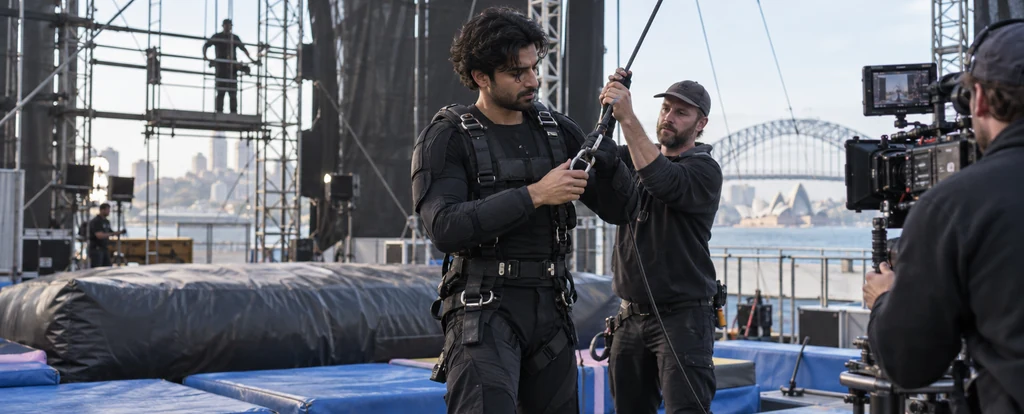
Stunt performers carry out the falls, fights, wire work and driving a script calls for, making the danger look real while keeping the cast and crew safe.
- Median salary*
- $72,800
3.7%vs last year, before tax
- People employed*
- 600
0.0%vs last year
- Projected growth*
- +7%
to 2035
- AI exposure*
- Low
- automation risk
- Average hours*
- 42/wk
+2h vs all jobs
- Shortage status*
- Not in shortage
national
Most stunt performers work on film, television and commercial shoots, with some moving between screen work and live shows or theme parks. What separates the role from acting is that the performance is physical and the planning is technical: falls, wire work and vehicle sequences are designed around harnesses, mats and rigging before anyone performs them. The work is largely project based, hired production by production through a stunt coordinator.
How much do stunt performers earn?
The median full-time salary for a stunt performer is $72,800 per annum, before tax, up $15,000 since 2018.
Stunt work is usually paid by the day or by the project, so what you earn across a year depends heavily on how many productions you book. Rates rise with experience and with the complexity of the stunt, and the minimums set under union agreements on larger productions sit above what independent shoots offer. Live shows and theme park work can provide steadier contracts than screen work, even where the day rate is lower.
What does a stunt performer do day to day?
The list below is what fills most weeks; the exact mix shifts with seniority and whatever stage the current work is at.
- Rehearsing fight choreography, falls and wire work with the stunt coordinator
- Performing high falls, vehicle stunts and precision driving during filming
- Inspecting harnesses, rigging, padding and landing mats before each take
- Timing action to camera cues alongside directors and camera crews
- Maintaining the physical skills the work draws on, such as martial arts, gymnastics, trampolining and horse riding
What skills do stunt performers need?
Employers look for craft and handmade production, backed by Wire rigs and descenders fluency and strong physical stamina and dexterity.
Specialist skills
- Craft and handmade production
Software and tools
- Wire rigs and descenders
- Stunt harnesses and safety lines
- Crash mats and airbags
- Pyrotechnic and fire safety equipment
- Onboard camera systems
General skills
- Physical stamina and dexterity
- Safety and compliance awareness
- Attention to detail
- Problem solving
- Written communication
Is the job growing?
About 600 people work as stunt performers in Australia, and employment is projected to grow 7% over the decade to 2035. That's modest growth: demand is steady rather than booming.
How do you become a stunt performer?
Here's the path most stunt performers take, step by step.
- 1Build a physical base
Gymnastics, martial arts, trampolining, diving and horse riding are the skills coordinators look for, and most performers arrive with years of training in one or two of them.
- 2Train for screen performance
A bachelor degree in drama or physical performance is common, with 38% of people in the role holding one, but short courses in screen combat, wire work and high falls at a stunt school or screen academy are the more direct route.
- 3Get on set
Start as a stunt double, a background extra or on student and low-budget productions, because coordinators cast performers whose work they have already seen.
- 4Hold the licences some sequences need
A high risk work licence for rigging, a first aid certificate and, in some states, a pyrotechnics licence are needed before you can work certain sequences, and the rules differ between states.
- 5Join the performers' union and keep training
Membership of the Media, Entertainment and Arts Alliance gives access to agreements that set minimum rates and safety conditions on covered productions, and continuing training keeps your range wide enough for the next brief.
Ready to apply as a stunt performer?
Whether you're working toward becoming a stunt performer or already are one and want a hand with the next step (sharpening your resume for ATS screening, tightening your cover letter, or knowing what you'll actually be asked at interview), here are examples grounded in this specific role, not generic templates.
What jobs can a stunt performer move to?
None of the roles stunt performers typically move into pay more than the role itself. Circus Performer is the closest match. If a bigger salary is the goal, moving up into a senior or principal position within the role is usually the faster route than moving sideways.
| Move to | Typical pay change | Overlap | Retraining |
|---|---|---|---|
| Circus Performer Stunt performers bring acrobatic skill and stage combat timing to circus arts, though aerial and apparatus specialities need further training. | −$20,800 | 42% | reskill |
Moves are chosen from Jobs and Skills Australia's Data on Occupation Mobility, which follows income tax records between 2011-12 and 2020-21, together with entry requirements and skill overlap. A known move is one people were seen making in that data. Pay change compares median full-time pay for the two roles.
Who works as a stunt performer?
The typical stunt performer is 33 years old; 72% are men, 55% work full-time, and full-timers average 42 hours a week.
- 33
- Median age
- 28%
- Female share
- 55%
- Full-time
- +2h
- vs all-jobs avg
What's it like being a stunt performer?
Stunt work comes in short, intense bursts, with filming days that start early, run long and involve a lot of waiting between takes. The physical demands are real and the margin for error is small, so performers train between jobs as much as they work. It suits people who take direction precisely, keep their skills current and are comfortable with a freelance calendar.
What people like
- Solving a stunt on the day. Working out how a fall or a fight will read on camera is a puzzle, and coordinators value performers who bring ideas as well as nerve.
- Working with a team you trust. You rehearse closely with a small group of performers and riggers, and that familiarity is what makes a difficult sequence repeatable take after take.
- Skills that keep growing. Each production may call for driving, horse riding, high falls or martial arts, so training in a new discipline often leads to the next job.
- Seeing the take land. The finished shot is a collaboration between the performer, the camera operator and the editor, and it is the performer's timing the audience sees.
What people find hard
- Income arrives in bursts. Day rates are solid on big productions, but weeks can pass between bookings, and time spent training and auditioning is unpaid.
- Long waits between takes. A day on set can mean hours in wardrobe or a harness for a few seconds of action, often in cold, wet or uncomfortable conditions.
- The physical toll adds up. Sprains, fractures and joint damage are an occupational risk even with mats, rigging and rehearsed choreography, and recovery time is unpaid.
- Work moves with the productions. Shoots in other cities or regional locations mean time away from home, and you often have little say in when or where the work lands.
Based on our synthesis of professional-body surveys and public accounts of the role, not first-person verified reviews.
Which industries employ stunt performers?
Motion picture and video production employs the largest share of stunt performers, followed by Television broadcasting.
Top employing industries
- 1Motion picture and video production
- 2Television broadcasting
- 3Performing arts operation
- 4Advertising and commercial production
- 5Amusement and recreation activities
Ranked by employment share; the source doesn't publish an exact percentage per industry.
| Bachelor degree | 38% | |
|---|---|---|
| Diploma / Advanced Diploma | 24% | |
| Certificate III/IV | 20% | |
| Postgraduate | 10% | |
| Other | 8% |
Will AI replace stunt performers?
Stunt performance sits at the low end of AI exposure, because the work is a real person doing something that would genuinely hurt anyone else. Previsualisation software and digital doubles have changed how sequences are planned and can stand in for some stunts altogether, but they do not change the falls, fights and driving that a director wants the audience to see as performed. What keeps the exposure low is the physical skill itself: timing, balance and control in front of a live camera.
Share of typical working time by exposure level
- Performing the stunt on the dayThe camera films a person landing the fall or hitting the mark, and the control they show in that moment is the whole point of hiring them.35%low
- Rehearsing fights, falls and wire workSpacing, timing and contact are worked out in person with the coordinator and the other performers, because the choreography only makes sense with real bodies at real distances.30%low
- Rigging and safety checksHarnesses, descenders, crash mats and airbags are checked by hand before every take, and the margin for error is small enough that this stays a hands-on job.20%low
- Planning stunts with the directorPrevisualisation software and digital doubles let a sequence be mapped out, and sometimes partly replaced, before filming, which changes what gets built but not what a performer can safely do.15%moderate
Common questions about becoming a stunt performer
Straight answers to the questions people ask most.
How much do stunt performers earn?
Stunt performers earn a median of $72,800 per year before tax, though most are paid by the day or the project, so what you take home across a year depends on how much work you book. Rates climb with experience and the difficulty of the stunt, and union agreements set higher minimums on larger productions.
How do you become a stunt performer?
Most people arrive with a background in gymnastics, martial arts, diving or dance, then train in screen combat and wire work before getting onto set as a double or extra. Coordinators hire performers they have seen work, so the first jobs usually come through training schools, short films and recommendations from people already in the industry.
Are stunt performers in demand?
Stunt performers are currently not in shortage, and employment is projected to grow 7% over the decade to 2035. The occupation is small, at about 600 people, so openings depend on how many productions are shooting rather than on a steady stream of vacancies. Much of the hiring happens through stunt coordinators who already know your work, which makes training and contacts as important as timing.
Will AI replace stunt performers?
Stunt performance is at the low end of AI exposure, because the work is a real person doing something that would hurt anyone else. Previsualisation software and digital doubles have changed how sequences are planned and can stand in for some stunts altogether, but the falls, fights and driving a director wants the audience to see as performed still need a trained body on the day. The part that resists automation is the physical skill itself: timing, balance and control in front of a live camera.
What can stunt performers move into?
Circus performers cross in and out of stunt work, since both jobs are built on acrobatics and aerial control, though screen combat and safety protocols need extra training. Dancers make the change with short-course training in fight choreography and vehicle work, and stunt work pays $18,200 more than dancing. Professional footballers bring elite fitness and spatial awareness, but earn $52,000 less in stunt work than they did playing.
Do you need a degree to be a stunt performer?
No, and there is no single qualification the industry requires, though 38% of people in the role hold a bachelor degree, often in drama or physical performance. Coordinators care far more about your physical range, your safety record and how you take direction than about your transcript.
Related roles
Not sure this is you? Take the career quiz and get a ranked shortlist of roles that fit how you like to work.