Concrete Batching Plant Operator
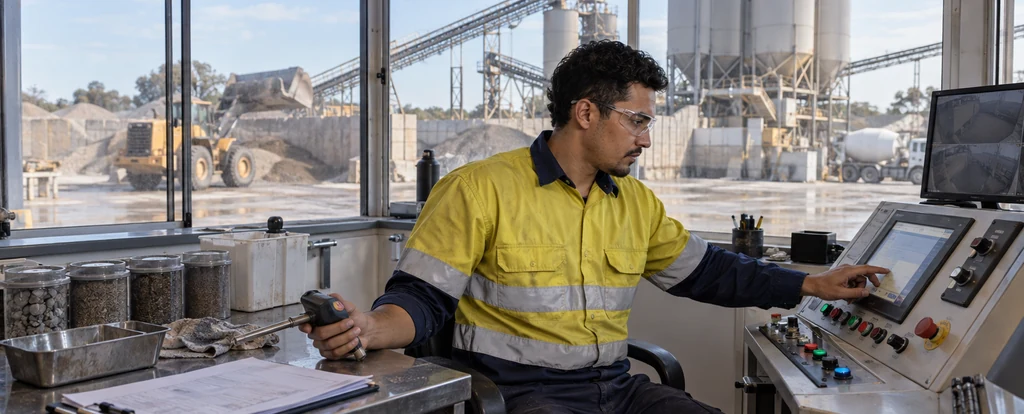
Concrete batching plant operators weigh and mix cement, sand, aggregate and water to the design a job calls for, then load the trucks that take it to site.
- Median salary*
- $75,400
3.9%vs last year, before tax
- People employed
- 850
6.3%vs last year
- Projected growth*
- +1.5%
to 2035
- AI exposure*
- Moderate
- automation risk
- Average hours*
- 44/wk
+4h vs all jobs
- Shortage status*
- Not in shortage
national
Most of the work happens at a fixed batching plant beside a quarry, depot or concrete yard, where the operator runs the control panel and the loader that feeds the bins. It is a plant job rather than a driving or finishing one: truck drivers carry the load to site and concreters place it, while the batcher answers for what went into the drum. Because concrete is usually poured early, shifts often start well before dawn.
How much do concrete batching plant operators earn?
The median full-time salary for a concrete batching plant operator is $75,400 per annum, before tax, up $15,700 since 2018.
Pay depends on the roster and agreement you are on: shift work, night pours and weekend loads usually attract penalty rates, and larger suppliers tend to pay above the award. Experience with batching software and a front-end loader licence gives you more room to negotiate, and mining support or civil contractors usually pay more than a small ready-mix yard. Casual and labour hire operators can earn a higher hourly rate but lose paid leave, which is worth weighing against the base figure.
What does a concrete batching plant operator do day to day?
The list below is what fills most weeks; the exact mix shifts with seniority and whatever stage the current work is at.
- Reading mix designs and customer orders to set batch quantities
- Operating computerised batching panels to weigh and discharge materials
- Testing and adjusting for aggregate moisture, slump and temperature
- Coordinating truck dispatch and recording delivery dockets
- Cleaning, inspecting and carrying out basic plant maintenance
What skills do concrete batching plant operators need?
Employers look for plant and equipment operation, operations management, worksite safety management, backed by Command Alkon COMMANDbatch fluency and strong safety and compliance awareness.
Specialist skills
- Plant and equipment operation
- Operations management
- Worksite safety management
- Inventory management
- Process improvement
Software and tools
- Command Alkon COMMANDbatch
- Trimble Batch
- Systech batching controls
- Front-end loader
- Aggregate moisture probes
General skills
- Safety and compliance awareness
- Attention to detail
- Problem solving
Is the job growing?
About 850 people work as concrete batching plant operators in Australia, and employment is projected to grow 1.5% over the decade to 2035. That's modest growth: demand is steady rather than booming.
How do you become a concrete batching plant operator?
Here's the path most concrete batching plant operators take, step by step.
- 1Get a construction induction card and a loader licence
A White Card is required before you set foot on most sites, and a front-end loader licence such as the RIIMPO321F unit is the qualification batching yards look for, because the role feeds the bins as well as running the panel.
- 2Start as a yard hand or batcher's assistant
Many operators come in through the yard, loading trucks, sampling aggregates and learning the mix designs before they are trusted with the panel. It is paid work, and the quickest way to find out whether the pace and the shift pattern suit you.
- 3Learn the batching software on the job
Plants run on systems such as Command Alkon COMMANDbatch, Trimble Batch or Systech controls, and employers train new operators on their own setup. Being able to set up a mix, correct for moisture and troubleshoot a fault is what turns a yard hand into a batcher.
- 4Add a certificate III or IV if you want to move up
About 34% of people in the role hold a certificate III or IV, often in concreting, civil construction or surface extraction operations, taken through TAFE or with an employer's support. It is rarely needed to start, but it helps for leading hand and plant supervisor roles.
- 5Move into shift supervision or plant management
From there the usual step is running a shift or a small plant, which means owning the dispatch schedule, aggregate stock, safety checks and the maintenance that keeps the plant available.
Ready to apply as a concrete batching plant operator?
Whether you're working toward becoming a concrete batching plant operator or already are one and want a hand with the next step (sharpening your resume for ATS screening, tightening your cover letter, or knowing what you'll actually be asked at interview), here are examples grounded in this specific role, not generic templates.
What jobs can a concrete batching plant operator move to?
Moving into Bulk Materials Handling Operator typically comes with the biggest pay rise, worth $30,700 a year more on average.
| Move to | Typical pay change | Overlap | Retraining |
|---|---|---|---|
| Bulk Materials Handling Operator Bulk materials handling builds on the batching operator's experience with material flow and plant equipment, requiring a short course for the specific systems. | +$30,700 | 59% | short course |
| Loader Operator Operating loaders and handling bulk materials carries directly across to loader operation, with minimal retraining needed for the different machine controls. | +$19,200 | 70% | minimal |
| Boiler Operator Process monitoring and plant operation skills transfer to boiler operation, with a short course needed for the boiler ticket and steam systems. | +$17,200 | 71% | short course |
| Concrete Pump Operator Concrete batching plant operators bring knowledge of concrete mixes and batching accuracy to pump operation, requiring a short course for the pump ticket. | +$15,600 | 50% | short course |
Moves are chosen from Jobs and Skills Australia's Data on Occupation Mobility, which follows income tax records between 2011-12 and 2020-21, together with entry requirements and skill overlap. A known move is one people were seen making in that data. Pay change compares median full-time pay for the two roles.
Who works as a concrete batching plant operator?
The typical concrete batching plant operator is 45 years old; 96% are men, 94% work full-time, and full-timers average 44 hours a week.
- 45
- Median age
- 4%
- Female share
- 94%
- Full-time
- +4h
- vs all-jobs avg
What's it like being a concrete batching plant operator?
The day runs to the pour schedule, so it is early starts, a burst of activity when trucks are queuing, and quieter stretches while you wait on the next order. Much of the work happens at a panel and on a loader, which suits people who like keeping a plant running well and getting a result they can measure. Demand comes from construction, so busy weeks and quiet ones are both normal.
What people like
- You can see the batch check out. A slump test either passes or it doesn't, so the feedback on your numbers comes back the same day.
- Your own plant to look after. Operators get to know their plant's quirks, run their own checks and clear small faults before they stop a pour.
- Early starts, early finishes. Concrete is placed in the morning where it can be, so a 5am start often means knocking off mid-afternoon.
- A small crew. A batching yard runs with a handful of people, so you deal with the same faces each day and handovers are short.
What people find hard
- Orders change mid-pour. A site can add a load, cancel one or switch the mix at short notice, and reworking the schedule at the panel is part of the shift.
- Wet stockpiles change the mix. Rain lifts the moisture in the sand and aggregate, so the numbers that worked yesterday need correcting again today.
- Weather can wash out the schedule. Pouring stops in heavy rain, which cancels loads and can turn a full shift into a short one.
- A lot of the week is spent on your feet. Full-time operators average around 44 hours a week, much of it at the panel, on the loader or climbing to the bins.
Based on our synthesis of professional-body surveys and public accounts of the role, not first-person verified reviews.
Which industries employ concrete batching plant operators?
Cement, lime and concrete product manufacturing employs the largest share of concrete batching plant operators, followed by Heavy and civil engineering construction.
Top employing industries
- 1Cement, lime and concrete product manufacturing
- 2Heavy and civil engineering construction
- 3Building construction
- 4Construction material wholesaling
- 5Mining support services
Ranked by employment share; the source doesn't publish an exact percentage per industry.
| Certificate III/IV | 34% | |
|---|---|---|
| Diploma / Advanced Diploma | 26% | |
| Bachelor degree | 20% | |
| Year 12 or below | 20% |
Will AI replace concrete batching plant operators?
Automation reaches a fair way into this job, because batching panels already weigh and sequence materials under software control and moisture probes feed readings straight into the system. What it does not remove is the operator's judgement about how a mix will behave on a wet day, or the need for someone who knows the plant well enough to catch a fault before it spoils a load. Most plants still expect a person at the panel through the pour.
Share of typical working time by exposure level
- Running the batching panelSoftware such as COMMANDbatch or Trimble Batch weighs and sequences the materials, so the operator mostly watches the screen, corrects faults and confirms each load before it discharges.30%high
- Correcting mixes for moisture, slump and temperatureA moisture probe gives a reading, but deciding how far to adjust the sand and water for a wet stockpile or a hot afternoon still comes down to the operator.25%low
- Inspecting and maintaining the plantClearing a blocked gate, greasing the mixer and checking the air lines are hands-on jobs, though some plants now flag likely faults from sensor data before the operator notices.25%low
- Coordinating dispatch and docketsDispatch systems allocate trucks and print dockets automatically, yet someone still has to juggle a late order, a truck that hasn't returned and a site that has changed its mix.20%moderate
Moves least exposed to AI
These career moves from concrete batching plant operator work are rated low for AI exposure:
- Concrete Pump Operator
Solid skill overlap (50%), short course to get there, and a low automation-risk profile.
- Loader Operator
High skill overlap (70%), little retraining to get there, and a low automation-risk profile.
Common questions about becoming a concrete batching plant operator
Straight answers to the questions people ask most.
How much do concrete batching plant operators earn?
$75,400 per annum, before tax, for full-time workers, though shift loadings and overtime move the yearly figure around. Plants run early and often on weekends, so penalty rates can make up a fair share of the total.
How do you become a concrete batching plant operator?
Most people start as a yard hand or batcher's assistant and learn the panel on the job, after getting a White Card and a front-end loader licence. Employers train new operators on their own batching software, and a certificate III in concreting (CPC30320) or civil construction helps later if you want a supervisory role.
Are concrete batching plant operators in demand?
Concrete batching plant operators are currently not in shortage, and employment is projected to grow 1.5% over the decade to 2035. About 850 people work in the role, and hiring follows construction activity, so openings tend to cluster where road, subdivision and commercial projects are running.
Will AI replace concrete batching plant operators?
Batching controls already automate much of the weighing and sequencing, and moisture probes feed readings straight into the system, so panel work is closer to monitoring than manual mixing. What holds the role at moderate exposure is everything around the screen: judging how a mix will behave on a wet day, keeping the plant running when a sensor or a gate faults, and reworking the schedule when a site changes its order. Employers still need someone on site who can make those calls.
What other jobs can a concrete batching plant operator move into?
The closest moves are into concrete pump operation ($15,600 more in pay), loader operation ($19,200 more) and bulk materials handling ($30,700 more), all of which build on the same plant and material handling experience. Pump work needs a short course for the pump licence, while loader operation uses the machine you already drive at the bins.
Related roles
- Concrete Pump Operator
- Loader Operator
- Bulk Materials Handling Operator
- Boiler Operator
- Loader Operator
- Roller Operator
Not sure this is you? Take the career quiz and get a ranked shortlist of roles that fit how you like to work.