Cosmetic Nurse
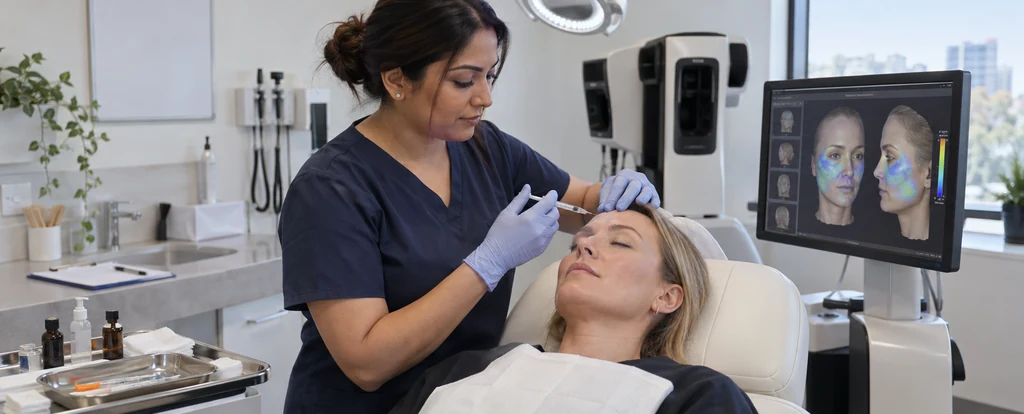
Cosmetic nurses deliver non-surgical treatments such as anti-wrinkle injections, dermal fillers and laser therapy, working with clients who want to change how their skin looks.
- Median salary*
- $101,400
3.9%vs last year, before tax
- People employed*
- 3,200
0.0%vs last year
- Projected growth*
- +12%
to 2035
- AI exposure*
- Moderate
- automation risk
- Average hours*
- 38/wk
−2h vs all jobs
- Shortage status*
- Not in shortage
national
Most cosmetic nurses work in private aesthetic clinics, with some based in dermatology practices or medical centres that offer skin treatments. The role sits close to beauty therapy, but the difference is the clinical training behind it: cosmetic nurses take a health history, judge what is safe to treat and manage complications such as a blocked blood vessel after filler. They usually work in a small team with a supervising doctor, and many combine clinic days with a second nursing job.
How much do cosmetic nurses earn?
The median full-time salary for a cosmetic nurse is $101,400 per annum, before tax, up $21,100 since 2018.
How you are engaged matters as much as experience here. Casual and contractor nurses are often paid per treatment or a share of the clinic fee, so a full booking sheet earns more than a quiet one, and some clinics add commission on product packages. Employed nurses in dermatology or hospital settings usually sit on nursing awards with penalty rates, while nurses with a steady client following can negotiate higher rates for injectable work.
What does a cosmetic nurse do day to day?
The list below is what fills most weeks; the exact mix shifts with seniority and whatever stage the current work is at.
- Assessing a client's health history, medications and expectations before treatment
- Administering anti-wrinkle injections and dermal fillers
- Running laser, IPL and skin-needling treatments
- Managing complications such as bruising, swelling or a blocked blood vessel
- Recording treatment notes and consent, and following up with clients afterwards
What skills do cosmetic nurses need?
Employers look for patient care and support, clinical assessment and treatment, medication management, backed by Cliniko fluency and strong client relationships and advisory.
Specialist skills
- Patient care and support
- Clinical assessment and treatment
- Medication management
- Infection control and hygiene
- Care planning and coordination
Software and tools
- Cliniko
- Pracsoft
- MedicalDirector
- VECTRA 3D imaging
- Cutera laser systems
General skills
- Client relationships and advisory
- Attention to detail
- Empathy and interpersonal care
Is the job growing?
About 3,200 people work as cosmetic nurses in Australia, and employment is projected to grow 12% over the decade to 2035. That's healthy, above-average growth, and the role should stay in solid demand.
How do you become a cosmetic nurse?
Here's the path most cosmetic nurses take, step by step.
- 1Become a registered nurse
Complete a Bachelor of Nursing, usually three years full time, and register with the Nursing and Midwifery Board of Australia through AHPRA. Registration is the base requirement, because cosmetic clinics hire nurses rather than beauty therapists for injectable and laser work.
- 2Build general nursing experience
Spend at least a year or two in a hospital, general practice or surgical setting. Injectables carry real risks, and the assessment skills you build on a ward, taking histories and noticing when something is wrong, are what let you screen clients safely.
- 3Train in aesthetic medicine
Most nurses complete a short course or postgraduate certificate in cosmetic nursing, covering facial anatomy, injectable technique, complication management and laser safety. Training is often run by private providers or device companies, and some employers offer supervised in-house programs.
- 4Meet the requirements for laser and injectable work
Laser and IPL use is regulated by state and territory health departments, and the training or licensing required differs between them, so check the rules where you plan to work. Injectable products are prescription medicines, so treatment happens under a prescriber's order or medical delegation in most clinics.
- 5Keep your registration and insurance current
Ongoing AHPRA registration, annual continuing professional development and professional indemnity insurance are continuing costs of the role, and clinics ask for them before you start.
Ready to apply as a cosmetic nurse?
Whether you're working toward becoming a cosmetic nurse or already are one and want a hand with the next step (sharpening your resume for ATS screening, tightening your cover letter, or knowing what you'll actually be asked at interview), here are examples grounded in this specific role, not generic templates.
What jobs can a cosmetic nurse move to?
Moving into Registered Nurse typically comes with the biggest pay rise, worth $12,600 a year more on average.
| Move to | Typical pay change | Overlap | Retraining |
|---|---|---|---|
| Registered Nurse Uses registered nursing assessment and clinical skills to return to general nursing practice. | +$12,600 | 80% | minimal |
| Mental Health Nurse Transfers registered nursing assessment and communication skills to mental health care, with specialist preparation. | +$12,600 | 52% | short course |
| Remote Area Nurse Builds on registered nursing assessment and treatment skills for remote primary care, with short preparation. | +$10,400 | 60% | short course |
| Diabetes Educator Uses registered nursing knowledge and patient education skills to support diabetes care, with short preparation. | +$2,600 | 59% | short course |
Moves are chosen from Jobs and Skills Australia's Data on Occupation Mobility, which follows income tax records between 2011-12 and 2020-21, together with entry requirements and skill overlap. A known move is one people were seen making in that data. Pay change compares median full-time pay for the two roles.
Who works as a cosmetic nurse?
The typical cosmetic nurse is 38 years old; 92% are women, 60% work full-time, and full-timers average 38 hours a week.
- 38
- Median age
- 92%
- Female share
- 60%
- Full-time
- −2h
- vs all-jobs avg
What's it like being a cosmetic nurse?
The work runs on booked appointments, so days are structured and largely predictable, with most of your time spent face to face with clients. The pressure comes from getting a precise result on delicate tissue and from managing expectations, since people often arrive with a photo or a friend's result in mind. Nurses who like combining hands-on technique with quick visible results and long-term relationships with regular clients tend to settle into it well.
What people like
- You see the result quickly. A client can look in the mirror at the end of a thirty-minute treatment and see the change, which is rare in nursing.
- Appointments run to a schedule. Sessions are booked in advance and rarely run past their slot, so you know the shape of your day and finish on time far more often than on a ward.
- Technique keeps developing. New devices, techniques and product lines arrive each year, and your hands get better with repetition.
- You build a client base. Regular clients return every few months, so you get to know people over years rather than seeing them once.
What people find hard
- Some requests are outside safe practice. Clients ask for filler volumes or repeat treatments that are not in their interest, and declining takes tact and firmness.
- Complications can be serious. A blocked blood vessel from filler is a medical emergency, so you need to know the protocol and stay calm while you manage it.
- Fine, repetitive hand work. Hours of injecting, lasering and standing take a physical toll on your neck, back and hands.
- Retail pressure in some clinics. Commission structures and package sales can pull the job towards selling, which does not suit every nurse.
Based on our synthesis of professional-body surveys and public accounts of the role, not first-person verified reviews.
Which industries employ cosmetic nurses?
Specialist medical services employs the largest share of cosmetic nurses, followed by General practice medical services.
Top employing industries
- 1Specialist medical services
- 2General practice medical services
- 3Hospitals
- 4Personal care and beauty services
Ranked by employment share; the source doesn't publish an exact percentage per industry.
| Bachelor degree | 52% | |
|---|---|---|
| Postgraduate | 26% | |
| Diploma / Advanced Diploma | 13% | |
| Other | 9% |
Will AI replace cosmetic nurses?
AI and automation have a moderate reach into cosmetic nursing. Consultation software and 3D imaging tools can map a face, simulate a result and record measurements, and clinic systems write up notes and send aftercare messages, which changes how plans are presented and tracked. The treatment itself, injecting, lasering and managing a complication, stays in your hands.
Share of typical working time by exposure level
- Administering injectables and fillersPlacement, volume and technique depend on facial anatomy and feel, and no device can inject a patient.30%low
- Laser, IPL and skin-needling treatmentsDevices have settings and safety cut-offs, but choosing parameters for a client's skin type and reading their reaction during treatment is clinical judgement.30%low
- Consultation and treatment planningImaging and simulation software can show a client a likely result, but you still judge what is safe and appropriate for their face and history.20%moderate
- Client records, consent and follow-upTemplates, photo storage and automated aftercare messages do much of this work, though you still confirm consent and check how a client is healing.20%high
Moves least exposed to AI
These career moves from cosmetic nurse work are rated low for AI exposure:
- Registered Nurse
High skill overlap (80%), little retraining to get there, and a low automation-risk profile.
- Remote Area Nurse
High skill overlap (60%), short course to get there, and a low automation-risk profile.
- Diabetes Educator
Solid skill overlap (59%), short course to get there, and a low automation-risk profile.
- Mental Health Nurse
Solid skill overlap (52%), short course to get there, and a low automation-risk profile.
Common questions about becoming a cosmetic nurse
Straight answers to the questions people ask most.
How much does a cosmetic nurse earn?
Cosmetic nurses earn a median of $101,400 per year before tax, and how you are paid matters as much as the figure. Casual and contractor nurses are often paid per treatment or a share of the clinic fee, while employed nurses usually have a base rate plus commission on product sales. Public hospital and dermatology roles generally follow nursing award rates, including weekend penalties.
How do you become a cosmetic nurse?
You need to be a registered nurse first, which means a Bachelor of Nursing and registration with AHPRA. From there, most nurses spend a year or two in hospital or general practice, then complete a short course or postgraduate certificate in aesthetic medicine before moving into a clinic.
Are cosmetic nurses in demand?
Cosmetic nurses are currently not in shortage, and employment is projected to grow 12% over the decade to 2035. Aesthetic work is concentrated in private city clinics, so openings tend to appear there rather than in hospitals, and most roles prefer nurses who already have injectable experience.
Will AI replace cosmetic nurses?
AI reaches into parts of this job but not the treatment itself. Imaging and simulation software helps assess skin and show a client a likely result, and clinic systems draft notes and aftercare messages, while injecting, lasering and managing a complication remain hands-on and regulated work.
What can cosmetic nurses move into?
Many return to general nursing as a registered nurse, since the assessment and patient care skills carry over and registered nursing pays $12,600 more. Remote area nursing is another option with a short course of preparation, drawing on the same treatment and client education skills.
Do you need a nursing degree to work in aesthetics?
Yes, if you want to inject or operate lasers. Injectable products are prescription medicines and laser use is regulated, so clinics need a registered or enrolled nurse for that work, while beauty therapists without a nursing qualification are limited to non-medical treatments.
Related roles
Not sure this is you? Take the career quiz and get a ranked shortlist of roles that fit how you like to work.