Costume Maker
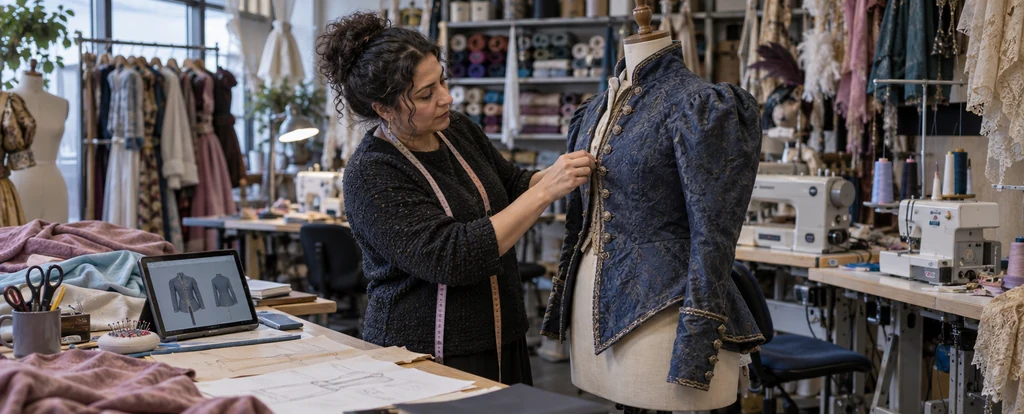
Costume makers cut, sew and fit the garments that performers wear on stage and screen.
- Median salary*
- $65,000
3.7%vs last year, before tax
- People employed*
- 1,800
0.0%vs last year
- Projected growth*
- +2%
to 2035
- AI exposure*
- Moderate
- automation risk
- Average hours*
- 40/wk
matches all-jobs average
- Shortage status*
- Not in shortage
national
Costume makers work in wardrobe departments for theatre, film, television and opera, and in costume hire and museum collections. They take a designer's sketches and a performer's measurements and turn them into finished garments, usually within a set budget and a fixed production schedule. The job is distinct from costume design, which sets the look; makers are the people who cut, construct and fit it.
How much do costume makers earn?
The median full-time salary for a costume maker is $65,000 per annum, before tax, up $13,900 since 2018.
Where you work shapes the rate more than anything else, with film and television productions and large performing arts companies usually paying more than small theatre and costume hire. Rates are often set per production or per week under an enterprise agreement, costume houses tend to pay hourly, and freelance makers carry the cost of quoting, sourcing and admin time between jobs.
What does a costume maker do day to day?
The list below is what fills most weeks; the exact mix shifts with seniority and whatever stage the current work is at.
- Reading design sketches, briefs and period references to plan each garment
- Measuring performers and drafting or grading patterns to fit them
- Cutting and sewing garments in fabric, trim and specialty materials
- Fitting costumes on performers through rehearsals or shoots and altering them
- Sourcing fabrics and trims, and repairing or restocking costumes between productions
What skills do costume makers need?
Employers look for craft and handmade production, visual design, creative software production, backed by CLO3D fluency and strong attention to detail.
Specialist skills
- Craft and handmade production
- Visual design
- Creative software production
- Project management
Software and tools
- CLO3D
- Adobe Illustrator
- Adobe Photoshop
- Industrial sewing machine
- Overlocker
General skills
- Attention to detail
- Time and deadline management
- Written communication
Is the job growing?
About 1,800 people work as costume makers in Australia, and employment is projected to grow 2% over the decade to 2035. That's modest growth: demand is steady rather than booming.
How do you become a costume maker?
Here's the path most costume makers take, step by step.
- 1Learn to sew to a professional standard
Construction, fit and finishing take years of practice, so start with school textiles, evening classes or a Certificate III in Applied Fashion Design and Technology at TAFE, and sew to a deadline rather than for fun.
- 2Study costume or design for performance
A diploma or degree in costume or design for performance teaches period construction, tailoring and fabric handling; about 38% of people working as costume makers hold a bachelor degree, though a diploma and a strong portfolio can get you started.
- 3Get backstage and on-set experience
Volunteer or take paid work with community theatre, student films and independent productions, and build contacts with wardrobe and crew; wardrobe assistant and costume standby roles are the usual way in.
- 4Keep a portfolio and choose a specialism
Photograph everything you make and note what you did on each piece, then develop a specialism such as period tailoring, millinery, costume ageing or dancewear, which is what gets you called back.
Ready to apply as a costume maker?
Whether you're working toward becoming a costume maker or already are one and want a hand with the next step (sharpening your resume for ATS screening, tightening your cover letter, or knowing what you'll actually be asked at interview), here are examples grounded in this specific role, not generic templates.
What jobs can a costume maker move to?
Moving into Textile Designer typically comes with the biggest pay rise, worth $13,000 a year more on average.
| Move to | Typical pay change | Overlap | Retraining |
|---|---|---|---|
| Textile Designer Costume makers understand fabric, colour and drape, but need further study to design textiles. | +$13,000 | 88% | reskill |
| Costume Designer Costume makers already cut and fit to a character brief, so the step up is leading the design. | +$5,200 | 78% | minimal |
| Clothing Patternmaker Costume makers already work with patterns and fit, and can retrain for technical patternmaking in garment production. | +$0 | 36% | reskill |
| Milliner Costume makers hand-sew and shape materials, and can specialise in hats through a short course. | −$10,400 | 53% | short course |
Moves are chosen from Jobs and Skills Australia's Data on Occupation Mobility, which follows income tax records between 2011-12 and 2020-21, together with entry requirements and skill overlap. A known move is one people were seen making in that data. Pay change compares median full-time pay for the two roles.
Who works as a costume maker?
The typical costume maker is 39 years old; 74% are women, 54% work full-time, and full-timers average 40 hours a week.
- 39
- Median age
- 74%
- Female share
- 54%
- Full-time
- +0h
- vs all-jobs avg
What's it like being a costume maker?
The job follows production schedules rather than a standard week: quieter stretches of research and construction give way to fittings, previews and filming, when wardrobe rooms run late. Most makers work on contract across theatre seasons, screen productions and costume houses, so steady work depends on reputation and contacts. The people who enjoy it tend to like solving a defined problem with their hands and then seeing it worn in front of an audience.
What people like
- Seeing the work on a performer. A costume that fits and reads from the back row is the visible result of weeks of cutting and fitting, and screen work means you can watch it again later.
- Every production brings a different period. One job might be Elizabethan doublets and the next a mid-century police drama, which keeps the research and the problem solving varied.
- Working with fabric and hand skills. Wool, silk, leather, boning and dye each behave differently, and the craft knowledge built up over a career is what separates a good maker from a competent sewer.
- Close work with designers and performers. Fittings put you in the room with the person wearing the costume, and a good fitting solves a problem for the garment and the performance at once.
What people find hard
- The work comes in projects. Contracts end when a season closes or a shoot wraps, so there are gaps to plan for and constant quoting, invoicing and chasing of the next job.
- Pressure in the final week. Dress rehearsals and the first days of a shoot bring last-minute alterations, and the opening night cannot be moved because a costume is not right.
- Repetition in the work. Large productions need multiples of the same garment, and a lot of time goes into uniforms, repairs and alterations rather than the showpieces.
- Physical conditions. Wardrobe rooms are often cramped and hot, and the work involves long hours standing, lifting, pinning and hand sewing.
Based on our synthesis of professional-body surveys and public accounts of the role, not first-person verified reviews.
Which industries employ costume makers?
Motion picture and video production employs the largest share of costume makers, followed by Performing arts.
Top employing industries
- 1Motion picture and video production
- 2Performing arts
- 3Museums and cultural heritage
- 4Clothing and textile manufacturing
- 5Education and training
Ranked by employment share; the source doesn't publish an exact percentage per industry.
| Bachelor degree | 38% | |
|---|---|---|
| Diploma / Advanced Diploma | 24% | |
| Certificate III/IV | 20% | |
| Postgraduate | 10% | |
| Other | 8% |
Will AI replace costume makers?
AI and automation reach the middle of this job rather than the edges. Digital tools such as CLO3D, Illustrator and pattern-drafting software speed up design iteration, pattern grading and the paperwork around sourcing and budgets, and automated cutting tables help in larger workrooms, but none of that sews a garment that has to sit on a living performer under stage lights.
Share of typical working time by exposure level
- Cutting, sewing and finishing garmentsIndustrial machines, overlockers and specialty feet speed up construction, but seams, boning, beading and hand finishing are still done by a person at a machine or a needle.35%low
- Fittings, alterations and repairsFittings happen on a moving performer in a rehearsal room or on set, and the calls on pinning, letting out and quick repairs are made in the moment.25%low
- Reading the brief and researching the periodImage search, digital archives and AI mood boards make gathering references much quicker, but deciding what suits the character and the budget is still a judgement call.20%moderate
- Drafting patterns and grading sizesCLO3D and digital pattern software can draft, grade and simulate a garment on screen before any fabric is cut, which cuts down on trial toiles, though the final fit is still set on the performer.20%moderate
Moves least exposed to AI
These career moves from costume maker work are rated low for AI exposure:
- Milliner
Solid skill overlap (53%), short course to get there, and a low automation-risk profile.
Common questions about becoming a costume maker
Straight answers to the questions people ask most.
How much do costume makers earn?
Costume makers earn a median of $65,000 per annum, before tax, as a guide for full-time workers. What moves that figure is the sector and the contract: screen productions and large performing arts companies generally pay more than small theatre and hire work, and freelance makers often earn less over a year than their day rate suggests once gaps between contracts are counted.
How do you become a costume maker?
Most people come through a TAFE or university course in costume or fashion, then start as a wardrobe assistant or costume standby on productions. A portfolio of finished garments, with photographs and a note of what you did on each piece, matters as much as the qualification.
Are costume makers in demand?
Costume makers are currently not in shortage, and employment is projected to grow 2% over the decade to 2035. About 1,800 people work in the occupation, and hiring moves with how many theatre seasons, films and television productions are funded in a given year, so work varies from one year to the next.
Will AI replace costume makers?
AI is changing the early stages of the work rather than the making itself. Tools such as CLO3D and digital pattern software can draft, grade and simulate a garment on a screen, which speeds up iteration and client approvals, but the physical construction, fitting and finishing still happen at a machine and on a performer.
What can costume makers move into?
Experienced makers often step up to costume designer, which pays $5,200 more and means leading the look rather than building it. Textile design pays $13,000 more and suits makers who enjoy fabric and colour, but it needs further study. Many also build their own business in commissions, alterations and hire, which is often where earnings grow as contacts accumulate.
Do you need a degree to be a costume maker?
No, but formal training helps. A TAFE certificate or diploma in costume or applied fashion teaches period construction and tailoring that are hard to learn on your own, and the contacts made during study often lead to first jobs.
Related roles
Not sure this is you? Take the career quiz and get a ranked shortlist of roles that fit how you like to work.