Dispatcher
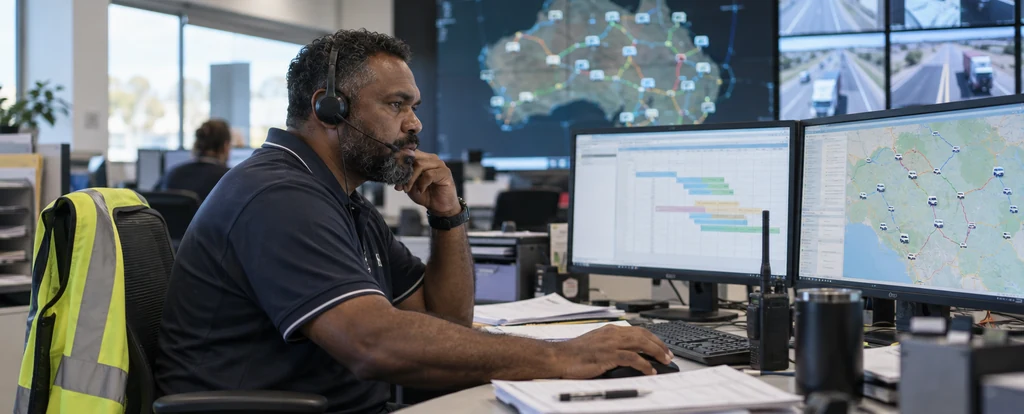
Dispatchers schedule vehicles, drivers and loads so freight and passenger services run to time, and they rework the plan when delays or urgent jobs come in.
- Median salary*
- $70,200
3.7%vs last year, before tax
- People employed
- 3,600
0.0%vs last year
- Projected growth
- +10.6%
to 2035
- AI exposure*
- Moderate
- automation risk
- Average hours
- 44/wk
+4h vs all jobs
- Shortage status
- Not in shortage
national
Dispatchers work from depot offices, control rooms and freight operations centres, allocating jobs and tracking runs as they happen. The day is spent coordinating drivers in real time rather than preparing documentation, which is what separates the role from a shipping clerk's. Road freight, courier companies and public transport operators are the main employers, and most dispatch teams work shifts to cover early starts and late finishes.
How much do dispatchers earn?
The median full-time salary for a dispatcher is $70,200 per annum, before tax, up $14,500 since 2018.
Pay in dispatch depends heavily on the roster, because shift work in freight and public transport brings penalty rates for nights, weekends and public holidays. Larger operators set rates through enterprise agreements that also cover overtime, while smaller courier and freight businesses often negotiate with each person individually.
What does a dispatcher do day to day?
The list below is what fills most weeks; the exact mix shifts with seniority and whatever stage the current work is at.
- Scheduling vehicles, drivers and loads to meet delivery and service windows
- Allocating jobs and monitoring runs in real time through transport management systems and GPS tracking
- Talking drivers through changes over the radio or phone when a run falls behind or a priority job comes in
- Updating customers and depot staff on delays and agreeing a new time where one is needed
- Keeping run sheets, dispatch records and compliance documentation up to date
What skills do dispatchers need?
Employers look for operations management, inventory management, backed by Transport management system (TMS) fluency and strong time and deadline management.
Specialist skills
- Operations management
- Inventory management
Software and tools
- Transport management system (TMS)
- MTData
- Maximas
- Microsoft Excel
- GPS and telematics fleet tracking
General skills
- Time and deadline management
- Written communication
- Problem solving
- Customer service
- Attention to detail
Is the job growing?
About 3,600 people work as dispatchers in Australia, and employment is projected to grow 10.6% over the decade to 2035. That's healthy, above-average growth, and the role should stay in solid demand.
How do you become a dispatcher?
Here's the path most dispatchers take, step by step.
- 1Get a grounding in transport and logistics
A Certificate III in Transport and Logistics or a Certificate IV in Supply Chain Operations at TAFE covers scheduling, load restraint, fatigue rules and freight documentation. About 28% of people working as dispatchers hold a certificate III or IV, though many enter with Year 12 and learn the systems on the job.
- 2Learn the dispatch platforms
Employers work with transport management systems such as MTData and Maximas, plus GPS and telematics tracking. Vendor training and short courses are the quickest way to become useful on the specific system a depot runs.
- 3Start in a role close to the work
Call centres, freight offices, courier depots and driving all lead into dispatch, because they build the phone manner, geography and documentation habits the job needs. Customer service experience counts for a lot here, since much of the day is spent talking to drivers and clients.
- 4Add licences and operational knowledge
A heavy vehicle licence, a forklift licence or a White Card can widen the roles you are considered for and help you understand what drivers are dealing with. Knowing fatigue management and mass and loading rules makes your scheduling decisions more credible.
- 5Move into coordination or supervision
After a few years, experienced dispatchers take on shift leadership, fleet coordination or operations supervision, often moving between freight, courier and public transport employers as they go.
Ready to apply as a dispatcher?
Whether you're working toward becoming a dispatcher or already are one and want a hand with the next step (sharpening your resume for ATS screening, tightening your cover letter, or knowing what you'll actually be asked at interview), here are examples grounded in this specific role, not generic templates.
What jobs can a dispatcher move to?
Moving into Shipping Clerk typically comes with the biggest pay rise, worth $18,600 a year more on average.
| Move to | Typical pay change | Overlap | Retraining |
|---|---|---|---|
| Shipping Clerk Dispatchers bring scheduling and freight coordination, but shipping documentation and customs work need further study.Known move | +$18,600 | 30% | reskill |
| Communications Operator Dispatchers bring radio procedure and vehicle coordination, which carry into emergency communications with a short course.Known move | +$5,200 | 57% | short course |
Moves are chosen from Jobs and Skills Australia's Data on Occupation Mobility, which follows income tax records between 2011-12 and 2020-21, together with entry requirements and skill overlap. A known move is one people were seen making in that data. Pay change compares median full-time pay for the two roles.
Who works as a dispatcher?
The typical dispatcher is 39 years old; 69% are women, 76% work full-time, and full-timers average 44 hours a week.
- 39
- Median age
- 69%
- Female share
- 76%
- Full-time
- +4h
- vs all-jobs avg
What's it like being a dispatcher?
Dispatch work has a steady rhythm that breaks whenever something goes wrong, and something usually does. You are making decisions all day with incomplete information, then living with the consequences when a run is late. People who like the puzzle of fitting jobs to vehicles, and who stay calm on the phone, tend to settle into it well.
What people like
- Every day is different. Weather, breakdowns, road closures and urgent customer requests mean the plan you start with rarely survives the morning, so there is little chance to get bored.
- You see the result of your decisions. A load that gets there on time, a driver who makes it home within hours, or a customer who is warned early enough to adjust are all outcomes you can trace back to a call you made.
- Drivers and customers rely on you. Dispatch sits at the centre of the operation, which means your knowledge of the fleet, the routes and the regular customers becomes genuinely valuable to the business.
- The skills carry across industries. Scheduling, radio procedure and live problem solving transfer into emergency communications, rail and logistics coordination, so dispatch experience opens more doors than it appears to.
What people find hard
- Everything lands at once. Peak periods, bad weather and a vehicle breakdown tend to arrive together, and you are the person fielding the phone calls from drivers and customers at the same time.
- Shifts run early and late. Dispatch desks are staffed across long operating hours, so nights, weekends and public holidays are part of most rosters rather than the exception.
- You absorb other people's frustration. When a delivery is late, the driver and the customer both want an answer from you, even when the cause was outside your control.
- Long stretches at a screen. The work is desk-based and headset-based for most of the shift, which can be draining on days when the schedule is running smoothly and the hours pass slowly.
Based on our synthesis of professional-body surveys and public accounts of the role, not first-person verified reviews.
Which industries employ dispatchers?
Health Care and Social Assistance employs the largest share of dispatchers, followed by Public Administration and Safety.
Top employing industries
- 1Health Care and Social Assistance
- 2Public Administration and Safety
- 3Information Media and Telecommunications
Ranked by employment share; the source doesn't publish an exact percentage per industry.
| Certificate III/IV | 28.3% | |
|---|---|---|
| Year 12 or below | 26.8% | |
| Diploma / Advanced Diploma | 19.1% | |
| Bachelor degree | 17.3% | |
| Postgraduate | 4% |
Will AI replace dispatchers?
Dispatch sits in the middle of the range. Scheduling software already ranks the best vehicle for a job and telematics updates positions without anyone calling in, which removes much of the manual tracking. What machines do not handle is the messy end of the day: deciding what to drop when a truck breaks down, talking a driver through a detour, and telling a customer the truth about a delay.
Share of typical working time by exposure level
- Allocating jobs to vehicles and driversScheduling software can rank and assign routine runs automatically, though someone still decides when a load is awkward, a driver is close to their hours, or a customer needs a specific vehicle.30%moderate
- Taking calls and radio traffic from driversA driver reporting a blocked road, a depot asking for a load swap and a customer chasing a delivery all need a person to weigh the options and answer in the moment.30%low
- Tracking vehicles and updating run statusGPS and telematics report positions continuously, so the manual work has shifted from plotting progress to checking the exceptions the system flags.25%high
- Keeping run sheets and compliance recordsSystems generate much of the paperwork, but entries still have to be checked against fatigue rules, load records and what actually happened on the run.15%moderate
Common questions about becoming a dispatcher
Straight answers to the questions people ask most.
How much do dispatchers earn?
Dispatchers earn a median of $70,200 per year before tax. Roster patterns and penalty rates move that figure more than experience does in the early years, and larger operators with enterprise agreements usually pay above the smaller courier and freight businesses.
How do I become a dispatcher?
There is no single qualification, and many dispatchers start with Year 12 and learn the systems on the job. A Certificate III in Transport and Logistics helps, but experience in a call centre, freight office, courier depot or behind the wheel is often what gets you the first dispatch role.
Are dispatchers in demand?
Dispatchers are currently not in shortage, and employment is projected to grow 10.6% over the decade to 2035. If you are weighing it up, related experience in freight, customer service or driving is the usual way in.
Will AI replace dispatchers?
Not entirely, but the role is moderately exposed. Scheduling software already proposes efficient allocations and telematics feeds vehicle positions straight into the system, which removes a lot of manual tracking. The judgement calls remain human: reworking a plan around a breakdown, talking a driver through a change, and giving a customer a straight answer about a delay.
What can dispatchers move into?
Shipping clerk is a common move and pays $18,600 more, though documentation and customs work need further study. Communications operator is closer in skill terms at $5,200 more, and is usually reached with a short course.
Do dispatchers work shifts?
Most do, because depots and transport operators run across long hours and someone has to cover the desk. Full-time dispatchers average 44 hours a week, and about 76% work full time.
Related roles
- Shipping Clerk
- Communications Operator
- Communications Operator
- Call Centre Operator
- Logistics Coordinator
- Railway Station Assistant
Not sure this is you? Take the career quiz and get a ranked shortlist of roles that fit how you like to work.