Railway Station Assistant
Railway station assistants look after the people moving through a train station, selling fares, answering questions and keeping platforms safe.
- Median salary*
- $67,600
3.5%vs last year, before tax
- People employed
- 2,900
0.0%vs last year
- Projected growth
- +4.2%
to 2035
- AI exposure*
- Moderate
- automation risk
- Average hours
- 42/wk
+2h vs all jobs
- Shortage status*
- Not in shortage
national
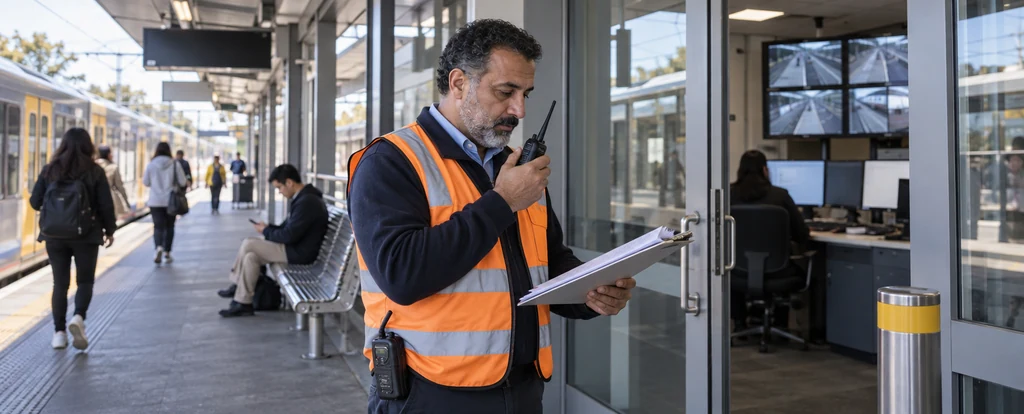
Railway station assistants work on the concourse and platforms of a train station rather than on board the trains. They sell and check fares, help passengers with timetables and accessibility needs, watch crowds on the platform and coordinate the response when a service is delayed or cancelled. Larger stations run a team of them alongside a station manager, while smaller or regional stations may leave one person to cover ticketing and safety together.
How much do railway station assistants earn?
The median full-time salary for a railway station assistant is $67,600 per annum, before tax, up $14,400 since 2018.
Pay depends heavily on the enterprise agreement you are employed under, because station staff in most capitals are covered by state rail agreements rather than one national award. Rosters matter just as much: early starts, night shifts, weekends and public holidays usually attract loadings, so two people with the same job title can take home noticeably different amounts. Casual and part-time roles are common at smaller stations, which changes both the hours and the total earnings.
What does a railway station assistant do day to day?
The list below is what fills most weeks; the exact mix shifts with seniority and whatever stage the current work is at.
- Selling and checking fares, topping up cards and helping passengers use fare machines and gates
- Answering questions about timetables, platforms, connections and accessibility options
- Watching platforms, concourses and entry points for crowding, unattended bags or behaviour that needs calming
- Making station announcements and updating information displays when services are delayed or a platform changes
- Reporting faults, cleaning up spills and working with train control or emergency services during an incident
What skills do railway station assistants need?
Employers look for operations management, backed by Ticketing systems (e.g., Opal, Myki) fluency and strong customer service.
Specialist skills
- Operations management
Software and tools
- Ticketing systems (e.g., Opal, Myki)
- Public address systems
- Two-way radios
- CCTV monitoring software
- Rail operations software
General skills
- Customer service
- Written communication
- Problem solving
- Safety and compliance awareness
- Attention to detail
Is the job growing?
About 2,900 people work as railway station assistants in Australia, and employment is projected to grow 4.2% over the decade to 2035. That's modest growth: demand is steady rather than booming.
How do you become a railway station assistant?
Here's the path most railway station assistants take, step by step.
- 1Finish Year 12 or an equivalent
Most rail operators ask for Year 12 as a minimum. A Certificate II or III in rail operations or in customer service can strengthen an application, but it is not usually required to be considered.
- 2Apply directly to a rail operator
Station assistant jobs are advertised by the operator that runs the network, not through a central register. Recruitment typically includes aptitude and literacy testing, a medical check and a police check, and some states also require a working with children check.
- 3Complete the operator's induction and safety training
This training is paid and usually runs for several weeks, covering rail safety, emergency procedures, fare systems and how to handle difficult passengers before you are rostered on a platform.
- 4Hold a current first aid certificate
Many operators require first aid before your first shift, and it matters on a platform where you may be the first person at the scene of an incident.
- 5Use the operator's internal training to move up
Rail operators run their own pathways into conductor, station manager, train control and driving roles, and internal applicants are usually considered first.
Ready to apply as a railway station assistant?
Whether you're working toward becoming a railway station assistant or already are one and want a hand with the next step (sharpening your resume for ATS screening, tightening your cover letter, or knowing what you'll actually be asked at interview), here are examples grounded in this specific role, not generic templates.
What jobs can a railway station assistant move to?
Moving into Train Driver typically comes with the biggest pay rise, worth $88,500 a year more on average.
| Move to | Typical pay change | Overlap | Retraining |
|---|---|---|---|
| Train Driver Railway station assistants know rail safety and passenger operations, and can train as drivers to move into higher-level train driving.Known move | +$88,500 | 50% | short course |
| Train Controller Railway station assistants can move into train control, applying their rail safety awareness to coordinate train movements.Known move | +$33,800 | 47% | short course |
| Railway Station Manager Railway station assistants can step up to manager, using their platform and passenger knowledge to supervise station operations.Known move | +$28,600 | 54% | short course |
| Security Guard Railway station assistants with safety and crowd management experience can retrain as security guards, a common next step.Known move | +$26,900 | 38% | reskill |
| Transport Conductor Railway station assistants bring passenger service and rail safety awareness to conductor work, a close move within rail operations.Known move | −$2,600 | 100% | minimal |
Moves are chosen from Jobs and Skills Australia's Data on Occupation Mobility, which follows income tax records between 2011-12 and 2020-21, together with entry requirements and skill overlap. A known move is one people were seen making in that data. Pay change compares median full-time pay for the two roles.
Who works as a railway station assistant?
The typical railway station assistant is 47 years old; 72% are men, 87% work full-time, and full-timers average 42 hours a week.
- 47
- Median age
- 28%
- Female share
- 87%
- Full-time
- +2h
- vs all-jobs avg
What's it like being a railway station assistant?
The job runs to a timetable, so the rhythm of a shift is set by the trains and the passengers they bring. A quiet mid-morning can turn into a full platform within minutes when a service is cancelled, and you are the person everyone turns to when it does. It suits people who stay calm in a crowd, like having a clear set of procedures to follow and would rather be on their feet among people than behind a desk.
What people like
- You can see the help land. Someone with a suitcase, a pram or a first day at a new school usually needs one clear answer, and you are the person who gives it.
- You learn the network properly. Knowing which platform, which exit and which connecting bus turns you into the person colleagues and passengers come to with a question.
- The work is set out for you. Rosters, procedures and safety rules are written down, so you know what a shift involves before it starts.
- Shifts can suit different lives. Early, late and weekend shifts are normal in rail, which can work well around study, family or a second job.
What people find hard
- Weather is part of the job. Open platforms and exposed concourses mean wind, rain and long stretches on your feet rather than a desk and a chair.
- Frustration gets directed at you. When a train is cancelled, you are the closest staff member in uniform, and some passengers take the delay out on whoever is standing there.
- Disruptions arrive all at once. A signal fault or a medical emergency means crowd control, announcements and replacement buses all have to happen at the same time.
- The roster covers every day of the year. Stations run on weekends and public holidays, so those shifts come around in turn rather than being a choice.
Based on our synthesis of professional-body surveys and public accounts of the role, not first-person verified reviews.
Which industries employ railway station assistants?
Transport, Postal and Warehousing employs the largest share of railway station assistants.
Top employing industries
- 1Transport, Postal and Warehousing
Ranked by employment share; the source doesn't publish an exact percentage per industry.
| Year 12 or below | 38.5% | |
|---|---|---|
| Certificate III/IV | 25.1% | |
| Bachelor degree | 13.7% | |
| Diploma / Advanced Diploma | 11.6% | |
| Postgraduate | 6.6% |
Will AI replace railway station assistants?
Automation has already taken over a good part of the counter work in this job. Smartcards, contactless payment, self-service fare machines and app-based alerts handle routine fares and timetable queries, so fewer passengers need a person for those. What remains is the physical, situational side: judging a crowded platform, helping someone who is lost or unwell, and taking charge when a service breaks down, none of which a system can do from a control room.
Share of typical working time by exposure level
- Platform and crowd safetyNoticing a platform filling up before it becomes dangerous, moving people along and checking on someone sitting alone is work that depends on being there.35%low
- Selling fares and helping with fare machinesContactless payment and self-service fare machines already handle most simple fares, so a station assistant is usually called in only when a card fails or a passenger needs help with a concession.25%high
- Passenger information and announcementsScreens and app alerts cover the routine timetable questions, but someone still has to explain in plain language which replacement bus to catch.20%moderate
- Disruption and emergency responseDirecting passengers away from an incident and briefing emergency services on arrival needs a person who watched it unfold.20%low
Common questions about becoming a railway station assistant
Straight answers to the questions people ask most.
How much do railway station assistants earn?
Full-time railway station assistants earn $67,600 a year before tax. What you actually take home depends on the enterprise agreement covering your employer, the shift loadings in your roster and whether you work full time, part time or casual.
How do I become a railway station assistant?
Apply directly to the rail operator that runs your city or regional network, usually with Year 12 behind you. The process involves aptitude testing, a medical and a police check, then several weeks of paid induction covering safety, fare systems and passenger service before you start on a platform.
Are railway station assistants in demand?
Railway station assistants are currently not in shortage, and employment is projected to grow 4.2% over the decade to 2035. With a workforce of about 2,900, openings come from staff turnover as much as from new positions, so operators tend to hire in intakes when they do recruit.
Will AI replace railway station assistants?
Not the whole job. Automated fare collection, contactless payment and app-based information have already taken over much of the routine fare and timetable work, which is why the role's exposure is moderate rather than low. Crowd management, helping someone who is confused or distressed, and taking charge during a disruption are still done by a person standing on the platform.
What can railway station assistants move into?
Transport conductor is a close move, since the passenger handling and safety work overlap almost completely and pay is $2,600 less. Station manager pays $28,600 more and uses the same platform knowledge with more responsibility, while train driving pays $88,500 more and needs a short training course through the operator.
What hours do railway station assistants work?
Average full-time hours are around 42 a week, and 87% of station assistants work full time. The rest are part time or casual, and almost everyone works a rotating roster that includes early starts, late finishes, weekends and public holidays.
Related roles
- Train Driver
- Transport Conductor
- Railway Station Manager
- Train Controller
- Security Guard
- Transport Conductor
Not sure this is you? Take the career quiz and get a ranked shortlist of roles that fit how you like to work.