Door-to-door Salesperson
Door-to-door salespersons call at homes across a set territory to sell products such as solar systems, internet plans and insurance, often on a base plus commission.
- Median salary*
- $54,600
3.8%vs last year, before tax
- People employed
- 3,000
0.0%vs last year
- Projected growth
- +7.8%
to 2035
- AI exposure*
- Moderate
- automation risk
- Average hours
- 42/wk
+2h vs all jobs
- Shortage status*
- Not in shortage
national
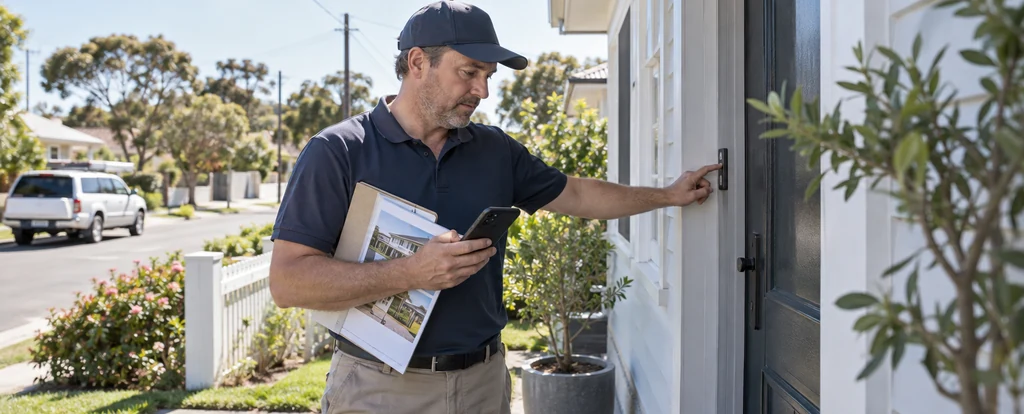
Door-to-door salespersons work on foot or from a vehicle, covering a territory of houses instead of waiting for customers to come to them. That is the main difference from retail sales, because every conversation starts with someone who was not expecting it. Pay commonly combines a small base with commission, and an area or team manager sets the daily call targets.
How much do door-to-door salespersons earn?
The median full-time salary for a door-to-door salesperson is $54,600 per annum, before tax, up $11,300 since 2018.
Pay in this job is usually a small base wage plus commission, so a strong month and a quiet one can look very different in the same role. Some employers are covered by an award or enterprise agreement that sets a floor, while others run commission-only arrangements, so it is worth asking how the base works before you accept an offer. The product you sell and the commission structure your employer uses move earnings more than length of service does.
What does a door-to-door salesperson do day to day?
The list below is what fills most weeks; the exact mix shifts with seniority and whatever stage the current work is at.
- Canvassing residential streets and knocking on doors to open a conversation
- Presenting product features, pricing and current offers to householders
- Answering objections and closing a sale or booking an in-home appointment
- Recording leads, outcomes and follow-up dates in a customer management system
- Meeting the daily call and appointment targets set by an area manager
What skills do door-to-door salespersons need?
Employers look for selling and negotiation, backed by Salesforce fluency and strong written communication.
Specialist skills
- Selling and negotiation
Software and tools
- Salesforce
- HubSpot CRM
- Zoho CRM
- Microsoft Excel
- Google Maps
General skills
- Written communication
- Customer service
- Client relationships and advisory
- Time and deadline management
- Digital literacy
- Problem solving
Is the job growing?
About 3,000 people work as door-to-door salespersons in Australia, and employment is projected to grow 7.8% over the decade to 2035. That's modest growth: demand is steady rather than booming.
How do you become a door-to-door salesperson?
Here's the path most door-to-door salespersons take, step by step.
- 1Check what local employers ask for
No formal qualification is required to start, and most employers look for Year 12 or equivalent. About 34% of people working in the role finished at Year 12 or below, so it is a genuine entry point without a degree.
- 2Apply to the companies that canvass in your area
Solar and energy retailers, telecommunications providers, insurance companies and charity fundraising agencies all recruit door-to-door teams, and entry usually includes a paid induction of a few days.
- 3Learn the product and the script on the job
Training is mostly in the field, where you pick up objection handling by running real conversations. Expect to be paired with an experienced seller or a team leader for the first weeks.
- 4Add a short course or certificate if you want to move up
A Certificate III or IV in Business, or a short sales course, helps for team leader and business-to-business roles, and some employers contribute to the cost. It is not needed to start.
- 5Get the checks and authorisations your product needs
Police checks and working with children checks are common for charity fundraising, and selling insurance products requires authorisation under an Australian Financial Services licence. Licensing rules vary by state, so confirm what applies where you work.
Ready to apply as a door-to-door salesperson?
Whether you're working toward becoming a door-to-door salesperson or already are one and want a hand with the next step (sharpening your resume for ATS screening, tightening your cover letter, or knowing what you'll actually be asked at interview), here are examples grounded in this specific role, not generic templates.
What jobs can a door-to-door salesperson move to?
Moving into Sales Manager typically comes with the biggest pay rise, worth $84,600 a year more on average.
| Move to | Typical pay change | Overlap | Retraining |
|---|---|---|---|
| Sales Manager Direct selling experience supports leading a sales team, but the management role requires broader planning and formal study.Known move | +$84,600 | 17% | reskill |
| Sales Representative Door-to-door salesperson brings face-to-face canvassing and closing skills, while the sales representative role adds account management and business-to-business selling.Known move | +$33,400 | 54% | short course |
| Call Centre Operator Telephone sales and objection handling carry into call centre work, with a short course for systems and compliance.Known move | +$10,400 | 50% | short course |
| Retail Assistant A door-to-door salesperson can apply customer service and product knowledge in retail, though the move needs retraining for store systems.Known move | +$9,900 | 25% | reskill |
| Telemarketer Direct selling skills transfer to telephone sales, though the work is script-led and often lower paid.Known move | −$5,300 | 58% | short course |
Moves are chosen from Jobs and Skills Australia's Data on Occupation Mobility, which follows income tax records between 2011-12 and 2020-21, together with entry requirements and skill overlap. A known move is one people were seen making in that data. Pay change compares median full-time pay for the two roles.
Who works as a door-to-door salesperson?
The typical door-to-door salesperson is 40 years old; 58% are women, 45% work full-time, and full-timers average 42 hours a week.
- 40
- Median age
- 58%
- Female share
- 45%
- Full-time
- +2h
- vs all-jobs avg
What's it like being a door-to-door salesperson?
The work has a clear rhythm: a territory or list, a run of doors, and a running tally of calls, appointments and sales. Much of the day is spent on your feet and outdoors, and the pressure comes from targets and from the fact that most conversations end in a refusal. People who settle into it tend to like the immediate feedback of commission and the freedom of working away from a desk.
What people like
- Feedback you can measure. Your numbers belong to you: calls made, appointments booked, sales closed, and commission lands in the next pay cycle.
- Time outdoors, away from a desk. You cover a territory on foot or by car, and the day changes with the suburb, the product and the weather.
- A low barrier to entry. You can start without a degree or a long qualification, and paid induction is common, which makes it a realistic first sales role.
- A route into better-paid selling. Canvassing builds objection handling and closing skills that business-to-business sales teams look for when they hire.
What people find hard
- Refusals are routine. Most doors end in a no, and some are blunt, so the job suits people who can reset between houses rather than carry a bad call into the next one.
- Income follows performance. On commission-only arrangements a slow week or a wet one shows up directly in your pay, which makes budgeting harder than in a fixed-wage job.
- Evenings and weekends. Employers schedule calls for when people are home, so late afternoons and Saturdays are common, and solar work concentrates in the warmer months.
- Targets and territory. Area managers set daily call and appointment targets, and a poorly matched territory or a product nobody wants makes those targets difficult to reach.
Based on our synthesis of professional-body surveys and public accounts of the role, not first-person verified reviews.
Which industries employ door-to-door salespersons?
Retail Trade employs the largest share of door-to-door salespersons, followed by Health Care and Social Assistance.
Top employing industries
- 1Retail Trade
- 2Health Care and Social Assistance
- 3Other Services
Ranked by employment share; the source doesn't publish an exact percentage per industry.
| Year 12 or below | 33.8% | |
|---|---|---|
| Bachelor degree | 25.8% | |
| Certificate III/IV | 12.9% | |
| Diploma / Advanced Diploma | 12% | |
| Postgraduate | 10.5% |
Will AI replace door-to-door salespersons?
AI and automation reach the administrative edges of this job more than the doorstep. Lead lists, route planning, lead scoring and CRM follow-up are already handled by software in many teams, and some employers use tools that draft follow-up messages or suggest the next offer. The pitch itself and the read on a householder's reaction stay with the person standing on the step.
Share of typical working time by exposure level
- Knocking on doors and opening conversationsReading whether someone is interested, busy or annoyed happens in the first few seconds at the door, and no tool does that for you.30%low
- Pitching the product and answering objectionsSoftware can suggest pricing options or the next offer, but a householder's question about their roof or their bill still needs an answer on the spot.30%moderate
- Recording leads and outcomes in the CRMMany teams now log calls and outcomes automatically from a phone or tablet, cutting the manual data entry that used to fill the end of a shift.20%high
- Booking appointments and scheduling follow-upCalendar tools route bookings to an installer or account manager and send reminders without the seller chasing each household by phone.20%high
Common questions about becoming a door-to-door salesperson
Straight answers to the questions people ask most.
How much do door-to-door salespersons earn?
Door-to-door salespersons earn a median $54,600 per annum, before tax. What moves that figure most is the commission structure, the product and how many sales you close, so two people in the same team can take home very different amounts.
How do you become a door-to-door salesperson?
You apply directly to the companies that run canvassing teams, such as solar and energy retailers, telecommunications providers, insurers and charity fundraising agencies. There is no required qualification, and most employers provide a paid induction followed by field training with an experienced seller.
Are door-to-door salespersons in demand?
Door-to-door salespersons are currently not in shortage, and employment is projected to grow 7.8% over the decade to 2035 over the decade to 2035. The occupation is small, at about 3,000 people, so most openings come from sellers moving on rather than from a large number of new positions.
Will AI replace door-to-door salespersons?
AI already handles the administrative edges of the job: lead scoring, route planning, CRM logging and follow-up messages are automated in many teams. The knock on the door, the pitch and the read on whether a householder is genuinely interested still depend on the person standing there, which is why the exposure is moderate rather than high. Tools that suggest the next offer can help a seller prepare, but they do not close a sale at the doorstep.
What can door-to-door salespersons move into?
Sales representative is a common step, adding account management and business-to-business selling to canvassing skills, and it pays $33,400 more. Call centre operator is an easier transition, using the same telephone and objection handling with compliance training, and it pays $10,400 more. Some experienced sellers go on to run their own canvassing team or fundraising agency, which is often where earnings grow, while others move into sales management after further study.
Do you need a licence to work door to door?
There is no single licence for the job, but the product decides what you need. Charity fundraising usually requires a police check and sometimes a working with children check, selling insurance products requires authorisation under an Australian Financial Services licence, and rules vary by state.
Related roles
- Sales Representative
- Retail Assistant
- Sales Manager
- Call Centre Operator
- Telemarketer
- Sales Representative
Not sure this is you? Take the career quiz and get a ranked shortlist of roles that fit how you like to work.